
How to Build Live Commerce for Programming Courses? Course Package Recommendation and Purchase Flow in a Mini Program Live Room
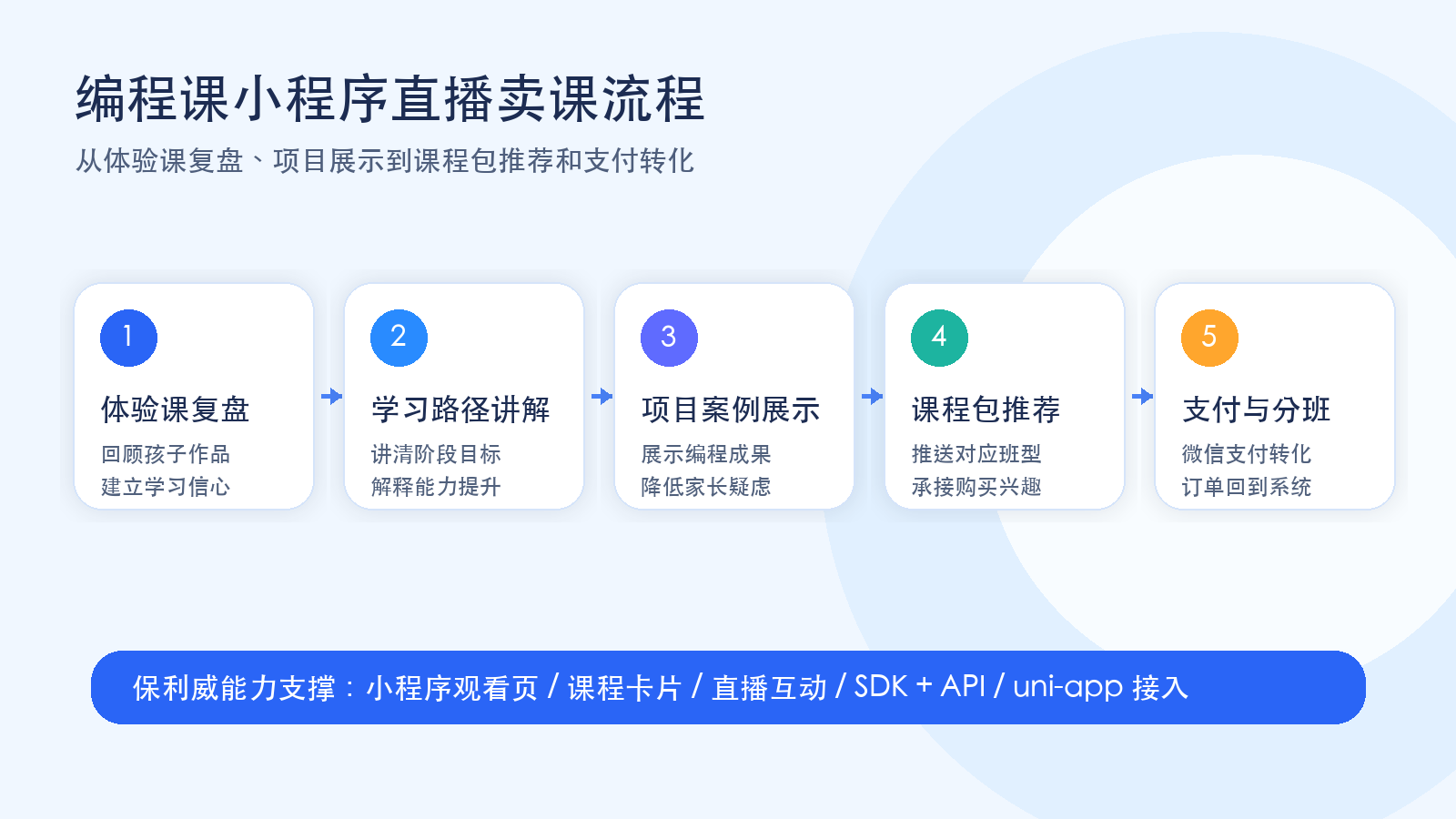
Programming course live sales should not only place course packages inside the live room. Institutions need to explain the learning path, stage goals, and course value first, then use course cards to carry purchase actions.
Selling programming courses through live streaming is different from selling ordinary products.
In ordinary live commerce, users may place an order because of price, style, or promotion. But for education courses, especially children’s programming, teen coding, and introductory informatics courses, parents are not buying a simple product. They are buying a learning path.
Therefore, the core of programming course live sales is not simply placing a course package inside the live room. The institution needs to help parents understand why the child should continue learning, how the next learning stage is arranged, and what capability goals the course package corresponds to. Then the course card can carry the purchase action.
If the institution already has trial courses in the early stage, and then uses mini program live streaming for a parent meeting or conversion briefing, the flow becomes clearer: the trial course lets the child participate, the live session helps parents understand the value, and the mini program shortens the purchase path.
01 Why Is a Purchase Link Not Enough for Programming Courses?
The purchase decision for programming courses is usually relatively heavy.
Parents care not only about price, but also whether the child is interested, whether the child can keep up, what capability programming learning improves, how the following courses are staged, how teachers provide guidance, and whether course outcomes can be seen.
These questions are difficult to answer with only a course detail page.
This is especially true when converting low-price trial courses into full-price courses. Parents may have seen the child attend several classes, but they may not yet fully understand the value of long-term learning. If the institution only sends a purchase link at this point, parents may glance at it and leave it aside.
The value of live streaming is that these questions can be explained in one focused session.
The teacher can first review what the child completed in the trial course, then explain the next learning path, and describe the capability changes from graphical programming and logical training to project practice. After parents understand the path, the corresponding course package and purchase entrance become easier to accept.
02 What Key Actions Should a Mini Program Live Room Support?
The first action is reservation and reminder.
Programming course conversion live streams usually have scheduled sessions, such as parent meetings after trial courses, holiday course briefings, and advanced course introduction sessions. Mini program reservation can collect interested parents in advance and remind them before the session starts.
The second action is vertical viewing.
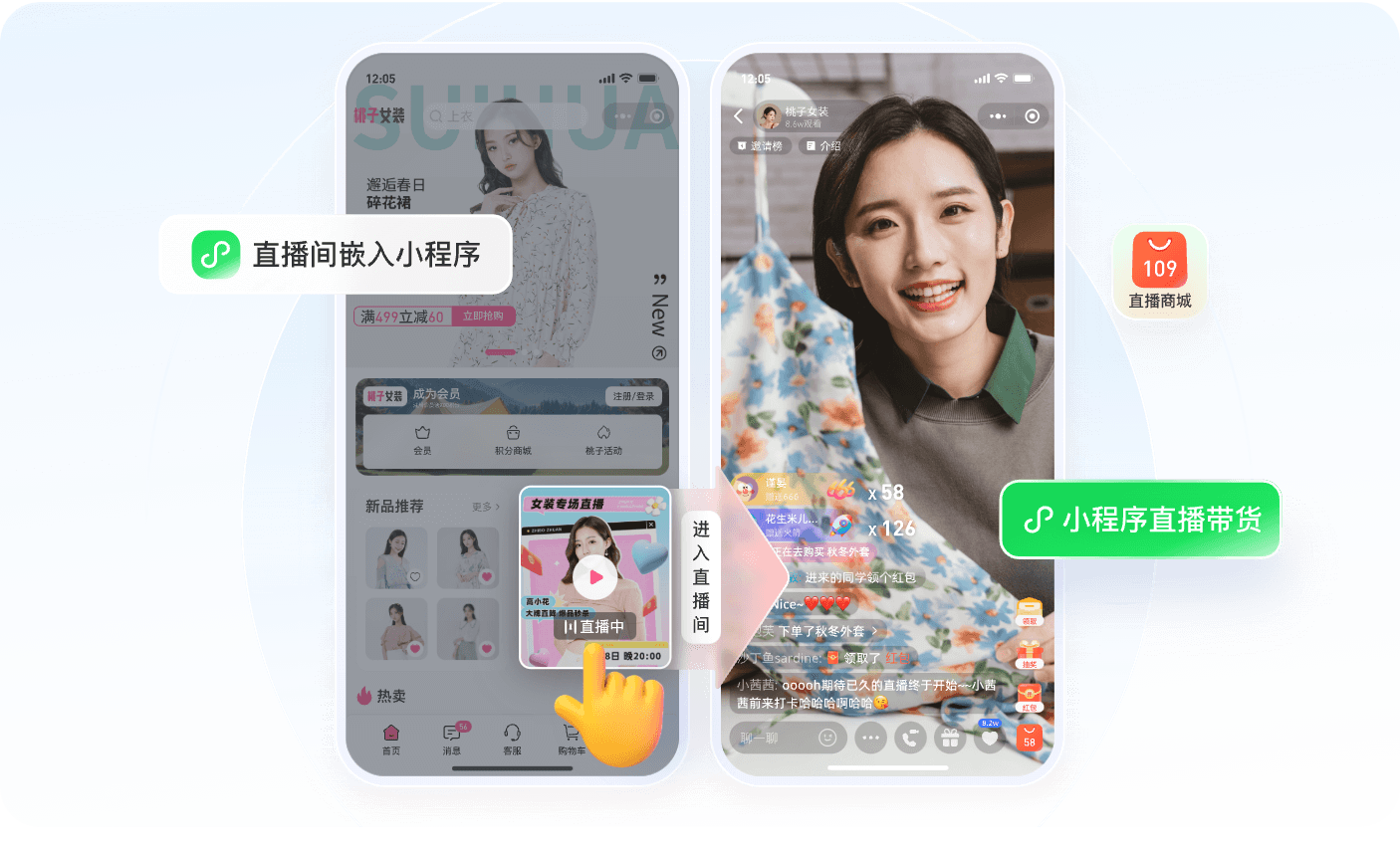
Parents usually receive notifications in WeChat and enter the live room on mobile phones. A vertical mini program live room is more suitable for parents to listen while reading comments, announcements, and course cards. It also connects more naturally with WeChat groups, enterprise WeChat notifications, and official account entrances.
The third action is course package recommendation.
Programming course live sales should not only say that there is a discount. The institution needs to explain which learning stage each course package corresponds to. For example, introductory courses, advanced courses, project practice courses, and competition-oriented courses may differ in target age, lesson schedule, and learning objectives. Course cards should carry this information instead of only displaying a purchase button.
The fourth action is payment and order connection.
After parents click the course card, they can enter the institution’s existing mini program mall, course detail page, or payment page. After payment, orders, course entitlement, and follow-up class assignment should return to the existing business system.
The fifth action is data return.
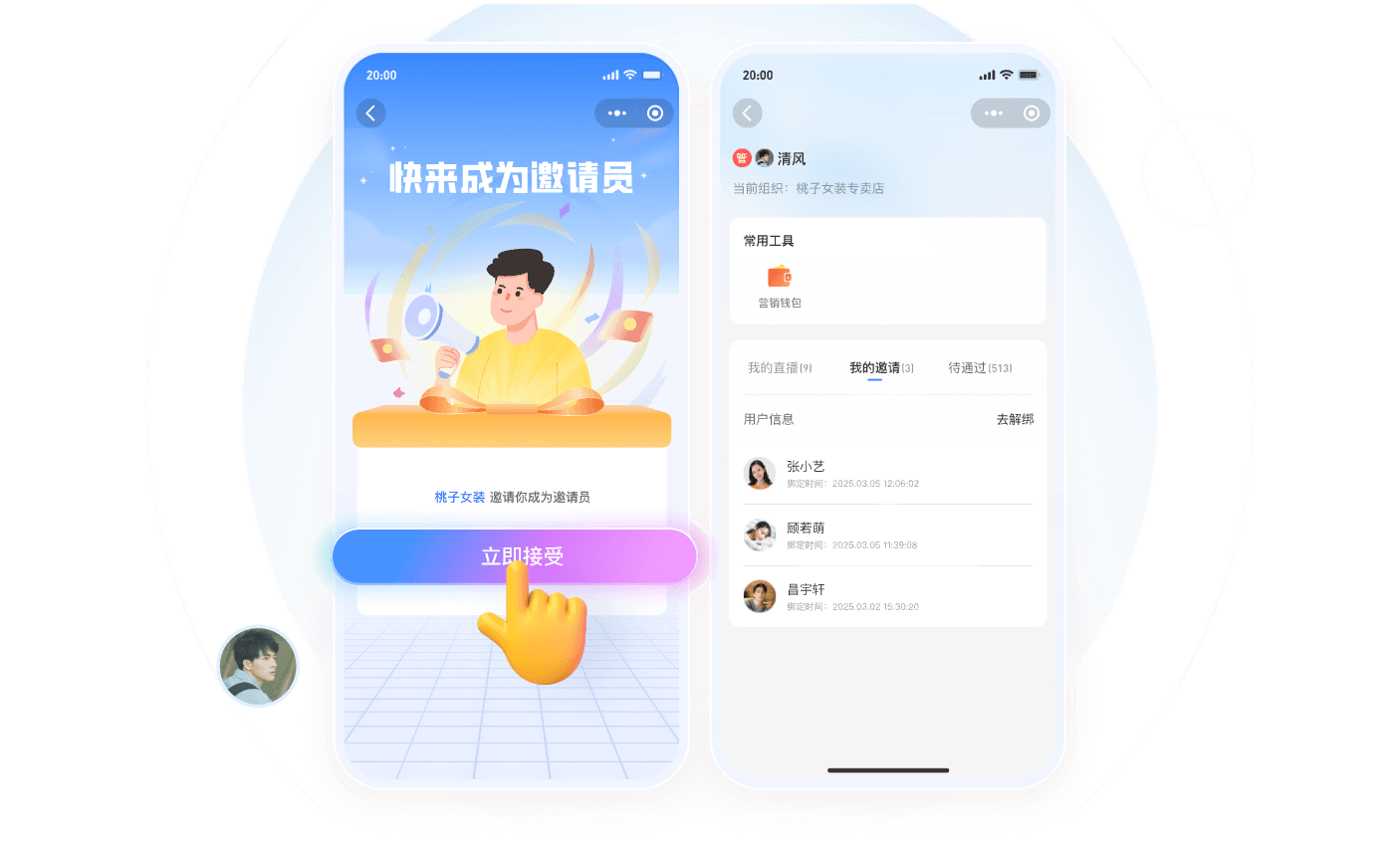
The institution needs to know who reserved, who attended, how long they watched, whether they clicked a course card, and whether they paid. For programming courses, these data points also help sales or advisors decide follow-up priorities.
03 How Should Course Cards Be Designed for Programming Courses?
A programming course card should not only say “advanced programming class” or “summer course package”.
Parents need to quickly judge whether the course is suitable for their child, what stage the child can reach after learning, how the course is arranged, what benefits are included, and what they will see after clicking.
Practical course card information includes:
First, the package name.
The name should correspond to the class type or learning stage explained by the teacher in the live session. Otherwise, parents may hear one name during the explanation but see another unfamiliar name on the card.
Second, the suitable stage.
For example, the course may be suitable for beginners, students who have completed trial courses, students with graphical programming basics, or a certain age group. This information helps parents quickly decide whether the card is relevant to their child.
Third, course highlights.
Programming courses can describe the learning path, project works, logical training, practice tasks, and stage outcomes. These should not become empty slogans. They should stay consistent with what the teacher explains in the live session.
Fourth, the purchase entrance.
After clicking the course card, parents should enter the course detail or payment flow directly, rather than searching for the course again. If the purchase path is too long, the interest built in the live room can easily be lost.
04 How Should Data Return Work for Programming Course Live Sales?
Live course sales are not valuable only when users pay immediately.
Many parents may watch the live session and click the course card to view details, but not pay right away. Others may raise questions during the Q&A session and require further communication from sales or advisors.
This requires live data to return to the follow-up business process.
At minimum, the institution should track reserved users, attended users, viewing duration, interaction behavior, course card clicks, payment status, user IDs, and order ownership.
If these data points can connect with the course system, CRM, or order system, the institution can know which parents are high-intent users, which parents only watched, and which parents have already paid but still need class assignment and service support.
For programming courses, data return can also help review live content. For example, which explanation segment led to more course card clicks, which questions were asked frequently, and which course package received more attention. These insights can improve the next parent meeting or conversion live script.
05 How Can POLYV Support This Scenario?
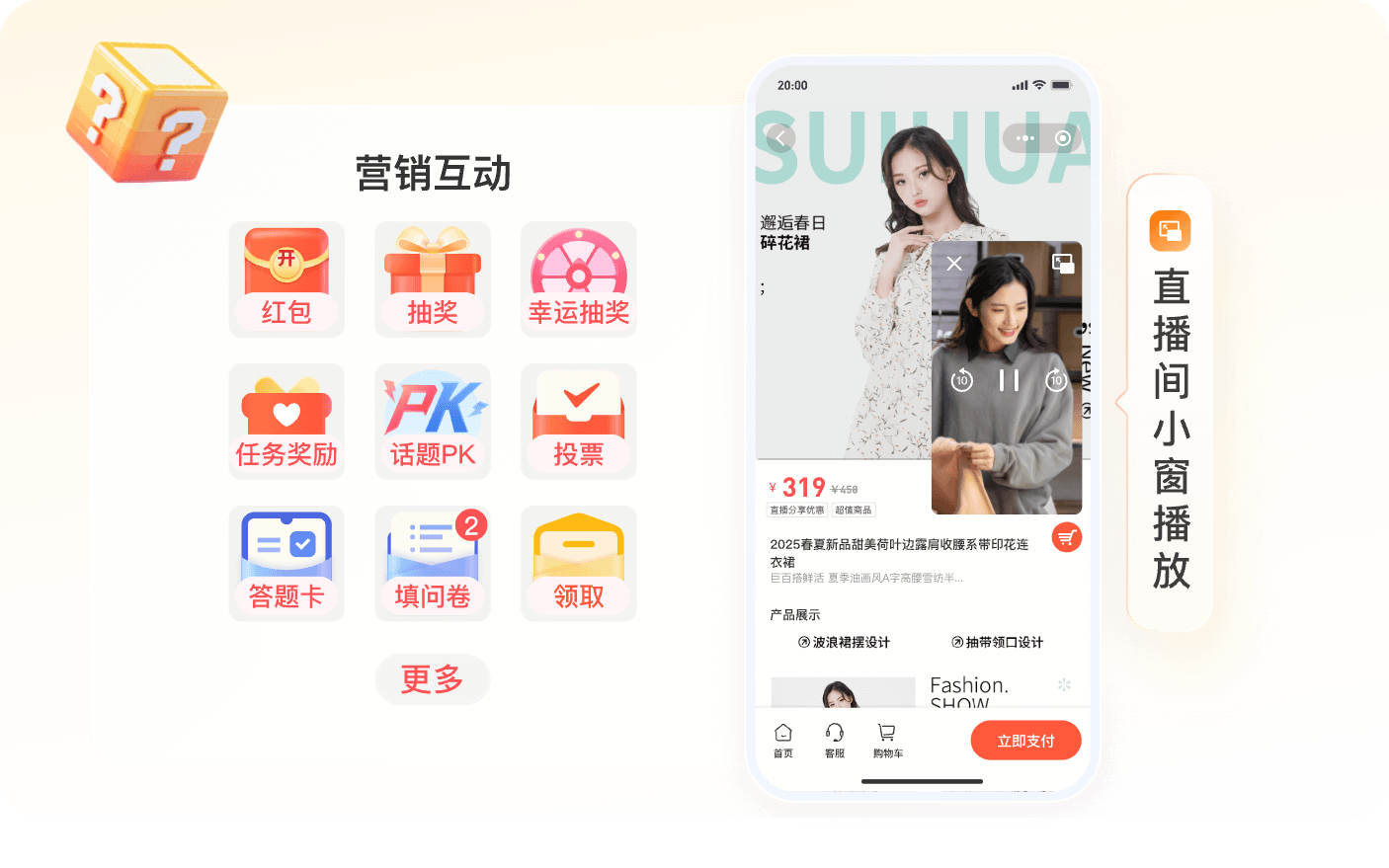
For programming course institutions that need mini program live course sales, POLYV can provide mini program live viewing pages, reservation viewing, live interaction, course or product recommendation, and data analytics. These capabilities help institutions turn post-trial conversion briefings, parent meetings, and course package recommendations into a complete live sales flow.
For mini program integration, POLYV supports native WeChat mini program integration and uni-app framework integration. Education providers that already have an App, mini program, course mall, or order system can choose a suitable viewing-page solution according to their technology stack, mini program qualifications, player capability requirements, and launch schedule.
If the institution wants to launch quickly, Webview integration and plugin plus SDK integration can connect live viewing pages and interaction capabilities. If deeper integration with existing business systems is needed, live SDKs, Web viewing page SDK, Web interaction receiver SDK, player capabilities, and API interfaces can connect channel information, viewer identity, course cards, interaction data, viewing records, click behavior, and payment results with existing systems.
In actual business operations, POLYV is more suitable as the live streaming capability layer. The frontend carries mini program viewing, interaction, and course card touchpoints. Course details, WeChat payment, order fulfillment, and class assignment continue to be handled by the institution’s existing course system. The backend returns key behavior data to CRM, order systems, or operations dashboards through APIs.
In this way, programming course institutions do not need to rebuild a complete platform. They can run a mini program live course sales flow around trial-course review, project presentation, course package recommendation, payment conversion, and data follow-up.
About POLYV
POLYV is a leading enterprise-grade video SaaS brand. From 2020 to 2025, POLYV ranked No. 1 on the Enterprise Live Streaming Service Provider Ranking for six consecutive years. Its core products and services include low-latency live streaming, video on demand, MR live streaming, digital humans, and live streaming studios, providing enterprises with integrated services such as private-domain video technology and platforms, content operations, and live streaming operations and execution for digital transformation.
Since its founding in 2013, POLYV has served the CCTV Spring Festival Gala live broadcast for six consecutive years. It has also provided video live streaming systems and services for large enterprises and financial institutions, including China Construction Bank, China Everbright Bank, Bank of Ningbo, Kingdee, Tencent, Huawei, iFLYTEK, Midea, and NetEase.