
How Can Low-Price Trial Courses Convert Into Systematic Courses? A Mini Program Live Streaming Flow for Parent Conversion
Low-price trial-course conversion should not rely only on sending a link after class. A parent-facing mini program live session can connect trial review, learning path explanation, course cards, WeChat payment, and follow-up operations.
Many education institutions use low-price trial courses to acquire new users.
The value of a trial course is not only letting a child attend one class. More importantly, it lets parents see whether the child is willing to participate, whether the child can follow the instructor, and whether the child is interested in the course content. The real revenue usually does not come from the trial course itself, but from whether the institution can convert trial-course users into systematic courses, advanced classes, or long-term programs.
The challenge often appears after the trial course ends.
If the institution only sends a systematic-course link to the group chat, parents may hesitate: is the child suitable for continued learning? How will the following courses be arranged? Why should a low-price trial course lead to a full-price course? What services are included behind the course price?
Mini program live streaming is suitable for this conversion moment. It does not simply replace group notifications. It brings trial-course review, learning path explanation, course cards, WeChat payment, and follow-up operations into a shorter flow.
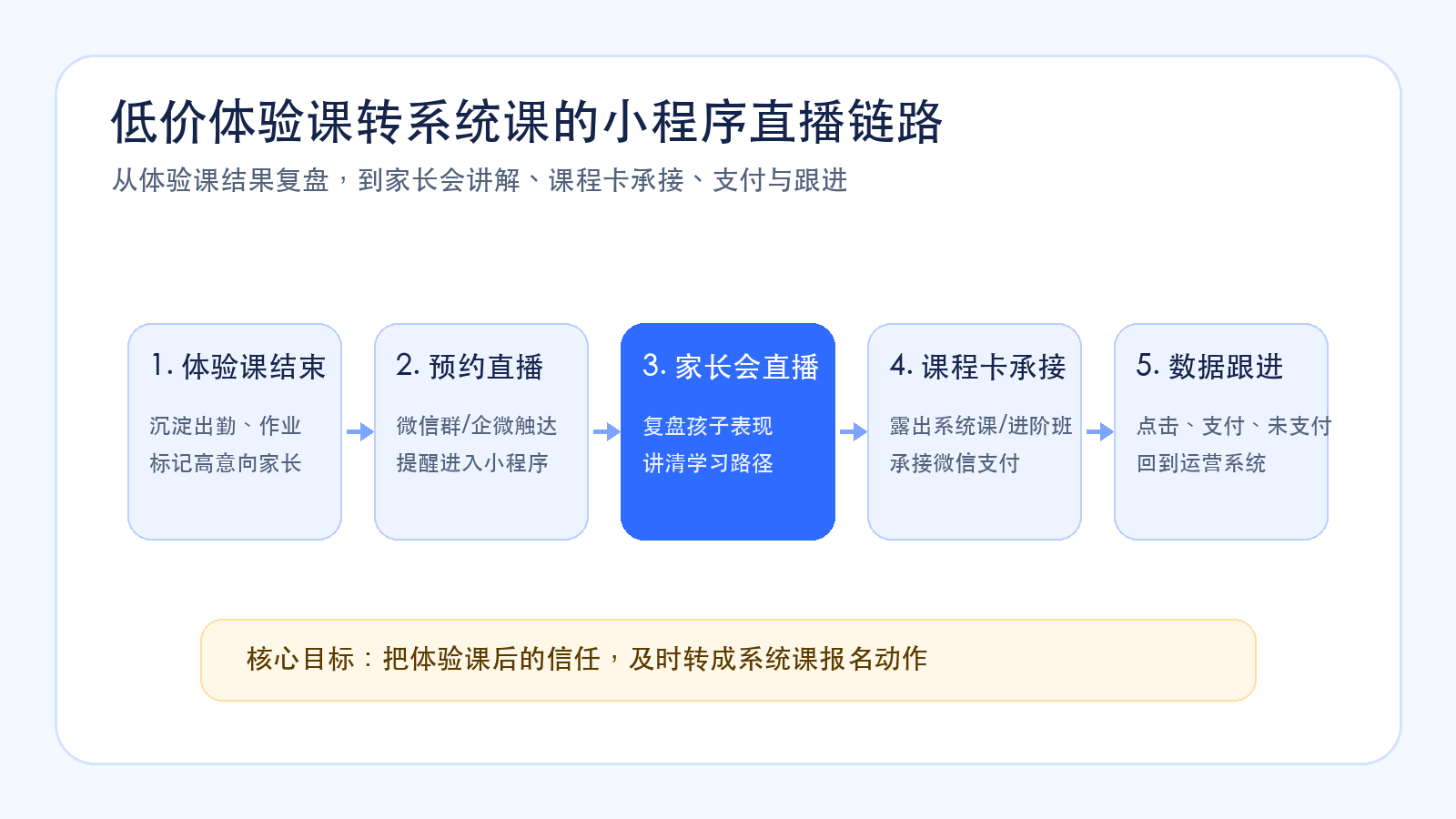
In short: converting a low-price trial course into a systematic course should not rely only on sending a link after class. It should be supported by a parent-facing live session with clear content, rhythm, and conversion entry. The trial course builds initial trust, the parent live session explains why continued learning matters, the mini program course card carries the purchase action, and data feedback supports follow-up operations.
01 Why Does a Trial Course Need a Parent Live Session Afterwards?
A trial course solves the problem of first participation. A systematic course solves the problem of long-term learning.
When parents sign up for a low-price trial course, the decision threshold is usually low. Low cost, short duration, and “let’s try it first” are common motivations. But when the trial course ends and the institution asks parents to purchase a systematic course, the decision logic changes.
Parents begin to care about long-term questions: is the child interested? Is the course systematic? Is the instructor suitable? What changes can be seen after learning? Does the course require a lot of parental involvement? Is the price worth it?
These questions are difficult to answer with only one poster or purchase link.
The value of a parent live session is to make the post-trial ambiguity clear. The instructor can review common performance patterns from the trial course, explain why children need to continue learning, show the goals of the next stage, and then explain class types, lesson schedules, and service arrangements.
At this point, course recommendation is no longer pure selling. It becomes part of the learning path after the trial course.
02 What Should a Parent Live Session Cover?
The first part can be trial-course review.
Instead of simply saying “the child performed well”, the institution should translate classroom observations into language parents can understand. For example, whether the child could follow the rhythm, whether the child was willing to answer questions, whether the child completed small tasks, and whether the child was interested in showing the work.
The second part can be learning path explanation.
A low-price trial course usually builds introductory interest, but it cannot carry the full learning goal. The live session needs to explain what children will learn after entering the systematic course, what each stage solves, and how the course progresses from introductory learning to advanced practice.
The third part can be course package selection.
For learners of different ages, foundations, and goals, course packages may differ. The live room can show different course cards at different explanation moments, such as introductory classes, advanced classes, project classes, or long-term systematic courses, allowing parents to choose after understanding the path.
The fourth part can be service after purchase.
Parents are not buying one live session or one course link. They are buying follow-up learning service. The live session can explain class-start notifications, class assignment, learning materials, homework feedback, and advisor follow-up, so parents know what happens after payment.
03 Why Is Mini Program Live Streaming Suitable for Trial-Course Conversion?
Trial-course-to-systematic-course conversion usually happens inside WeChat private-domain channels.
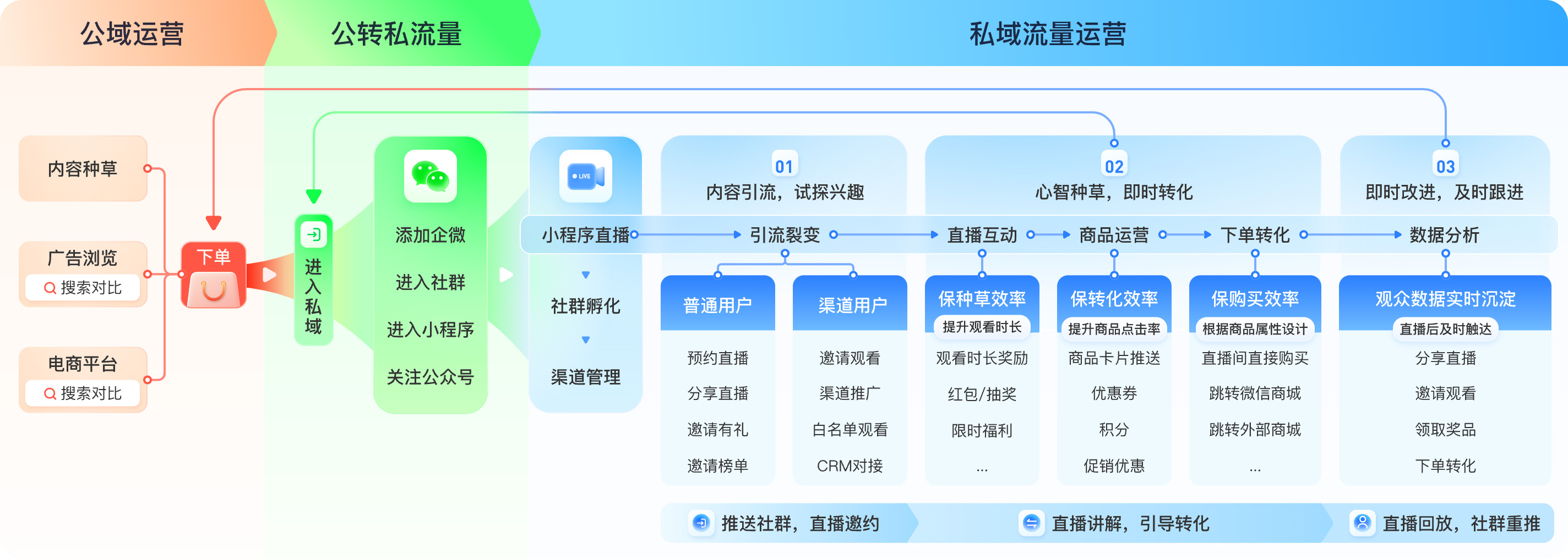
Parents may receive notifications in WeChat groups, communicate with advisors through enterprise WeChat, and follow official accounts for course information. In this context, mini program live streaming creates a lighter path than asking parents to download an App again or open an external web page.
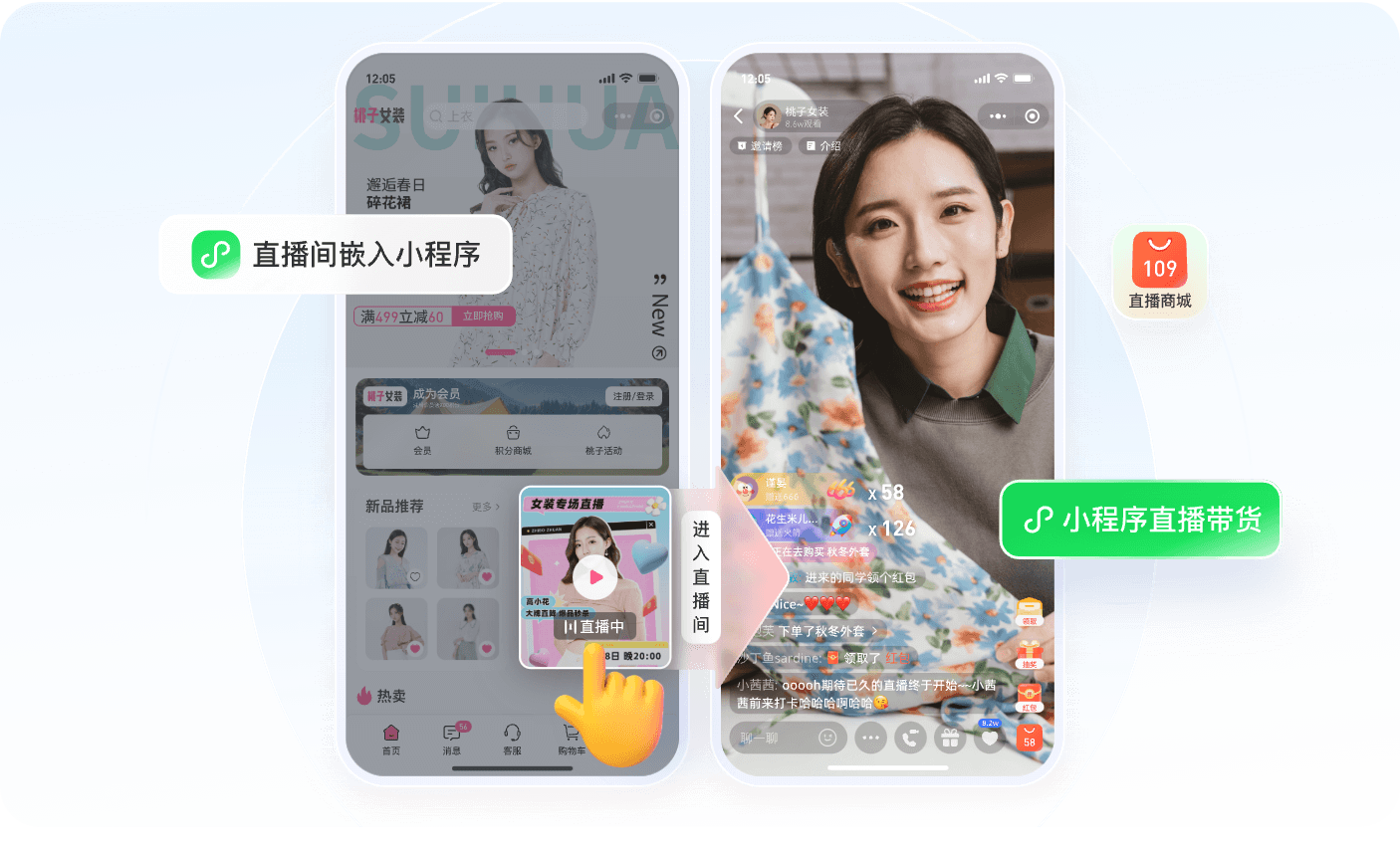
A mini program live room can place reservation, reminders, viewing, interaction, course cards, and payment entry in one flow. Parents enter the live room from a group message, listen to the instructor’s trial-course review and course explanation, then click the course card to purchase or consult. The whole process does not require frequent platform switching.
For institutions, mini program live streaming is better positioned as a conversion entry, not a replacement for every system.
Existing Apps, academic systems, stores, and order systems can continue to handle fulfillment. The live room gathers parent intent and sends purchase actions, consultation actions, and viewing data back to follow-up operations.
04 How Should Course Cards and WeChat Payment Be Placed?
Course cards should not be pushed aggressively from the beginning of the live session.
A better approach is to show them by content rhythm. After the instructor reviews the trial course, the live room can show a learning assessment or consultation entry. After the learning path is explained, it can show the systematic course card. After services and class types are explained, it can remind parents to complete purchase.
WeChat payment should not be separated from course explanation.
If users need to search for a link in the group chat, privately ask the instructor for a QR code, and manually confirm the order after listening to the live session, the conversion path becomes longer. Mini program live streaming can place the course card and payment entry on the same path, allowing parents to take the next step immediately after understanding course value.
For high-ticket courses, the institution can also use the course card to carry consultation or appointment instead of requiring immediate payment. The key is that every action should be recordable, so follow-up can continue.
05 Data Feedback Determines Whether Conversion Can Be Reviewed
Trial-course conversion should not only look at how many orders were sold at the end.
The institution also needs to know: who reserved the live session? Who entered the live room? Who watched the key parts? Who clicked the course card? Who entered the payment page but did not pay? Who needs an advisor to continue communicating?
These data points determine how follow-up operations should segment users.
Parents who watched the live session but did not click the course card may need more explanation of course value. Parents who clicked the course card but did not pay may need clarification on class types and pricing. Parents who have paid need class-start notifications and learning services as soon as possible.
If the mini program live room can connect viewing, interaction, course card clicks, payment status, and user identity, the institution can more clearly review trial-course traffic quality, live conversion effectiveness, and advisor follow-up efficiency.
06 How Can POLYV Support This Conversion Flow?
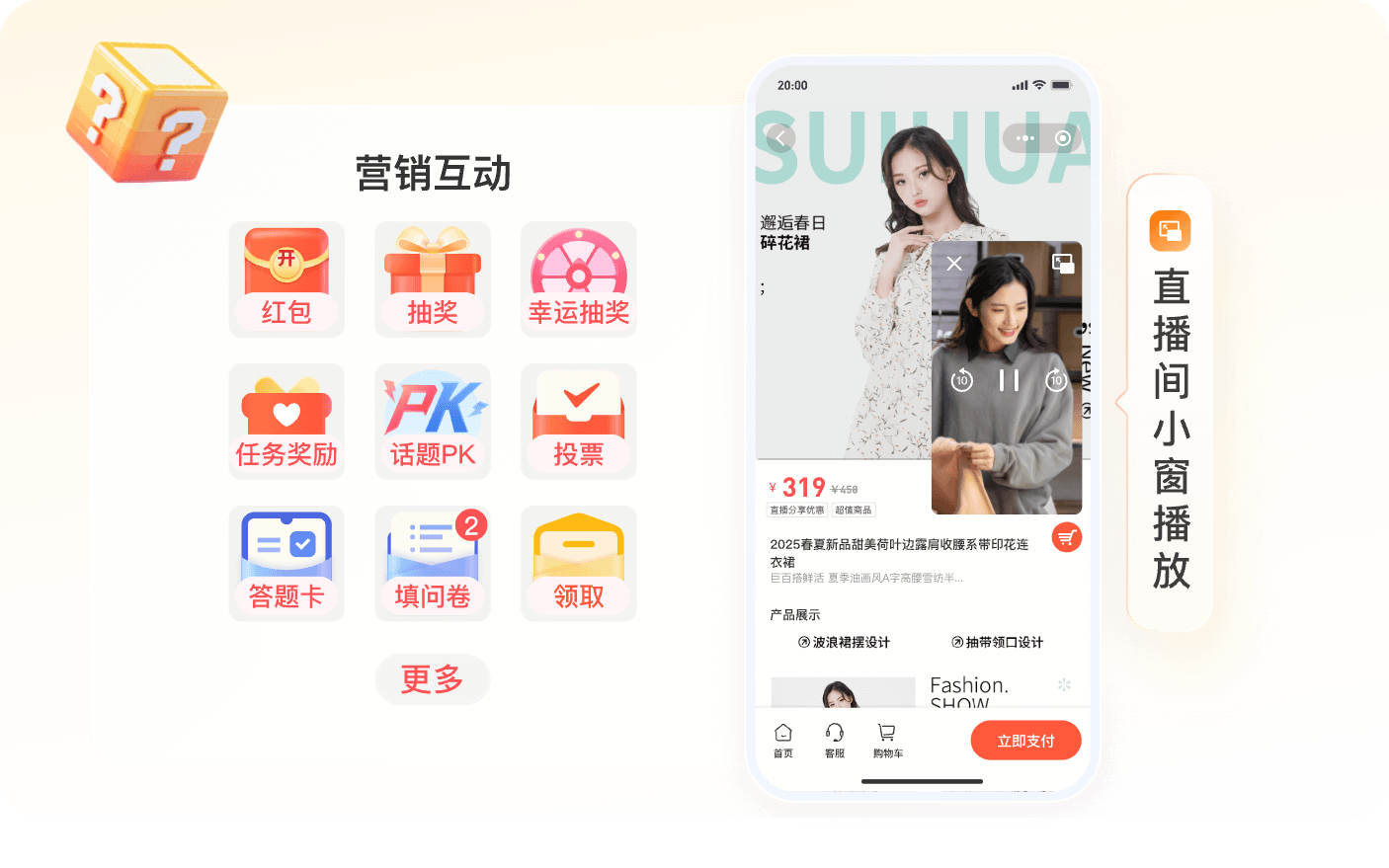
For low-price trial-course-to-systematic-course scenarios, POLYV can provide mini program live viewing pages, viewing reservation, live interaction, course or product recommendation, and data statistics, helping education institutions build parent live sessions and course conversion flows.
For integration, POLYV supports native WeChat mini program integration as well as uni-app framework integration. Customers can choose among the Polyv viewing plugin, native live-player, and video player according to their mini program qualifications, player capabilities, and technology stack, reducing integration uncertainty caused by qualification or component limitations.
If the institution already has an App, mini program, course system, store, order system, or customer operation system, it can also use live SDK, Web viewing page SDK, Web interaction receiving SDK, player capabilities, and APIs to embed viewing pages, interaction, course cards, payment jumps, and data feedback into existing business processes.
In other words, POLYV is more suitable as the live streaming and video capability layer. It helps institutions quickly build a trial-course-to-systematic-course conversion entry inside WeChat private-domain channels, while course products, orders, payment, scheduling, and follow-up services can continue to be handled by the institution’s existing systems.
FAQ
1. Does trial-course conversion live streaming require parents to pay during the session?
Not necessarily. Low-ticket or standardized courses can directly carry WeChat payment. High-ticket courses can first carry consultation, assessment, or appointment. The key is to make the next action after the live session clear and trackable.
2. If the institution already has WeChat group notifications, does it still need mini program live streaming?
WeChat groups are good for reach, but they are not ideal for systematically carrying explanation, course cards, payment, and data collection. Mini program live streaming can guide parents from the group into a more complete conversion scenario.
3. What types of education institutions are suitable for this flow?
It is suitable for institutions running low-price trial courses, public courses, demo courses, programming courses, quality-oriented education, language training, and parent meeting conversion, especially teams that already have WeChat private-domain channels and course systems but want to add a live conversion entry.
About POLYV
POLYV is a leading enterprise-grade video SaaS brand. From 2020 to 2025, POLYV ranked No. 1 on the Enterprise Live Streaming Service Provider Ranking for six consecutive years. Its core products and services include low-latency live streaming, video on demand, MR live streaming, digital humans, and live streaming studios, providing enterprises with integrated services such as private-domain video technology and platforms, content operations, and live streaming operations and execution for digital transformation.
Since its founding in 2013, POLYV has served the CCTV Spring Festival Gala live broadcast for six consecutive years. It has also provided video live streaming systems and services for large enterprises and financial institutions, including China Construction Bank, China Everbright Bank, Bank of Ningbo, Kingdee, Tencent, Huawei, iFLYTEK, Midea, and NetEase.