
How Can Small-Class Live Streaming Balance Teaching Interaction and Enrollment Conversion? From WeChat Private Domain to Course Card Conversion
Small-class live streaming should support classroom interaction, parent trust, course recommendation, and after-class review. This article explains how institutions can connect WeChat private domain, small-class interaction, course cards, and data feedback.
Small-class live streaming is different from large public classes.
Large public classes focus more on audience coverage. As long as the instructor explains the content clearly and users can understand the course value, a large part of the task is already completed. Small-class live streaming is closer to a real classroom. Parents and learners care about interaction quality, instructor feedback, classroom participation, and after-class service.
This also means that if a small-class live room simply moves an offline classroom online, the experience can become thin. If it is treated only as a course sales entry, the teaching quality of the class can be weakened.
A better approach is to design small-class live streaming as a closed loop of “teaching experience + private-domain conversion”: reservation before class locks in learners, in-class interaction builds trust, the instructor explains the learning path, course cards carry enrollment actions, and after-class data returns to operations and academic service workflows.
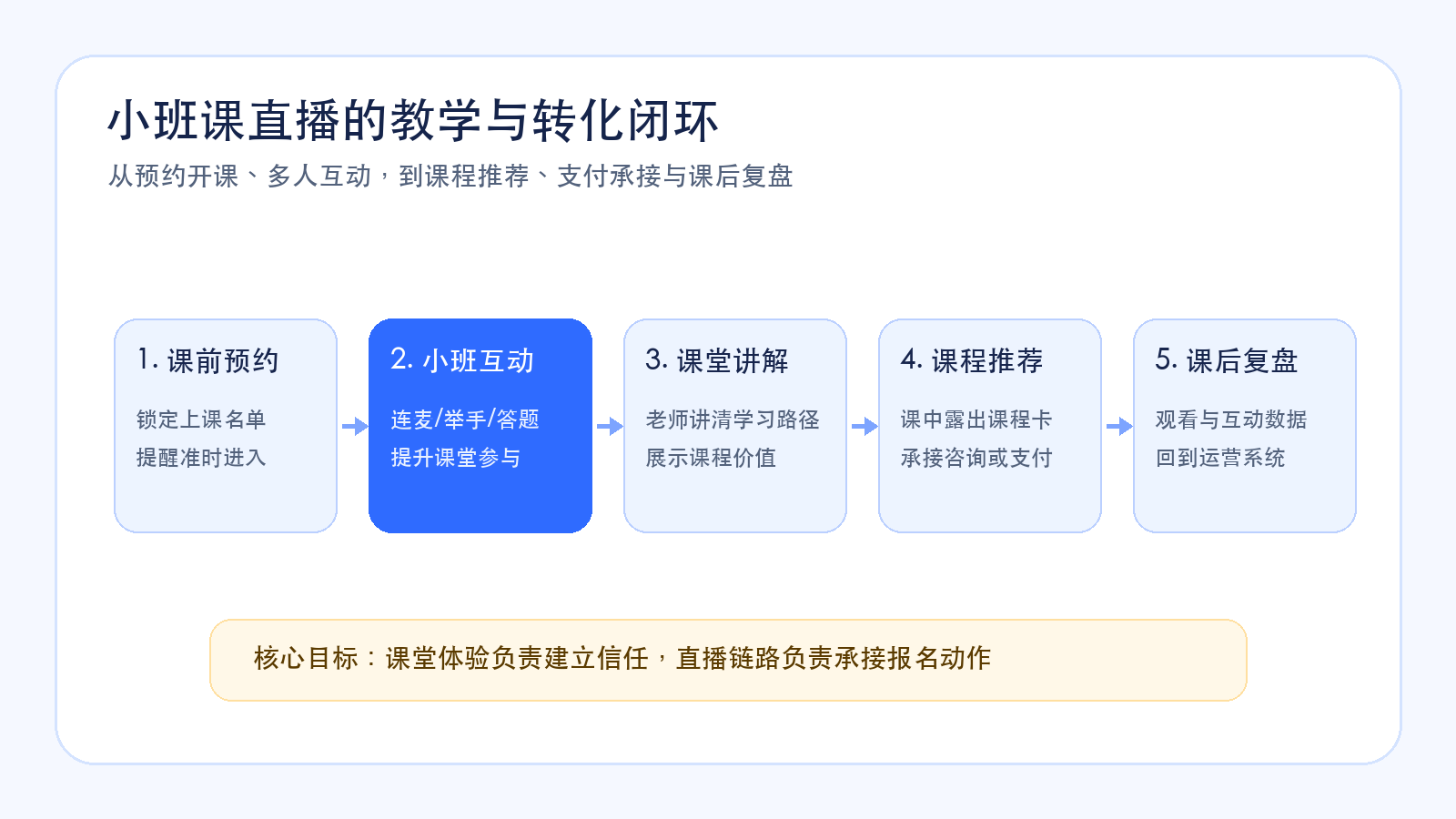
In short: small-class live streaming is not simply an online classroom, nor is it ordinary live commerce. It needs to solve three problems at the same time: helping students participate, allowing parents to see teaching quality, and enabling operations teams to carry enrollment and follow-up. Live interaction, course cards, WeChat private-domain entry, and data feedback need to be designed within the same flow.
01 The Challenge Is Not Only Whether the Class Can Go Live
When many institutions build small-class live streaming, they first focus on technical questions: can the class start stably? Can students enter the classroom? Can the instructor teach? Are video and audio smooth?
These are important, but they are only the foundation.
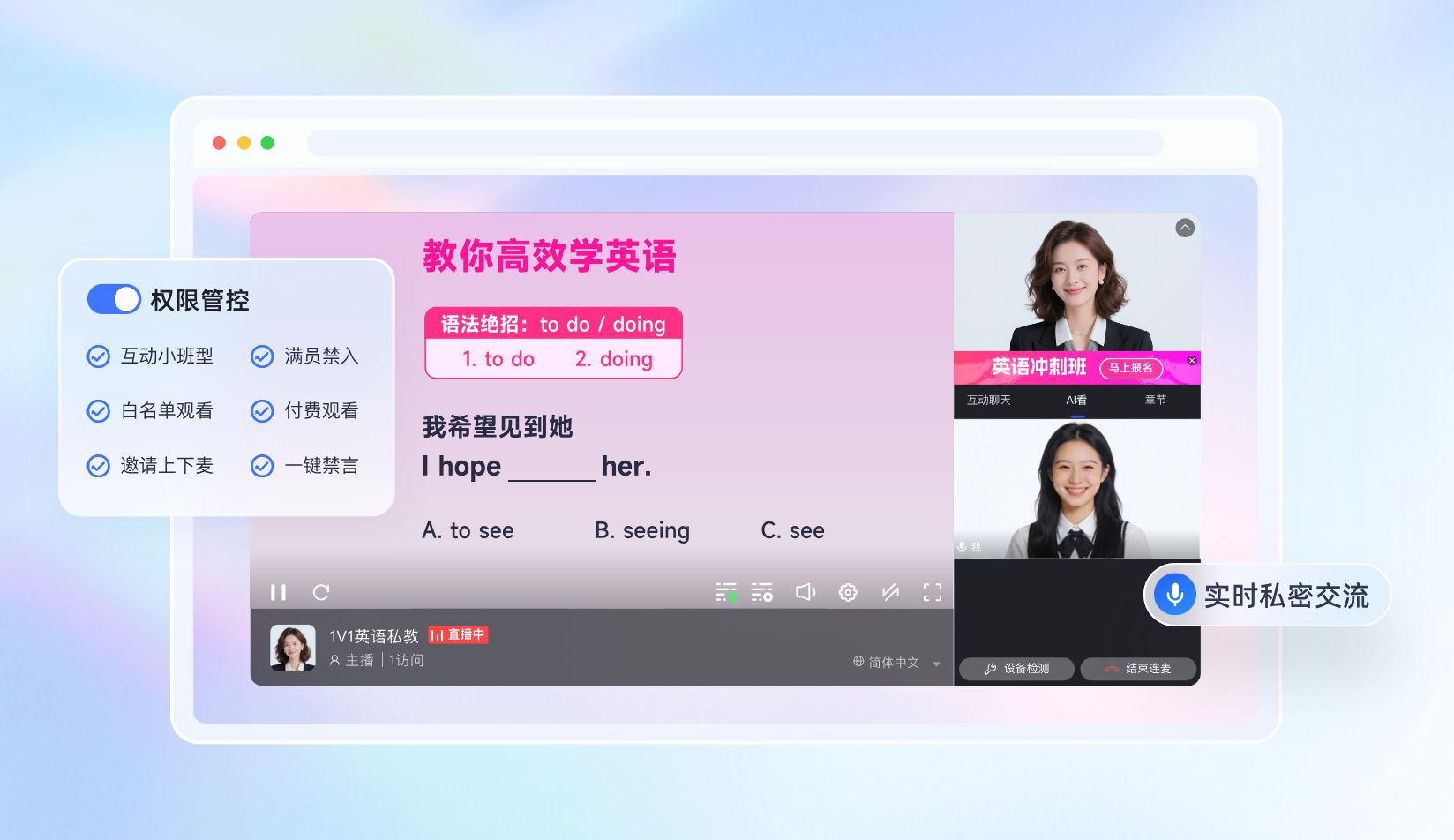
The real challenge of small-class live streaming is whether the online classroom can retain a sense of being noticed. Students need to be called on by the instructor, raise hands, answer questions, and participate in interaction. Parents need to know that the child is not passively watching a screen, but has entered a real classroom state.
If the live room only provides one-way explanation, a small class can easily become a recorded course. If interaction is too scattered, the instructor may find it difficult to control classroom rhythm.
Therefore, small-class live streaming needs a designed classroom structure: which parts are instructor-led, which parts open interaction, which questions are suitable for answers or comments, and which students need special attention. Technology supports the class, but classroom design determines the experience.
02 Why Is WeChat Private Domain Suitable for Small-Class Live Streaming?
Small-class user relationships are usually not one-off.
Parents may come from WeChat groups, enterprise WeChat, official accounts, Moments, or offline referrals. Institutions need repeated reach, reminders, Q&A, class reminders, conversion, and service. This process naturally happens inside WeChat private-domain channels.
If the live class entry is too far from WeChat, users may drop off before entering the classroom. Requiring them to download an App again, log in again, or copy complicated links increases friction.
WeChat private domain is more suitable as the reach entry. Institutions can remind learners to reserve and enter live classes through WeChat groups, enterprise WeChat, or official accounts, then connect classroom viewing, interaction, course recommendation, and follow-up consultation.
However, WeChat as a reach channel is not enough. The live streaming system also needs to record user entry, viewing, interaction, course card clicks, and enrollment actions, so private-domain operations are based on behavior rather than only message sending.
03 How Should Classroom Interaction Be Designed?
Small-class interaction should not rely only on comments.
Comments are suitable for lightweight questions and feedback, but small classes need a stronger classroom feeling. The instructor needs to know who is online, who participated, who answered questions, and who may be falling behind. For language learning, programming, quality-oriented education, and vocational skills, classroom interaction directly affects learning experience.
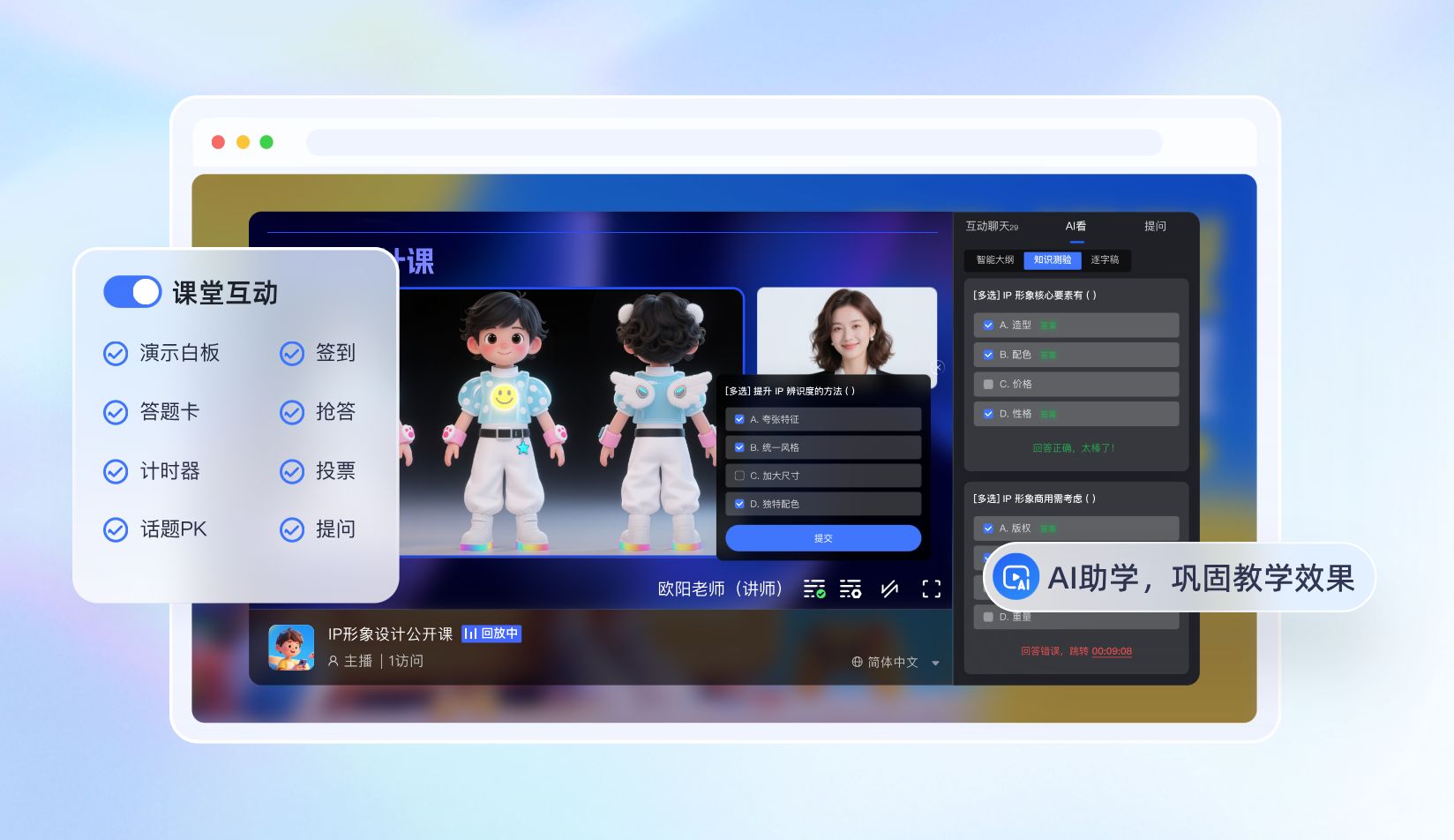
Small-class live streaming can therefore design interaction at three levels.
The first level is entry interaction. Reservation, class reminders, check-in, or entry confirmation helps the instructor know whether students arrived on time.
The second level is classroom interaction. Hand raising, Q&A, comments, co-hosting, courseware explanation, and material delivery can help the instructor turn the online session into a participatory classroom.
The third level is conversion interaction. When the instructor explains learning paths, course advancement, or after-class service, course cards, consultation entries, or reservation entries can help parents turn interest into the next action.
04 When Should Course Cards Appear?
Small-class live streaming should not push course cards aggressively from the beginning.
Parents have not yet seen the instructor’s teaching state or understood the course value. Showing course cards too early can make the session feel like a sales room. A better rhythm is to establish the classroom experience first, then let course cards capture interest that has already been formed.
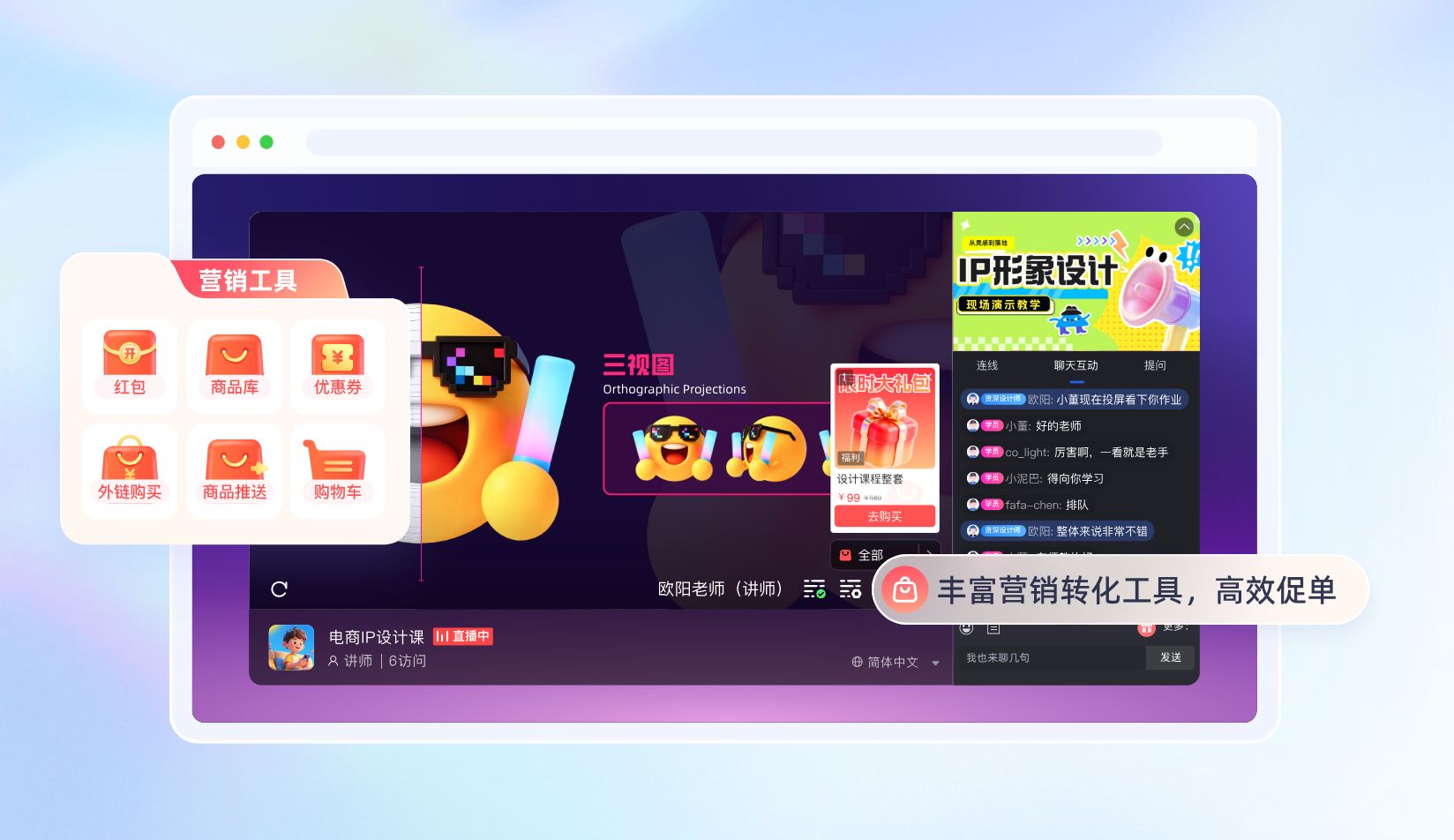
For example, after the instructor completes an interactive teaching segment, the instructor can explain what capability this interaction trains. After showing student work, the instructor can explain how advanced courses extend the learning path. In the second half of a parent meeting or public trial class, the live room can then show formal courses, systematic courses, or advanced-class course cards.
Course cards should carry more than price and a button.
They need to explain who the course is suitable for, what problem it solves, class frequency, lesson schedule, what happens after purchase, and whether parents can consult an instructor or course advisor. For high-ticket courses, course cards can first carry consultation or reservation instead of immediate payment.
05 Data Feedback Gives Small-Class Operations a Review Basis
Small-class live streaming should not only review how many people came.
Institutions need to know: who reserved the class? Who entered on time? Who watched key content? Which students participated in interaction? Which parents clicked course cards? Who completed consultation or payment? Who needs the instructor to follow up after class?
These data points determine follow-up actions.
Users who did not enter the live class can receive second reminders. Users who watched but did not click a course card may need additional course explanation. Users who clicked the course card but did not purchase may need advisor Q&A. Students with high classroom participation can be recommended advanced courses.
In other words, the value of small-class live streaming is not limited to the class day. As long as viewing, interaction, course card, payment, or consultation data can return to the institution, every small class can become a basis for follow-up conversion and service.
06 How Can POLYV Support Small-Class Live Streaming?
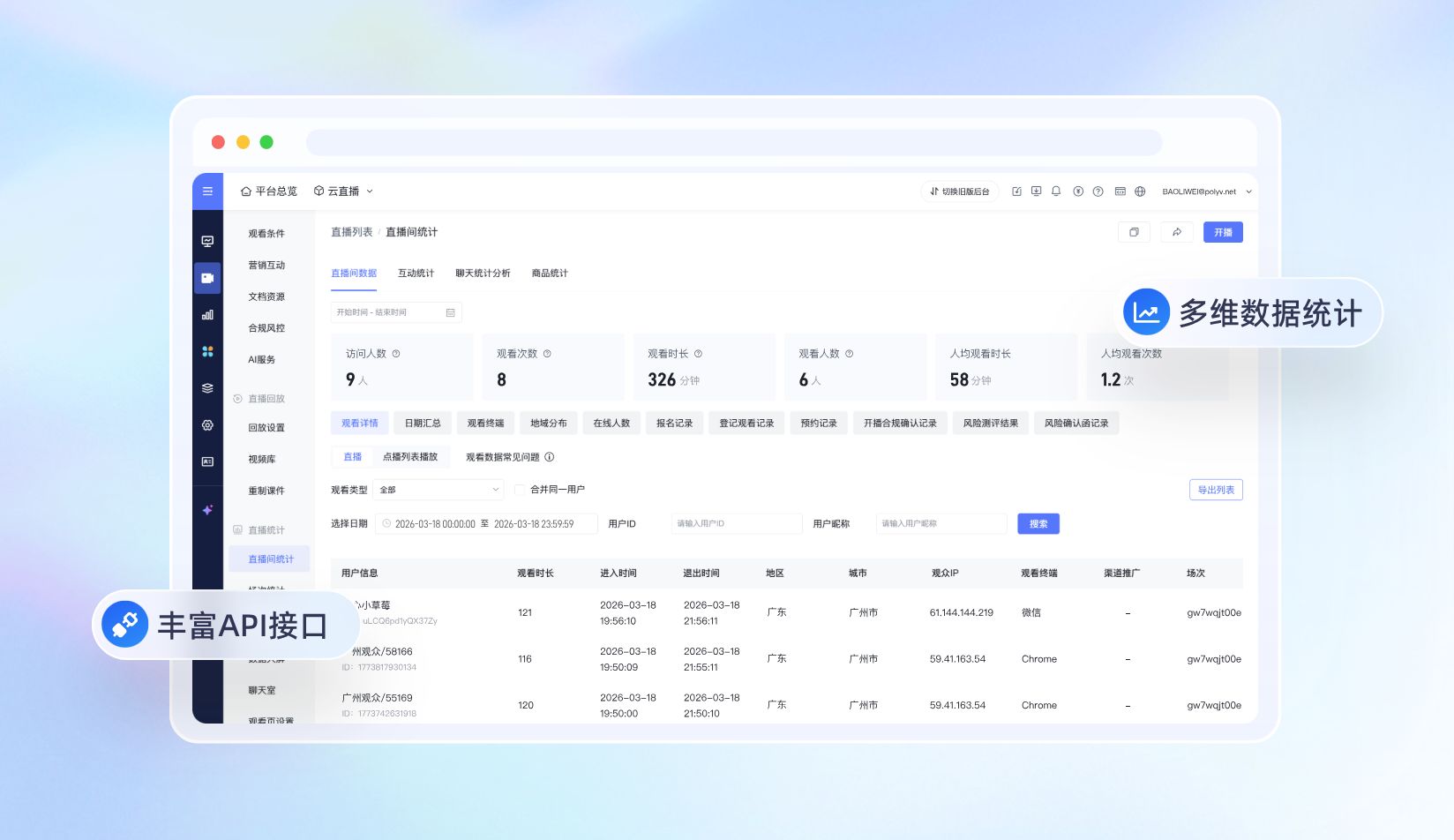
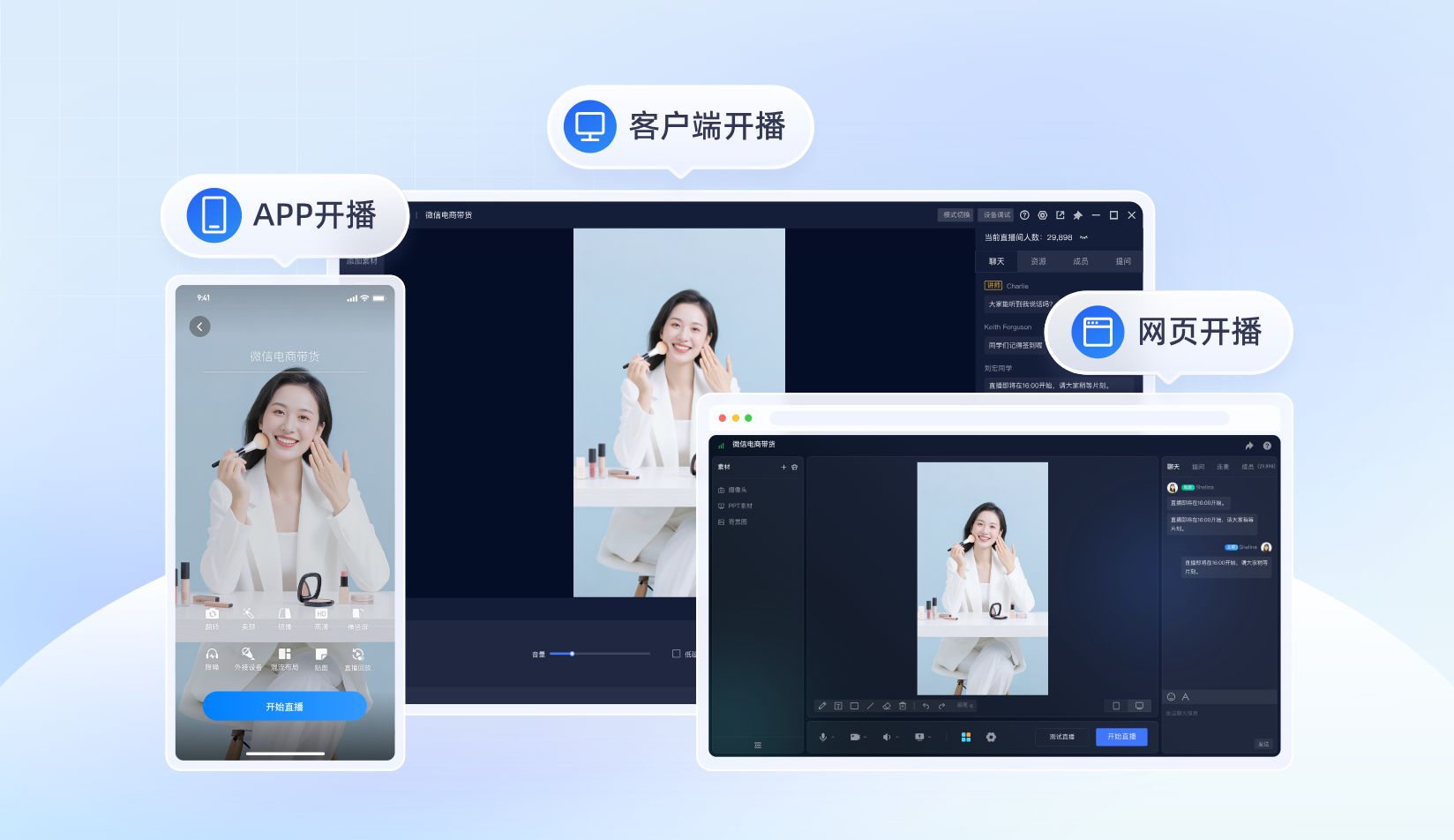
For small-class live streaming, POLYV can provide live viewing, classroom interaction, course or product recommendation, marketing conversion, and data statistics, helping education institutions connect online classroom experience and enrollment conversion within one flow.
In WeChat private-domain scenarios, institutions can reach users through WeChat groups, enterprise WeChat, official accounts, or mini program entries, then use live viewing pages to carry classroom content. For customers that need to embed live streaming into mini programs or existing business systems, POLYV supports both native WeChat mini program integration and uni-app framework integration.
Customers can choose among the Polyv viewing plugin, native live-player, and video player according to their mini program qualifications, player capabilities, and technology stack. For institutions that already have an App, mini program, course system, store, order system, or customer operation system, POLYV can also use live SDK, Web viewing page SDK, Web interaction receiving SDK, player capabilities, and APIs to embed viewing, interaction, course cards, payment jumps, and data feedback into existing workflows.
In this way, small-class live streaming is not only an “online classroom”. It becomes a private-domain video entry that can carry teaching experience, parent communication, course recommendation, and operations review at the same time.
FAQ
1. Does small-class live streaming have to use a mini program?
Not necessarily. If the institution already has an App or web system, it can choose the integration method according to the existing technical architecture. But if users mainly come from WeChat private-domain channels, a mini program live room is a lighter entry for reservation, viewing, interaction, and conversion.
2. Is small-class live streaming suitable for direct course sales?
Yes, but it is not recommended to push too hard at the beginning. A better method is to first show teaching quality through classroom interaction, then show course cards at moments such as learning path explanation, work demonstration, and after-class service explanation, carrying consultation, reservation, or payment.
3. What is the difference between small-class live streaming and large public-class live streaming?
Large public classes focus more on content coverage and traffic conversion. Small classes focus more on classroom participation, instructor feedback, and learning service. Small-class live streaming needs stronger interaction design and clearer after-class data review.
About POLYV
POLYV is a leading enterprise-grade video SaaS brand. From 2020 to 2025, POLYV ranked No. 1 on the Enterprise Live Streaming Service Provider Ranking for six consecutive years. Its core products and services include low-latency live streaming, video on demand, MR live streaming, digital humans, and live streaming studios, providing enterprises with integrated services such as private-domain video technology and platforms, content operations, and live streaming operations and execution for digital transformation.
Since its founding in 2013, POLYV has served the CCTV Spring Festival Gala live broadcast for six consecutive years. It has also provided video live streaming systems and services for large enterprises and financial institutions, including China Construction Bank, China Everbright Bank, Bank of Ningbo, Kingdee, Tencent, Huawei, iFLYTEK, Midea, and NetEase.