
How to Choose a Small-Class Live Streaming Platform? 5 Capabilities Education Institutions Should Check
When choosing a small-class live streaming platform, education institutions should evaluate not only streaming, but also classroom interaction, WeChat entry, course cards, payment jumps, and data feedback.
When education institutions choose a small-class live streaming platform, they should not only ask whether the platform can go live.
The goal of small-class live streaming is not simply moving one class online. It should allow instructors to organize the classroom, students to participate, parents to see teaching value, and institutions to carry enrollment, renewal, and after-class operations.
If a platform only supports streaming and viewing, a small class can easily become a one-way broadcast. If it only emphasizes marketing and conversion, the classroom experience may be weakened. A truly suitable small-class live streaming platform needs to cover teaching, interaction, private-domain entry, course conversion, and data review at the same time.
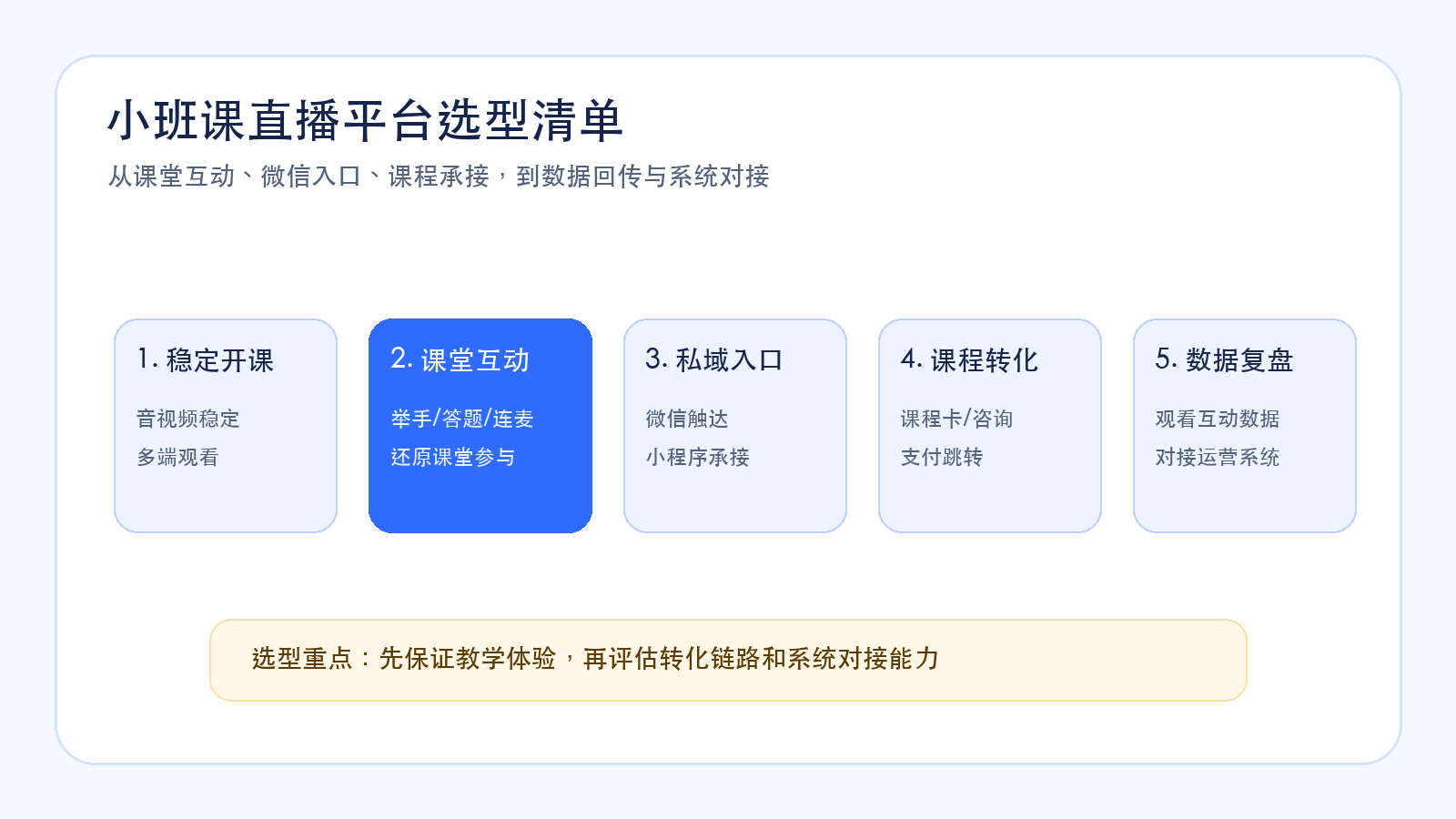
In short: when choosing a small-class live streaming platform, education institutions should first evaluate classroom experience, then private-domain conversion. Stable streaming is the foundation, interaction determines classroom quality, WeChat entry affects attendance, course cards and payment links affect conversion, and data feedback determines whether after-class operations can continue.
01 Capability 1: Stable Classes and Multi-Device Viewing
The foundation of small-class live streaming is allowing instructors and students to enter the classroom smoothly.
This sounds basic, but it is critical for education institutions. Small classes usually have fixed class times, specific student lists, and instructor schedules. If students cannot enter, audio is unstable, or video freezes, the classroom rhythm is interrupted.
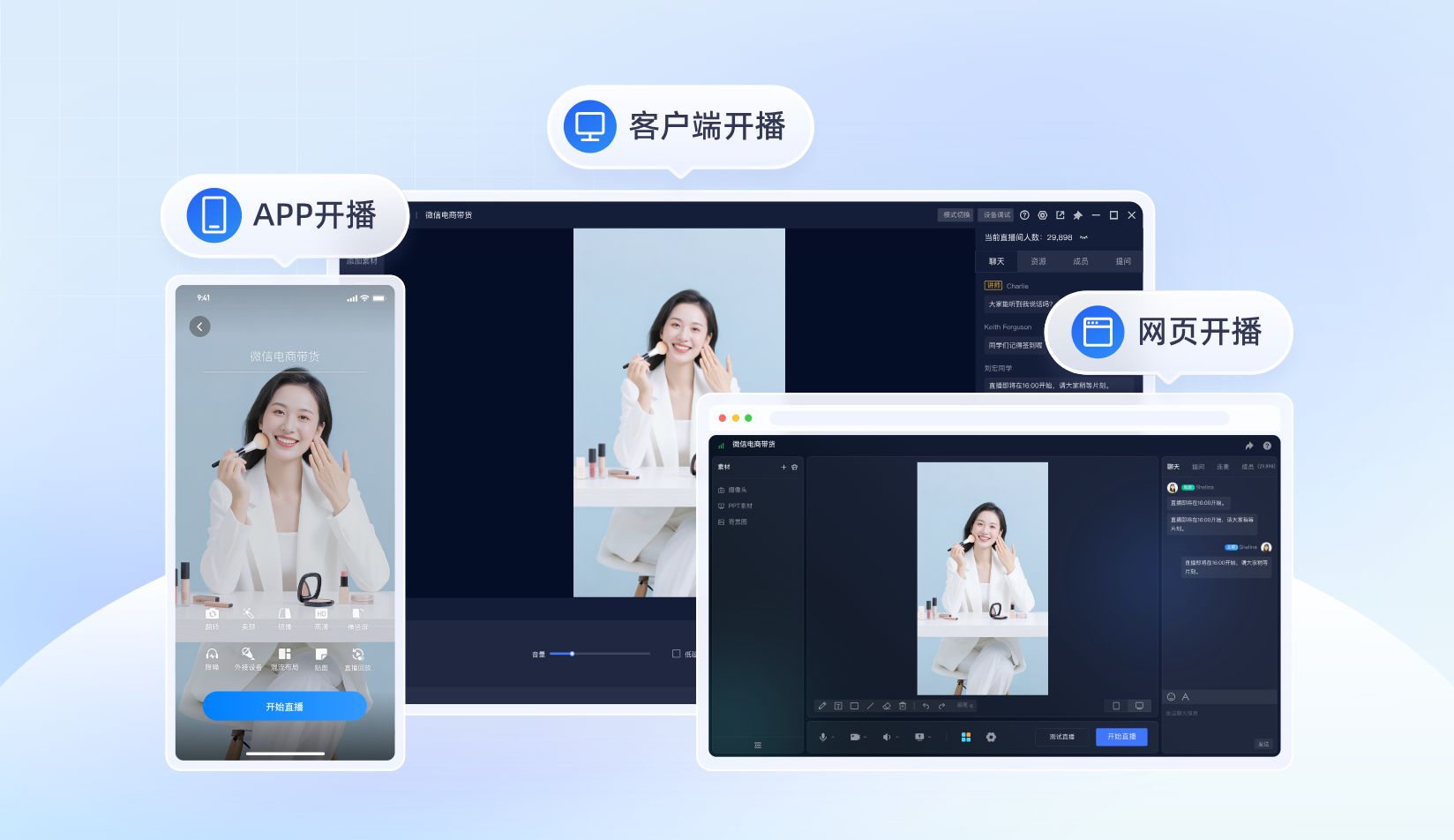
When selecting a platform, institutions need to check whether it supports stable live viewing, multi-device access, viewing experience under different network conditions, and whether instructors and students can start or enter classes quickly.
For WeChat private-domain scenarios, institutions should also check whether users can enter the live room smoothly from WeChat groups, enterprise WeChat, official accounts, or mini programs. The shorter the path, the easier it is to stabilize attendance.
02 Capability 2: Classroom Interaction, Not Just Comments
The biggest difference in small-class live streaming is interaction density.
Large live classes can mainly rely on instructor output, but small classes require instructors to observe student feedback. Whether students are online, participating in answers, willing to interact, and keeping up with the rhythm all affect parents’ judgment of course quality.
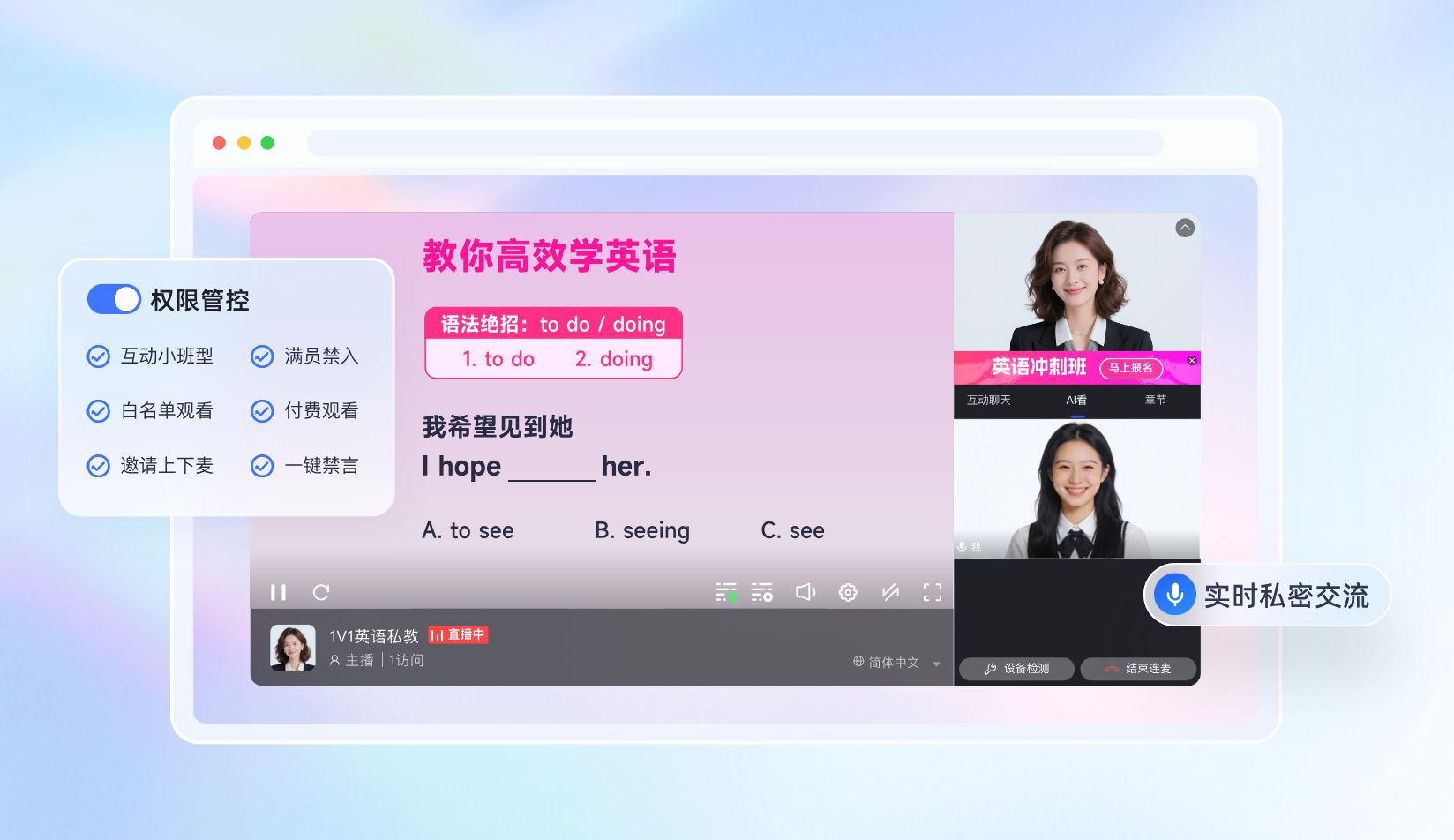
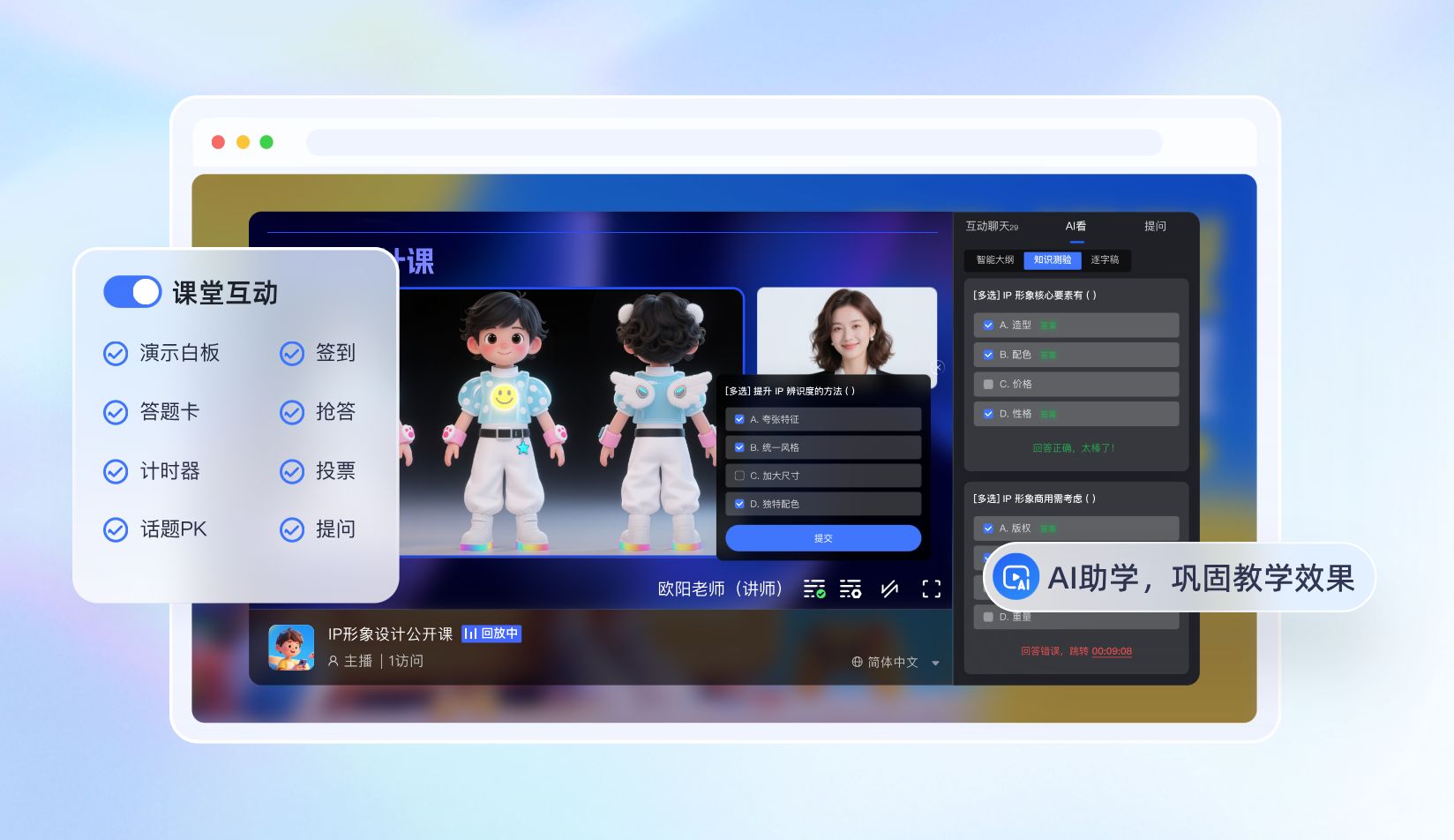
Therefore, a small-class live streaming platform should support interaction closer to a classroom, such as hand raising, Q&A, comments, co-hosting, courseware display, material delivery, and interaction statistics.
Interaction is not for making the class look busy. It helps instructors understand whether students are actually following the class. For language training, programming courses, quality-oriented education, and vocational training, interaction data can also help instructors identify follow-up tutoring priorities.
03 Capability 3: WeChat Private-Domain Entry and Mini Program Conversion
Many education institutions acquire small-class users from WeChat private-domain channels.
Parents receive notifications in WeChat groups, consult instructors through enterprise WeChat, and enter course services through official accounts or mini programs. If the live streaming entry is too far from WeChat, the cost of entering the classroom becomes higher.
A mini program live room is suitable as a lightweight entry. Institutions can remind users to reserve and enter live classes through WeChat groups, official accounts, enterprise WeChat, or mini program messages, then complete viewing, interaction, course recommendation, and consultation inside the live room.
It is important to note that mini program live streaming does not mean the institution must rebuild a complete system. A more reasonable structure is to let the mini program carry viewing and conversion entry, while existing Apps, academic systems, stores, and order systems continue to handle learning services and fulfillment.
04 Capability 4: Course Cards, Consultation, and Payment Jump
A small-class live streaming platform should not only serve the classroom. It should also carry enrollment actions.
After parents see the instructor’s teaching style, student interaction, and course value, they may want to continue consulting or purchase a course. If they still need to search for a link in a group chat or privately ask for a QR code, the conversion path becomes longer.
The platform should support course cards, consultation entries, reservation entries, or payment jumps, allowing parents to take the next step at the right moment.
Course cards should not become hard-selling ads. A better approach is to show them when the instructor explains learning paths, course advancement, student work, or after-class service, so they capture interest that has already been built.
For high-ticket courses, course cards can first carry consultation or reservation. For standardized courses or low-price courses, they can directly carry WeChat payment or order jumps.
05 Capability 5: Data Statistics and System Integration
After a small-class live session ends, institutions should not only review viewing numbers.
More important questions include: who reserved the class? Who entered on time? Who watched key content? Who participated in interaction? Who clicked a course card? Who completed consultation, reservation, or payment? Who needs follow-up from an instructor or advisor?
If these data stay only inside the live streaming backend, they are difficult to use in operations. When selecting a platform, institutions should check whether it supports data statistics, user behavior records, course card click data, viewing data, and integration capabilities.
Through data feedback, institutions can connect live streaming data with customer operation systems, order systems, academic systems, or dashboards, turning each small-class session into a basis for follow-up service and conversion.
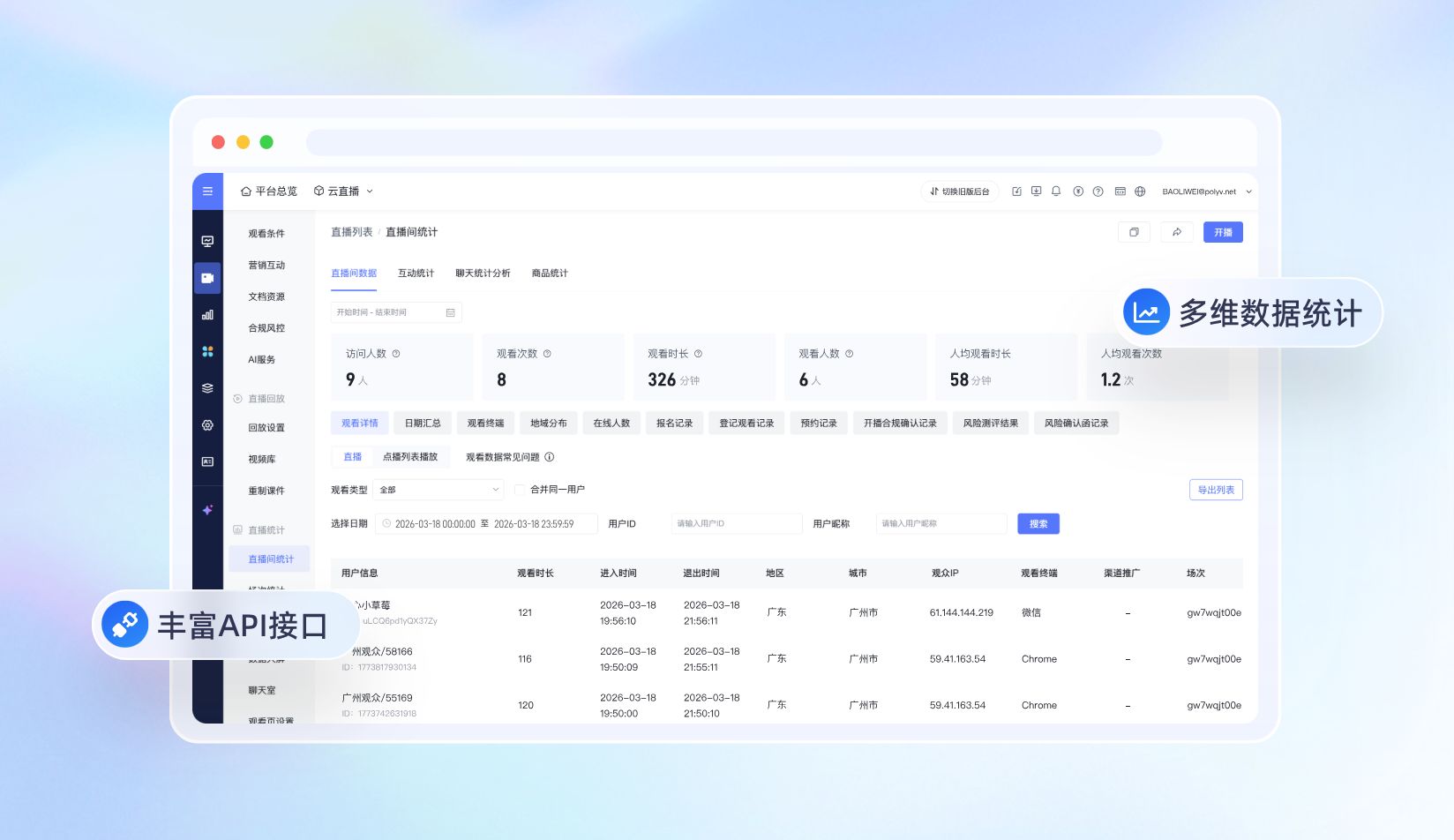
06 How Can POLYV Support Small-Class Live Platform Selection?
For small-class live streaming scenarios, POLYV can provide stable live viewing, classroom interaction, course or product recommendation, marketing conversion, and data statistics, helping education institutions balance teaching experience and enrollment conversion.
In WeChat private-domain and mini program scenarios, POLYV supports native WeChat mini program integration as well as uni-app framework integration. Customers can choose among the Polyv viewing plugin, native live-player, and video player according to their mini program qualifications, player capabilities, and technology stack, reducing integration uncertainty.
For institutions that already have Apps, mini programs, academic systems, course stores, order systems, or customer operation systems, POLYV can also use live SDK, Web viewing page SDK, Web interaction receiving SDK, player capabilities, and APIs to embed viewing, interaction, course cards, payment jumps, and data feedback into existing business processes.
In other words, institutions do not need to rebuild a complete platform for small-class live streaming. They can add video live streaming, interaction, and private-domain conversion capabilities on top of existing business systems.
FAQ
1. What should institutions check first when choosing a small-class live streaming platform?
It is recommended to start with classroom experience, including streaming stability, student entry path, interaction capability, and instructor classroom management. After classroom experience is established, evaluate course cards, payment conversion, and data feedback.
2. Does small-class live streaming always need co-hosting?
Not necessarily. Different courses rely on co-hosting to different degrees, but the platform should at least support manageable interaction methods such as hand raising, Q&A, comments, material delivery, and interaction statistics. Interaction should serve classroom rhythm, not simply be more numerous.
3. If an institution already has an academic system, does it still need live platform integration?
Yes. The live platform handles viewing, interaction, and behavior data, while the academic system handles scheduling, student management, and fulfillment. Only when the two are connected through APIs or business workflows can classroom data truly support follow-up operations.
About POLYV
POLYV is a leading enterprise-grade video SaaS brand. From 2020 to 2025, POLYV ranked No. 1 on the Enterprise Live Streaming Service Provider Ranking for six consecutive years. Its core products and services include low-latency live streaming, video on demand, MR live streaming, digital humans, and live streaming studios, providing enterprises with integrated services such as private-domain video technology and platforms, content operations, and live streaming operations and execution for digital transformation.
Since its founding in 2013, POLYV has served the CCTV Spring Festival Gala live broadcast for six consecutive years. It has also provided video live streaming systems and services for large enterprises and financial institutions, including China Construction Bank, China Everbright Bank, Bank of Ningbo, Kingdee, Tencent, Huawei, iFLYTEK, Midea, and NetEase.