
How Can Small-Class Live Streaming Improve Attendance Rate? From WeChat Reminders to Mini Program Entry
Improving small-class live attendance requires more than group reminders. Institutions need to connect reservation, WeChat reach, mini program entry, classroom interaction, and data feedback into one operations flow.
The biggest challenge in small-class live streaming is often not registration, but whether registered users actually attend.
Many education institutions encounter similar situations: parents reserve a public trial class, demo class, or small-class live session, but do not enter when the class starts; students enter the live room but leave quickly; the instructor prepares interaction, but participation is unstable.
On the surface, this looks like users are not punctual. In reality, the entry path, reminder mechanism, and in-class experience are often not connected.
For education institutions, improving attendance rate should not rely only on sending one group message before class. Reservation, reminders, entry, interaction, and after-class follow-up should form a complete flow. WeChat private-domain channels handle reach, mini program live rooms reduce entry friction, classroom interaction improves retention, and data feedback supports follow-up operations.
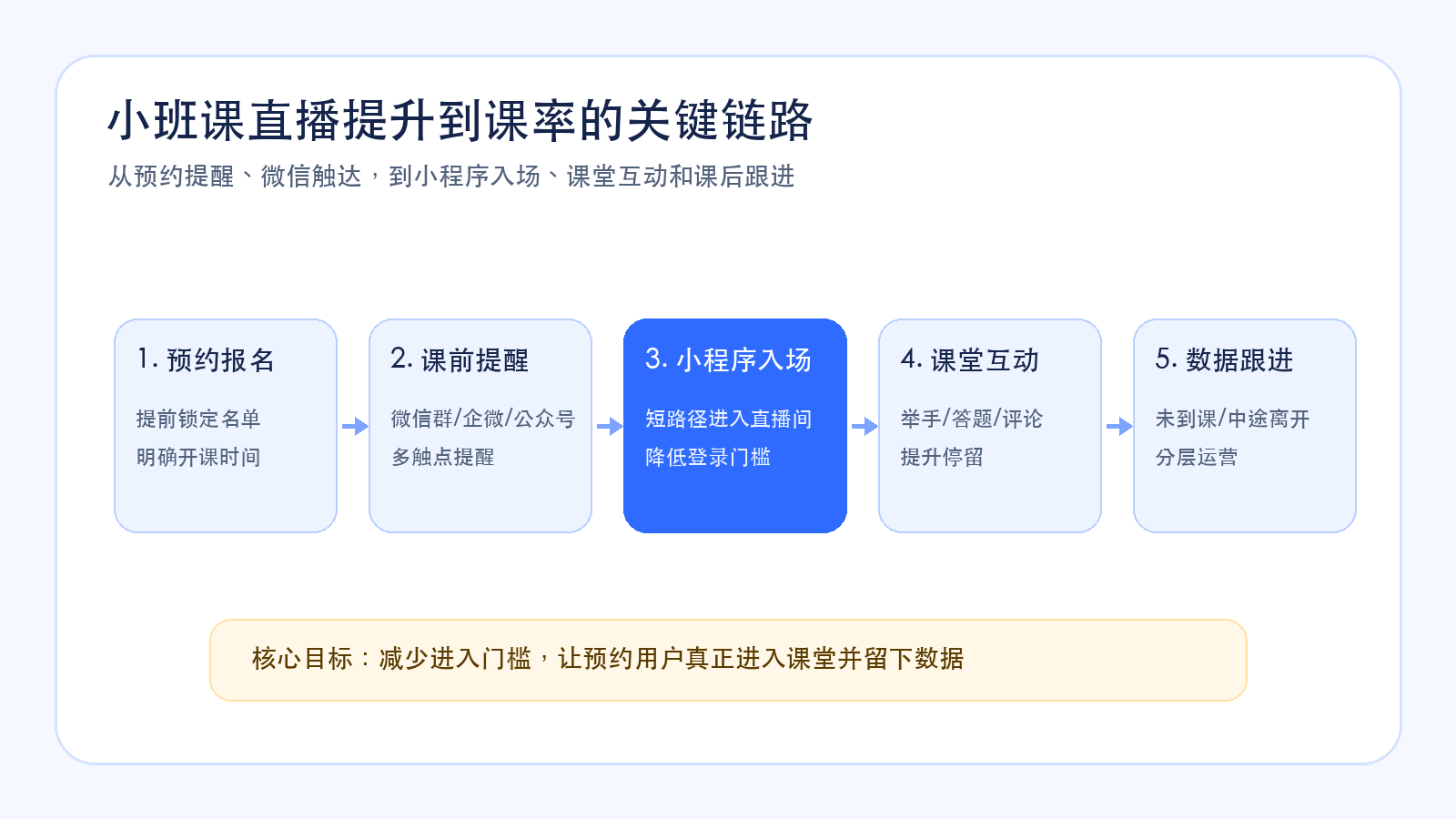
In short: improving small-class live attendance is not simply about sending more notifications. Users need to know when the class starts, where to enter, what to do after entering, and how the institution will follow up if they miss the class. Reservation reminders, WeChat reach, mini program entry, classroom interaction, and data statistics need to be placed in the same operations flow.
01 Why Do Users Reserve a Small-Class Live Session but Not Attend?
There is often a gap between reservation and attendance.
Parents may reserve a class after seeing an activity poster or group message, but get interrupted on the day of class. Students may remember there is a class but not know where to enter. Parents may have received the notification but need to search chat history for the link. Some users may enter the live room but leave if the first few minutes do not engage them.
These problems are not only about course content.
Small-class live attendance is often affected by three factors: whether reminders are timely, whether the entry path is short enough, and whether the classroom experience can keep users after they enter.
If institutions only look at registration numbers and do not manage reminders and entry after reservation, attendance rate will fluctuate.
02 What Should Reservation Solve Before Class?
Reservation is not just collecting a list.
For small-class live streaming, reservation has at least three layers of value: confirming user intent, supporting follow-up reminders, and helping instructors and operations teams know who may attend.
The reservation process can record user identity, class session, class time, course type, and source channel. This allows institutions to send targeted reminders before class instead of sending the same group message to everyone.
For example, users who reserved but have not entered can receive priority reminders before class. Users who repeatedly reserve but miss class can be followed up by advisors. Users who have entered live rooms but did not convert can continue to be nurtured in later sessions.
Reservation data becomes meaningful only when it is connected with reminders, entry, and after-class follow-up.
03 How Should WeChat Private-Domain Reminders Be Designed?
WeChat private-domain channels are suitable for pre-class reach.
Parents are usually already connected with the institution through WeChat groups, enterprise WeChat, official accounts, or mini programs. Institutions can set multiple reminders around class time, such as explaining the class topic one day before, reminding users to prepare a few hours before, and reminding them to enter 10 minutes before class.
But reminders are not better simply because there are more of them.
A good reminder should clearly tell users three things: what problem the class solves, when it starts, and where to enter. For small classes, the reminder can also include class preparation, such as whether the camera is needed, whether materials should be prepared, and whether there will be interaction.
If the reminder only says “class starts tonight, remember to attend”, users still need to find the course value and entry themselves. The more specific the reminder, the easier it is for users to attend.
04 Why Can Mini Program Live Rooms Reduce Entry Friction?
When users enter a course from WeChat private-domain channels, the entry path should be as short as possible.
If users need to download an App, copy a link, log in again, and search for the course, the path becomes longer. For trial classes, public courses, and small-class live sessions, every additional step can cause drop-off.
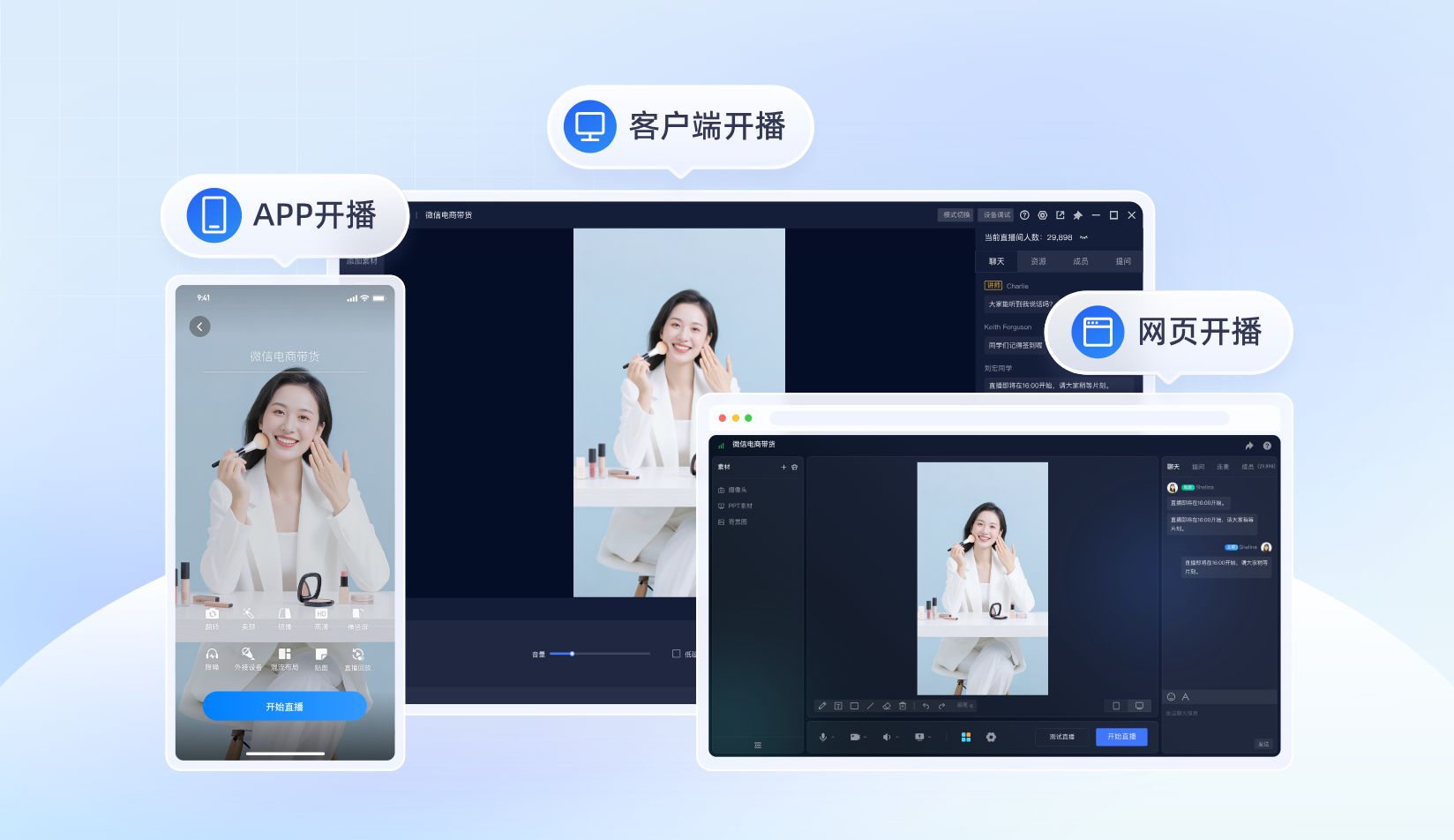
A mini program live room is suitable as a lightweight entry. Users can enter the live room from WeChat groups, enterprise WeChat, official accounts, or mini program messages, then complete reservation, viewing, interaction, and course conversion.
This does not mean institutions need to move every business process into the mini program.
A more reasonable approach is to use the mini program for live viewing and class entry, while existing Apps, academic systems, and order systems continue to handle long-term learning, scheduling, and fulfillment. The mini program brings users into the classroom, and existing systems carry follow-up service.
05 Classroom Interaction Determines Whether Users Stay
Improving attendance is not only about whether users enter the live room. It is also about whether they stay in the class.
If a small-class live room only provides one-way explanation, users can easily become observers. A real small class should make students feel that they are inside a classroom, not just watching a video.
Therefore, classroom interaction should happen early.
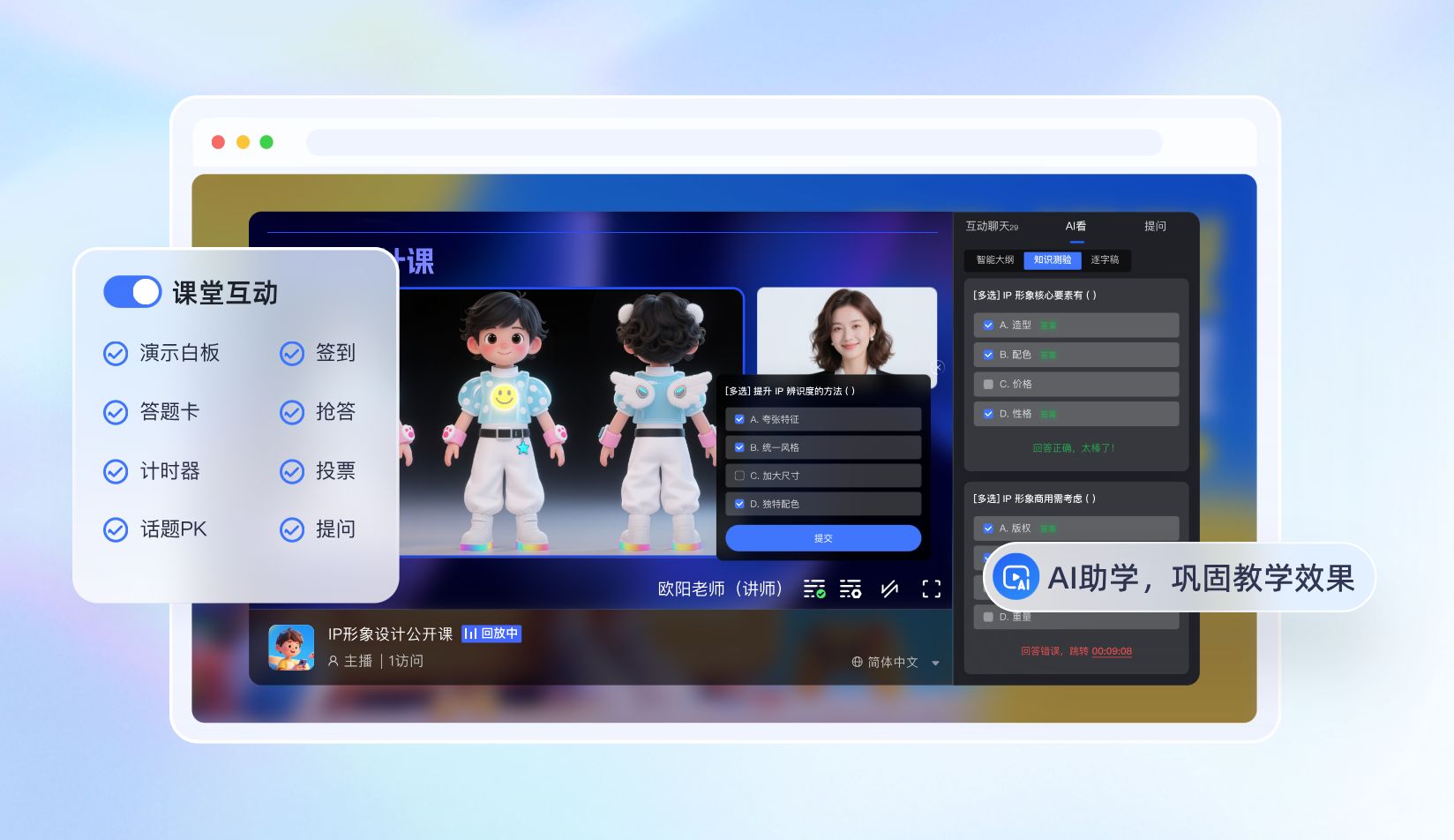
The instructor can set check-in, questions, hand raising, comments, or small tasks at the beginning, helping students enter the learning state in the first few minutes. During the class, Q&A, co-hosting, courseware interaction, and material delivery can maintain participation. In parent-facing sessions, comments and Q&A can also collect concerns and naturally lead to course explanation.
Interaction is not only about liveliness. It helps instructors understand which students are actually participating.
06 Data Feedback Helps Follow Up Even with Users Who Did Not Attend
Attendance management should not only happen before the class starts.
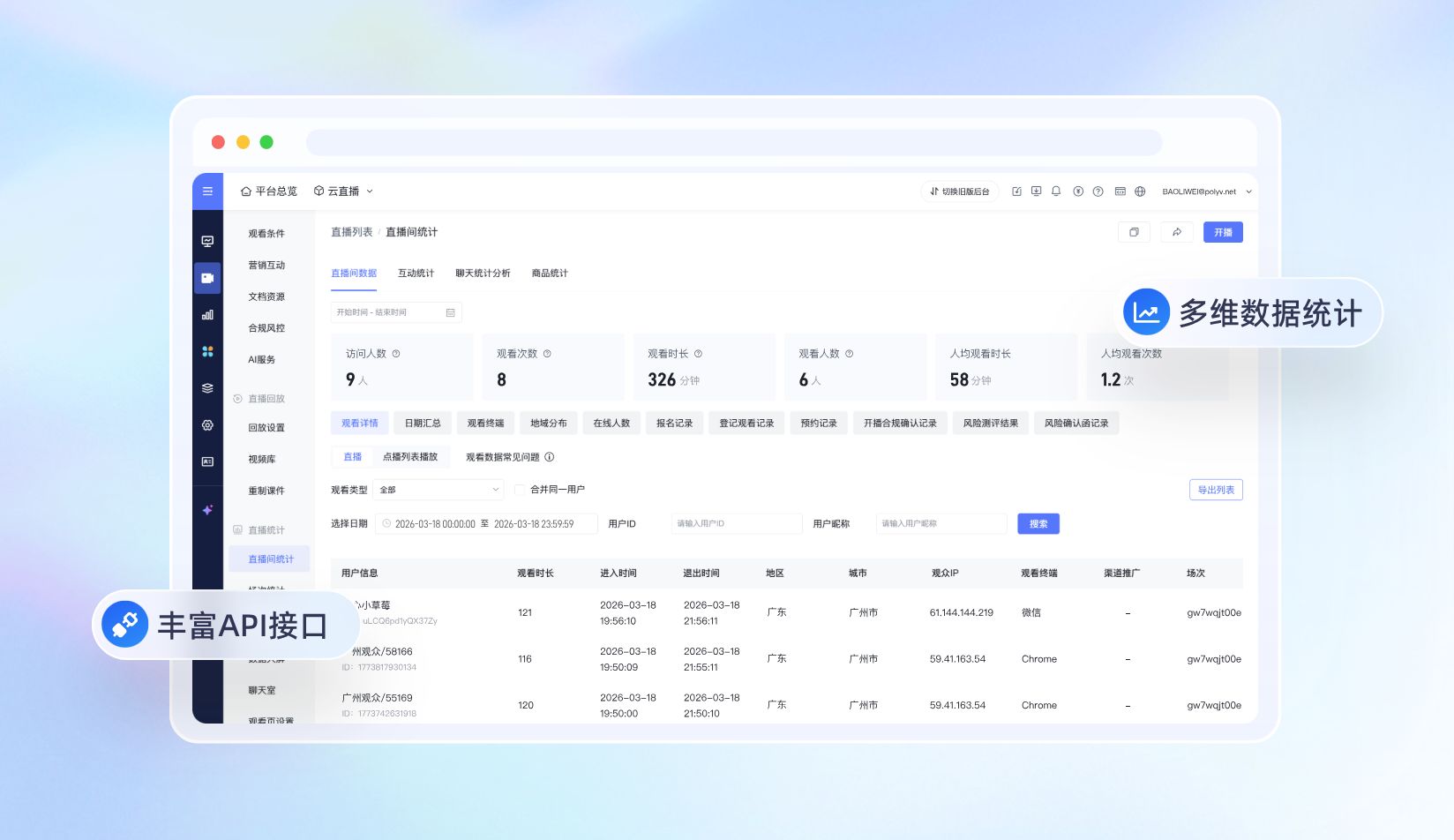
After the live session, institutions need to know who reserved but did not attend, who entered but left quickly, who watched key parts, who participated in interaction, who clicked course cards, and who needs advisor follow-up.
These data points determine the next actions.
Users who reserved but did not attend can receive replay links or second reservation opportunities. Users who entered but left can receive highlights or course value explanations. Users who participated but did not enroll can receive instructor or advisor Q&A. Highly engaged users can be recommended advanced courses or systematic programs.
If viewing, interaction, course card clicks, and user identity can return to customer operation systems, academic systems, or dashboards, institutions can upgrade attendance management from manual reminders to segmented operations.
07 How Can POLYV Support Attendance Improvement?
For small-class live attendance management, POLYV can provide live viewing, viewing reservation, classroom interaction, course or product recommendation, and data statistics, helping education institutions connect pre-class reminders, in-class interaction, and after-class review.
In WeChat private-domain and mini program scenarios, POLYV supports native WeChat mini program integration as well as uni-app framework integration. Customers can choose among the Polyv viewing plugin, native live-player, and video player according to their mini program qualifications, player capabilities, and technology stack.
For institutions that already have Apps, mini programs, academic systems, course stores, order systems, or customer operation systems, POLYV can also use live SDK, Web viewing page SDK, Web interaction receiving SDK, player capabilities, and APIs to embed reservation, viewing, interaction, course cards, payment jumps, and data feedback into existing business workflows.
In other words, institutions do not necessarily need to rebuild a complete platform. They can use the small-class live room as an entry point and add attendance reminders, lightweight entry, classroom interaction, and after-class data capabilities around it.
FAQ
1. If small-class live attendance is low, what should be optimized first?
Start with the entry path. Check whether users know the class time, whether the entry is short enough, whether reminders are clear, and whether users can participate quickly after entering the live room. Many attendance problems are caused by long paths rather than unattractive courses.
2. Are WeChat group reminders enough?
WeChat group reminders are useful for reach, but may not be enough. A better approach is to combine WeChat groups, enterprise WeChat, official accounts, mini program messages, and live reservations, while recording reservation, entry, and viewing data.
3. Will a mini program live room conflict with an existing App?
Not necessarily. The mini program can carry lightweight entry and conversion, while the App continues to carry long-term learning and fulfillment. Through APIs and business workflows, the two can reduce the friction of entering live classes.
About POLYV
POLYV is a leading enterprise-grade video SaaS brand. From 2020 to 2025, POLYV ranked No. 1 on the Enterprise Live Streaming Service Provider Ranking for six consecutive years. Its core products and services include low-latency live streaming, video on demand, MR live streaming, digital humans, and live streaming studios, providing enterprises with integrated services such as private-domain video technology and platforms, content operations, and live streaming operations and execution for digital transformation.
Since its founding in 2013, POLYV has served the CCTV Spring Festival Gala live broadcast for six consecutive years. It has also provided video live streaming systems and services for large enterprises and financial institutions, including China Construction Bank, China Everbright Bank, Bank of Ningbo, Kingdee, Tencent, Huawei, iFLYTEK, Midea, and NetEase.