
How Can a Small-Class Parent Meeting Live Session Drive Conversion? From Classroom Review to Course Enrollment
A small-class parent meeting live session is not just a report meeting. It connects classroom review, learning path explanation, parent Q&A, course cards, and follow-up data to carry course enrollment.
A small-class parent meeting live session is not simply about putting instructors and parents into one live room.
For education institutions, the real value of a parent meeting is turning “the child has attended class” into “parents understand why continued learning matters”. If the session only reports classroom performance, parents may feel the instructor is responsible, but they may not move into enrollment or renewal decisions.
A better small-class parent meeting live session connects classroom review, learning path explanation, parent Q&A, course explanation, and enrollment conversion. Classroom experience builds trust, the parent meeting explains the reason for continued learning, and course cards or consultation entries carry the next action.
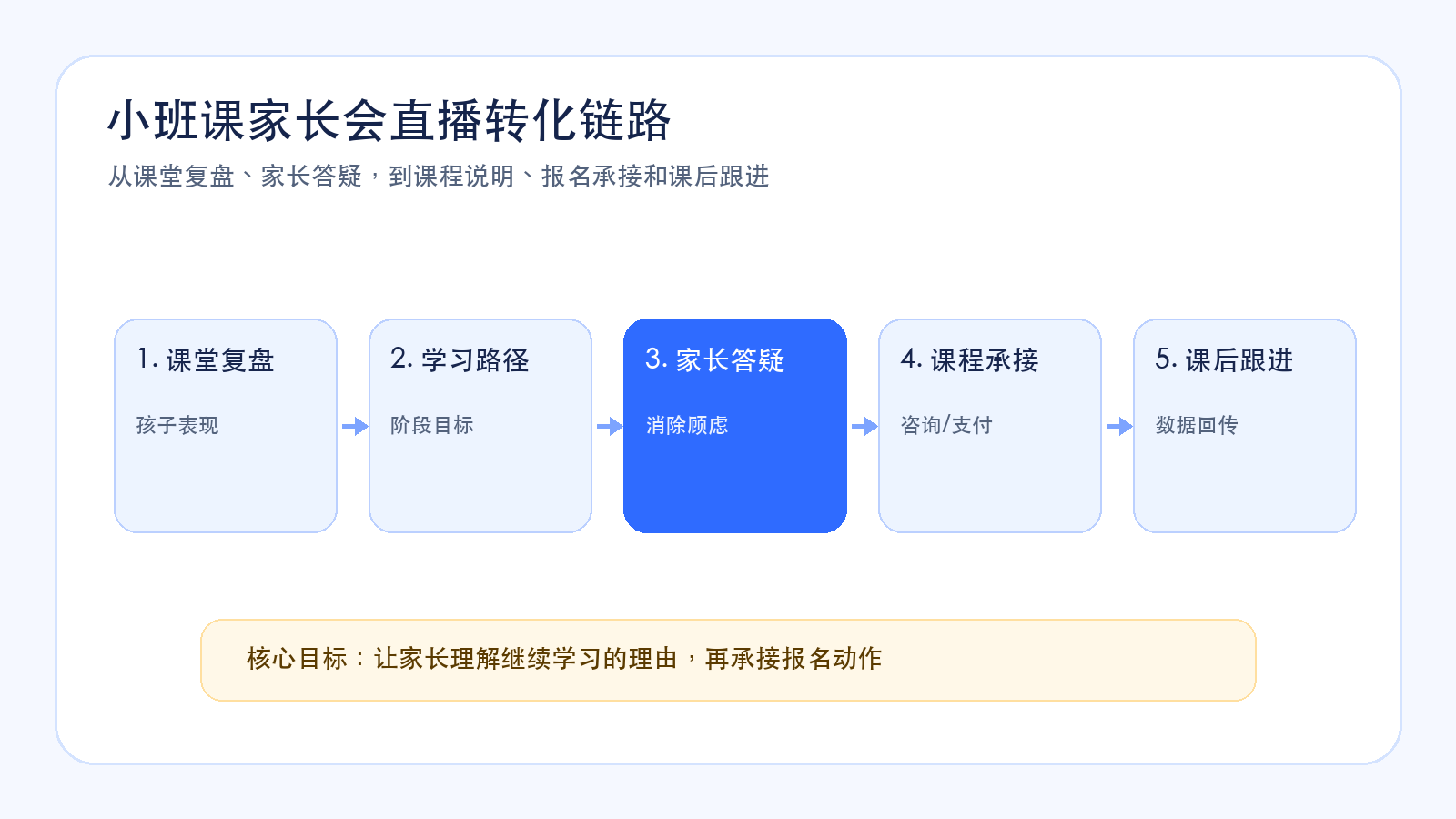
In short: a small-class parent meeting live session is not just a report meeting. It is a communication scene that moves from teaching trust to course conversion. Instructors should explain classroom performance, future learning paths, and service arrangements, while the live room should carry consultation, reservation, payment, and after-class follow-up.
01 Why Is Parent Meeting Live Streaming Suitable for Small-Class Conversion?
Small-class course decisions are rarely driven only by discounts.
Parents care about whether the child is suitable for continued learning, whether the instructor understands the child, whether the course system is clear, and whether follow-up service can keep up. Parent meeting live streaming is suitable for answering these questions in one focused session.
Compared with ordinary live course sales, the parent meeting has a stronger trust base. Parents have already seen the child attend class, and the instructor can review based on real classroom performance. It is easier to explain learning paths and course arrangements at this moment than simply sending a purchase link.
Therefore, the key is not to push courses immediately, but to explain why continued learning is necessary.
02 What Should Classroom Review Cover?
Classroom review should not stop at “the child performed well”.
More effective review should cover participation, task completion, interaction performance, learning interest, and stage problems. For example, whether the child was willing to answer questions, whether tasks were completed, whether the child could follow the instructor, and which ability points need further training.
These details make parents feel that the instructor truly sees the child.
After parents understand the child’s current status, course recommendations become more natural. They become learning suggestions based on classroom observation, not pure sales.
03 Learning Path Is the Core of Parent Meeting Conversion
Many parents hesitate not because they are not interested, but because they do not understand the next learning path.
The live parent meeting needs to explain how trial classes, small classes, systematic courses, and advanced courses connect. What stage is the child currently in? What comes next? How long does it take to see staged outcomes? What class frequency and after-class service are needed?
Once the learning path is clear, course cards become easier to understand.
If a course card only displays the course name and price, parents still need to judge whether it fits. If the course card corresponds to the stage goals explained in the live session, parents can understand why this class type is recommended.
04 When Should Course Cards and Consultation Entries Appear?
Course cards should not appear at the beginning of the parent meeting.
A better timing is after the instructor explains classroom review, learning path, and service arrangement. At this point, parents already understand the course value, so the next action is easier to take.
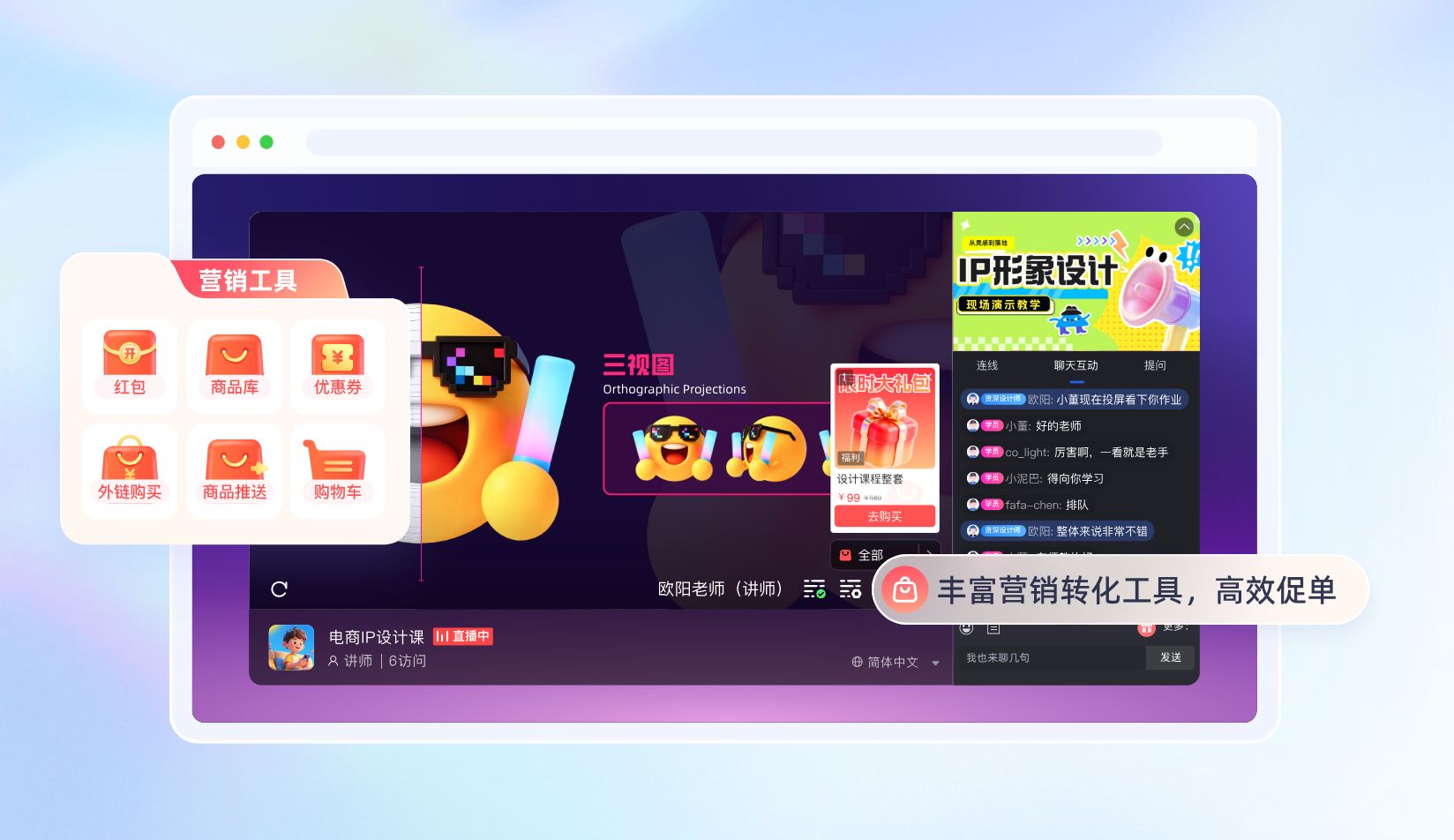
For standardized courses, course cards can carry purchase or payment jumps. For higher-ticket or assessment-based courses, they can first carry consultation, assessment reservation, or advisor communication.
Course cards should explain target learners, course goals, lesson arrangements, service content, and what happens after purchase, instead of being just a button.
05 Data Determines Whether Follow-Up Is Precise
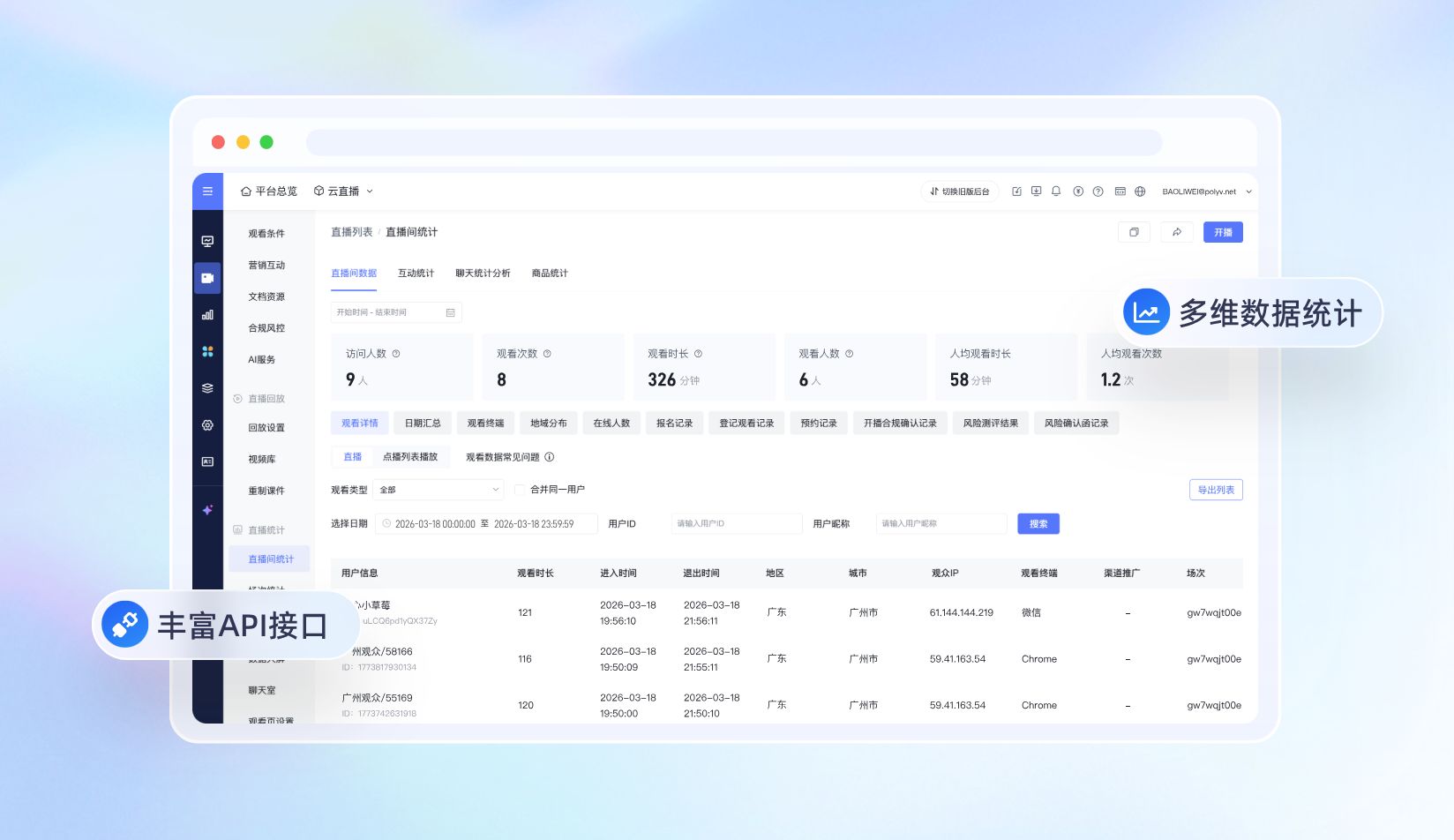
After the parent meeting live session, institutions need to know which parents watched completely, which parents asked questions, which parents clicked course cards, and which parents entered consultation but did not purchase.
These data determine follow-up strategy.
Parents who watched completely but did not click course cards may need additional course benefit explanations. Parents who clicked course cards but did not pay may need advisors to explain class types and pricing. Parents who actively asked questions may already be in a strong decision stage.
If these data return to customer operation systems, order systems, or academic systems, follow-up service and conversion will be more grounded.
06 How Can POLYV Support Parent Meeting Live Streaming?
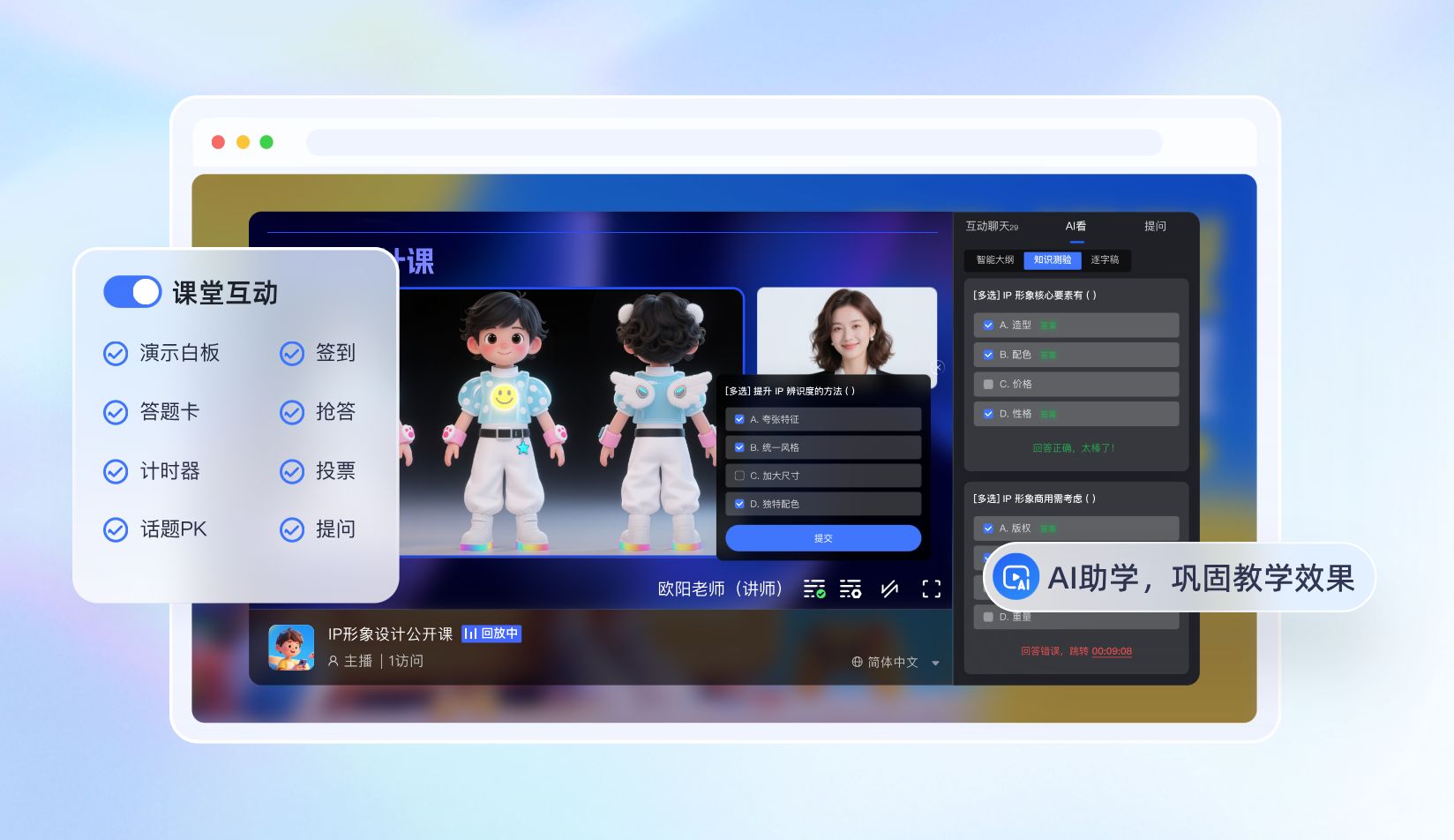
For small-class parent meeting live sessions, POLYV can provide live viewing, classroom interaction, course or product recommendation, replay, and data statistics, helping institutions connect parent communication and course conversion.
In WeChat private-domain and mini program scenarios, POLYV supports native WeChat mini program integration as well as uni-app framework integration. Customers can choose among the Polyv viewing plugin, native live-player, and video player according to their mini program qualifications, player capabilities, and technology stack.
For institutions that already have Apps, mini programs, academic systems, course stores, order systems, or customer operation systems, POLYV can also use live SDK, Web viewing page SDK, Web interaction receiving SDK, player capabilities, and APIs to embed viewing, interaction, course cards, consultation entries, and data feedback into existing workflows.
FAQ
1. Is a parent meeting live session suitable for direct course sales?
It can carry enrollment actions, but hard selling at the beginning is not recommended. A better approach is to explain classroom review and learning paths first, then show course cards, consultation, or payment entries naturally.
2. Should parent meeting live sessions have replay?
Yes. Parents who missed the session can watch later, and parents who attended can review course arrangements and service explanations. Replay data also supports segmented follow-up.
3. How is a parent meeting live session different from a public class live session?
Public classes focus more on content acquisition. Parent meeting live sessions focus more on trust communication and conversion. They need to connect with the child’s classroom performance, not just general course selling points.
About POLYV
POLYV is a leading enterprise-grade video SaaS brand. From 2020 to 2025, POLYV ranked No. 1 on the Enterprise Live Streaming Service Provider Ranking for six consecutive years. Its core products and services include low-latency live streaming, video on demand, MR live streaming, digital humans, and live streaming studios, providing enterprises with integrated services such as private-domain video technology and platforms, content operations, and live streaming operations and execution for digital transformation.
Since its founding in 2013, POLYV has served the CCTV Spring Festival Gala live broadcast for six consecutive years. It has also provided video live streaming systems and services for large enterprises and financial institutions, including China Construction Bank, China Everbright Bank, Bank of Ningbo, Kingdee, Tencent, Huawei, iFLYTEK, Midea, and NetEase.