Cloud Multi-Channel Distribution Stable Operation Solution for Multi-Platform Live Streaming by Apparel Brands
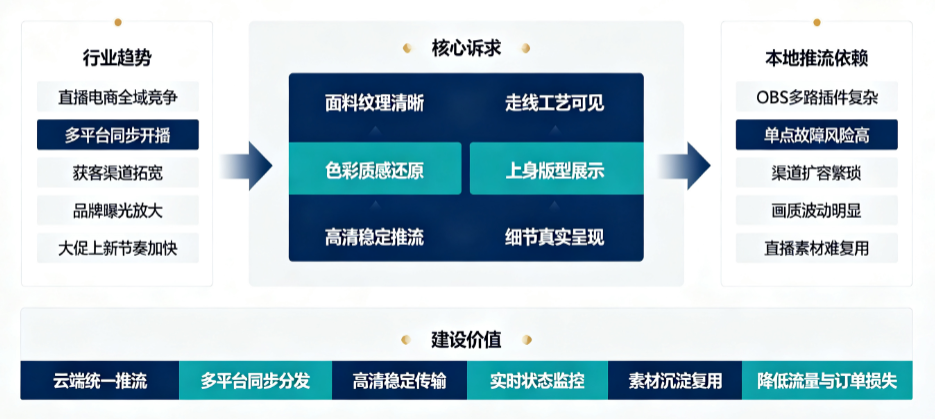
As the live-streaming e-commerce industry enters a new phase of cross-platform competition, simultaneous live streaming across multiple platforms has become a core operation model for apparel brands to expand customer acquisition channels, boost sales volume and raise brand exposure. Apparel live streaming heavily relies on detailed real-scene presentation. Fabric texture, stitching craftsmanship, color rendering and fitting effects are critical factors that drive consumers to place orders, imposing stringent requirements on live stream clarity, transmission stability and detail restoration. At present, most apparel brands still adopt the traditional local stream push model, using OBS plug-ins and local software to realize multi-platform distribution. This approach suffers from prominent drawbacks including high single-point failure risks, cumbersome channel expansion, volatile image quality and low reusability of live streaming materials. Especially during major promotion events, new product launches and special live sessions, live stream interruptions or blurry footage will directly trigger traffic slumps and order losses, hindering the large-scale development of brands’ cross-platform live streaming businesses. Against this backdrop, replacing local stream push and building an intelligent cloud-based multi-platform live streaming system has become an essential demand for apparel brands to improve live streaming quality and operational efficiency.
I. Operational Challenges of Multi-Platform Live Streaming Faced by Apparel Brands
(1) Concentrated Risks of Local Stream Push and Low Efficiency in Channel Expansion
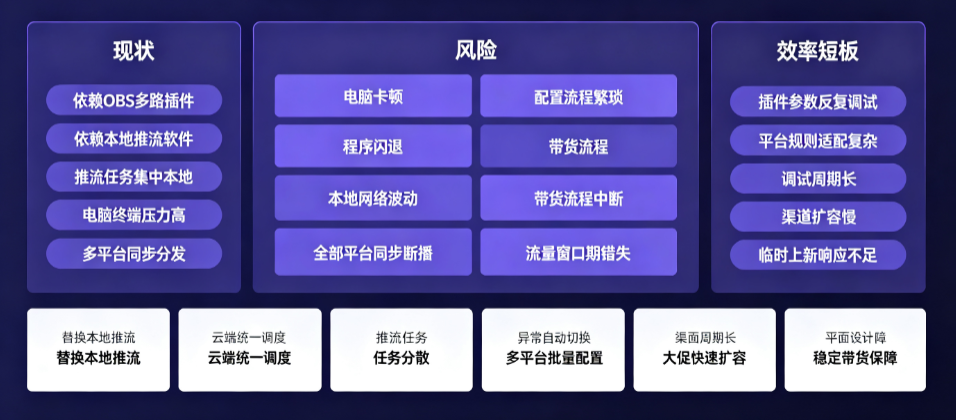
Most apparel brands currently rely on OBS-Multi-RTMP plug-ins and local multi-stream push software for simultaneous multi-platform live streaming. All stream push tasks run on local computers, creating severe single-point failure risks. Any issues such as computer lagging, program crashes or local network fluctuations during live streaming will cut off broadcasts simultaneously across all platforms including Douyin, WeChat Channels and Kuaishou, directly halting sales. In addition, when brands need to rapidly open new live channels for seasonal new arrivals or shopping festivals, operators have to repeatedly adjust plug-in parameters and adapt to platform rules locally. The complicated configuration and long debugging cycle prevent timely channel expansion to seize traffic windows, resulting in missed prime sales opportunities.
(2) Unstable Image Transmission and Heavy Loss of Traffic and Orders
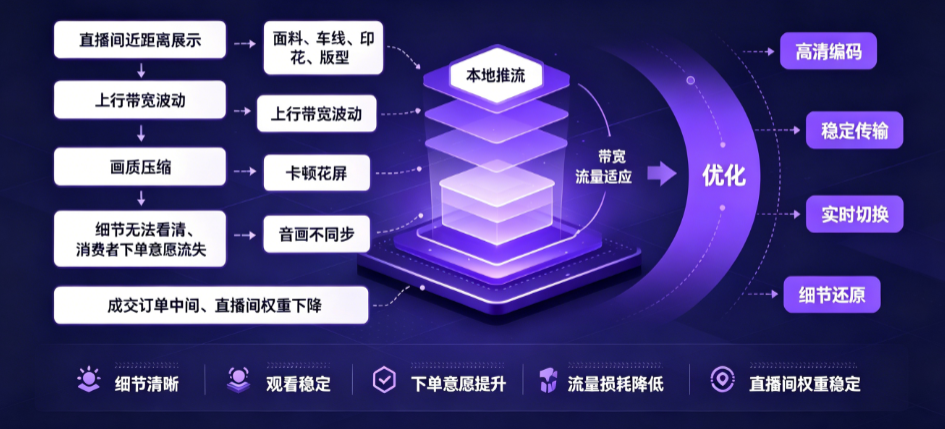
Unlike general live-stream sales, the core competitiveness of apparel live streaming lies in refined real-scene demonstration, which requires close-up display of fabric texture, stitching details, printing effects and tailoring. Therefore, high standards for video quality and transmission stability are mandatory. Traditional local stream push lacks professional network optimization capabilities. Slight fluctuations in the uplink bandwidth of live studios may lead to heavily compressed blurry images, stuttering, screen tearing and audio-video desynchronization. These problems make it impossible to clearly showcase apparel details and reduce consumers’ willingness to purchase. Particularly during prime evening live streaming hours, unexpected broadcast interruptions or degraded image quality will not only cause immediate loss of online viewers and suspended transactions, but also hurt the weight of live rooms on each platform, resulting in long-term traffic losses.
(3) Dispersed Live Streaming Materials and Low Reuse Rate for Ad Placement
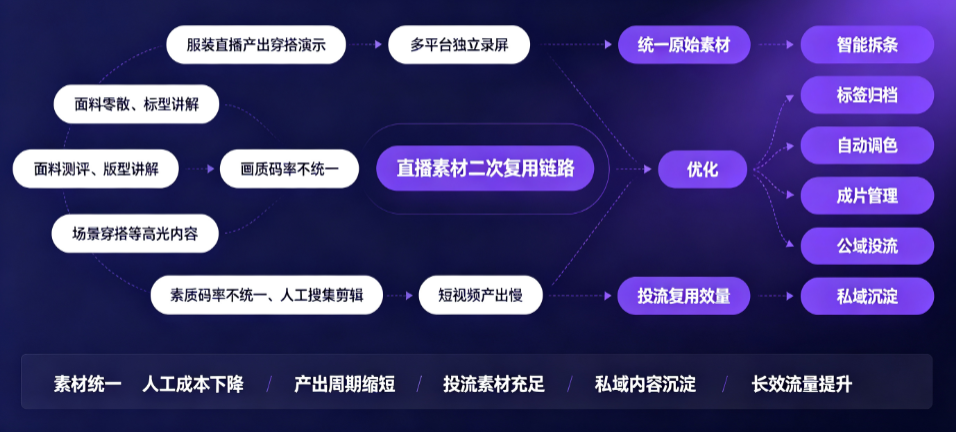
Each apparel live session generates abundant high-quality content including outfit demonstrations, fabric evaluations, tailoring explanations and scenario-based styling, which serves as core materials for public domain ad placement, short video content seeding and private domain content accumulation. Nevertheless, the traditional local multi-stream push model only supports independent screen recording on each platform. Recorded videos from different channels feature inconsistent standards in image quality, bitrate and resolution, making standardized original live footage unavailable. Operation teams need to collect scattered recording files across platforms and conduct separate editing, color grading and image optimization. The tedious material sorting process incurs high labor costs and lowers the output efficiency of short videos, making it difficult to reuse live content repeatedly for sustained traffic monetization.
II. Efficient Multi-Platform Live Streaming Operation Strategies for Apparel Brands
(1) Cloud Multi-Channel Distribution Enables Rapid Live Channel Expansion
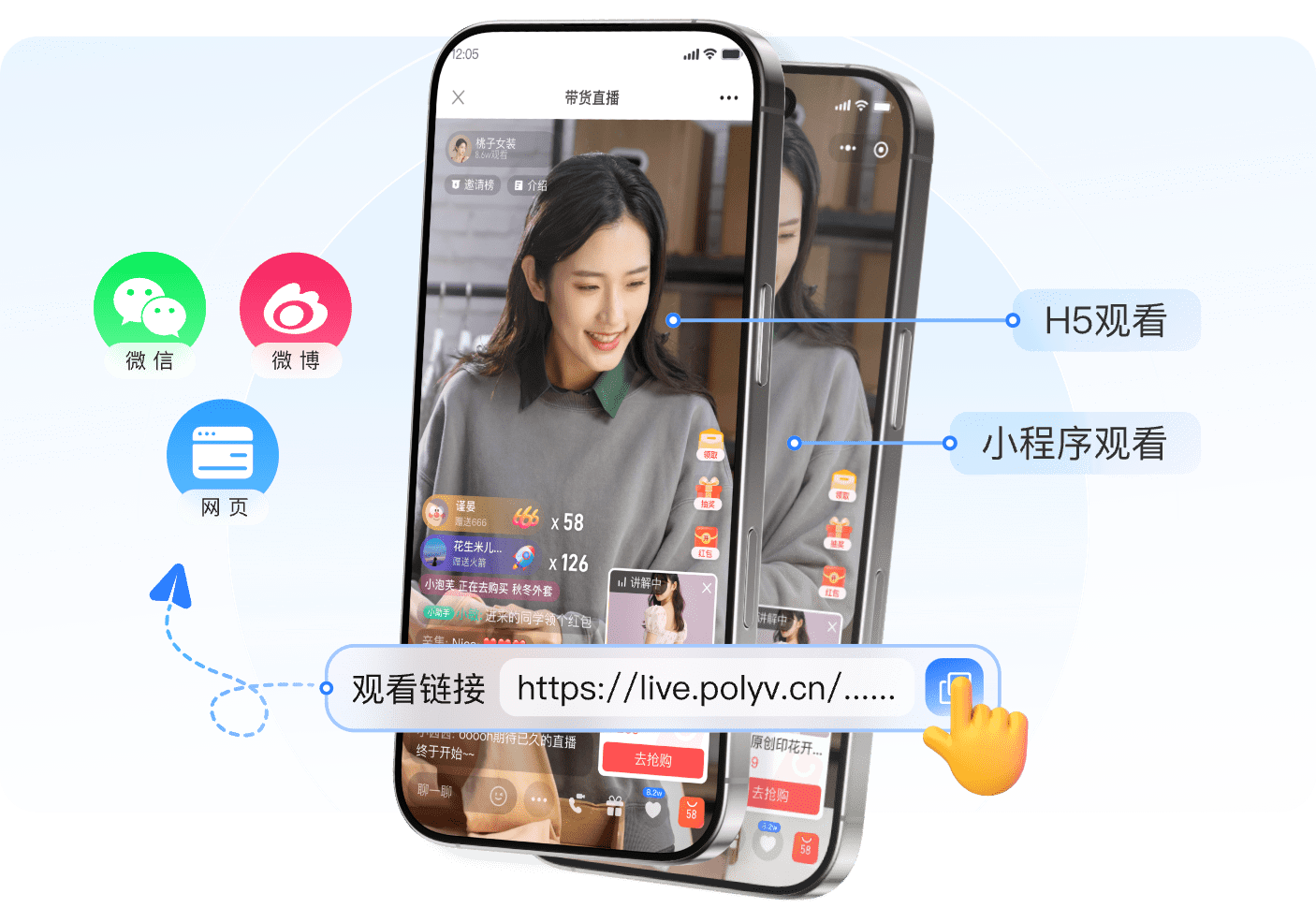
Powered by mature cloud distribution capabilities, PolyV adopts an architecture where one source signal is uploaded to the cloud for replicated multi-channel distribution. Brands only need to push one high-definition original live stream to the cloud. The system automatically replicates video streams, adapts encoding parameters and distributes content across platforms in the cloud. One live source can support synchronous stream output to up to 50 platforms, covering mainstream e-commerce live streaming platforms such as Kuaishou and WeChat Channels. To add new live channels, operators do not need to debug plug-ins or modify parameters locally. They only complete one-click configuration of stream push addresses in the backend to finish channel expansion quickly, greatly shortening deployment cycles. Moreover, all distribution tasks run on the cloud, eliminating platform-wide simultaneous broadcast interruptions caused by local computer lag or network instability. This significantly reduces live failure risks and equipment maintenance workload.
(2) Global CDN Optimization Restores Apparel Details in High Definition
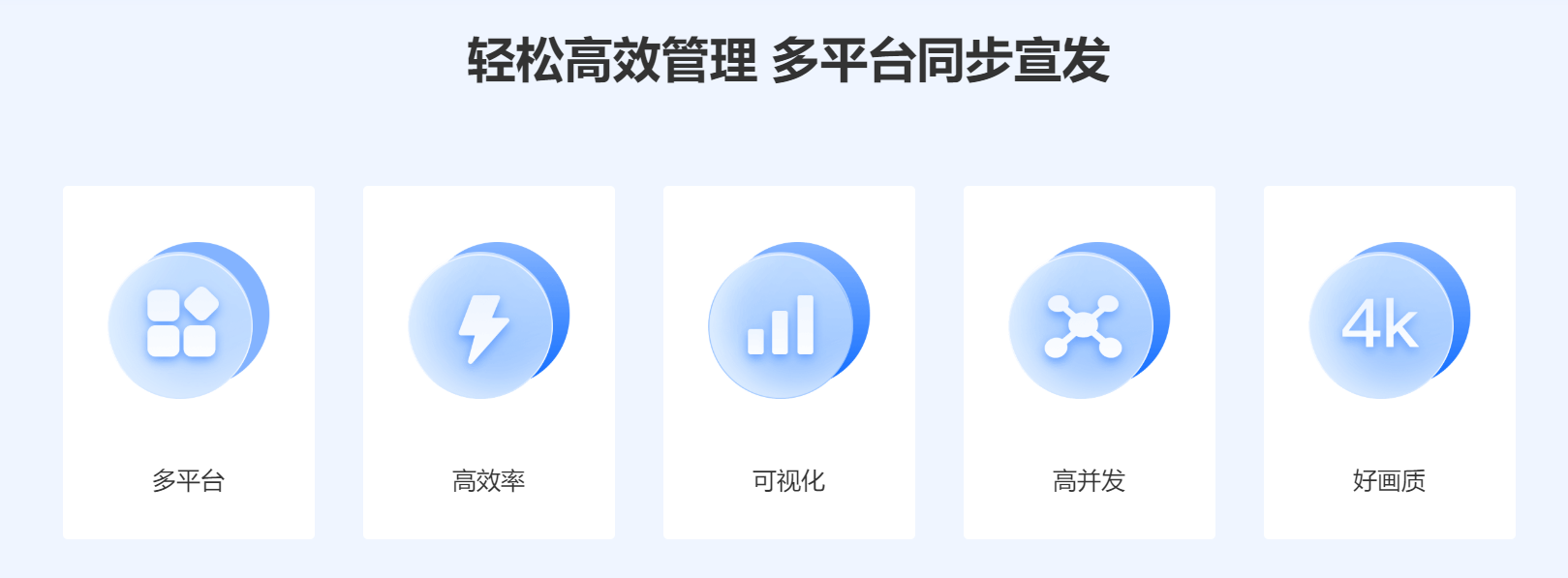
Supported by PolyV’s globally distributed CDN network, together with adaptive bitrate adjustment, intelligent weak network compensation and image anti-shake optimization technologies, the solution comprehensively optimizes live transmission links. Catering to the demand for refined presentation in apparel live streaming, the system dynamically adapts to uplink network conditions of live studios. It intelligently adjusts encoding parameters amid bandwidth fluctuations to avoid blurriness, stuttering and screen tearing, and accurately restores core details including fabric texture, stitching craftsmanship, garment colors and fitting effects. The solution ensures consistent high-definition live streaming during prime sales hours, prevents sudden broadcast interruptions and image quality degradation, retains live room traffic and order conversions, maintains live room weight on each platform, and lays a solid foundation for brands’ long-term live streaming operations.
(3) Cloud Homologous Recording and AI Editing Boost Ad Placement
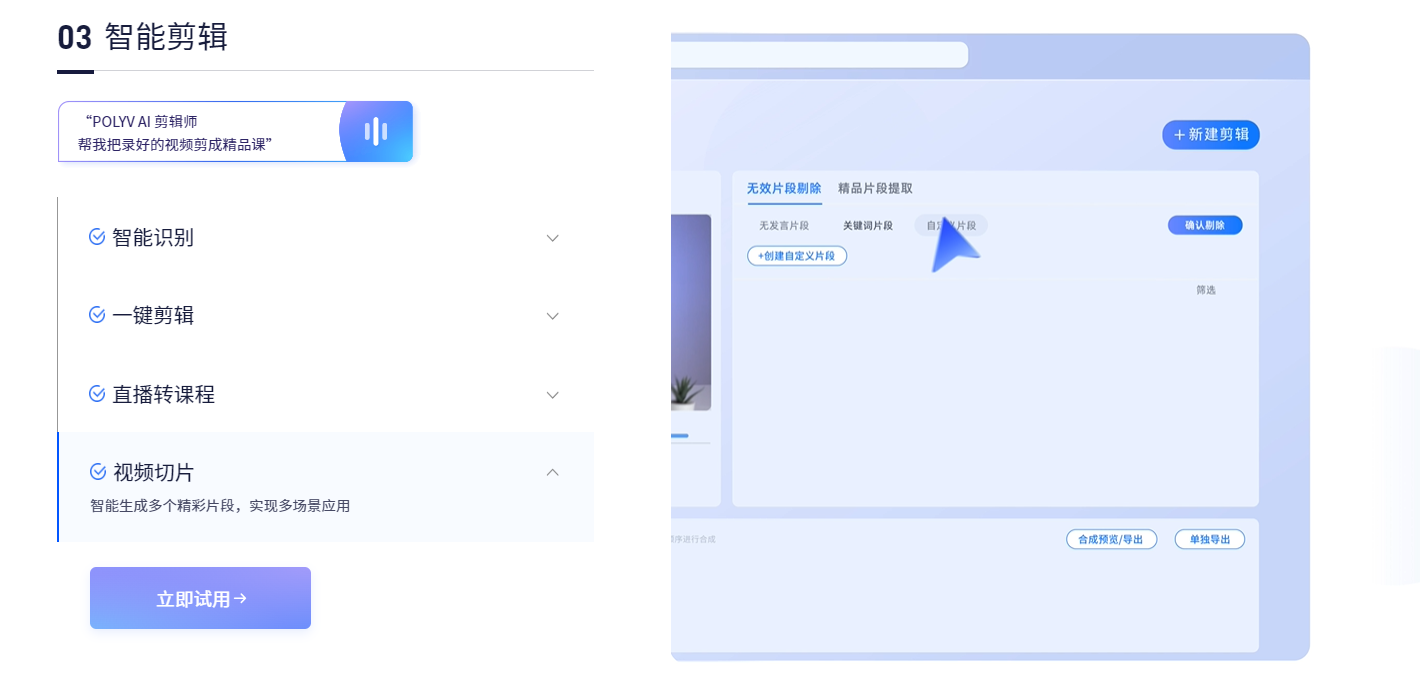
Based on the original live signals uniformly received by the cloud, full standardized high-definition recording is realized. Live materials from all channels share identical sources and consistent standards for image quality, bitrate and resolution, solving the problem of inconsistent footage quality from separate platform recording. Combined with PolyV’s AI intelligent editing capabilities, the system can automatically identify highlight segments during live streams, including outfit introductions, fabric evaluations, bestseller showcases and promotional flash sales. It intelligently cuts, edits and synthesizes short video materials. Operators are freed from manual segment screening, editing and color grading. Labor costs for content operation are drastically reduced, and large volumes of high-quality short seeding videos can be produced rapidly. These materials support public domain ad placement, account updates and private domain content seeding, forming a closed-loop content operation system where “one live stream enables multiple rounds of reuse and continuous traffic generation”.