
How Can Chinese Enterprises Going Global Build a Global Live Training Platform? 2026 Global Live Training Solution for Enterprises Expanding Overseas
Many Chinese enterprises have set up overseas branches, with distributors and store employees spread across dozens of countries and time zones. Headquarters need to deliver new product training, policy announcements and institutional briefings to global teams on a regular basis. When live training systems that operate smoothly domestically are moved overseas, a new set of challenges emerge. Social tools vary from country to country, and access authentication rules differ widely. Cross-border network links span oceans, audiences are located in multilingual regions, and live rooms operated by individual branches run separately. These issues pile up at the solution selection stage. For many overseas-expanding enterprises, digital training projects have been underway for half a year yet remain stuck in repeated remedial work.
I. Pain Points for Chinese Enterprises Going Global When Building a Global Live Training Platform
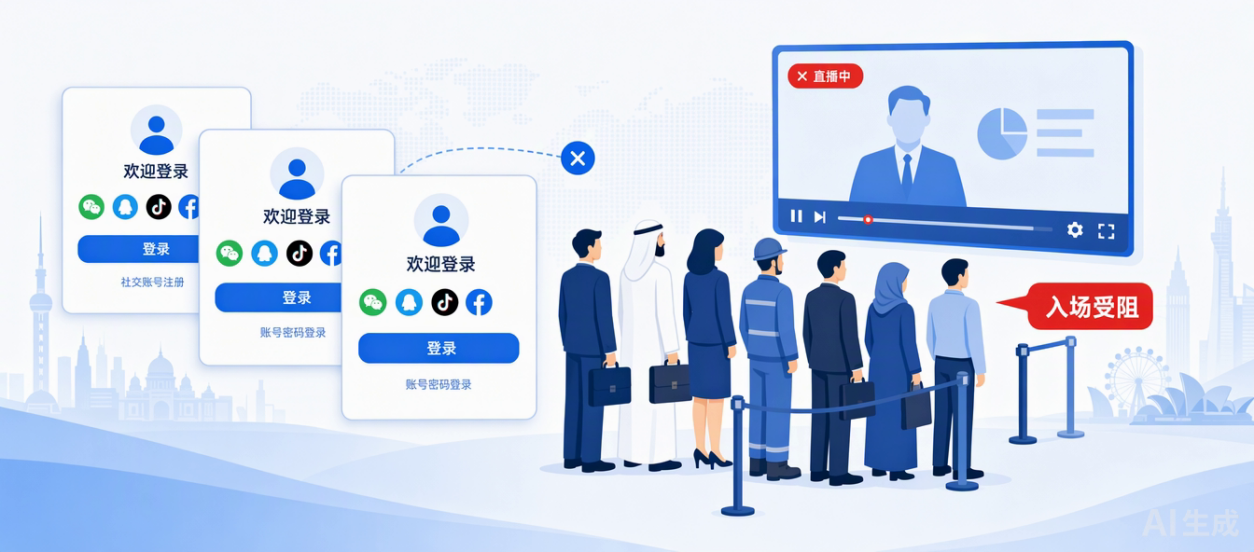
(1) Access Tied to Social Accounts, Blocking Employees and Distributors from Entry
Most mainstream overseas live streaming and meeting tools use local social accounts or corporate emails as access credentials, with independent registration rules for systems such as Teams and WhatsApp. The majority of overseas distributors are small business owners, and their personal accounts are used for daily business operations. By the time they complete account registration and identity verification, the session may have already started for ten minutes, while many participants on the attendance list are still stuck on the login page. Employees in some regions work with limited equipment and network conditions, leading to even longer waiting times during verification. This creates a notable gap between actual attendance and the official participant list.
The access process places a heavy workload on organizational teams. Before every new product briefing or policy rollout, HR and channel teams need to send registration invitations and installation guides to different countries in advance, and troubleshooting takes up a large share of project preparation hours. New distributors lose enthusiasm for participation amid repeated registration attempts, and the global outreach stops at the entry stage before the training content begins.
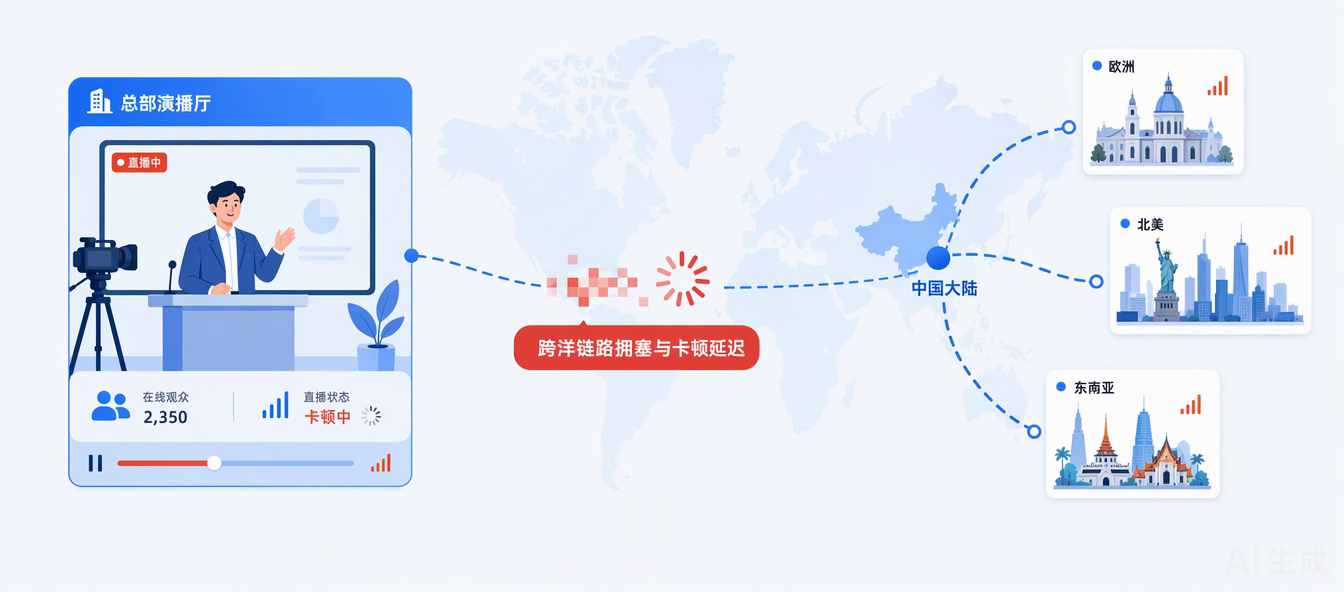
(2) Poor Quality of Cross-Border Links Undermining Experience for Global Synchronous Sessions
When headquarters host sessions from domestic studios for audiences across Europe, the Americas, the Middle East and Southeast Asia, signals travel through multiple public network nodes for transoceanic transmission. When thousands join simultaneously during peak hours, the waiting time for the first frame to load extends as nodes become congested. Screenshots of blurry footage and audio-video desync flood group chats for local sites. A global synchronous session intended to run in unison is disrupted by unstable links.
Interactions are even more sensitive to latency. When overseas employees join the live stream to ask questions, their voices take several seconds to reach headquarters, and the lecturer’s response takes another round trip. A single question-and-answer exchange can take nearly half a minute, discouraging more participants from raising hands over time. There is also a delay between the end of live streaming and the release of recordings. Local teams resort to asynchronous self-study, reducing the sense of engagement in synchronous sessions and making it hard for headquarters to maintain direct communication rhythms with frontline teams.
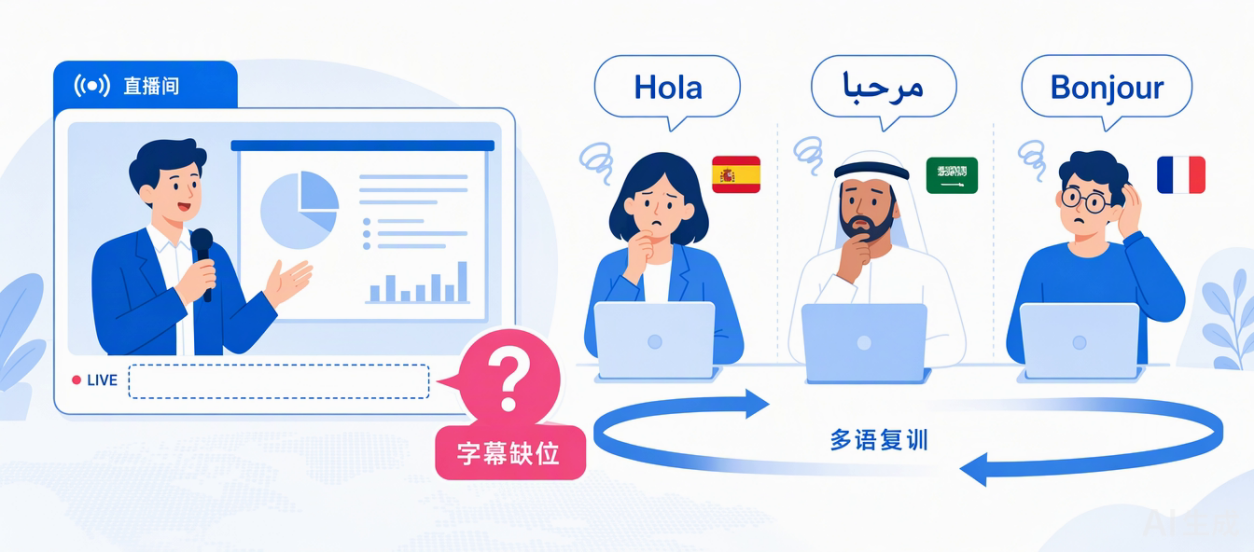
(3) Diverse Local Languages Creating Barriers to Understanding Synchronous Briefings
A single briefing covers multiple regions with vastly different languages, including Spanish, Arabic and French. Headquarters lecturers deliver sessions in Chinese or English, with heavy use of industry terminology. Local staff have varying proficiency in the source language, so they often only grasp half of the critical information required for implementation after a two-hour session.
Live streaming only outputs source-language audio, with no supporting translated subtitles. Local teams have to organize additional multilingual retraining after each session, repeating the same content and consuming extra lecturer and local working hours. Misunderstanding of product selling points and rebate policies by distributors carries over to end markets, slowing down the localization of headquarters knowledge alongside new product launch schedules.
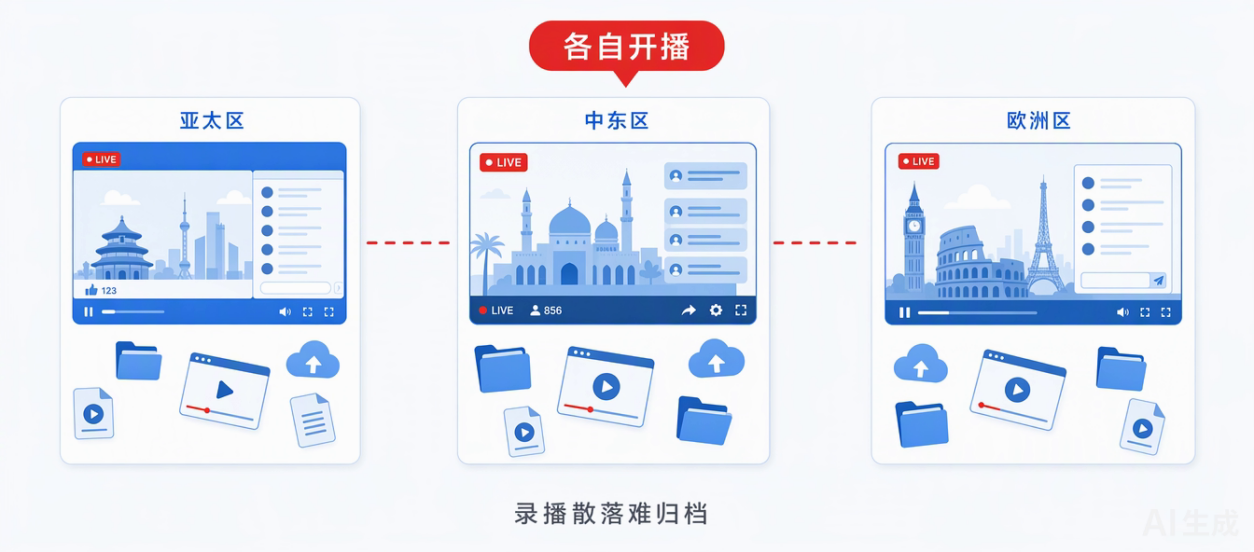
(4) Separate Live Operations Across Regions Resulting in Dispersed Recorded Resources
Overseas branches select tools and launch live sessions independently. Recorded training courses are stored on local computers and separate cloud accounts, with duplicate filenames and multiple versions of the same material frequently mixed in folders. When headquarters wants to retrieve a validated mature course, searches across scattered systems often yield nothing, forcing repeated re-recording of content.
Permission standards are also fragmented. Viewing access and confidentiality scopes are set separately by each region, and tracking of sensitive content spread relies on regional self-inspection. When staff transfer between roles or distributors terminate cooperation, access revocation depends on manual list checks. As business rosters keep expanding, management capacity becomes stretched, and the scale supported by training content hits a ceiling before channel expansion.
II. How to Build a Global Live Training Platform for Chinese Enterprises Going Global
Polyv addresses four core demands of Chinese enterprises expanding overseas: organizational onboarding, cross-border links, multilingual comprehension and content governance. It integrates self-built organizational structure integration, global cloud distribution, AI multilingual subtitles and a unified live management console into one system. Headquarters can deliver content to teams across all countries, while viewing experience and access permissions are controlled within a single backend, supporting scaled, regular global live training.
(1) Integrate Organizational Structure with Unique ID Authentication for Global Access
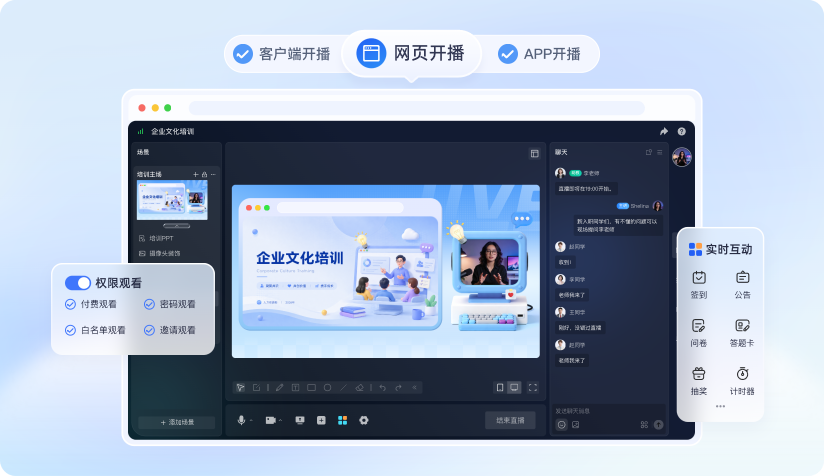
Polyv supports enterprises to build internal organizational structures on the platform and connect with existing HR and channel management systems. Employee IDs and distributor customer numbers serve directly as login credentials. Before going live, administrators can define viewing scope by region and position, and participants can complete authentication and access sessions with their unique IDs anywhere in the world. Browser and app entry points are compatible. Teams in regions with limited equipment can join lightweight sessions via H5 pages. Access permissions update automatically once rosters are synchronized with the organizational structure.
Enterprises regain full control over entry rules. HR and channel teams are freed from creating proxy accounts and guiding users through registration, allowing them to focus on content arrangement and attendance statistics. New distributors gain training access immediately after signing agreements, and participant lists are updated instantly in the backend, aligning outreach with channel rosters.
(2) Global Cloud Nodes to Support Transoceanic Live Streaming and Co-hosting
Powered by Polyv’s globally distributed CDN nodes and low-latency real-time transmission capabilities, senders and viewers connect to the nearest local node. When headquarters stream from China, employees in Europe and America pull streams from local nodes, cutting first-frame loading time and reducing lags and disconnections. The platform reliably supports thousands of concurrent viewers across different time zones.
Remote co-hosting connects headquarters lecturers and global participants in a unified session. Round-trip latency for questions and responses is kept within an acceptable range, restoring normal interaction frequency. Recordings also use global accelerated links to deliver consistent viewing experience worldwide. This creates a stable technical foundation for global synchronous sessions.
(3) Real-time AI Subtitles to Serve Multiple Languages in One Briefing
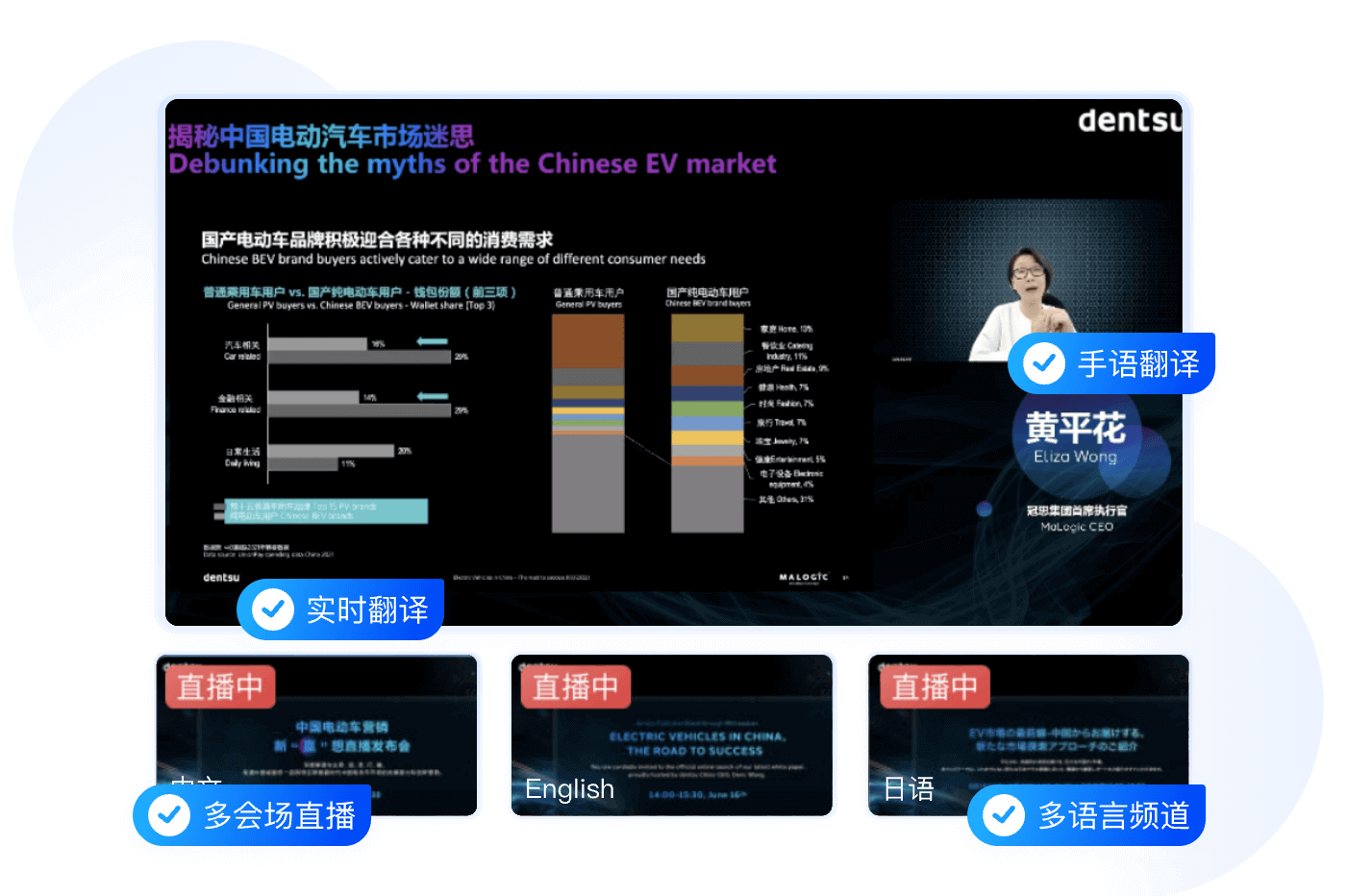
The platform has built-in real-time AI subtitles. Lecturer speech is transcribed and translated during live streaming, covering languages including Spanish, Arabic and French. Viewers can switch subtitle languages according to their preferences, and industry terminology is displayed side by side in the source language and target translation to remove comprehension barriers during the live session.
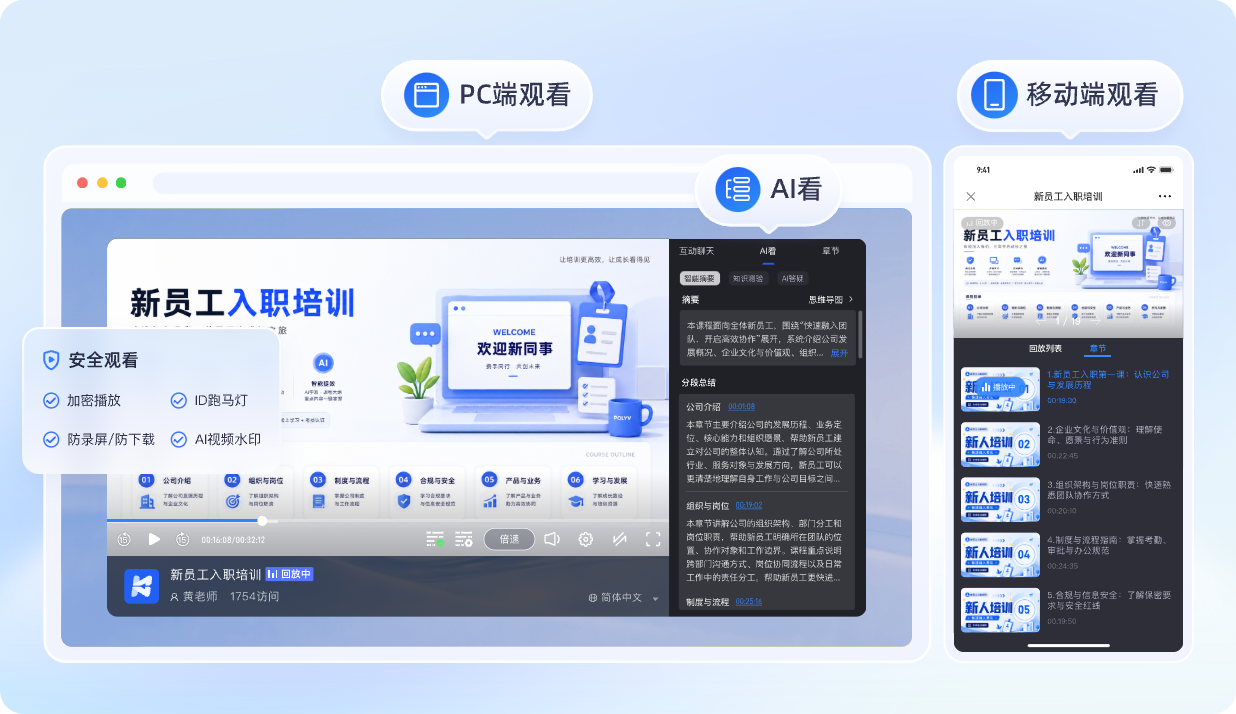
The same subtitle tracks remain available on replay pages. Staff can click subtitle lines to jump back to relevant sections and verify terminology. One training session meets the comprehension needs of teams in multiple language regions, reducing the working hours spent on retraining and shortening the cycle for product knowledge to travel from headquarters to overseas end markets.
(4) Unified Backend Management to Build a Centralized Global Enterprise Video Library
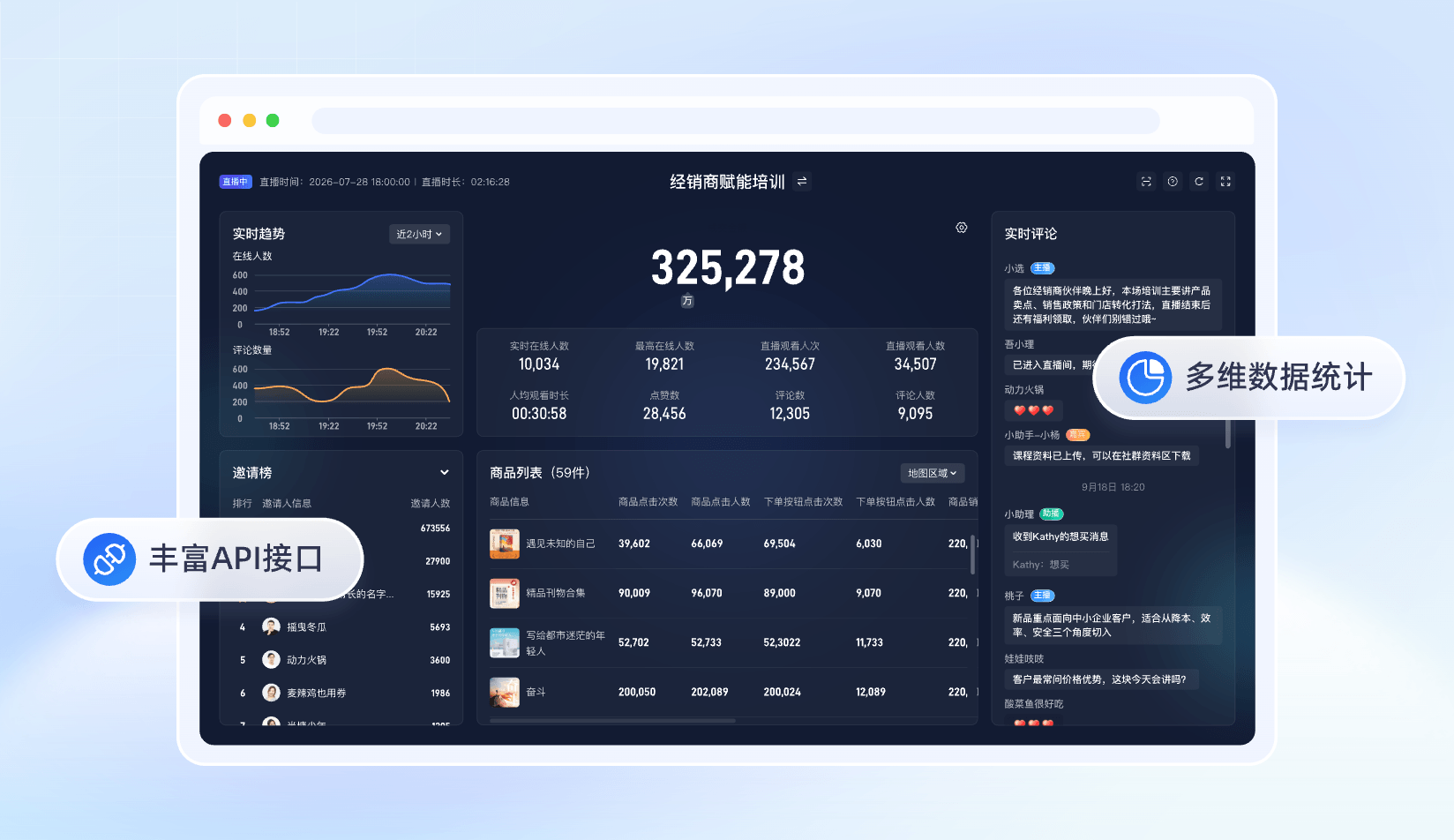
Live rooms and recorded resources from all global branches converge in one management backend. The enterprise video library archives courses by region and product category, with unified naming, version control and courseware frameworks set by headquarters. Administrators can retrieve mature courses via internal search, and validated content can be scheduled for release across different regional markets, cutting costs for re-recording and secondary production.
Permission policies are configured once and take effect globally. Viewing scope, validity periods and dynamic watermarks are linked to the organizational structure. Access automatically adjusts when staff change roles, and permissions are revoked promptly when distributor partnerships end. Complete viewing behavior logs are retained, providing traceable records for security teams investigating content leaks. Global training content is managed through a single unified workflow.
III. Core Value Delivered by the Solution
The four capabilities resolve the key challenges of global training for Chinese enterprises going global. Unique ID authentication consolidates entry rules under one corporate roster, returning viewing list management authority to the enterprise. The global distribution network connects headquarters studios with local sites through stable links, reducing latency for transoceanic co-hosting and laying a reliable experience foundation for synchronous global sessions. Real-time AI subtitles enable one briefing to cover multilingual regions, cutting retraining workload and speeding up knowledge localization. The unified backend and enterprise video library centralize scattered recordings, and permission policies remain effective even as rosters expand. As overseas teams keep growing and new markets open up, live training capacity expands in tandem. New hire onboarding, product launch briefings and distributor conferences can run regularly on one system, and this capability becomes the communication foundation for the global operation of Chinese enterprises.