
How Can Education and Training Platforms Leverage Live Streaming for In-Depth Empowerment? A Solution for In-App Live Streaming Integration and Teaching Closed-Loop
Live online teaching via streaming serves as a core instructional format for education and training institutions to deliver real-time classes, facilitate Q&A sessions, and provide targeted course tutoring. With the widespread rollout of self-developed teaching apps and proprietary learning platforms, standardized, closed-loop and privatized online teaching systems have become an industry trend. Most conventional third-party live streaming tools operate as standalone systems. They cannot be deeply embedded into an institution’s in-house teaching ecosystem, often leading to issues such as learners leaving the application, fragmented teaching scenarios, loose permission controls, and isolated data silos. These tools fail to meet institutions’ core requirements for closed-loop instruction, copyright protection of educational content, multi-scenario learner outreach, and unified data aggregation. For this reason, integrating live streaming capabilities into self-built apps through technical integration to build an integrated, controllable live teaching system with interoperable data is critical for education platforms to upgrade teaching services and refine their digital teaching infrastructure.
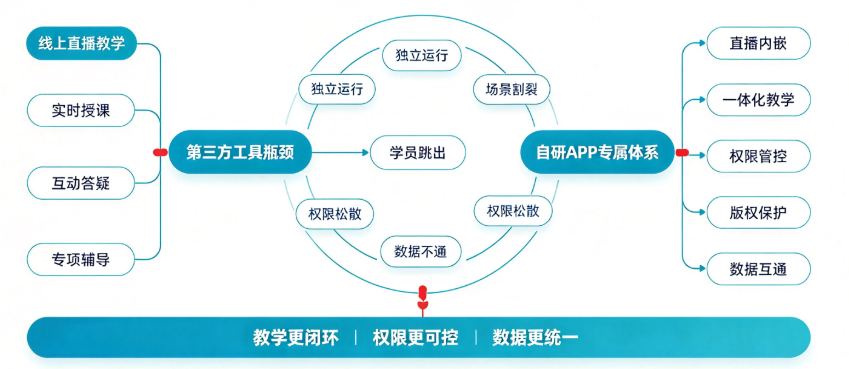
I. Operational Pain Points of Live Streaming Integration for Education and Training Platforms
(I) Standalone External Live Tools Prevent a Closed Teaching Workflow
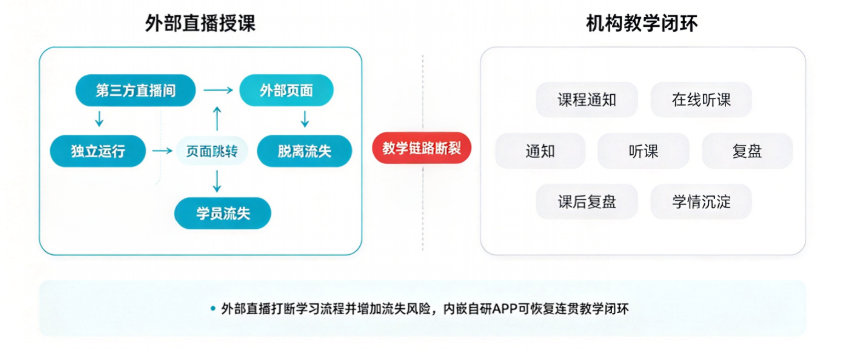
Most education and training institutions rely on generic third-party platforms for live classes. These live rooms exist separately from the institution’s self-developed teaching apps and learning systems. Learners must jump to external webpages and leave the dedicated teaching application to attend classes. This disrupts continuous online learning, exposes students to irrelevant feeds and advertisements on outside platforms, and easily causes distractions and user churn. External live environments cannot align with an institution’s branded teaching interface and operational framework. It is difficult to form a complete teaching loop covering pre-class notifications, live attendance, post-class review and learning data aggregation, which substantially undermines teaching quality and learner experience.
(II) Limited Forms of Access Restrict Learner Outreach Scenarios
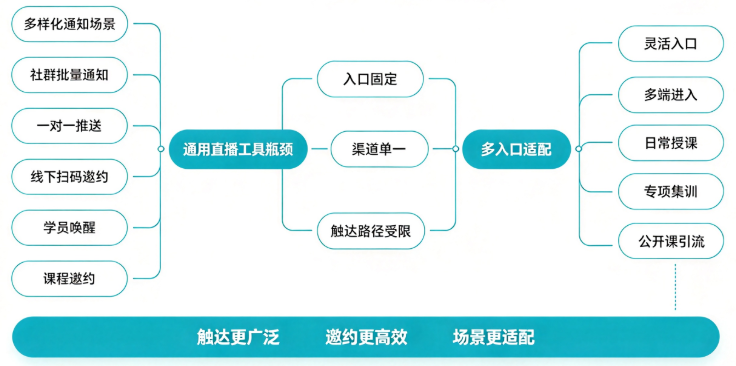
Education and training requires diverse notification methods, including bulk group messages, one-on-one targeted pushes, and offline QR code invitations. Generic live streaming tools offer fixed entry points, mostly supporting only one access channel. This lack of flexible access limits institutional outreach, learner re-engagement and course invitations across scenarios. It becomes difficult to support regular live sessions, intensive training camps, open class lead generation and other teaching use cases.
(III) Rudimentary Live Permissions Create Risks of Course Copyright Leaks
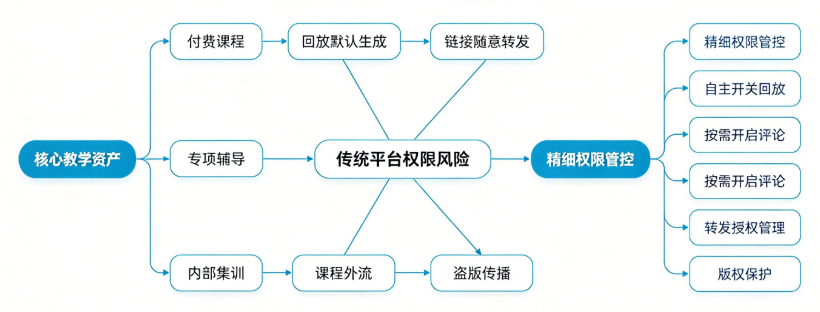
Paid courses, specialized tutoring and internal training sessions constitute high-value educational assets that require strict safeguards against unauthorized distribution. Traditional live platforms feature coarse-grained permission management. Functions such as replay generation, learner comments and content sharing are enabled by default with limited custom controls. Freely shareable links and public replays may lead to unauthorized circulation and piracy of paid teaching materials. This harms institutional commercial interests and disrupts standardized teaching schedules.
(IV) Isolated Live Streaming Data Blocks Unified Learning Record Aggregation
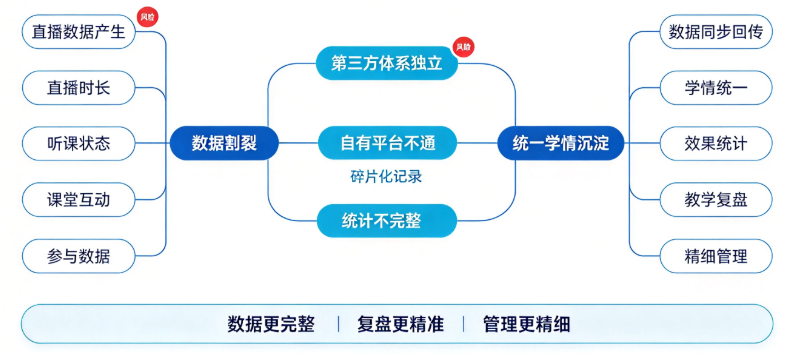
Live session duration, learner attendance status and classroom interaction records form the core basis for learning analytics, teaching reviews and curriculum iteration. Third-party live streaming tools maintain independent data systems that cannot connect to an institution’s native teaching platform. Metrics including viewing duration and engagement cannot be synced back, creating fragmented educational datasets. Institutions struggle to compile complete learner profiles, assess classroom outcomes holistically, and conduct data-backed teaching reviews and granular learning management.
II. Implementation of Custom Live Streaming Integration for Education and Training Apps
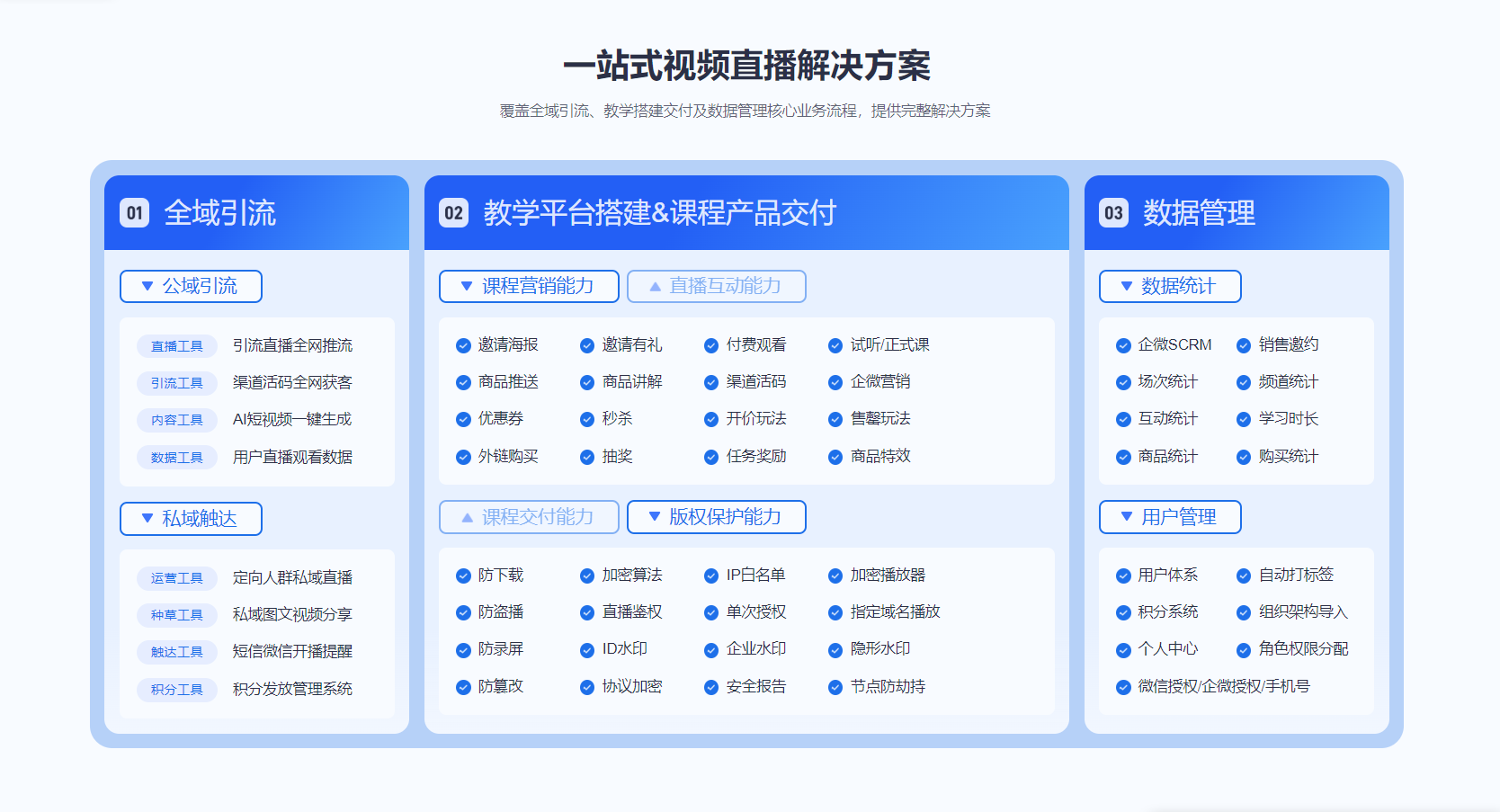
PolyV adapts to live integration demands for self-built teaching apps and proprietary education platforms. Targeting fragmented scenarios, rigid access, weak permission controls and disjointed data, PolyV delivers an end-to-end embedded live streaming integration solution. It supports private deployment, closed-loop scenarios, granular permissioning and data interoperability to fit regular online teaching operations in the education sector.
(I) Deep SDK/API Integration to Build App-Native Live Teaching Scenarios
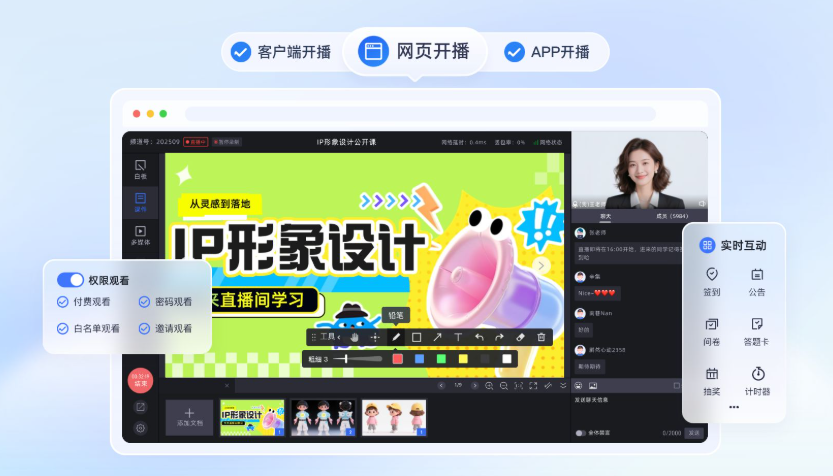
With mature SDK and API integration capabilities, full live teaching functions can be embedded directly into self-developed education apps and proprietary learning platforms. Live room visuals and features support custom branding aligned with institutional requirements. Learners attend classes, participate in interactions and complete follow-up coursework entirely within the institution’s dedicated app without redirecting to third-party services. Barriers between teaching stages are removed to form a closed workflow spanning pre-class notifications, in-class instruction and post-class review, improving learner focus and teaching professionalism.
(II) Dual Access Points to Cover Full-Spectrum Teaching Outreach
The system supports two entry modes: live stream links and QR codes, accommodating diverse notification workflows. Institutions may push links to communities and direct messages for bulk learner alerts. QR codes on offline posters and printed materials enable instant class entry. The two access methods complement each other to support regular online classes, lead-generation open sessions, offline-online hybrid instruction and make-up classes for remote students, streamlining notifications and learner entry.
(III) Granular Permission Configuration to Safeguard Course Copyright
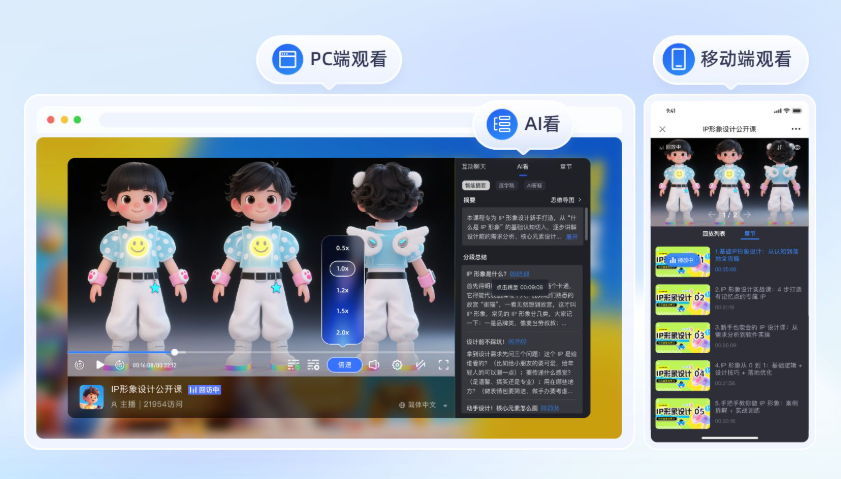
A visual backend permission console lets institutions toggle live features based on course type and instructional goals. Operators may enable or disable replays, learner comments and content sharing for scenario-specific control. For paid exclusive courses, sharing and public replay access can be disabled to stop unauthorized distribution and piracy. For public open classes, interaction and replay functions can remain active to support lead generation and learner conversion. Tunable permissions balance interactive learning and copyright security for core educational content.
(IV) Global Data Callback and Interoperability for Closed-Loop Learning Data Aggregation
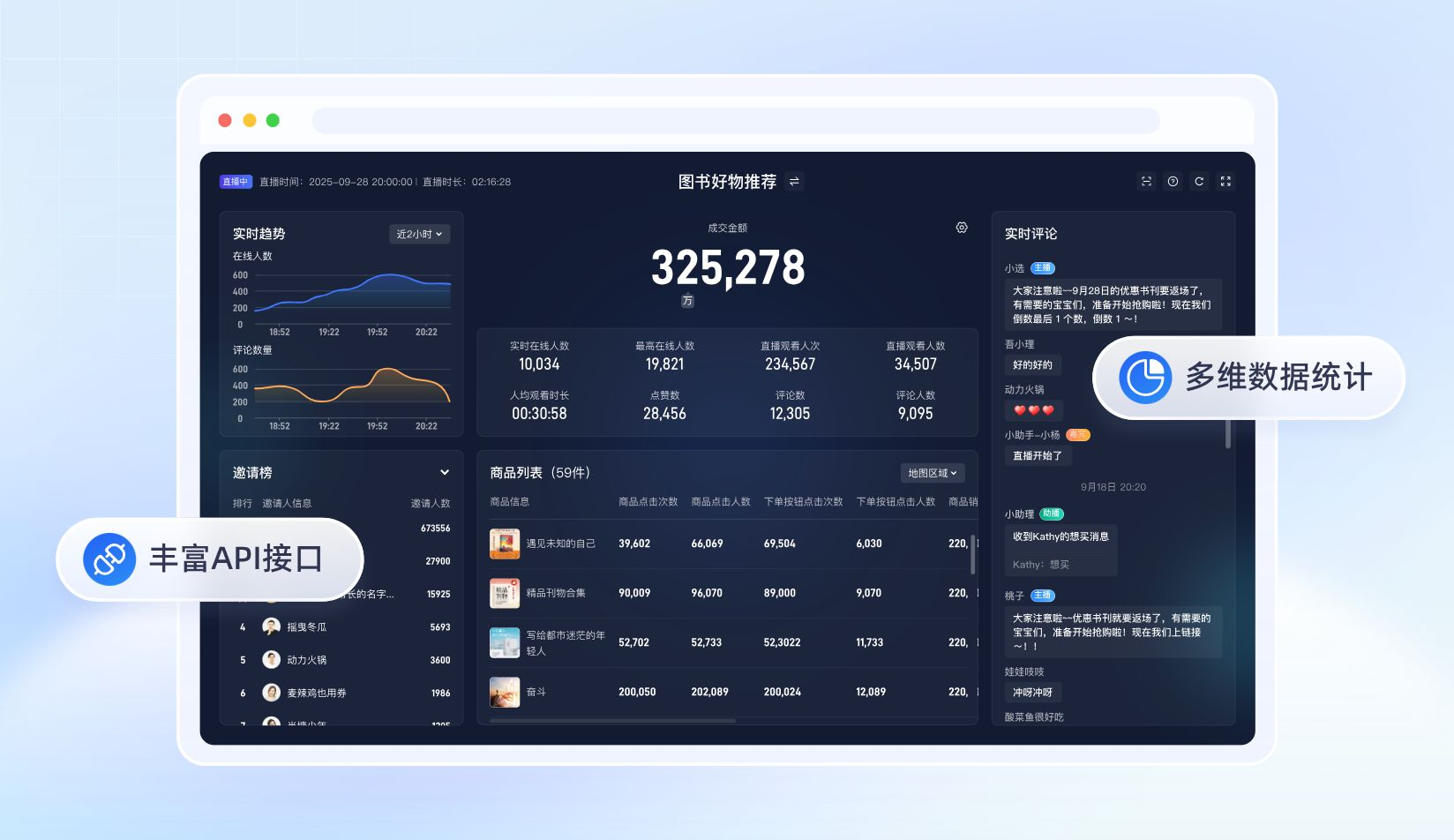
The platform supports callbacks for comprehensive live streaming metrics. Core learning data including total session length, individual viewing duration, classroom interactions and participant counts can be synchronized back to the institution’s native teaching platform in real time. Silos between separate systems are broken down, enabling seamless convergence of live metrics and existing teaching records. Institutions leverage unified datasets to review class performance, analyze learner progress and refine course design. This supports iterative improvements to delivery models and curricula, enabling granular teaching management driven by data.
III. Core Value of the Solution
Tailored for digital teaching requirements of embedded live streaming within education and training platforms, the solution addresses key limitations of external live tools. Deep SDK/API integration builds private, branded live teaching environments to close instructional loops and elevate teaching professionalism. The dual-entry model for links and QR codes supports flexible outreach across diverse teaching scenarios. Granular permission controls protect paid course copyright and mitigate leakage risks. Cross-system data callbacks consolidate learning records to inform teaching reviews and curriculum optimization. The solution empowers education institutions to build embedded live teaching systems that are closed-loop, secure, flexible and data-driven, lifting online teaching quality and platform operational capacity on an ongoing basis.