
# How Can Multi‑location Groups Build an Internal Live Streaming Platform? A 2026 Corporate Business Training Solution
Retail groups operating across multiple locations run stores and teams spread over different regions. In the past, internal training and quarterly strategy briefings relied on offline intensive training sessions and successive video conferences, which came with high costs and limited reach. Migrating such content to a live streaming platform hinges on integration with existing account systems — a prerequisite for a single live session to serve all stores. Many groups first tried hosting live streams on work accounts of social applications. However, frontline staff across different regions follow varied usage habits. Bottlenecks emerge at login verification, followed by deeper issues around permission control and learning record tracking.
I. Key Pain Points for Internal Live Streaming Platforms of Multi‑location Groups
(1) Live Entry Tied to Social Accounts, Blocking Frontline Staff in Some Regions
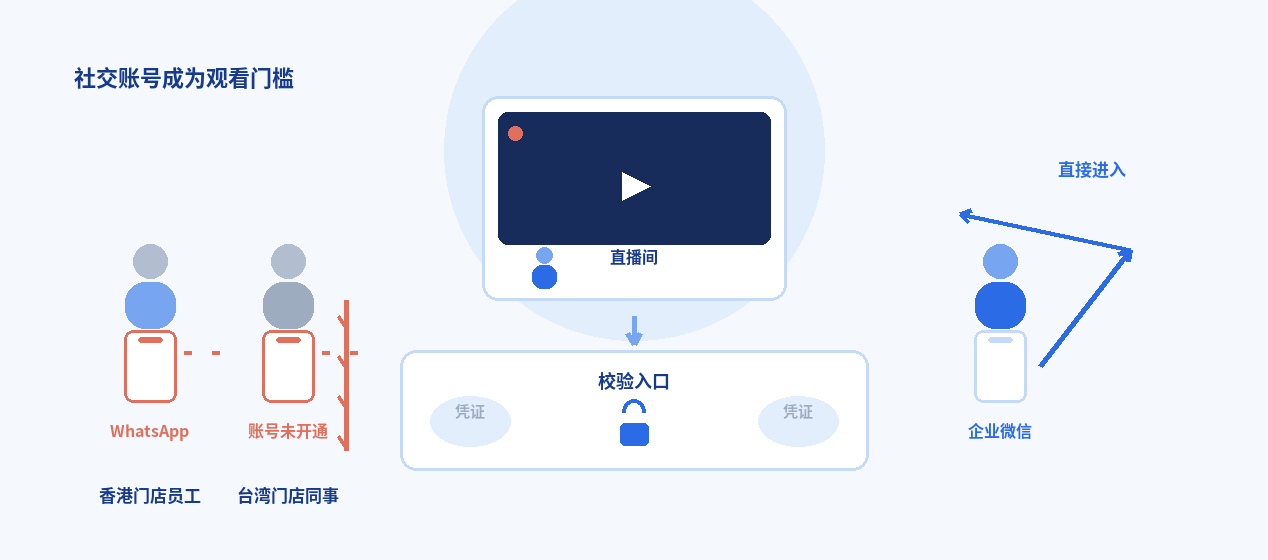
The group’s original live entry was built atop WeCom authentication. Employees in the home region gain seamless access via their work accounts. The organisational setup differs for other branches, where frontline store staff mainly use familiar local communication tools for shift scheduling and handover. Some remote team members rarely use their assigned corporate social accounts, and no standard process exists to activate these accounts during onboarding. When live sessions go live, these employees get stuck on the verification page. IT teams have to manually collect mobile numbers for allowlisting and guide users through app installation remotely. Training intended for all stores is thus split into disjointed experiences, and carefully prepared headquarters content lands poorly among remote outlets.
(2) Separate Account System for New Platforms, Pushing Up HR Maintenance Workloads
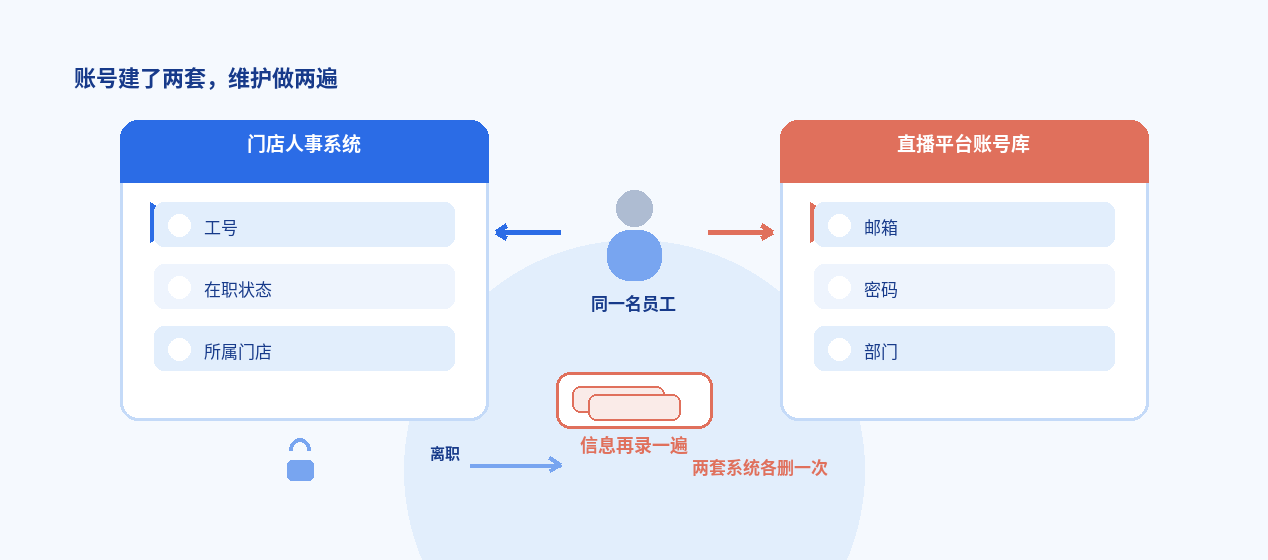
The group has maintained a mature store personnel system for years, where fields such as staff IDs and employment status are updated daily by HR and regional teams with high data integrity. If a new live streaming platform requires independent registration, employees must submit email addresses and passwords a second time, while department affiliations need reconfirmation. HR teams manage two sets of spreadsheets instead of one, and offboarding procedures must be repeated across both systems. Shortly after rollout, the IT department receives a flood of password reset and account recovery requests, hurting frontline perception of the platform at launch. Redundant system building becomes a tangible barrier to internal tool adoption.
(3) Complex Hierarchies from Headquarters to Counter Staff, with Fragmented Permission Configuration
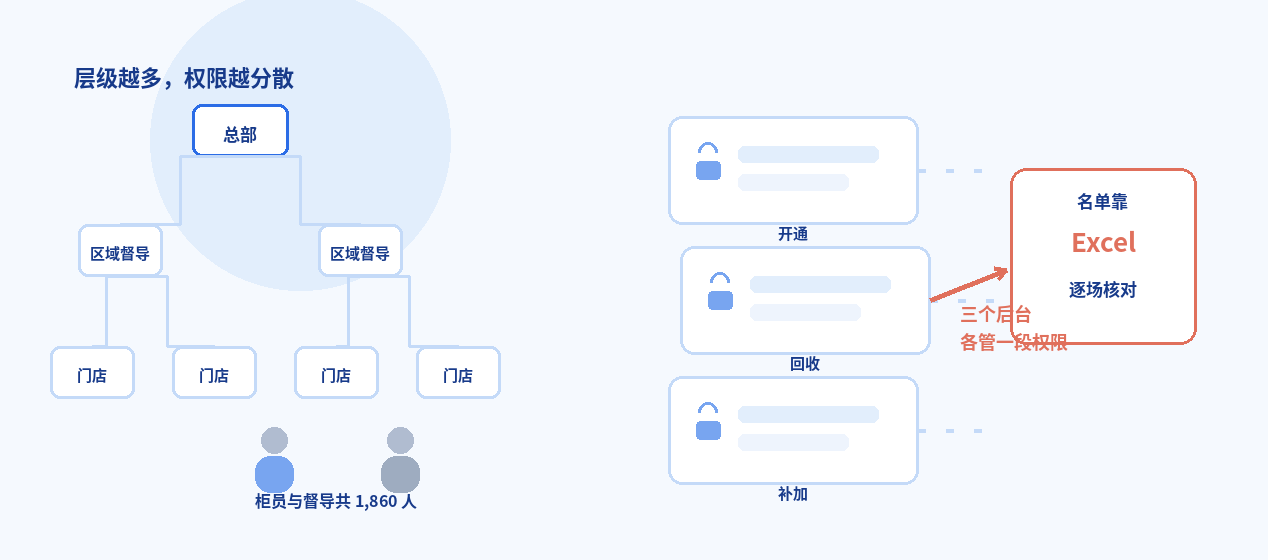
Leadership at headquarters and regional supervisors focus on strategic content, while store managers and counter staff prioritise operational guidance. Access to business strategy briefings must be restricted to management, whereas new‑product training needs to reach frontline sales teams. Previously, permissions were scattered across multiple backends. After organisational restructuring, supervisor transfers or store mergers require manual reviews of the viewer list for every live session. Overly broad access expands exposure of confidential internal material; missing entries lock out eligible viewers. The IT team usually only adjusts settings after receiving feedback from stores, leaving permission management reactive to personnel changes.
(4) No Individualised Learning Records to Provide Evidence for Training Assessments
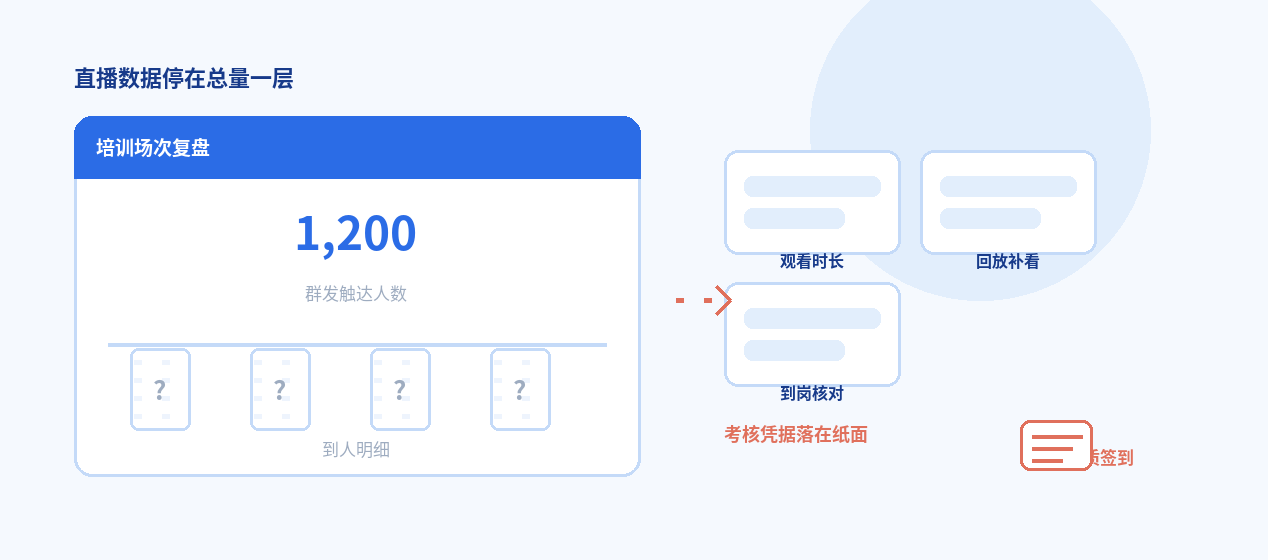
After training and strategy meetings, management wants to verify two core metrics: who watched the session and how long they stayed. Legacy systems only record the number of recipients and peak concurrent viewers, without granular breakdowns by store or individual. There is no clear record of who completed the full broadcast or caught up via playback. The human resources team hopes to tie learning records to job qualification and promotion reviews, yet lacks supporting data. It becomes impossible to quantify the return on investment for online training, forcing organisations to revert to manual paper sign‑off sheets.
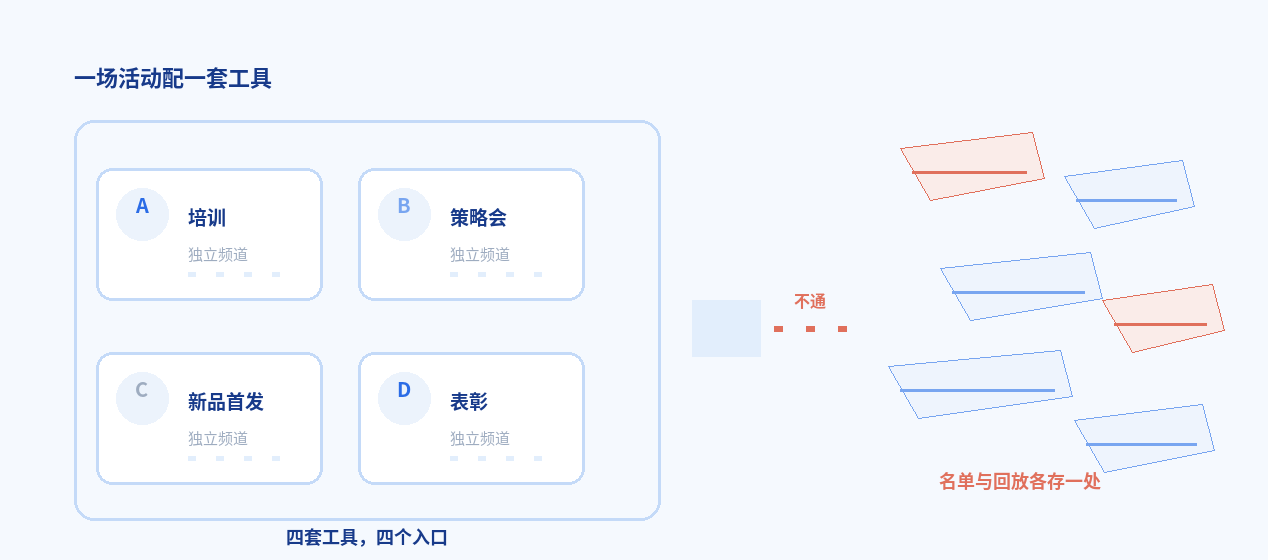
(5) Procurement Built for Isolated Use Cases, Fragmenting Corporate Content Assets
Initial live streaming requirements centred on employee training, so the selected tool was configured purely for classroom delivery. When annual strategy conferences and internal new‑product launches followed, the platform struggled to support large‑scale events, multi‑guest co‑hosting and interactive award ceremonies. The group had to source alternative tools for these sessions. Each system maintains its own channels, audience lists and playback files, with incompatible account standards and data formats. Compiling a complete inventory of content assets requires manual consolidation across backends, with field mapping repeated for every round of aggregation. This repetitive work erodes the long‑term reuse value of internal communications content.
II. Building an Internal Live Streaming Platform for Multi‑location Groups
Polyv delivers internal live streaming capabilities for geographically distributed group enterprises. Its live entry is decoupled from social accounts; staff identities are inherited from existing systems, while organisational structures and viewing permissions are managed hierarchically within a unified backend. Individualised learning logs are captured, and one single platform supports diverse internal scenarios. Live broadcasts, playback archives and data are consolidated into one workflow, cutting organisational overhead for cross‑regional internal communications.
(1) Independent Identity Verification Channel, Free from Social Account Dependencies
The platform offers a standalone live viewing portal with no mandatory binding to third‑party social accounts such as WeCom or WeChat, and no reliance on external software for login verification. Staff at remote branches do not need to register for unfamiliar corporate social tools. They access live rooms through exclusive links issued centrally by the group.
The identity verification pathway remains fully under the group’s control, with viewing eligibility linked to internal personnel rosters. Store staff across all regions can attend meetings smoothly. Cross‑regional training and policy announcements are no longer limited by differences in workplace software, closing gaps in full workforce coverage.
(2) Integration with Store Systems for Direct Authentication via Staff ID
The platform exposes standard APIs to connect with the group’s existing store human resources management system, drawing unique staff IDs directly as authentication credentials. Employees log in using their existing staff numbers without secondary registration or separate account creation.
The original identity framework is fully reused. HR teams avoid duplicate data entry; updates for new hires, departures and transfers only need to be made once in the personnel system, and the live streaming platform synchronises automatically. Consistent datasets reduce account maintenance labour and minimise permission mismatches.
(3) Hierarchical Organisational Structure with Synchronised Permission Updates
Administrators can bulk import or build a complete tree‑style organisational structure that mirrors the multi‑layer setup of headquarters, regional offices and individual stores. Access rules can be defined by region, store and job role.
When staff change roles or stores undergo bulk personnel adjustments, updates to the corresponding nodes in the organisational structure trigger bulk permission changes, eliminating manual edits for every account. The group’s layered workforce structure is visualised clearly, delivering a single control point for graded protection of sensitive content.
(4) Real‑Name Viewing Trails for Auditable Training Attendance
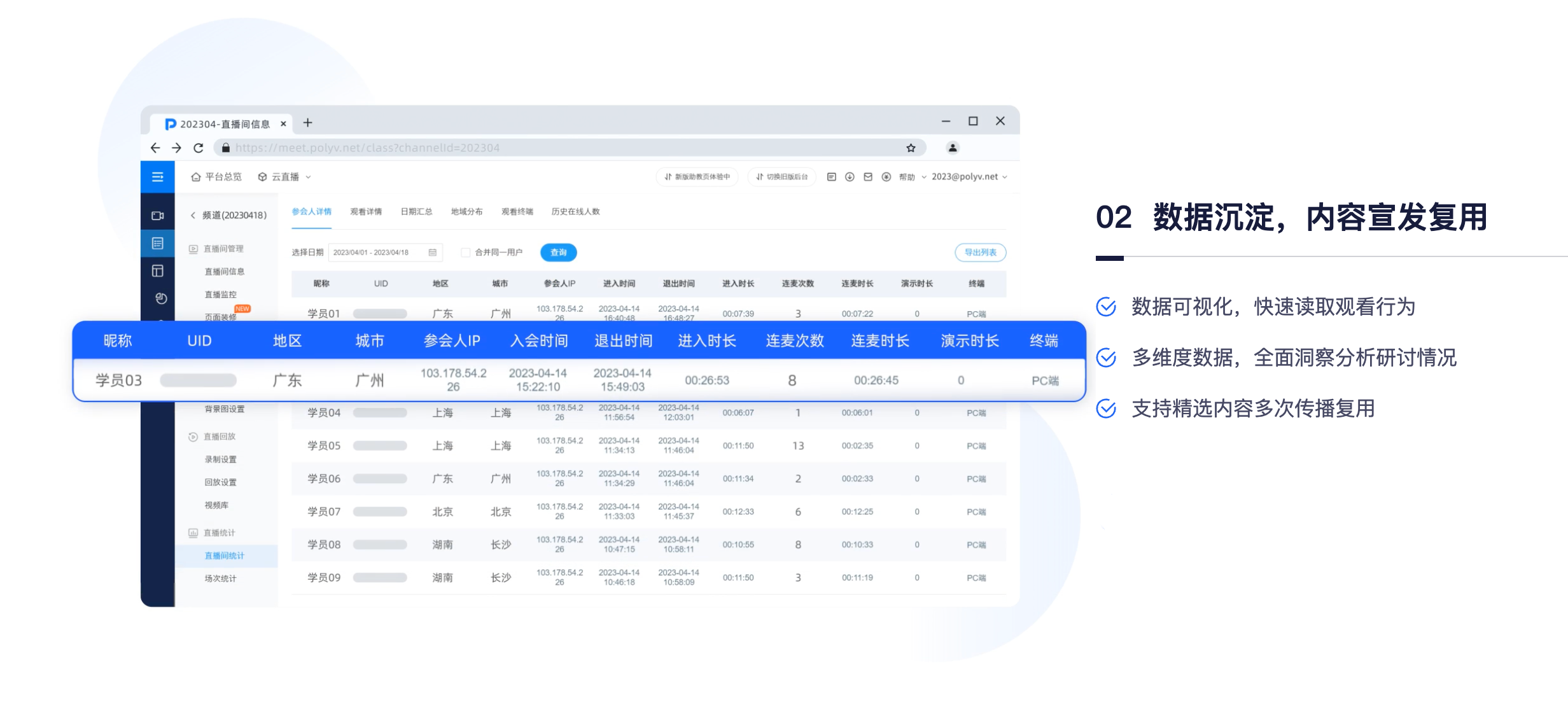
Every viewing activity is automatically tied to a staff ID. The system permanently records entry timestamps, cumulative watch duration, exit points and on‑demand playback history. All data can be filtered by employee, store or region and exported as complete attendance reports with one click.
HR teams can reliably distinguish between employees who watched the full stream, those who left midway and absentees, and include live learning hours in training assessments. Underperforming stores are easy to identify, creating clear targets for follow‑up supervision. Online training evolves from a vague “session delivered” to a verifiable “competency completed”.
(5) One Unified Platform for Consolidated Cross‑scenario Data
The same live streaming infrastructure supports employee training, annual business strategy conferences, internal new‑product launches, regional award ceremonies and all other internal events. Different live rooms and access rules can be configured for distinct use cases without procuring separate tools.
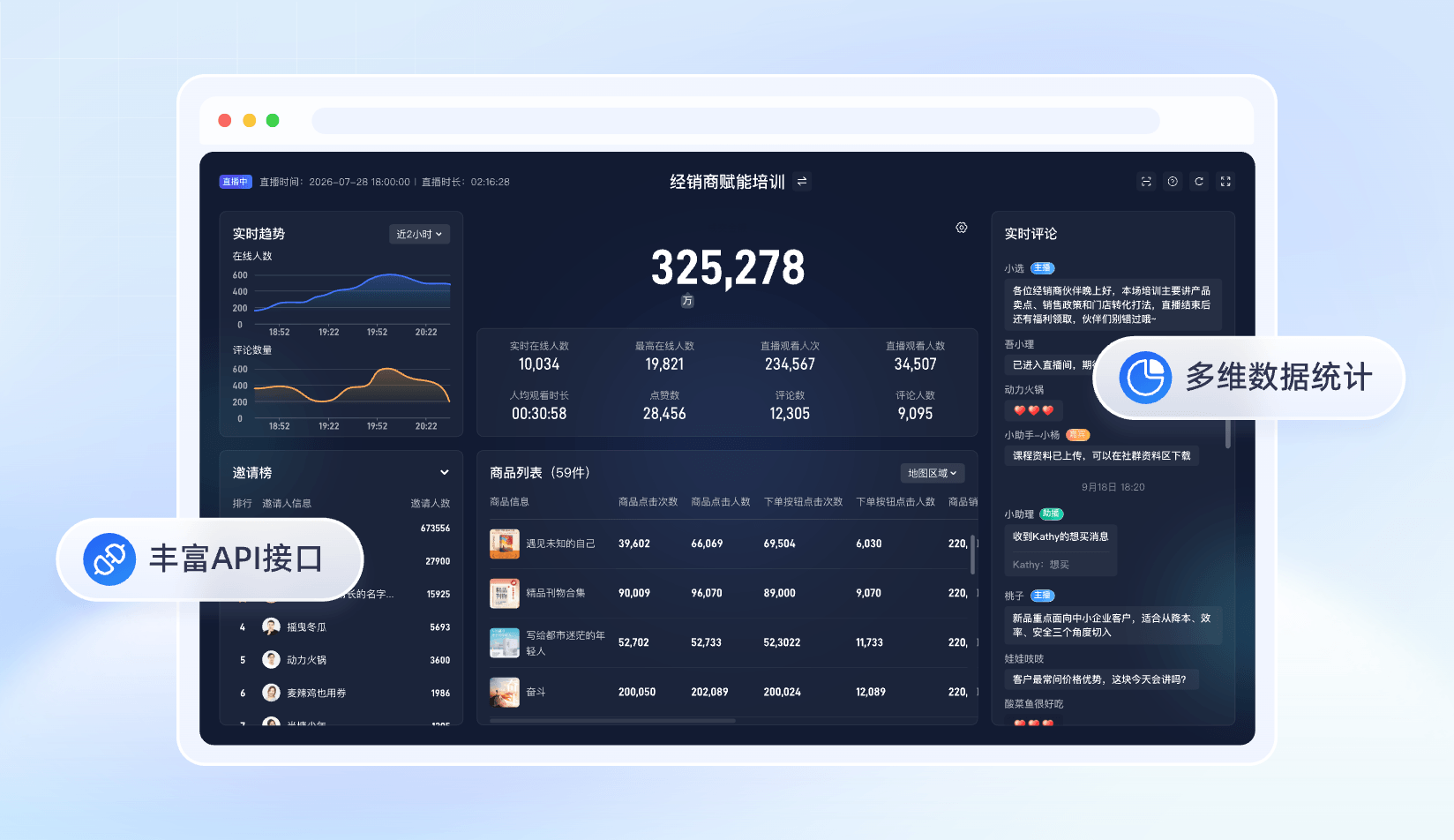
User permissions, live recordings and viewing data are stored centrally. Past sessions can be retrieved and reviewed anytime. The group eliminates siloed operations across multiple platforms, unifies live asset management and lowers both operational and procurement costs. Internal live streaming gradually builds a reusable repository of data assets.
III. Core Value of the Solution
This targeted solution addresses each major operational hurdle for multi‑location group internal live streaming. By decoupling the viewing entry from social platforms, remote frontline teams authenticate using the group’s native identity system, restoring full reach for cross‑regional training. Staff IDs are pulled from existing store HR systems, retaining established workflows and freeing HR and IT teams to focus on content operations. Organisational hierarchies are managed centrally, and viewing permissions update alongside personnel shifts for flexible, traceable access control. Individual viewing records stay bound to staff IDs, capturing dwell time and catch‑up playback to supply validated metrics for training evaluations. Multiple internal use cases share one platform, centralising live streams, replays and analytics and turning ad‑hoc internal communications into a sustainable routine.
For groups operating across many locations, a unified internal live streaming platform aligns content output from headquarters with execution rhythms at remote stores. Employees in all branches receive the same stable viewing experience, while management gains granular, store‑ and region‑level data for post‑event reviews. Consolidated tooling cuts redundant procurement and integration work and lays a solid digital foundation for internal corporate communications.