
How Government & Enterprise Organizations Rapidly Deploy Live Streaming Capabilities Within Their Native Apps?A Dedicated Live Streaming Integration & Implementation Solution for Government and Enterprise Clients
During the advancement of digital government initiatives and the upgrade of internal office systems for government and enterprise organizations, online live streaming has become a key digital carrier for internal work meetings, government affairs briefings, policy outreach and public convenience services. Most government and enterprise entities have built proprietary self-developed mobile applications, serving as the unified entry for external public services and internal office operations.
Generic third-party live streaming platforms operate as standalone systems. They cannot be deeply integrated into existing government and enterprise systems, bringing issues such as fragmented scenarios, mismatched security standards, poor business adaptability and non-standard implementation workflows. These limitations fail to meet the rigorous requirements of government and enterprise organizations for secure, stable, closed-loop digital construction. Therefore, rapidly embedding live streaming capabilities via mature technologies to build a dedicated live streaming system compatible with diverse business scenarios, compliant with security regulations and supporting project approval has become a critical requirement for digital office transformation and government transparency initiatives.
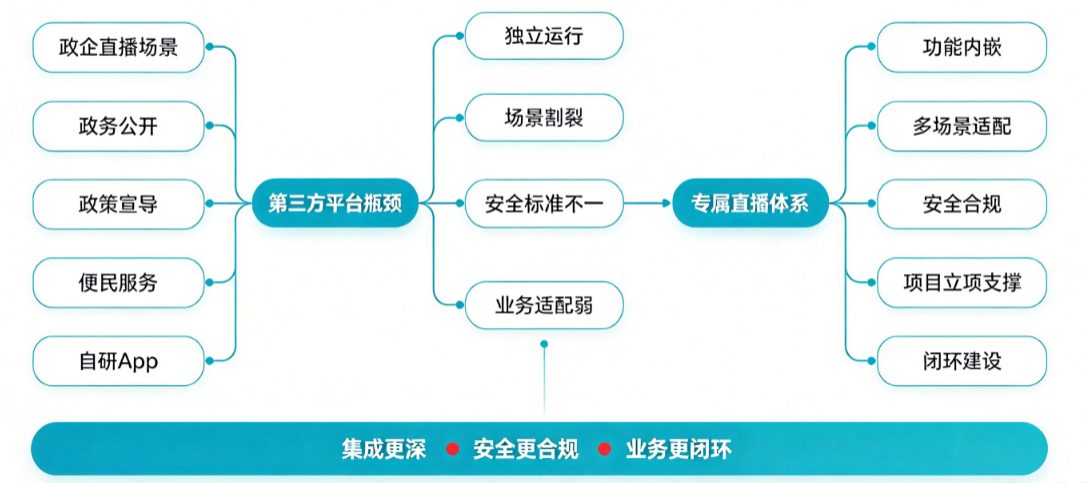
I. Core Pain Points in Building Live Streaming Capabilities for Government & Enterprise Native Apps
(1) Redirection to External Platforms Breaks Business Closed Loops
Government and enterprise live streaming operations demand unified business scenarios and closed user experience. Generic third-party live streaming platforms are independent ecosystems and cannot be deeply embedded into proprietary government and enterprise apps. When hosting live events, staff and end users must jump to external webpages to watch streams, leaving the organization’s own business system. This disrupts the overall service and office experience, creates broken business workflows, introduces distracting content from external platforms and causes user traffic leakage. It prevents closed-loop operations for government services, internal office work and policy briefings, failing to comply with unified digital construction standards for government and enterprise bodies.
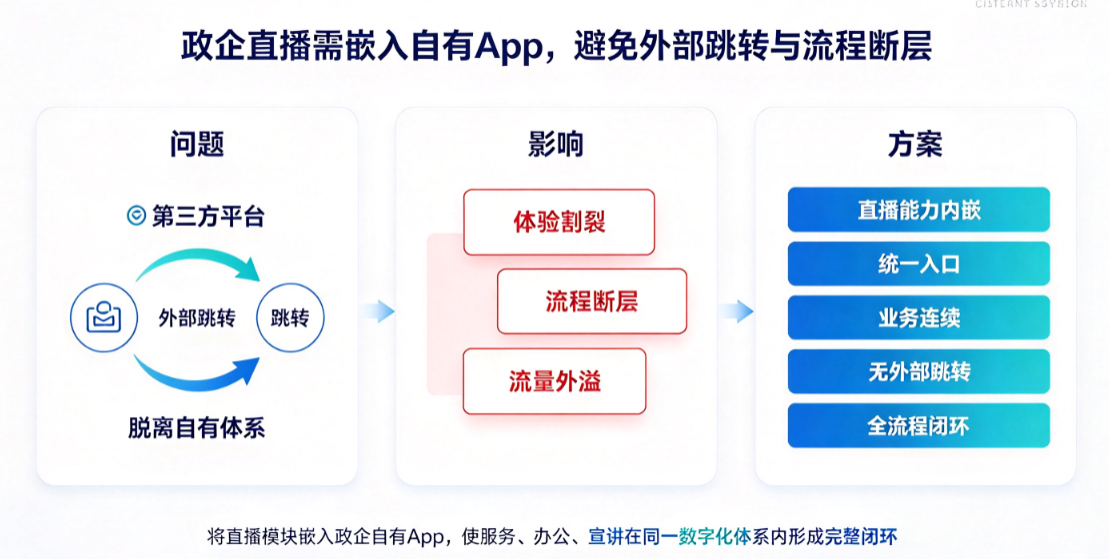
(2) Rigorous Government & Enterprise Security Standards Are Poorly Supported by Generic Solutions
Digital projects for government and enterprise organizations enforce strict requirements on security, stability and compliance. Technical integration, system docking and content management workflows must follow dedicated security specifications. Most mainstream live streaming solutions target consumer and commercial scenarios with loose security frameworks. They lack fine-grained permission control, identity authentication, content moderation and access risk control capabilities. Their system integration protocols, data transmission standards and content security governance mechanisms cannot satisfy stringent government and enterprise project requirements, bringing potential risks including unauthorized data access, content leakage and system instability.
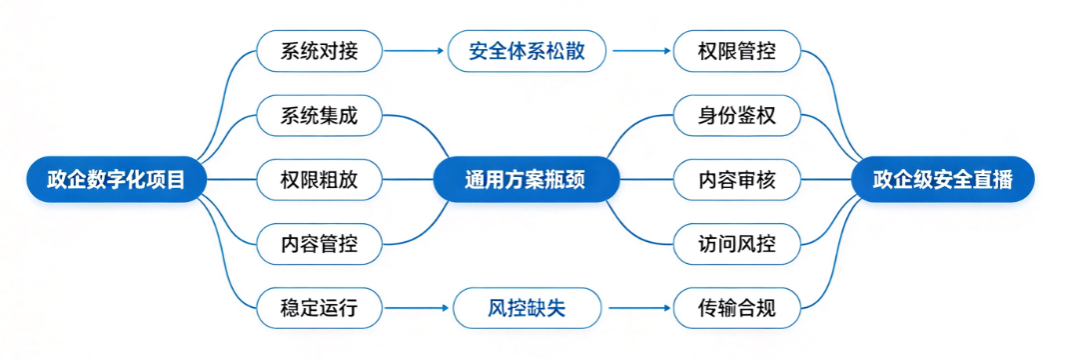
(3) Diverse Business Scenarios Cannot Be Fully Covered by Basic Live Streaming Features
Government and enterprise live streaming falls into two major categories: internal use and public-facing services. Internal scenarios include confidential work meetings, departmental training and work deployment. External scenarios cover government transparency briefings, policy popularization, public notices and public service outreach. Different scenarios impose distinct requirements on streaming definition, interaction permissions, content archiving and viewer access rights. Standard live streaming tools offer limited functions and weak scenario adaptability. They cannot simultaneously accommodate confidential internal office work and public government outreach, making it difficult to support regular, systematic live streaming operations.
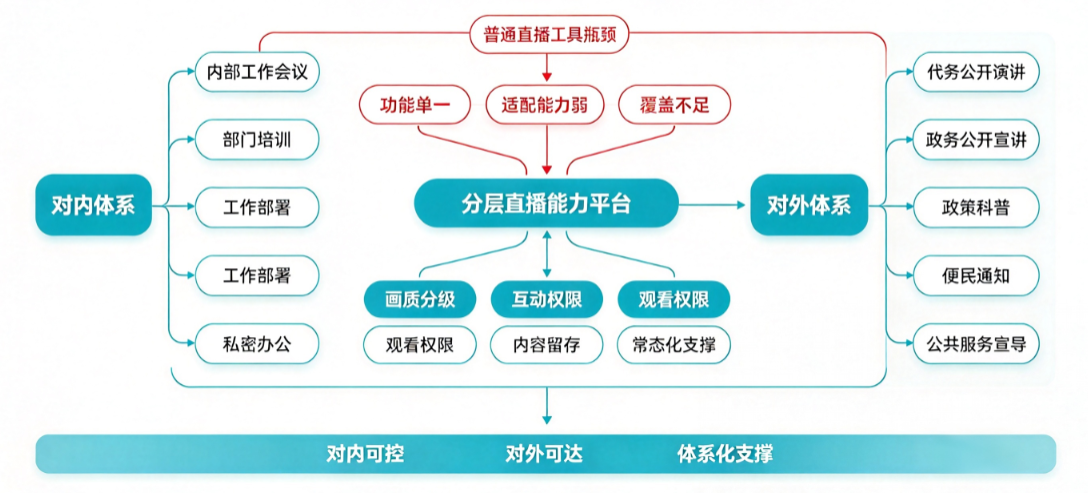
(4) Rigorous Project Approval Processes Are Hindered by Inflexible Delivery Models
Government and enterprise projects require complete technical integration plans, clear implementation roadmaps and standardized quotations as supporting materials for internal review and approval. Traditional live streaming vendors adopt rigid delivery models and struggle to provide detailed technical proposals and scalable quotations in early project phases. In addition, requirements, concurrent user volumes and functional modules for government and enterprise projects are refined incrementally. Fixed delivery frameworks cannot match the phased implementation rhythm of such projects, obstructing preliminary evaluation and subsequent iterative upgrades.
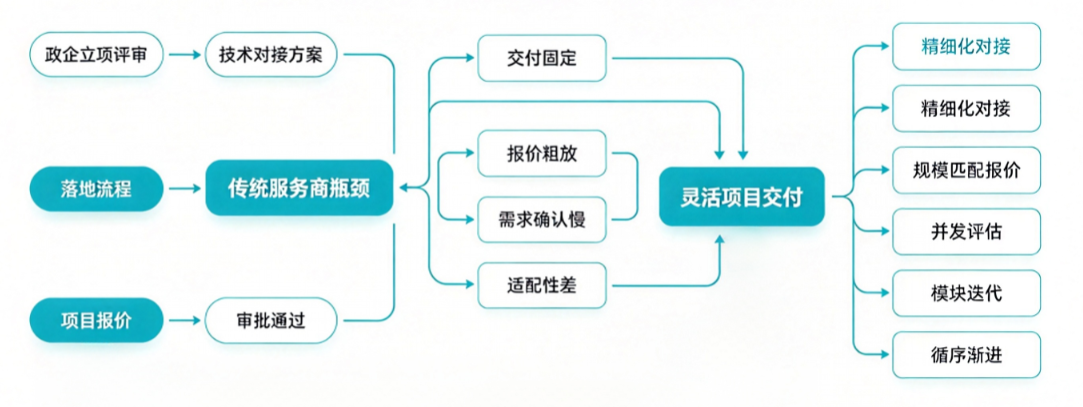
II. Dedicated Solution for Rapid Live Streaming Implementation in Government & Enterprise Native Apps by Polyv
Polyv closely aligns with digital construction standards for government and enterprise organizations. To address pain points including broken business loops, inadequate security compliance, limited scenario coverage and barriers in project approval, Polyv delivers a highly adaptable, secure and implementable dedicated live streaming integration solution. It helps government and enterprise clients quickly build live streaming capabilities inside their proprietary apps.
(1) Deep SDK Embedded Integration to Build Closed-Loop Business Scenarios
The solution provides mature and stable App SDK integration capabilities, embedding full live streaming functions seamlessly into government and enterprise native applications. All operations including stream publishing, playback, interaction and playback-on-demand take place within the client’s own system. Users never need to redirect to third-party platforms. Live streaming scenarios, user traffic and business data are fully retained internally, eliminating fragmented experiences and workflow interruptions caused by external jumps. This meets government and enterprise requirements for unified, closed-loop digital services and office systems, building an exclusive, independent and controllable live streaming business environment.
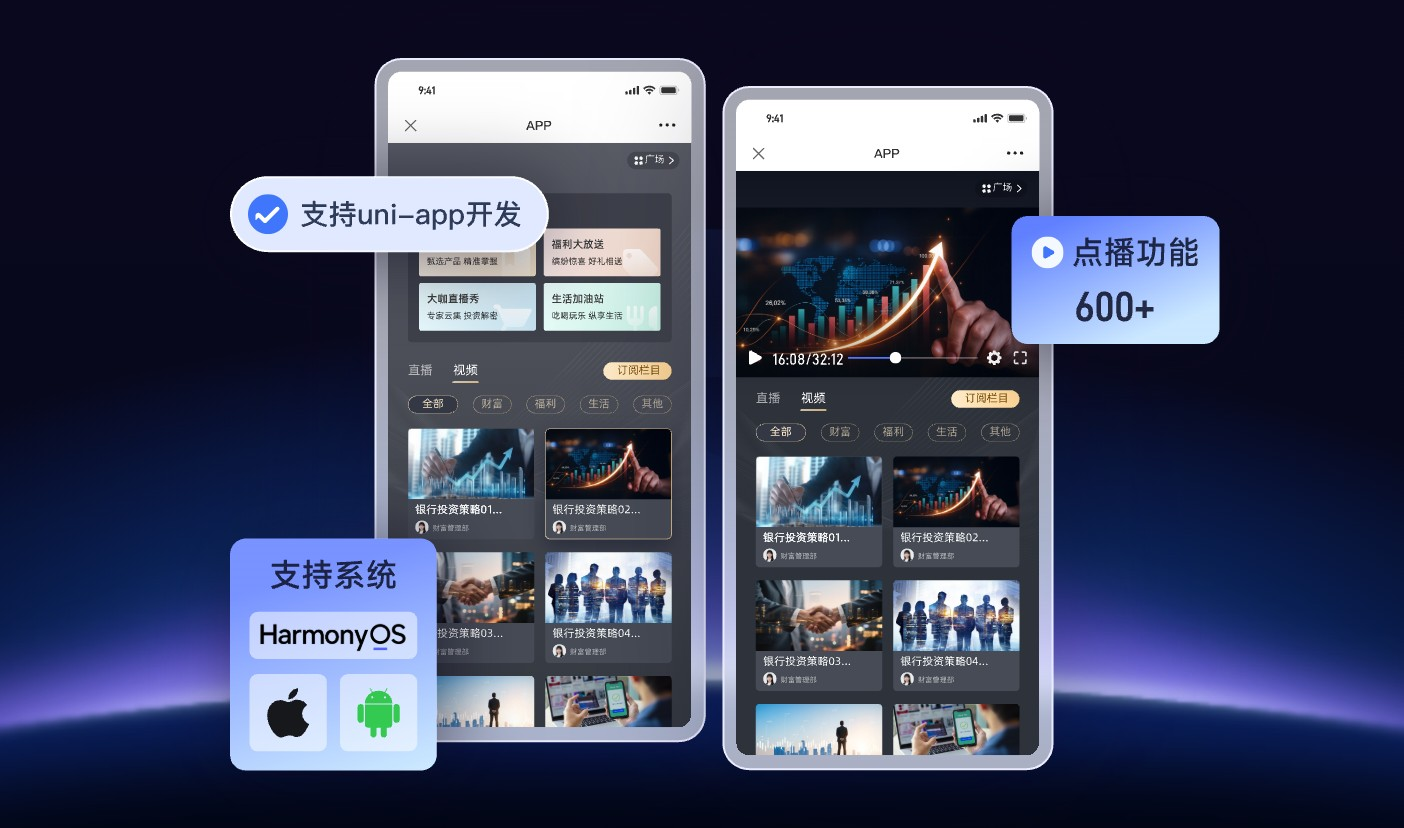
(2) Full-Range Security Controls to Meet Government & Enterprise Compliance Standards
Backed by a dedicated security framework for government and enterprise clients, the system fully satisfies security and stability specifications. It supports fine-grained identity authentication, hierarchical access control, malicious access interception and live content security moderation. Access and operation permissions can be assigned according to job roles, departments and business attributes, separating public government content from confidential internal materials. A full-link security shield covers access gateways, content distribution and data transmission to mitigate risks of content leakage, unauthorized access and unlawful dissemination, fully complying with compliance requirements for government and enterprise projects.
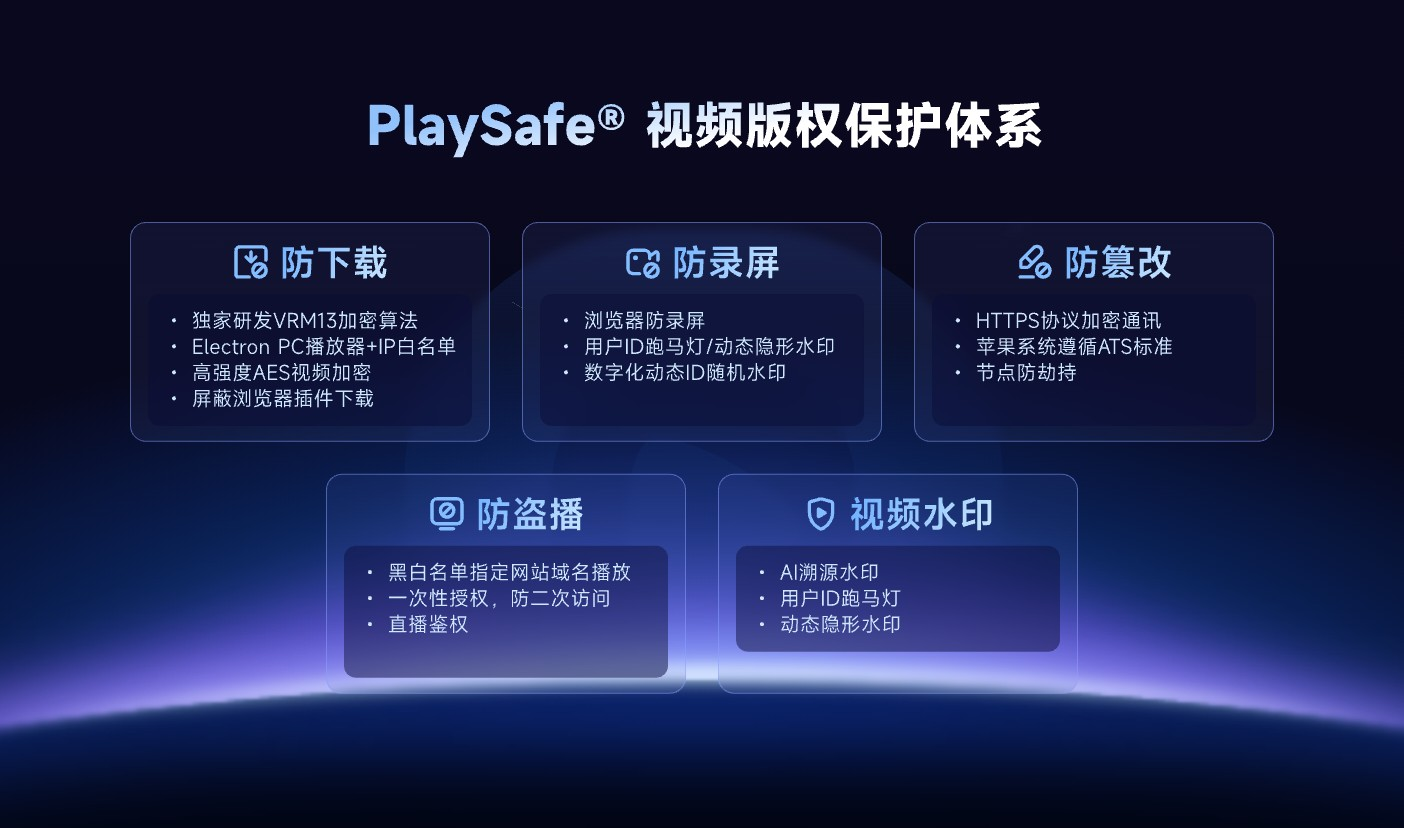
(3) Full-Spectrum Scenario Coverage to Support Diverse Government & Enterprise Business Needs
The live streaming system features comprehensive functions and strong scenario adaptability to serve both internal and external live operations. It supports high-definition stable streaming, real-time chat interaction, online check-in and automatic recording for playback. Confidential live streams for internal meetings can be secured via permission management to protect sensitive office information. Public government briefings can enable standard viewing and interaction for policy education and public outreach. One unified system supports all live streaming use cases, fulfilling daily digital office and public service demands.
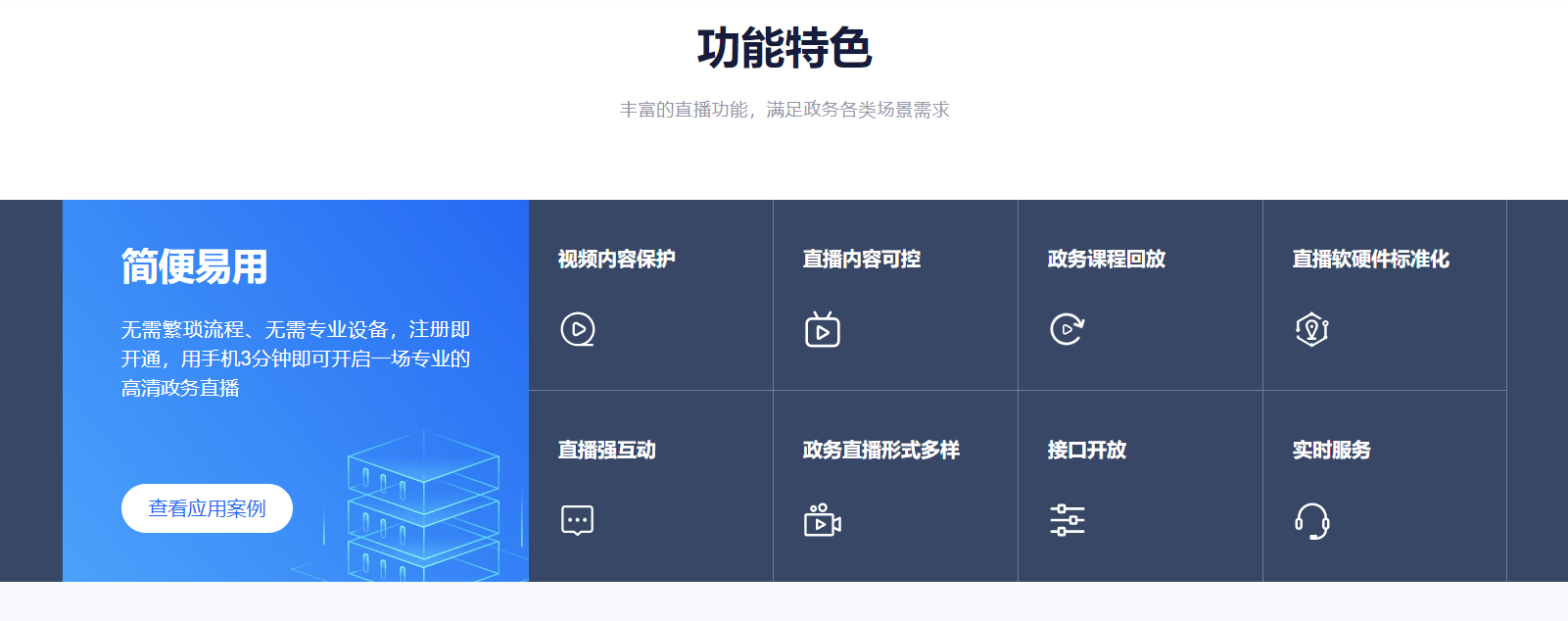
(4) Flexible Technical Docking & Delivery to Support Project Approval and Iterative Rollout
Polyv assigns dedicated technical teams for government and enterprise clients to support R&D joint debugging throughout the project lifecycle. Teams can deliver refined technical integration plans, defining implementation workflows, interface standards and execution steps. Based on projected concurrent users, required functional modules and business objectives, Polyv provides standardized quotation documents as supporting materials for internal project review and assessment. The flexible delivery model adapts to progressive requirement refinement and post-launch iteration, ensuring orderly, compliant and stable project rollout.
III. Core Value of the Solution
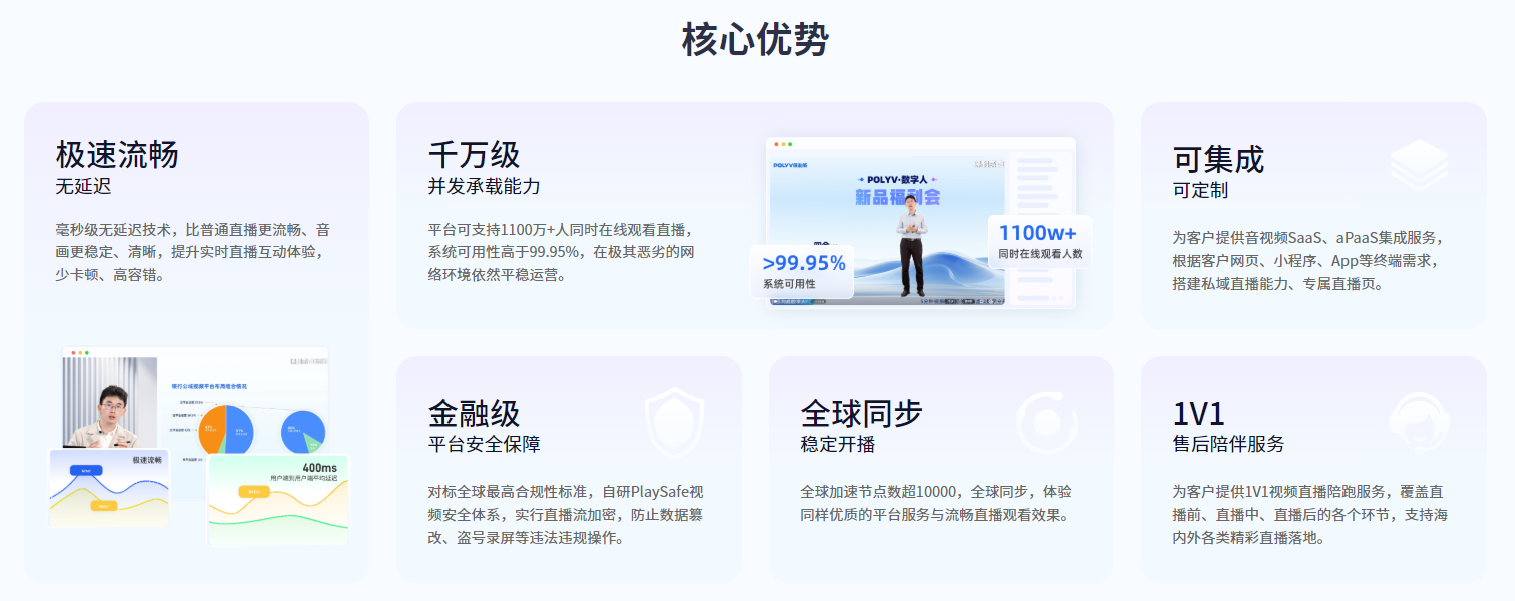
This solution precisely addresses the core demands of government and enterprise organizations to rapidly build live streaming capabilities within native apps, resolving the limitations of conventional live streaming tools in government and enterprise scenarios. SDK embedded integration enables closed-loop live streaming operations and unifies the digital service and office experience. Comprehensive security controls maintain compliance and guarantee secure and stable operation of live content and systems. Full-spectrum functional capabilities serve both internal office work and external government outreach. Flexible technical delivery and project approval support fit the rigorous governance and iterative construction rhythm of government and enterprise projects. Polyv helps organizations rapidly deploy a secure, compliant, fully controllable and iterable dedicated live streaming system, advancing digital government and intelligent office transformation.