
How Real Estate Enterprises Build an Online Property Viewing System?Digital Operation Solution for Aggregated Property Videos
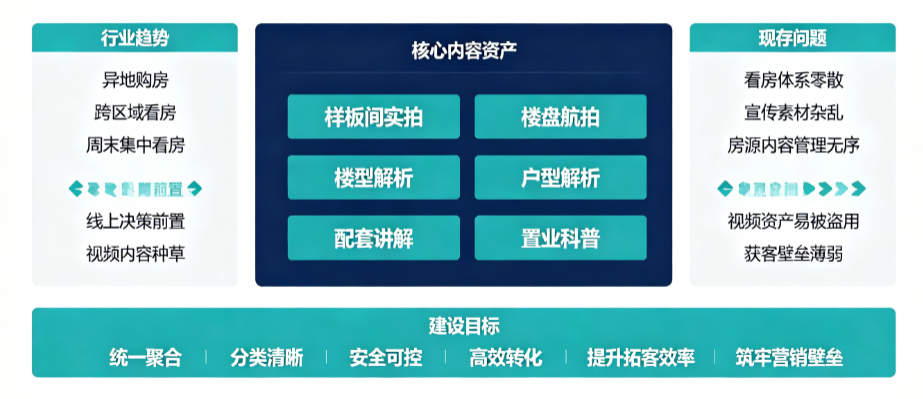
With the in-depth digital transformation of marketing in the real estate industry, the traditional customer acquisition model relying on offline store-based services and on-site property viewings can no longer adapt to current home-buying consumption trends. Cross-city and cross-regional property viewings have become mainstream demands, and home buyers prefer to complete preliminary property viewing decisions through online real-scene videos, house type interpretations and supporting facility explanations, which greatly reduce the time cost of offline property visits. Video content has also become a core asset for real estate enterprises to acquire customers, build brand trust and display property listings. Content such as model apartment real shots, aerial footage of real estate projects, house type analysis and home-buying popular science serves as a key differentiated advantage for real estate enterprises to acquire customers online. However, most real estate institutions currently face multiple problems, including fragmented online property viewing systems, scattered promotional materials, disorderly management of property content, and vulnerable core video assets to piracy. These issues lead to poor customer viewing experience, low sales viewing efficiency and weak barriers for online customer acquisition. Therefore, building a unified, aggregated, clearly classified, safely controlled and efficiently converted online video property viewing system has become a core imperative for real estate enterprises to revitalize digital assets, improve customer acquisition and conversion, and consolidate marketing barriers.
I. Core Pain Points of Online Property Viewing Operations in the Real Estate Industry
(I) High Cost of Offline Property Viewings and Invalid Customers Occupying Marketing Resources
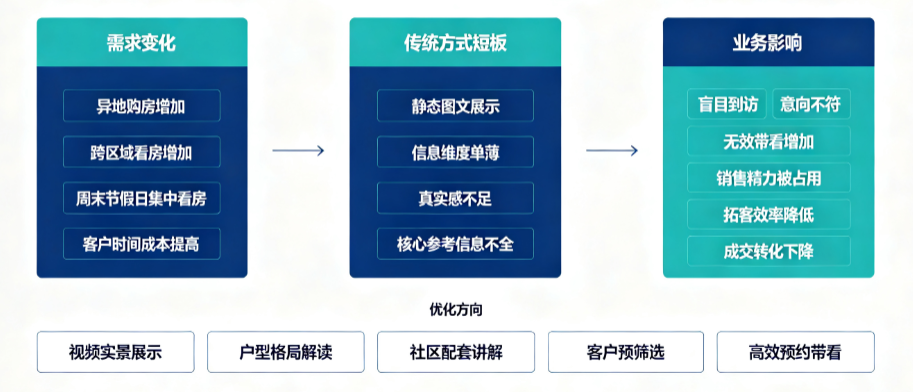
Among current home buyers, the proportion of customers purchasing and viewing properties across regions continues to rise. Most customers can only conduct on-site property visits on weekends and holidays, which involves long travel time and high viewing costs. Traditional property display relying solely on static images and simple text descriptions provides insufficient information and authenticity, failing to fully present core home-buying references including house type layout, lighting conditions, community environment and surrounding supporting facilities. Unable to independently complete property screening and in-depth project evaluation online, customers tend to visit properties blindly with mismatched intentions. A large number of low-precision and low-intention customers continuously occupy the time and energy of sales teams in property viewing, resulting in massive invalid viewing work and significantly reducing the overall customer acquisition and transaction conversion efficiency of the team.
(II) Fragmented Promotional Materials and Disjointed Customer Viewing Experience
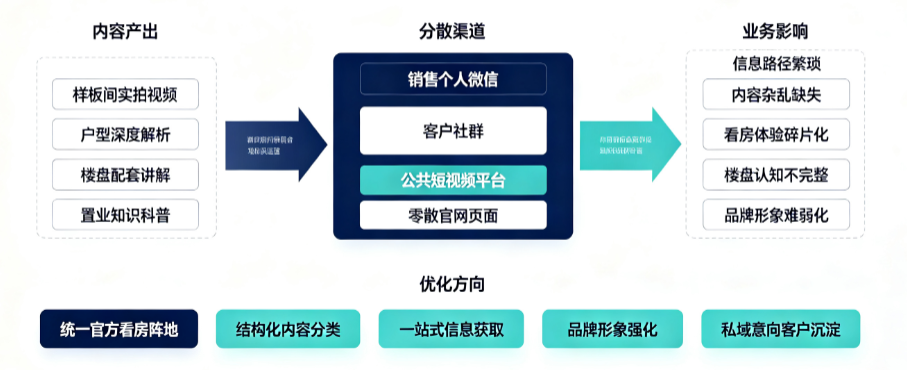
To meet the needs of online customer acquisition, real estate enterprises continuously produce high-quality promotional content such as model apartment real-shot videos, in-depth house type analysis, project supporting facility explanations and home-buying knowledge popularization. Nevertheless, most institutions have not built a unified official property viewing platform. Various video materials and promotional documents are scattered across sales personnel’s personal WeChat accounts, customer groups, public short video platforms and fragmented official website pages. To obtain comprehensive project information, customers need to search across multiple platforms and channels, resulting in cumbersome information acquisition, missing and disordered content, and fragmented viewing experience. This prevents customers from forming a complete and systematic understanding of real estate projects, weakens the official brand image of enterprises, and hinders the precipitation and retention of private domain intentional customers.
(III) Disordered Accumulation of Massive Materials and Low Efficiency of Property Content Operation
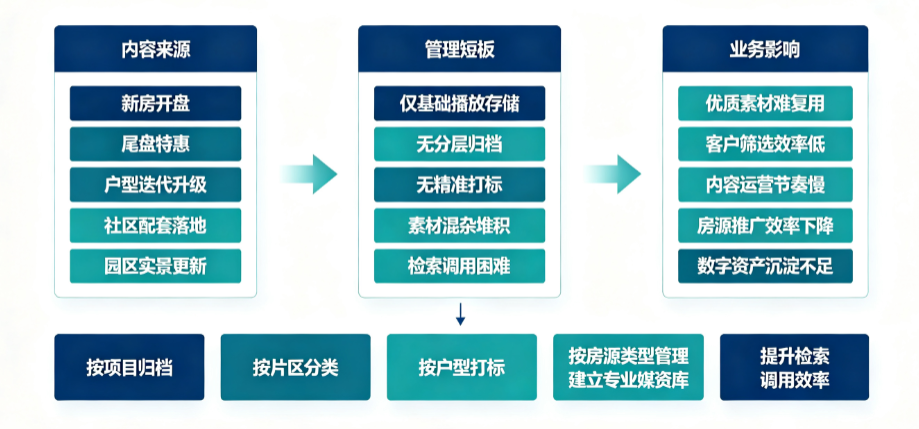
Real estate project marketing involves intensive nodes, including new project launches, year-end preferential offers, house type upgrades, and the completion of community supporting facilities, leading to continuous iteration and accumulation of promotional video materials and massive stock content resources over time. Ordinary players and basic content tools on the market only support elementary video playback and storage functions, lacking professional media asset classification and management capabilities. They cannot achieve hierarchical archiving and precise labeling based on project attributes, regional divisions, house type categories and property types. Ultimately, promotional materials for new, ongoing and tail-end projects are mixed and piled up, making it difficult to quickly retrieve and apply high-quality promotional content and for customers to accurately screen targeted property information, which severely restricts the efficiency of online content operation and property promotion.
(IV) Unprotected Core Video Assets and Customer Loss Caused by Piracy
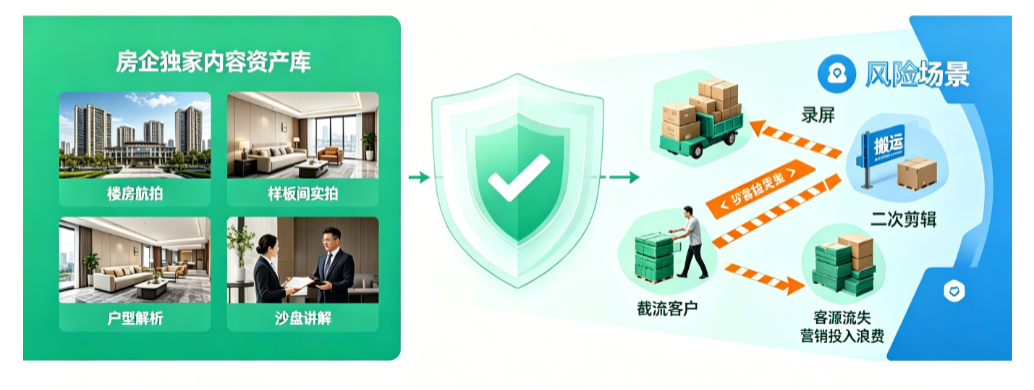
Exclusive content of real estate enterprises, including project aerial videos, on-site model apartment footage, professional house type interpretation and sand table analysis, constitutes core customer acquisition assets with high exclusivity and scarcity. However, ordinary public playback pages lack complete copyright protection mechanisms, without traceable watermarks, video encryption, download restriction and screen recording prevention functions. Industry peers and competing institutions can easily capture, repost and re-edit exclusive promotional materials to carry out marketing and intercept targeted home-buying customers. This breaks the differentiated online customer acquisition barriers of real estate enterprises, causing customer loss, wasted marketing investment and damaged brand rights and interests.
II. How Real Estate Enterprises Build an Online Property Viewing System
(I) Immersive Real-scene Video Viewing to Precisely Filter Invalid On-site Visits
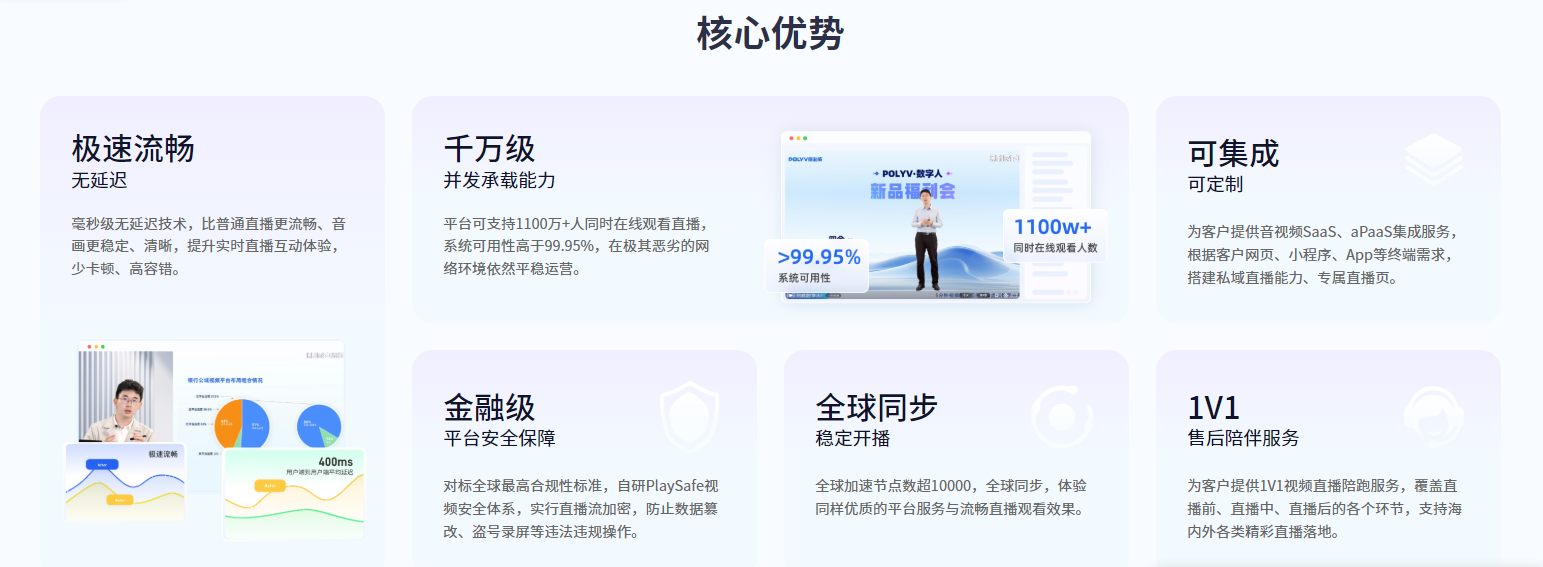
Leveraging ultra-clear video on-demand and real-scene content aggregation capabilities, Polyvi builds an immersive online property viewing system for real estate enterprises, which can systematically carry full-scenario video content including real project scenes, house type details, community environments and surrounding supporting facilities, reproducing the complete offline property viewing experience. Fully catering to the core customer groups of cross-regional and weekend property viewers, the system enables customers to independently browse properties, compare real scenes and evaluate intentions online to complete preliminary property screening efficiently. It effectively solves the problems of insufficient information and authenticity in traditional graphic display, avoids blind customer visits caused by information asymmetry, and accurately filters low-matching and low-intention customers. This frees sales teams from massive invalid viewing work, allows them to focus on serving high-precision intentional customers, reduces human resource consumption, and comprehensively improves the accuracy of customer acquisition and on-site transaction conversion efficiency.
(II) Full-channel Content Aggregation Website to Build an Exclusive Official Marketing Platform
We build an exclusive aggregated official online property viewing platform for real estate enterprises, realizing one-stop aggregation of full-dimensional content including property real-shot videos, graphic materials, project columns, launch updates, promotional activities and home-buying announcements. It integrates promotional materials scattered in sales private domains, customer groups, short video platforms and fragmented official website pages, eliminating the operational pain points of fragmented content, disordered channels and inconsistent publicity standards. Serving as a unified traffic entry for all public and private domain drainage, the official aggregation platform standardizes brand external display, provides customers with one-stop and standardized property viewing and consulting services, efficiently precipitates private domain intentional customers, and builds a stable and sustainable online customer acquisition and operation platform.
(III) Multi-dimensional Label Classification Management to Realize Refined Material Operation and Maintenance
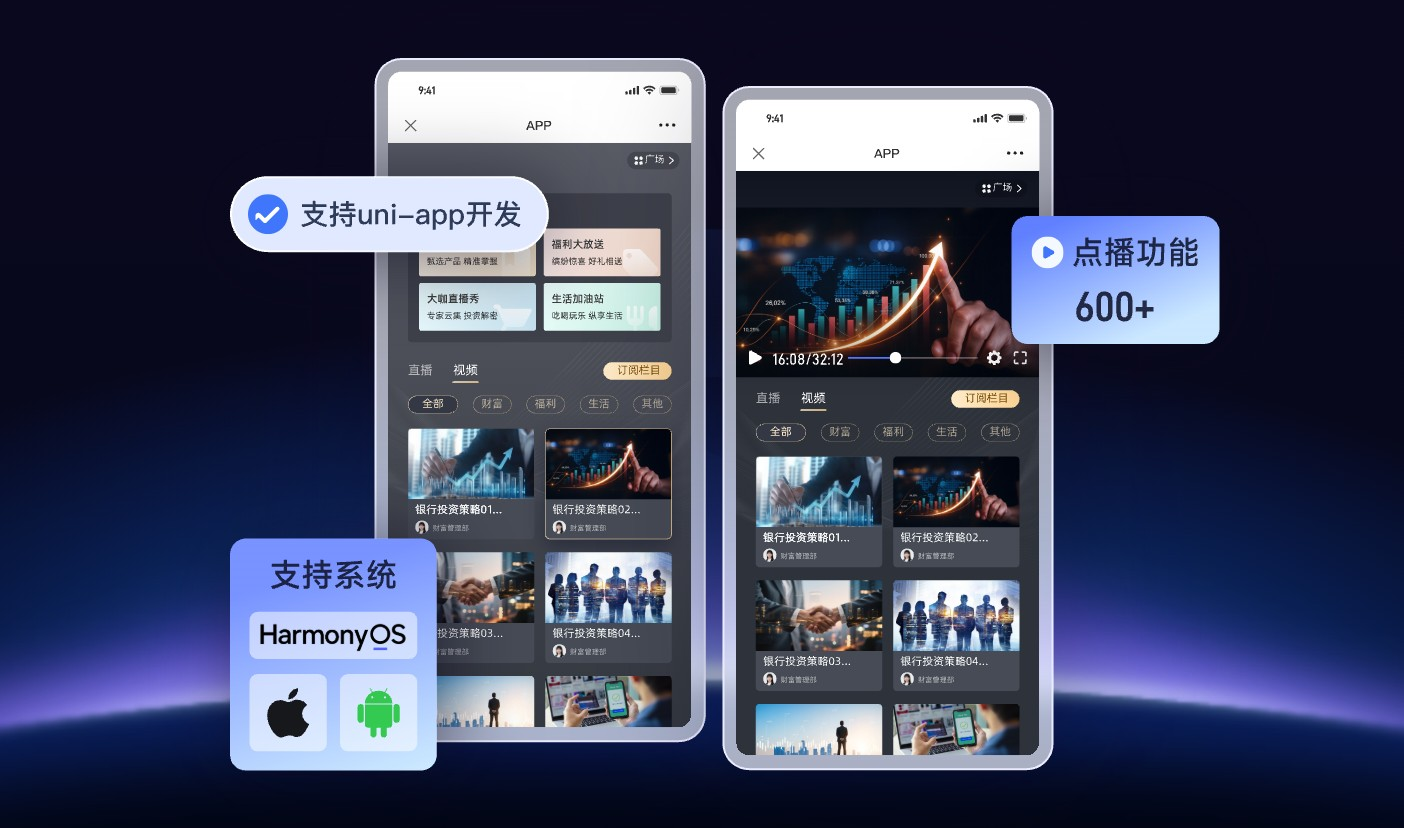
Equipped with a professional multi-level media asset management system, the solution supports customized multi-dimensional label classification by project, region, house type specification, property type and marketing stage. It enables hierarchical archiving, precise classification and orderly storage of various video materials for new launches, ongoing sales, tail-end promotions and stock projects. All promotional materials are well-organized and easily retrievable, allowing operation teams to quickly access materials for marketing promotion and customers to accurately screen targeted property content according to their needs. This completely solves the problems of mixed materials, difficult retrieval and low operation efficiency, and realizes refined, normalized and efficient operation of property video assets.
(IV) PlaySafe® Security System to Build a Solid Barrier for Core Asset Protection
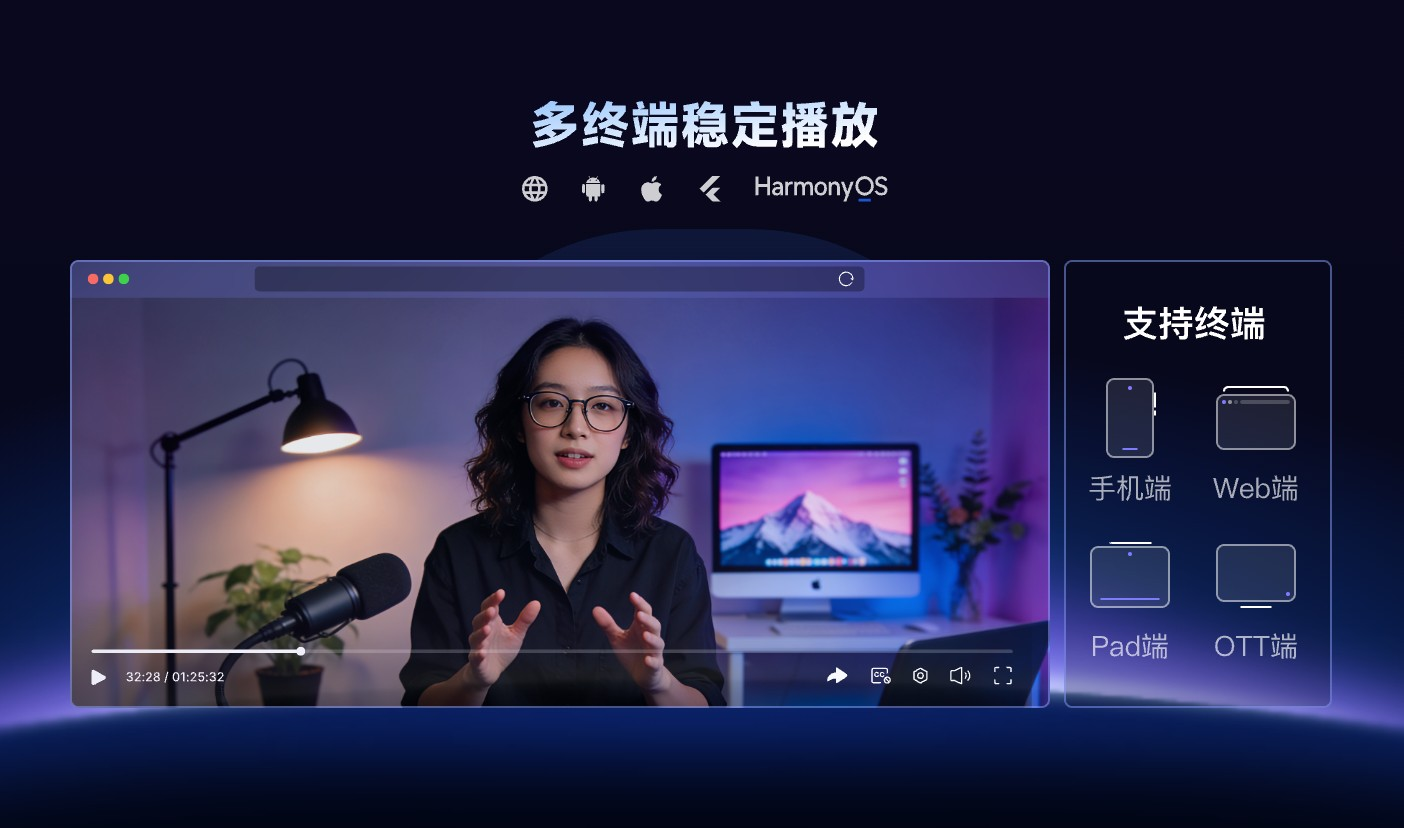
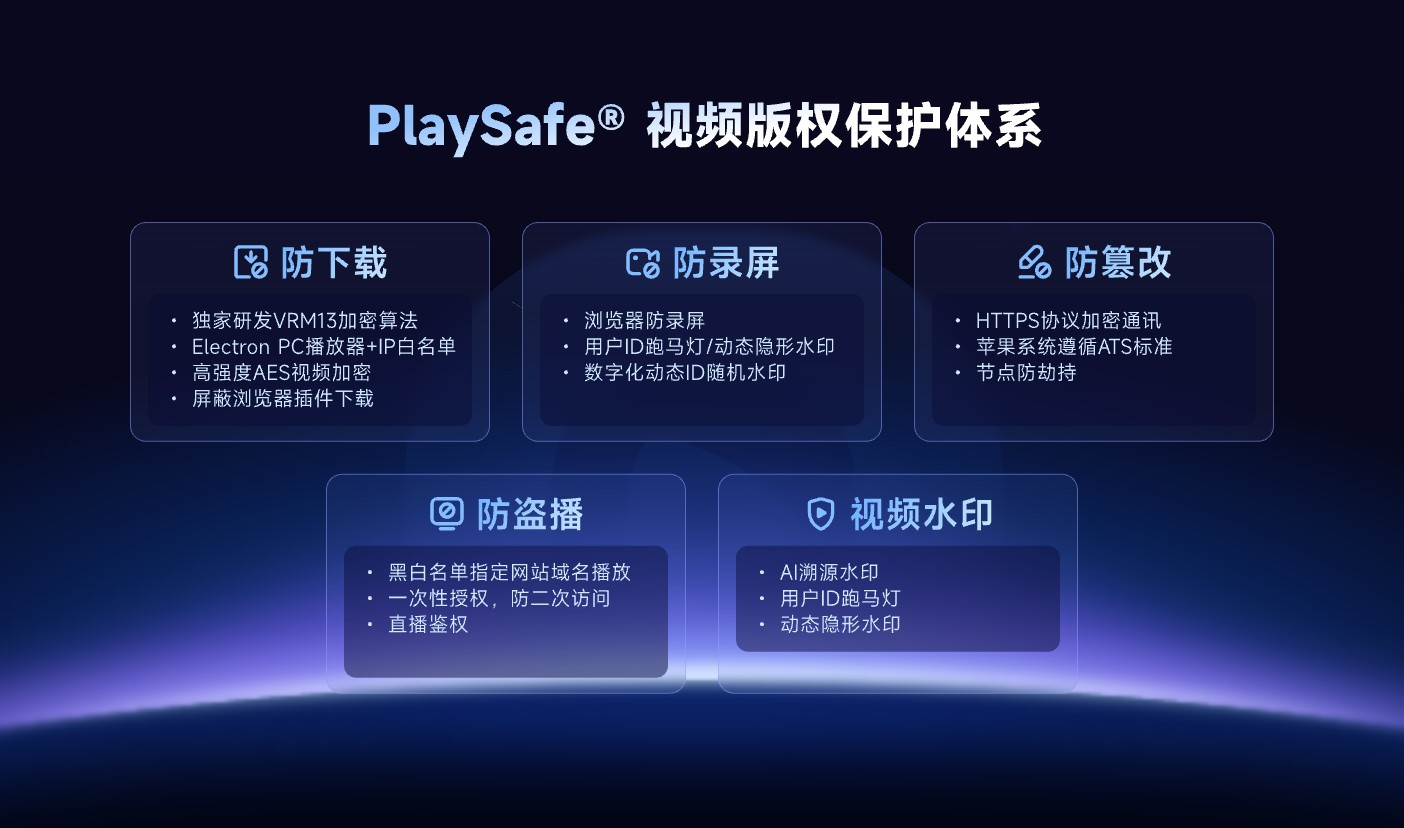
Adopting Polyvi’s exclusive PlaySafe® full-link video security protection system tailored for real estate core asset protection, the solution builds an all-round copyright protection barrier through encrypted video storage, dynamic traceable watermarks, download prohibition, screen recording prevention, illegal live broadcast blocking and anti-leeching technologies. It fundamentally prevents peers from capturing, reposting and illegally reusing promotional materials to intercept customers, effectively protects high-value exclusive assets such as project aerial footage and model apartment real-shot videos, consolidates the differentiated online customer acquisition barriers of real estate enterprises, avoids wasted marketing resources and customer loss, and ensures the safe and controllable operation of digital marketing assets.
III. Core Value of Solution Implementation