
How to Build a Stable On-Demand System for Short Drama Apps: Cloud On-Demand Solution for Short Drama Platforms in 2026
Driven by surging demand for fragmented entertainment on mobile internet, short dramas have swiftly emerged as a mainstream leisure content format among all demographics, featuring tight plots, short single-episode durations, gripping thrills and low viewing barriers, with the industry’s user base expanding steadily. Supported by a monetization model combining free preview, episode unlocking and membership subscriptions, numerous content studios, new media agencies and cultural & entertainment enterprises have rushed into the market, developing proprietary short drama apps to seize industry dividends.
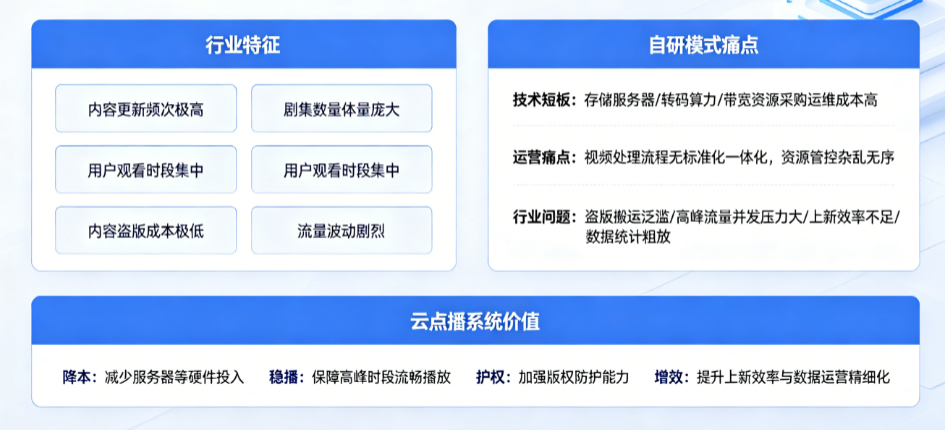
Compared with traditional long-video platforms, the short drama sector is marked by extremely frequent content updates, massive episode libraries, concentrated viewing hours, low content piracy costs and drastic traffic fluctuations. These characteristics impose stringent, refined technical requirements on video storage, transcoding, content distribution, copyright protection and data operations.
At present, most small and medium-sized short drama platforms and new market entrants opt to independently develop the underlying video on-demand architecture for their proprietary apps, aiming to secure content copyrights, cut platform commission fees and privately accumulate user assets. Nevertheless, self-developed models come with conspicuous technical flaws and operational pain points. Enterprises must invest heavily upfront in purchasing and maintaining storage servers, transcoding computing power and bandwidth resources. Furthermore, self-built video systems lack standardized, integrated video processing workflows, leading to disorganized storage, transcoding, distribution and playback control for massive short drama resources.
Meanwhile, rampant unauthorized reproduction of short dramas, heavy pressure from concurrent traffic surges during peak hours, slow new content rollouts and simplistic data analytics persist as pervasive challenges. These issues not only drive up operational costs substantially but also undermine user viewing experience and paid conversion efficiency, resulting in low member retention and unstable commercial revenue. Against this backdrop, leveraging mature third-party cloud on-demand systems to fully supplement underlying technical capabilities for short drama apps has become an essential demand for platforms to scale up and operate sustainably, enabling cost reduction, stable playback, copyright safeguarding and efficiency improvement.
I. Core Industry Pain Points of Self-Developed Short Drama Apps
(1) Exorbitant Costs for Self-Built Architectures and Lack of Standardized Media Asset O&M
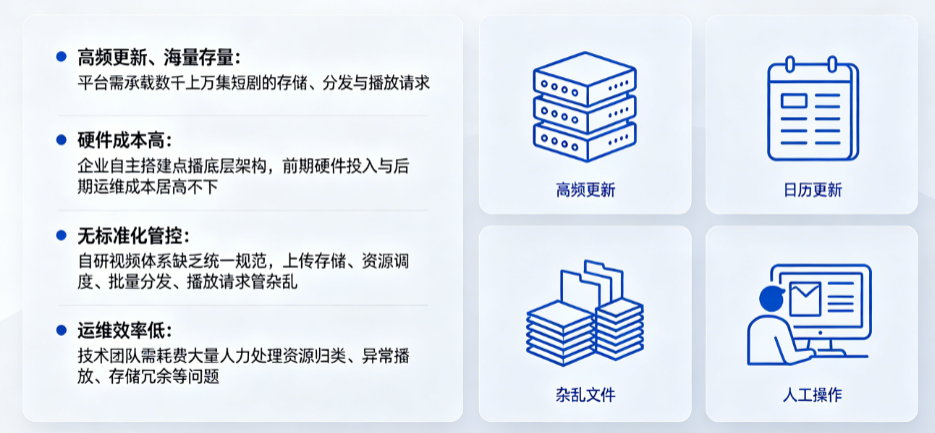
Short drama operations entail frequent content refreshes and ever-expanding content inventories, requiring platforms to support storage, distribution and playback requests for thousands of episodes daily. This places high demands on underlying hardware and operation & maintenance (O&M) frameworks. Building an in-house on-demand infrastructure entails hefty upfront hardware expenditures and continuous long-term maintenance costs.
More importantly, self-developed video systems lack standardized management protocols. There are no unified rules governing bulk upload and storage of segmented short dramas, resource scheduling, mass distribution and playback request management, resulting in scattered, chaotic backend operations. Technical teams expend extensive manpower daily sorting media assets, troubleshooting playback errors and eliminating storage redundancy amid constant new episode launches, leading to abysmal O&M efficiency and uncontrollable long-term comprehensive operational costs.
(2) Widespread Piracy Diverting Paid Platform Users
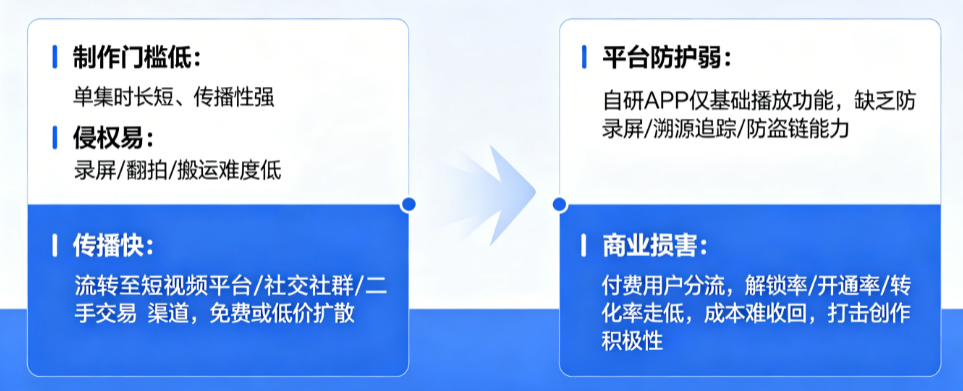
Short dramas feature low production thresholds, brief single episodes and high transmissibility, making them the hardest-hit category for online copyright infringement. Unlike long-form videos, short dramas can be easily screen-recorded, remade and reposted. Paid unlockable episodes and exclusive high-definition content for members are frequently mass-recorded and downloaded by users via screen capture tools. Pirated copies spread rapidly across short-video platforms, social groups and second-hand trading channels at zero or negligible prices.
Most self-developed short drama apps only support basic playback functions without robust copyright protection frameworks, lacking core capabilities such as anti-screen-recording, traceability and anti-leech. Platforms suffer severe diversion of targeted paying users to pirated alternatives, dragging down episode unlock rates, membership sign-ups and renewal conversion rates. Costs invested in drama production, content procurement and traffic promotion become difficult to recoup, severely eroding platform commercial gains and discouraging content creation.
(3) Insufficient Self-Hosted Transcoding Computing Power Slowing New Content Launches
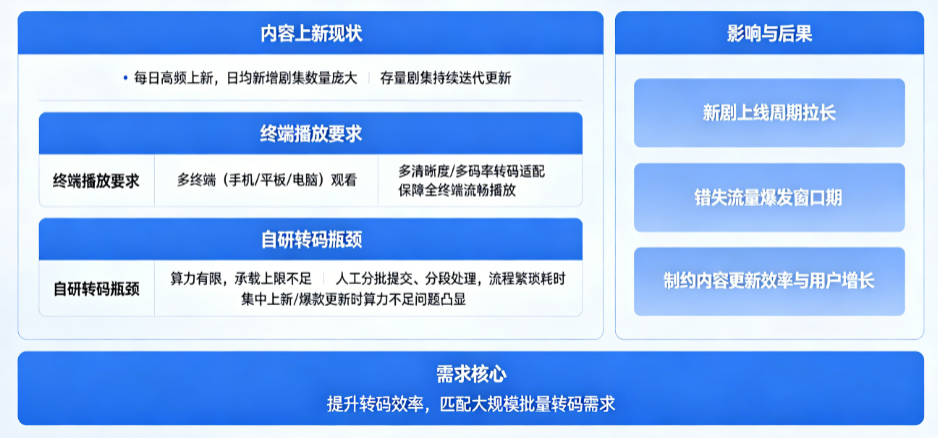
To retain user activity and maintain content competitiveness, short drama platforms roll out new episodes in large volumes every day while continuously updating existing titles. Since users watch content across mobile phones, tablets, computers and other devices with divergent network conditions and screen resolutions, newly launched episodes must undergo bulk transcoding into multiple definitions and bitrates to guarantee smooth cross-device playback.
However, self-deployed transcoding servers have capped computing power that cannot meet large-scale batch transcoding demands. Massive episode batches require manual segmented submission and processing, creating cumbersome, time-consuming workflows. This bottleneck worsens during mass new content rollouts or hit drama updates, drastically delaying release timelines. Platforms miss critical traffic windows for user acquisition and monetization, hampering content refresh efficiency and user growth momentum.
(4) Inadequate Peak Bandwidth Capacity Causes Playback Instability and User Churn
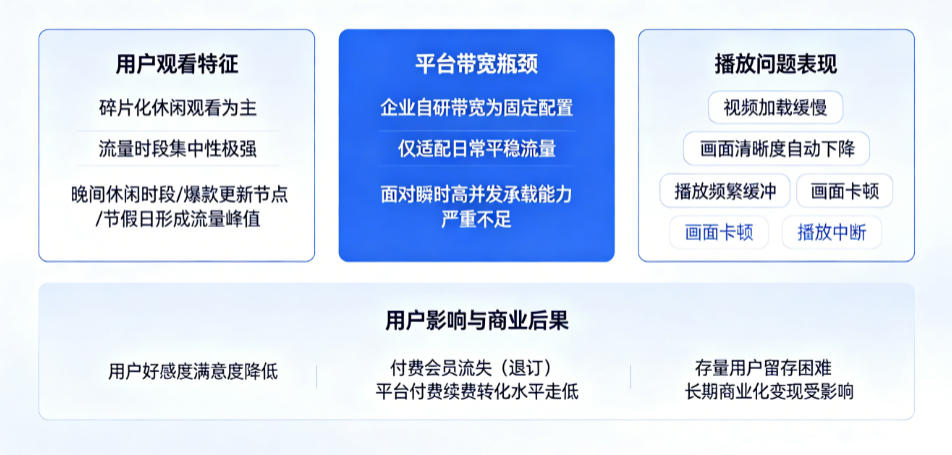
Short drama users consume content in fragmented leisure time, creating highly concentrated traffic spikes during evening downtime, hit drama release dates and holidays, with instantaneous surges in concurrent visitor numbers. Self-provisioned fixed bandwidth is sized only for baseline daily traffic and cannot withstand abrupt high-concurrency loads.
During peak hours, platforms commonly suffer slow video loading, automatic resolution degradation, frequent buffering, frame stuttering and playback interruptions. Unstable viewing experience erodes user satisfaction dramatically. Paid members, who hold higher standards for playback smoothness and image quality, are particularly likely to cancel subscriptions amid persistent playback failures. This directly reduces member renewals, impairs existing user retention and undermines long-term commercial monetization.
(5) Limited Data Analytics Capabilities Hinder Data-Driven Content Operations
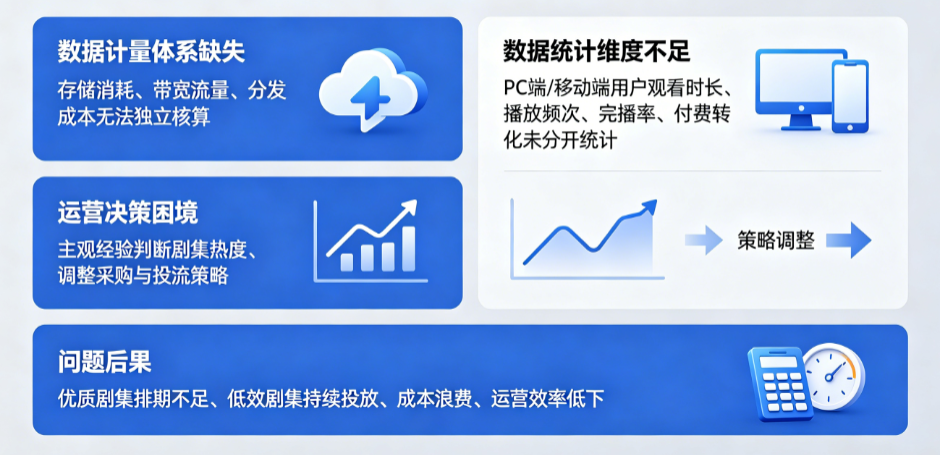
Granular data operations are pivotal for short drama platforms to cut costs and boost monetization, yet most self-developed apps lack comprehensive video metering and statistical frameworks with clear data limitations. Platforms cannot independently calculate storage consumption, bandwidth usage and distribution costs tied to individual dramas, making it impossible to accurately evaluate the return on investment (ROI) of each title.
Additionally, they cannot separately track differentiated metrics including viewing duration, play counts, completion rates and paid conversions across PC and mobile terminals. Operations teams rely solely on subjective experience to judge drama popularity and adjust content procurement & traffic promotion strategies, without visualized, quantifiable data support. This leads to misallocated scheduling for high-potential dramas, sustained investment in underperforming titles and wasted budgets, lowering precision in content procurement and traffic delivery and dragging down overall operational efficiency.
II. Cloud On-Demand Solutions Addressing Practical Challenges for Short Drama Apps
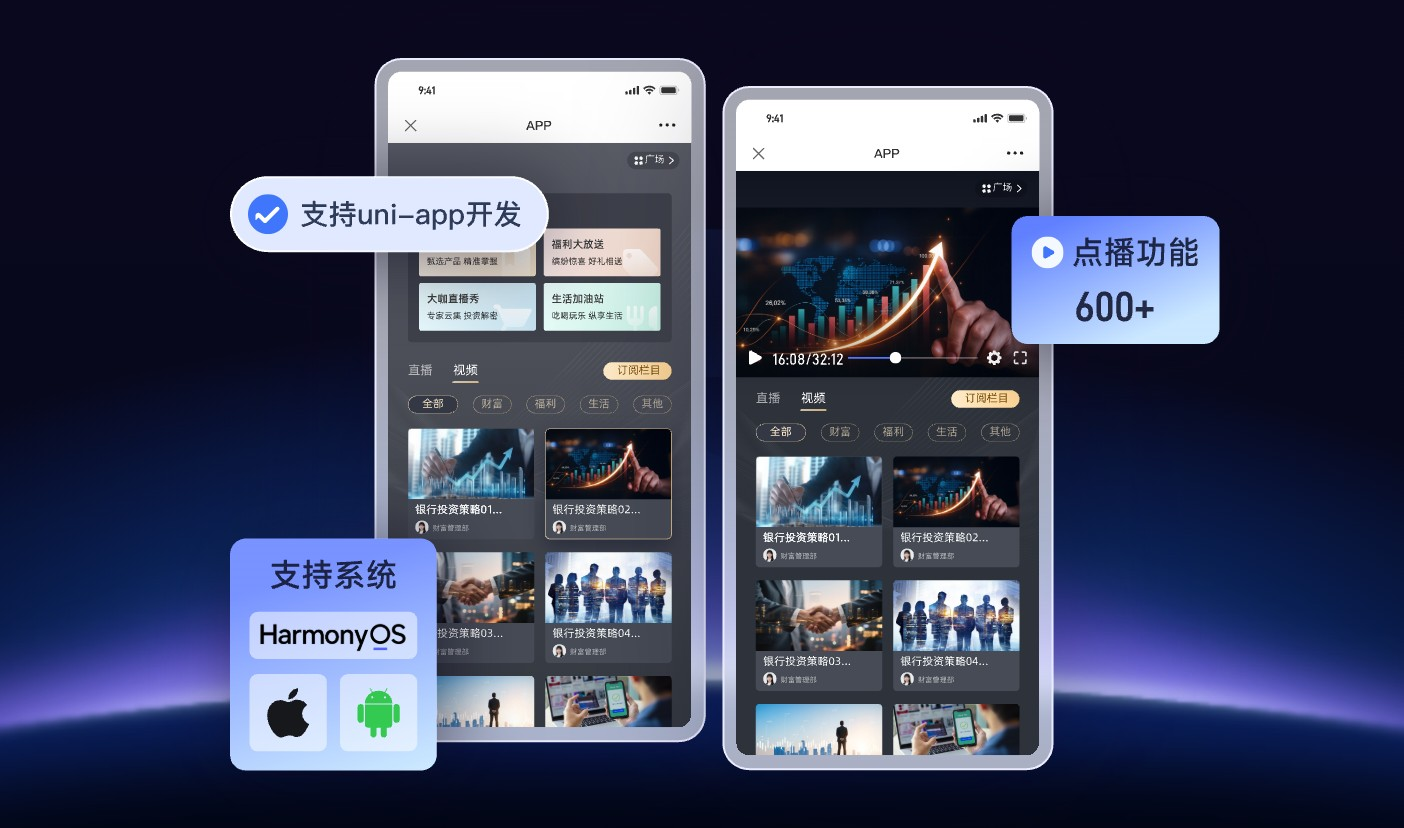
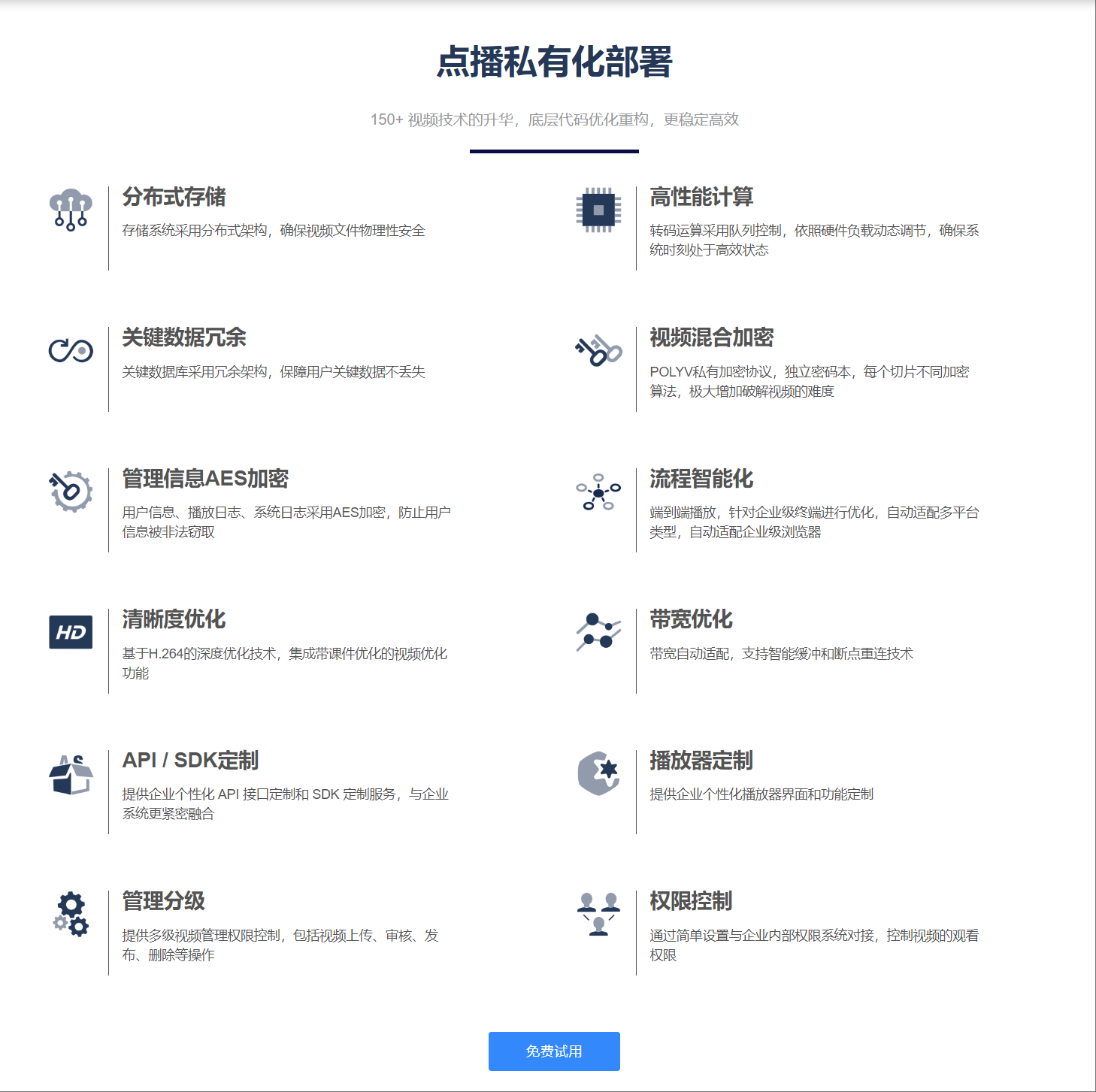
Polyv delivers mature enterprise-grade cloud on-demand systems tailored to private-domain video commercial scenarios including paid short dramas and proprietary film & television apps. It offers standardized SDKs and lightweight API integration, eliminating the need for enterprises to reconstruct their existing app architecture for rapid feature docking.
The system covers the full chain of capabilities: cloud video storage, intelligent batch transcoding, global CDN distribution, encrypted cross-device playback, copyright protection and multi-dimensional data analytics. Aligned perfectly with short drama business traits — massive segmented episodes, frequent updates, peak high concurrency and paid monetization — it comprehensively resolves core pain points of self-built on-demand architectures: high costs, low efficiency, security vulnerabilities, unstable playback and insufficient data analytics. It empowers short drama platforms to build professional video on-demand frameworks with lightweight implementation.
(1) Cloud On-Demand Services Cut Costs and Streamline Media Asset O&M
To tackle the high investment and cumbersome maintenance of self-built infrastructure, Polyyv’s cloud on-demand service integrates end-to-end foundational capabilities: cloud storage for short drama footage, bulk transcoding, global CDN distribution and standardized playback under a unified media asset operation system.
Platforms are relieved of upfront procurement, upgrades and maintenance for storage servers, transcoding hardware and bandwidth, eliminating substantial fixed expenditures. The cloud’s standardized management framework enables unified upload, intelligent categorization, resource scheduling and compliance control for massive short drama libraries, simplifying all media asset O&M workflows. Technical teams face far lighter daily maintenance workloads and reduced labor expenses, optimizing the overall cost structure to deliver lightweight, efficient media asset management.
(2) Full-Link Copyright Protection Curbs Piracy and User Diversion
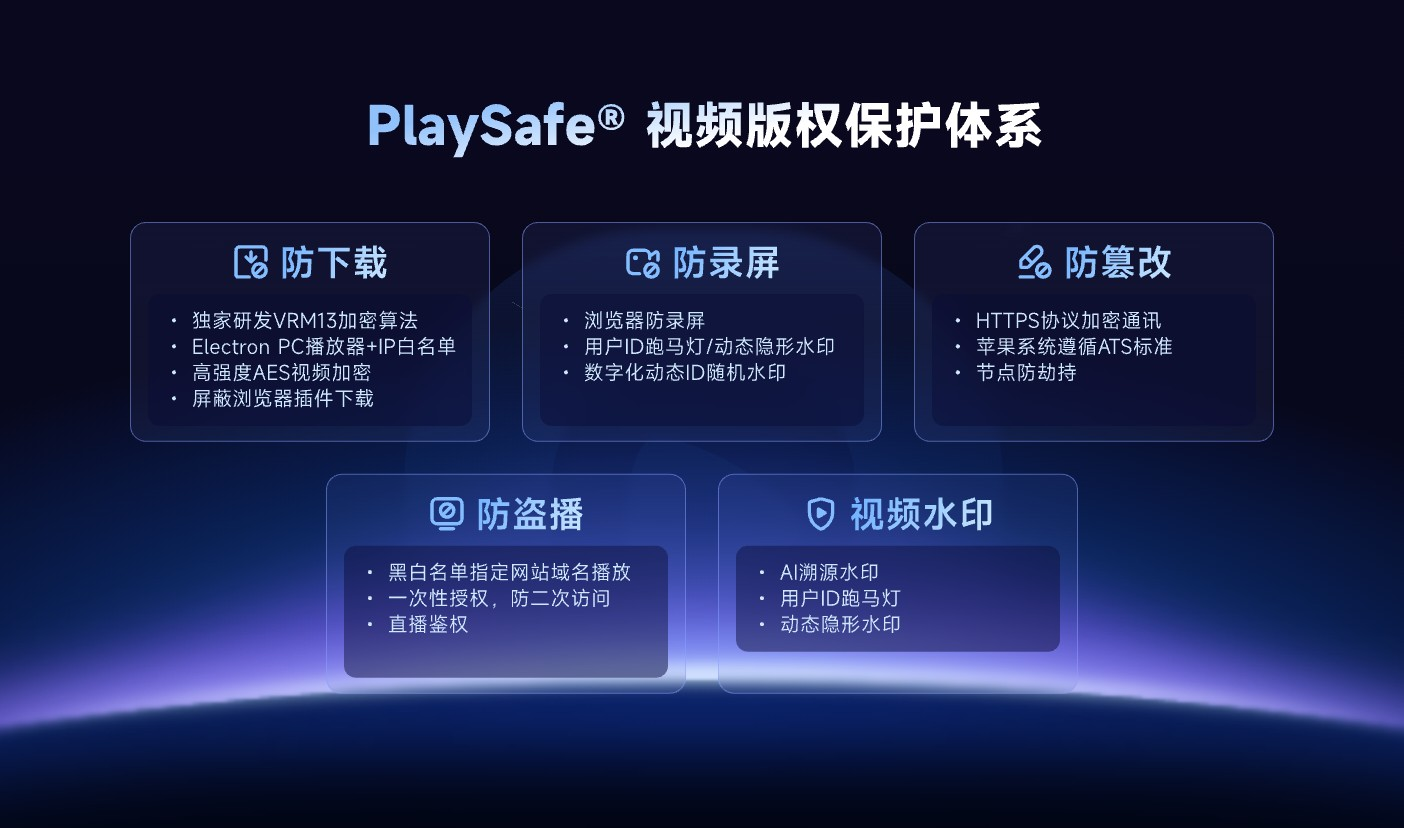
To combat rampant short drama screen-recording piracy and paid user diversion, the system embeds Polyv’s proprietary PlaySafe® video copyright protection suite, establishing multi-layered, full-link content security barriers. Protection spans encrypted cloud storage, dynamic watermarks on playback terminals, anti-screen-recording safeguards, illegal download interception and anti-leech distribution, securing content throughout storage, transmission and terminal playback.
Platforms can customize dynamic watermarks tagged by traffic source channels to trace pirated content and quickly identify unauthorized dissemination channels. This effectively mitigates mass screen-recording reposting, illegal resale and low-cost pirated distribution, reducing the impact of piracy on platform paid systems. It safeguards proprietary content copyright assets and paying user bases, ensuring commercial returns on content investments.
(3) Intelligent Batch Transcoding Accelerates Cross-Device Content Distribution
Powered by cloud-based elastic transcoding computing, the platform supports fully automated bulk transcoding of thousands of short drama episodes across multiple bitrates, eliminating manual segmented processing. One-click batch adaptation for multiple definitions and formats drastically shortens transcoding cycles and speeds up full new drama rollouts, helping platforms seize critical traffic growth windows.
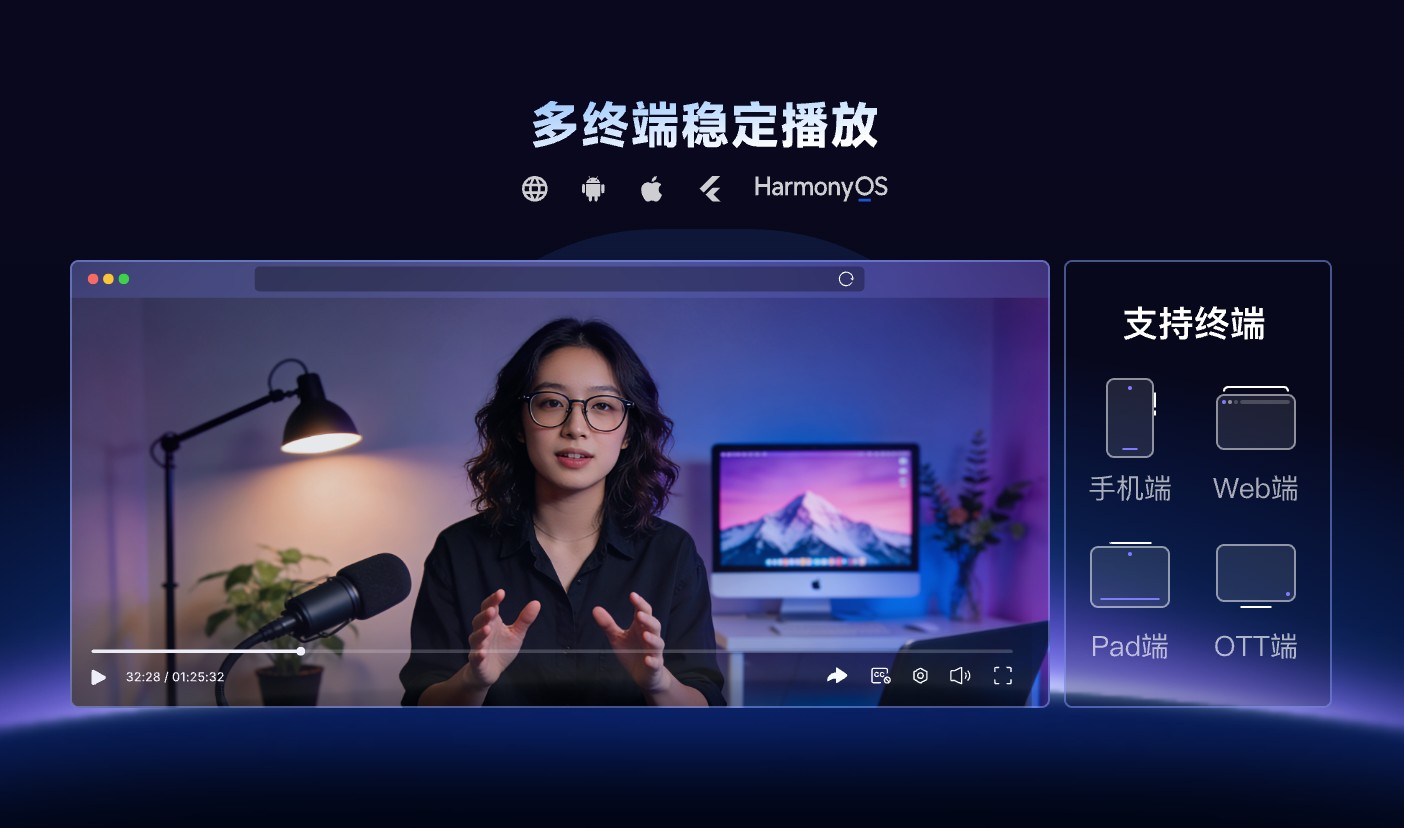
Transcoded videos are fully compatible with browsers, all operating systems, mobile phones, tablets and other terminal devices. The system dynamically adjusts playback resolution based on real-time user network conditions: switching to low bitrates automatically during network congestion to sustain smooth playback, and loading high-definition footage under stable connectivity. This fully accommodates users’ fragmented, multi-scenario viewing habits and elevates cross-device user experience.
(4) Global CDN Intelligent Distribution Stabilizes Playback Amid Peak Concurrency
Built on a globally distributed CDN node network, Polyyv delivers low-latency, highly stable video distribution links capable of handling massive concurrent traffic surges from evening viewing peaks, hit drama premieres and holiday periods. Technologies including intelligent nearest-node distribution, link optimization and cache acceleration minimize video loading latency and buffering, resolving common issues such as blurry frames, stuttering and playback disconnections.
Consistently smooth viewing experience boosts satisfaction among paid users, reducing subscription cancellations and churn caused by playback malfunctions. It stabilizes member renewal conversion during traffic peaks, retains existing users, improves monetization efficiency and supports sustained platform user base expansion.
(5) Multi-Dimensional Visualized Data Empowers Granular Content Operations
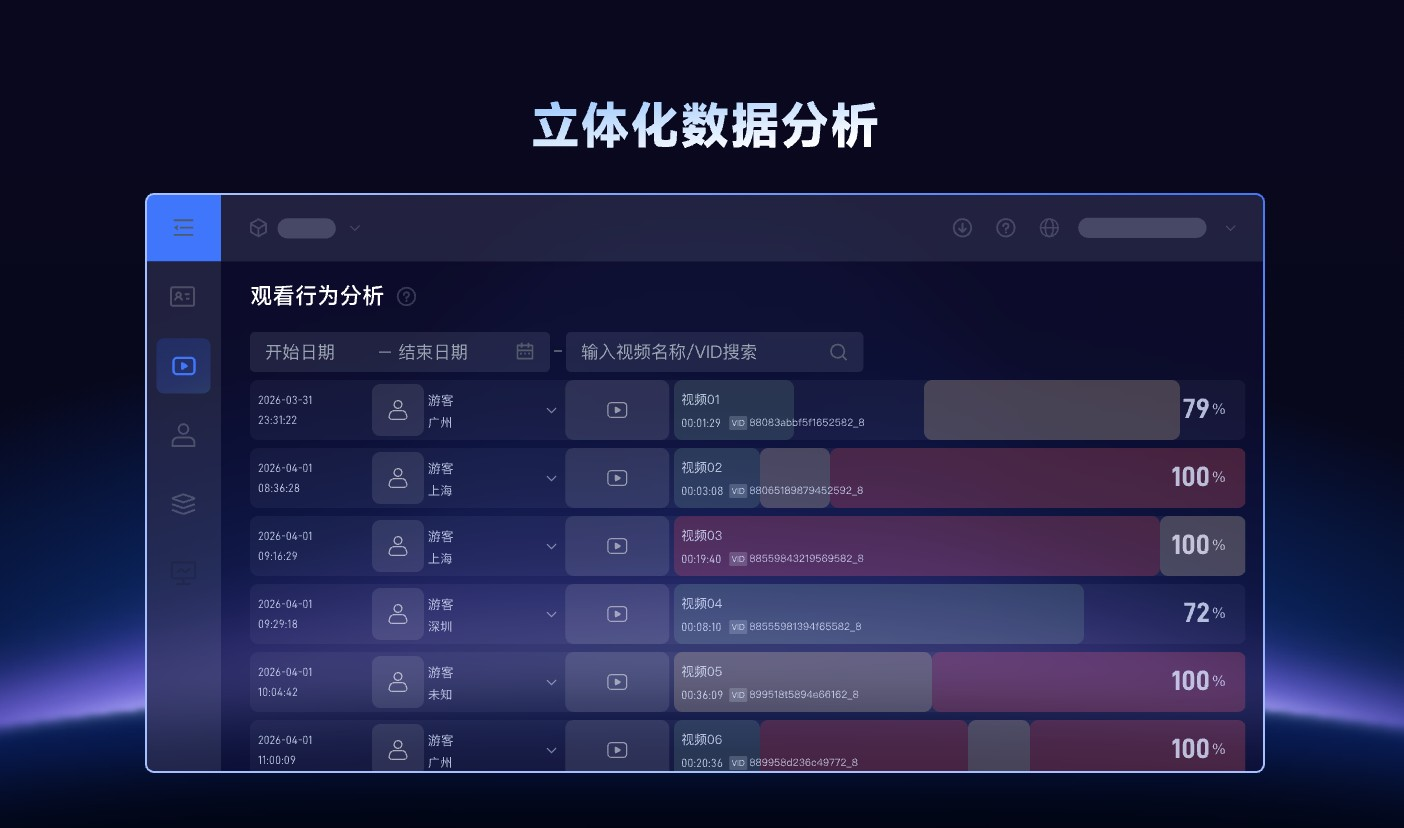
The platform comes equipped with comprehensive refined video analytics, supporting standalone data queries per drama and cross-terminal statistical tracking. Core metrics include play volume, viewing duration, engagement, bandwidth consumption and paid conversion, all presented via intuitive visualized charts for fast data reading and analysis by operations teams.
Platforms can precisely calculate traffic and storage operational costs for individual dramas, clearly identify high-traffic, high-conversion and high-retention premium titles and filter underperforming content with low market traction. Data-driven insights optimize content procurement budgets, traffic promotion tactics and drama release scheduling, replacing traditional experience-led operations with refined, quantitative content management to continuously boost content monetization efficiency and overall ROI.
III. Core Value of Deploying a Short Drama App On-Demand System
Polyv also provides private-domain live streaming systems with integration solutions for brand mini-programs and native apps, alongside private-domain monetization tools including flash sales, red envelopes, lucky draw bags and coupons. It fully addresses all shortcomings of self-developed on-demand architectures, resolving a full spectrum of industry pain points: excessive infrastructure costs, slow batch transcoding, unstable playback during traffic peaks, piracy-driven user diversion and simplistic data operations.
It empowers platforms to build low-cost, highly stable, secure and data-driven professional on-demand operation frameworks, effectively cutting O&M expenses, accelerating new content rollouts, upgrading user viewing experience and retaining core paying users. Granular data analytics continuously lift content monetization efficiency and consolidate the commercial foundation of platforms.
Competition in the short drama industry has intensified sharply, with rising costs for content procurement and traffic promotion. Compliant, refined and stable operations have become core competitiveness for long-term platform growth. Traditional self-built video on-demand models carry inherent limitations: high hardware investment, cumbersome maintenance workflows, capped transcoding computing power, frequent playback stuttering during peak hours, absent copyright protection and limited data analytics. These persistent operational losses trigger paid user churn, low returns on content investments and sluggish monetization, severely restricting the scaled, sustainable development of short drama platforms.