
Lightweight Corporate Training Solution: Live In-store Product Training for Chain Retail Stores
Standardized product knowledge training serves as the core foundation for chain retail stores to improve employees’ professional competencies, unify sales pitches, and optimize terminal service quality. Characterized by widespread store distribution, scattered staff, and high employee rotation and mobility, chain retail businesses face high costs and poor implementation effects with traditional offline centralized training. For this reason, most enterprises adopt online live streaming for company-wide internal product training. However, most in-store training sessions are hosted independently by instructors without supporting operational tools or permission management systems, resulting in prevalent pain points: unverifiable training effectiveness, disorganized and hard-to-document Q&A content, cumbersome staff access configuration, low reusability of course materials, and high risks of internal training content leakage. Targeting the exclusive pain points of chain retail internal training scenarios, building a lightweight live training system adapted to corporate organizational structures, supportive of interactive assessments, intelligent operation and maintenance, and fully secure and controllable has become the key for retail enterprises to implement standardized company-wide training and efficient talent empowerment.
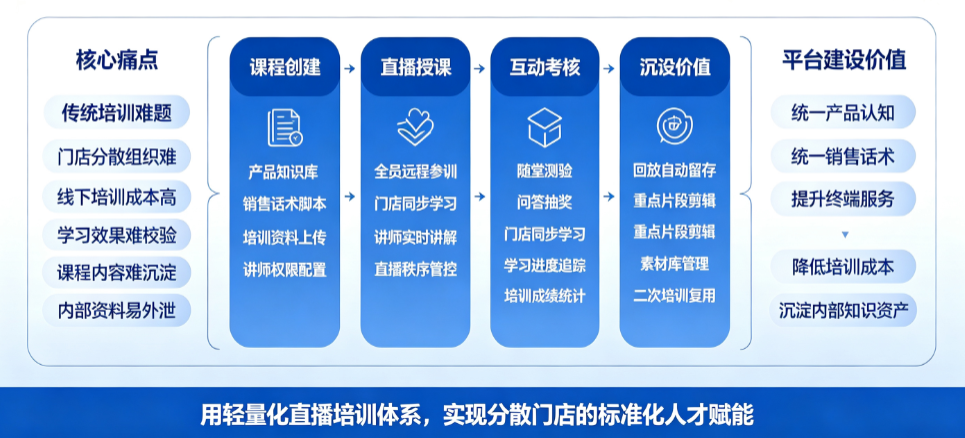
I. Core Pain Points of Live Product Training for Chain Retail Stores
1. Single-host Live Sessions Without Auxiliary Tools, Unverifiable Training Effectiveness
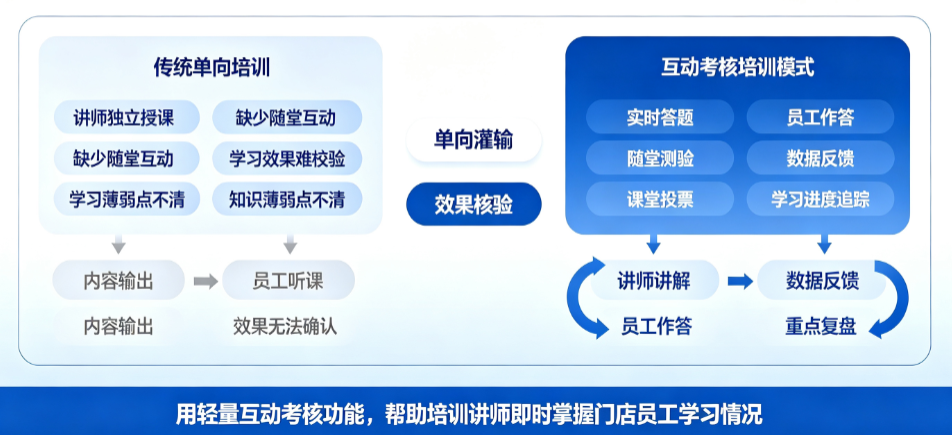
Most in-store product training live sessions are independently delivered by instructors throughout the entire course without operational assistants. While focusing on explaining product knowledge points, disassembling sales pitches, and conducting in-store practical training, instructors cannot oversee real-time training effect assessments. Traditional live training only supports one-way content output and lacks in-class interactive assessment functions, making it impossible to launch real-time quizzes, tests and polls to verify employees’ learning mastery. Enterprises cannot instantly grasp the learning progress and knowledge weaknesses of staff across all stores. Such training is reduced to one-way knowledge indoctrination with unmeasurable learning outcomes, failing to guarantee the uniformity and effectiveness of product training for stores nationwide.
2. Disorganized and Scattered Trainee Q&A Disrupts Training Rhythm
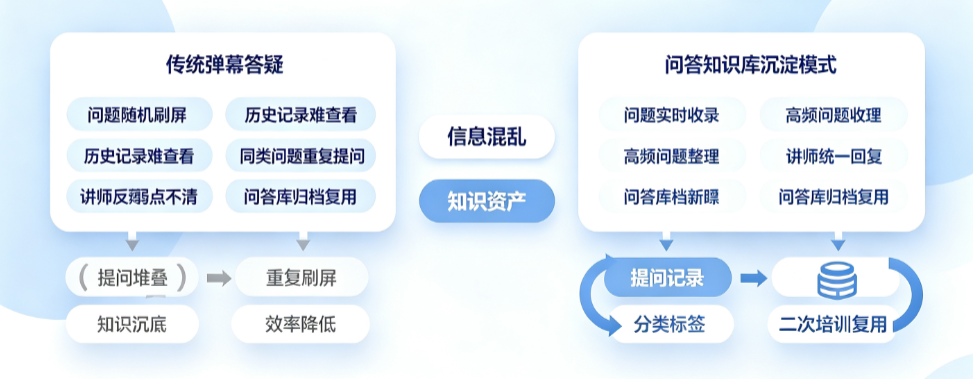
The Q&A sessions of in-store live training mainly rely on instructors’ verbal replies. Employee comments are random and scroll rapidly, leading to dense overlapping questions on the screen. Newly joined trainees cannot view historical Q&A records, resulting in repeated inquiries of the same questions. In the single-teacher mode with no dedicated staff to organize Q&A content, instructors are forced to answer repetitive questions frequently, interrupting the normal teaching rhythm and greatly reducing training efficiency. Furthermore, high-quality Q&A content cannot be archived in real time to form a reusable question-and-answer knowledge base, hindering the long-term standardized accumulation of corporate internal training resources.
3. Disconnected Organizational Structure and Low-efficiency Staff Access Configuration
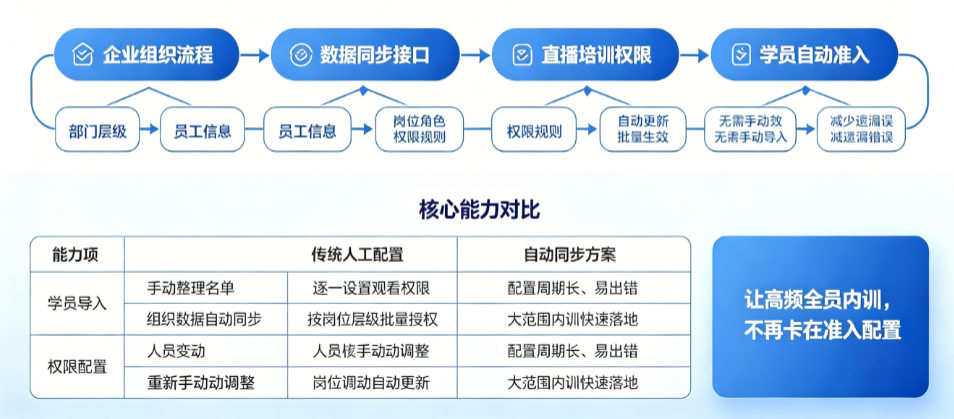
Chain retail enterprises feature large and complex organizational structures, multiple staff levels, a large employee base, and frequent personnel transfers and job rotations. General live streaming tools cannot connect to the native organizational system of WeCom or automatically synchronize departmental structures and employee information. For each product training session, administrators have to manually import trainee lists and configure viewing permissions one by one, resulting in extremely cumbersome and time-consuming access configuration. Manual operations suffer from low efficiency and frequent errors such as missing personnel and incorrect permission settings, failing to adapt to the high-frequency, large-scale company-wide internal training scenarios of chain enterprises.
4. Bulky Live Playbacks Hinder Precipitation and Reuse of High-quality Courses
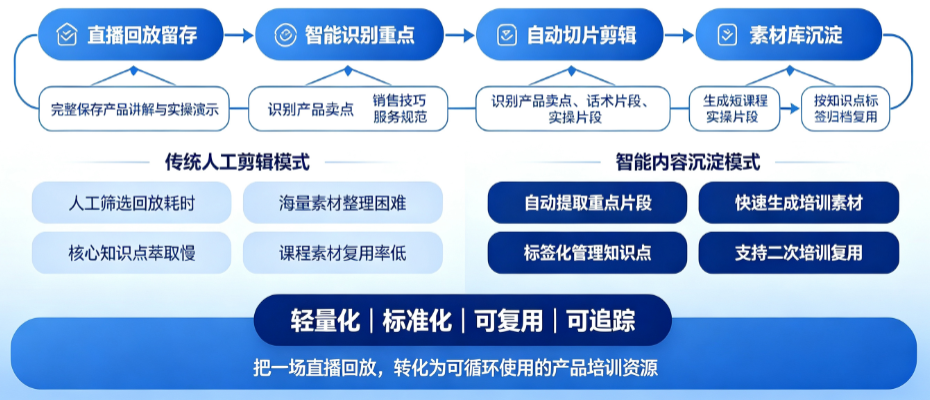
Regular fragmented product training for retail stores generates a large number of complete live playback videos covering product selling points, sales skills, service specifications and practical exercises. However, the traditional model relies on manual editing and sorting. Screening, slicing and editing massive video materials involves enormous workload with low efficiency. Enterprises cannot quickly extract core product knowledge points and benchmark sales pitches to form lightweight, standardized high-quality training materials. The overall utilization rate of live streaming content remains extremely low, making it difficult to build a reusable internal training resource library for sustainable empowerment.
5. High Confidentiality Risks with Uncontrollable Content Leakage
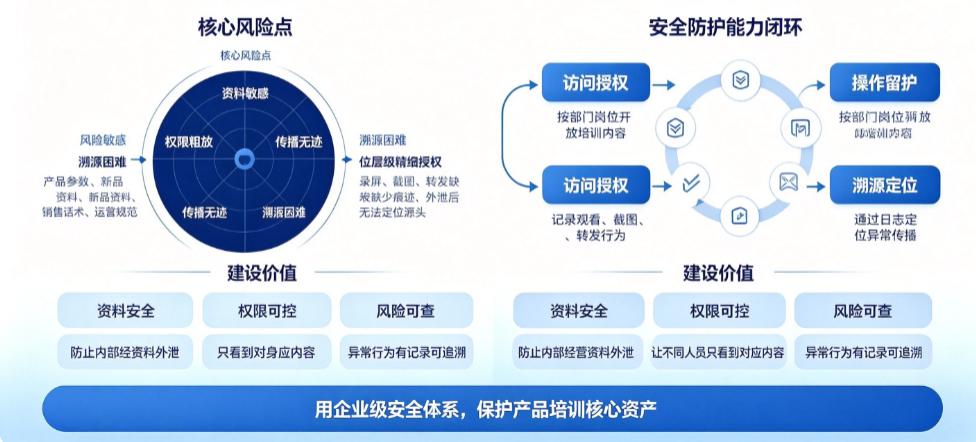
Internal product parameters, new product materials, sales pitches and operational specifications of retail enterprises are confidential business information prohibited from external dissemination. General live streaming tools lack enterprise-level content security protection systems and refined permission control and traceability capabilities. Once employees privately record screens, take screenshots or forward internal training content externally, enterprises cannot conduct effective traceability, which may easily lead to the leakage of core internal training data, bring hidden dangers to corporate standardized operation and market competition, and damage brand interests.
II. Solutions to Pain Points of In-store Live Training for Chain Retail Stores
Polyv has in-depth experience in corporate internal training live scenarios. Targeting the exclusive needs of chain retail stores for single-teacher delivery, company-wide empowerment, content precipitation and security control, it has built a lightweight, highly adaptable and secure enterprise live training solution. This solution comprehensively addresses the practical pain points of retail internal training and helps chain retail enterprises build a standardized, intelligent and secure company-wide product training system.
1. In-class Quiz and Interactive Assessment to Verify Company-wide Learning Effect in Real Time
The system allows instructors to launch real-time answer sheets, in-class quizzes and polls during live sessions. Instructors can independently complete integrated teaching and assessment without operational assistants. Teachers can design targeted questions based on product knowledge points to test store employees’ mastery of product selling points, sales pitches and service specifications, and quickly identify universal knowledge weaknesses. Real-time data feedback enables instructors to accurately adjust training rhythms, eliminate one-way indoctrination training, and effectively improve the implementation quality and learning conversion rate of in-store product training across chain outlets.
2. AI Intelligent Assistant for Automatic Operation and Standardized Q&A Management
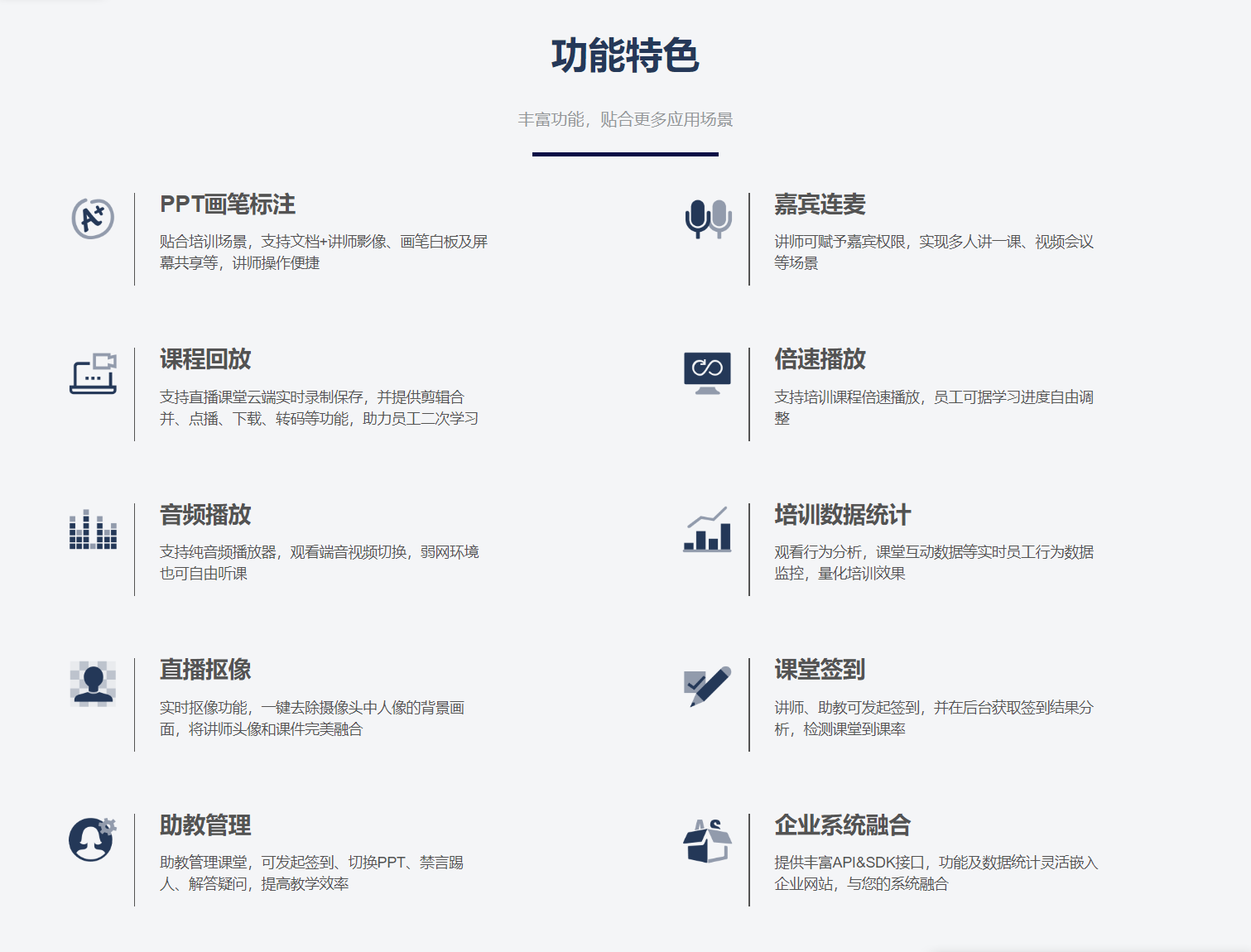
Embedded in live and on-demand courses, the AI assistant can answer employee questions in real time based on course content. Employees can raise questions at any time while watching playback videos, and the system can generate standardized replies quickly based on officially approved course content with stable response speed and quality. This function breaks the time and quantity limitations of manual Q&A, standardizes the Q&A process with officially regulated content, reduces instructors’ invalid repetitive work, and ensures a smooth and consistent teaching rhythm.
3. Native WeCom Architecture Integration to Simplify Access Configuration with One Click
The solution supports in-depth integration with native WeCom functions, enabling one-click synchronization of corporate organizational structures, department levels and employee accounts without manual batch entry of trainee lists. The system can automatically match live room viewing permissions based on departments and positions, realizing targeted live streaming by department, store and post. It eliminates the cumbersome manual permission configuration for each training session, greatly reduces backend operation and maintenance workload, and perfectly adapts to large-scale chain retail enterprises with complex organizational structures, massive staff and high-frequency company-wide training needs.
4. AI Intelligent Editing and Extraction to Precipitate Standardized Training Materials Efficiently
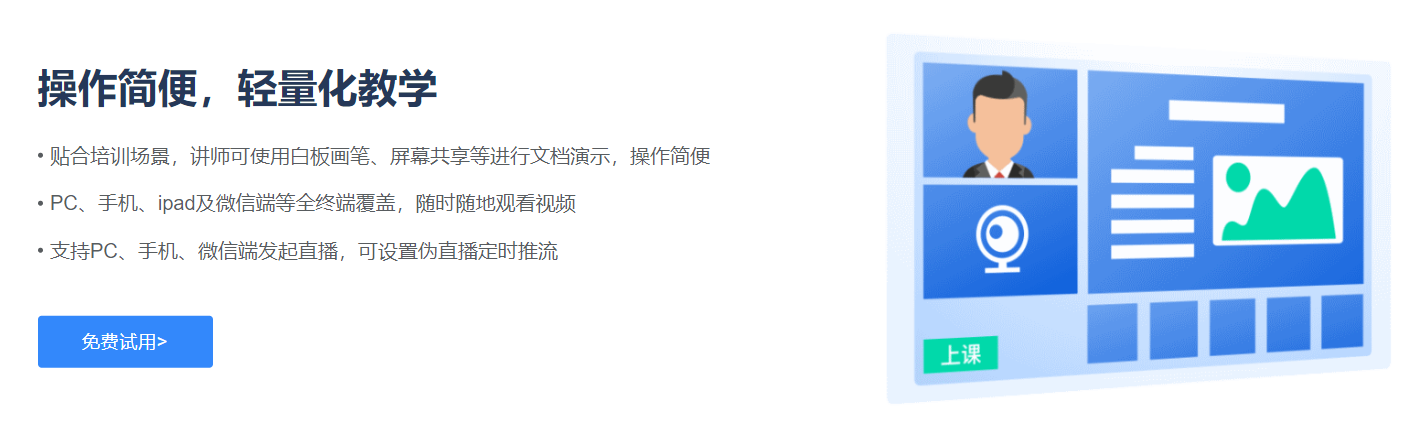
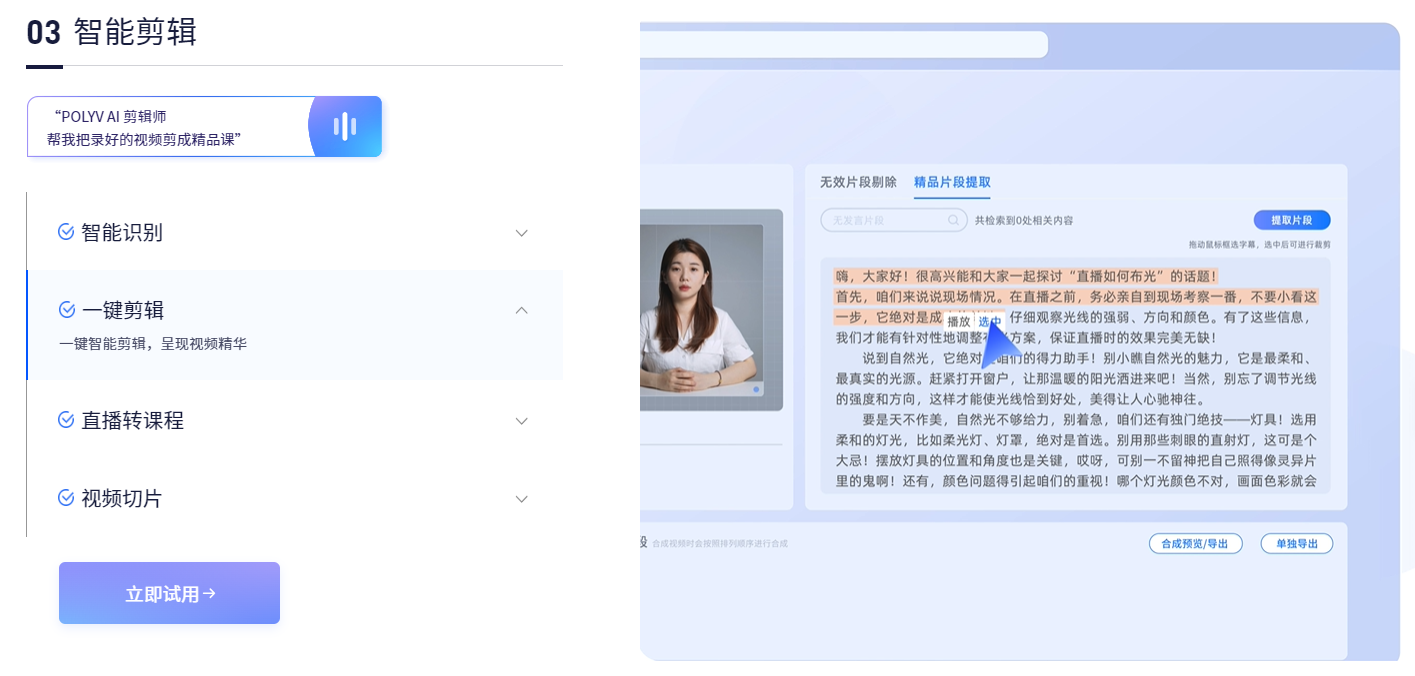
Leveraging AI intelligent editing capabilities, the system can identify core knowledge points, product explanation segments and benchmark sales pitch clips from live videos to automatically complete video slicing, essence extraction and content editing. It eliminates the need for frame-by-frame manual screening and editing, greatly reducing material processing time and labor costs. Complete live playbacks can be quickly split into lightweight high-quality short training videos to form standardized in-store training materials and build an exclusive internal product knowledge base, maximizing the reusability of live playback content and realizing one-time live streaming with multiple rounds of long-term empowerment.
5. PlaySafe® Copyright Protection System to Build a Solid Security Barrier for Internal Training
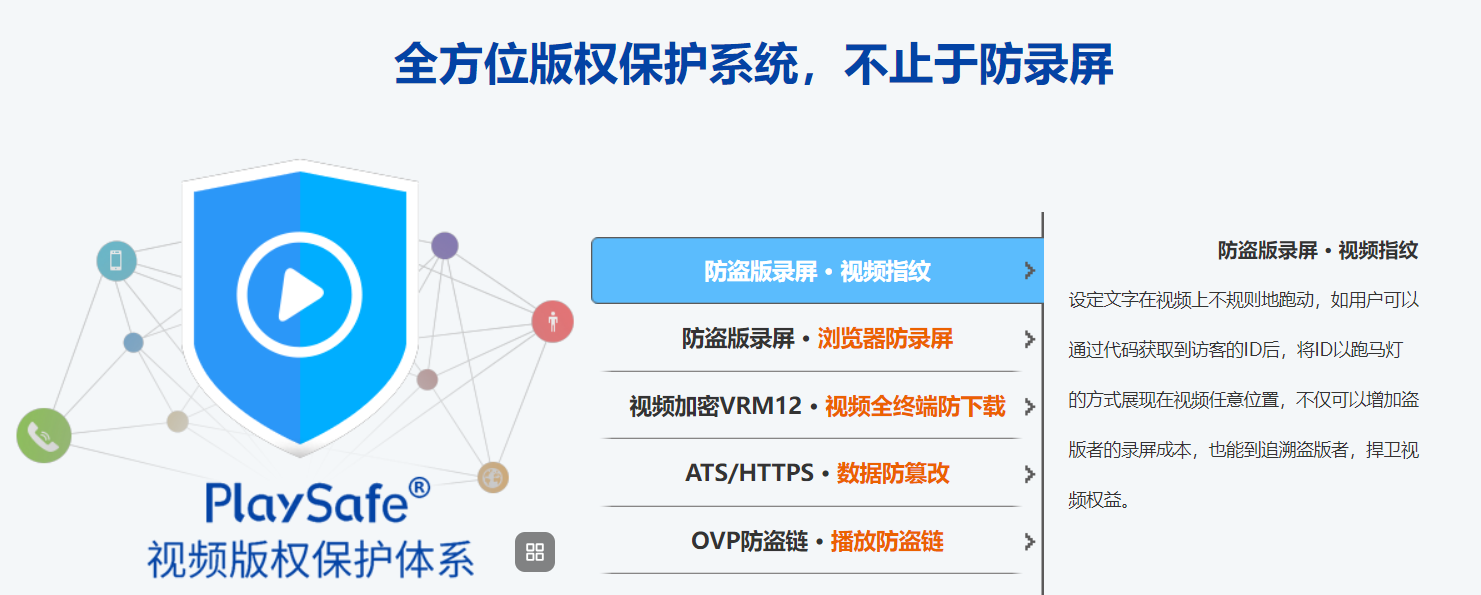
Equipped with the PlaySafe® copyright protection system tailored for confidential corporate internal training scenarios, the solution provides full-range security capabilities including refined viewing permission control, exclusive watermark traceability, screen recording prevention and content leakage prevention. It strictly restricts internal training content to on-the-job employees only and blocks unauthorized external access. All training screens are embedded with traceable watermarks, enabling rapid source tracing in case of screen recording, screenshotting or external leakage. It fully protects confidential internal data such as corporate product materials and sales specifications, eliminates training content leakage risks, and ensures the security of chain retail enterprises’ internal business information.
III. Core Implementation Values of the Solution
Tailored to the industry characteristics of chain retail internal training, including single-teacher delivery, company-wide empowerment, high-frequency training and confidential teaching scenarios, the Polyv chain retail live training solution resolves the industry pain points of low efficiency, poor effectiveness, difficult content precipitation and insufficient security in traditional retail training. With intelligent interactive tools, automatic operation and maintenance capabilities, integrated permission management, digital content precipitation and enterprise-level security protection, it simplifies training operation processes, unifies teaching standards for stores nationwide, precipitates exclusive corporate product training assets, and strictly controls internal data security. It enables the standardized, intelligent and normalized implementation of in-store product training, and continuously improves the professional competence of frontline employees as well as the overall service and sales capabilities of retail stores.