
Lightweight Safety Training Solution for Online In-house Live Training of New Energy Vehicle Enterprises
The new energy vehicle industry features rapid model iteration, fast technology upgrading and frequent policy updates, which drive continuous changes in terminal sales pitches, after-sales maintenance processes and vehicle configuration parameters. This imposes extremely high requirements on the timeliness, accuracy and safety of corporate internal training. Front-line positions in vehicle enterprises have clear division of labor and fragmented working schedules. Sales staff stay in exhibition halls to receive customers all day long, while after-sales technicians focus on vehicle maintenance work. Coupled with the regular rotation and shift system for stores, it is difficult to organize full-staff training at a unified time. Traditional offline centralized training and fixed-time live training modes suffer from lagging content updates, poor adaptability, unverifiable training effects and high leakage risks of confidential job-related content. They can no longer support the normalized, standardized and safe full-staff competency building of new energy vehicle enterprises. Thus, building a lightweight online live training system adapted to the job characteristics of vehicle enterprises has become an industry imperative.
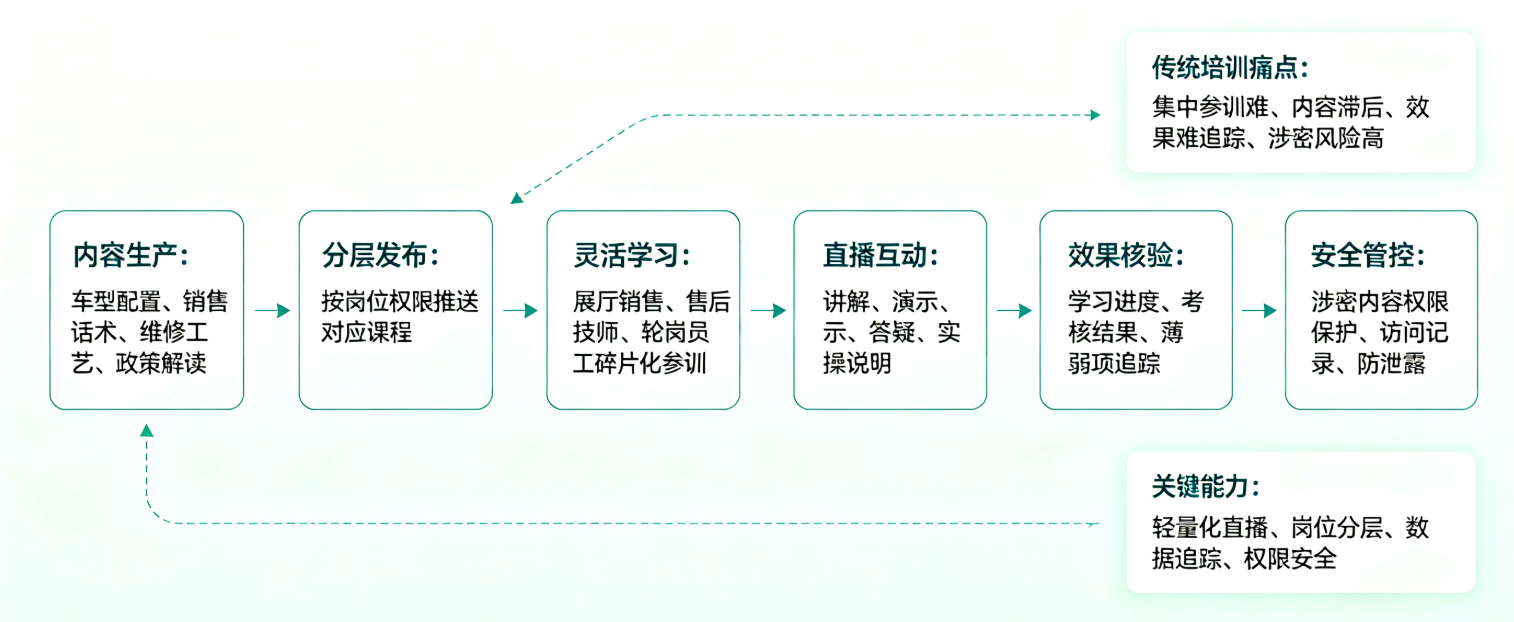
I. Major Pain Points of In-house Live Training for New Energy Vehicle Enterprises
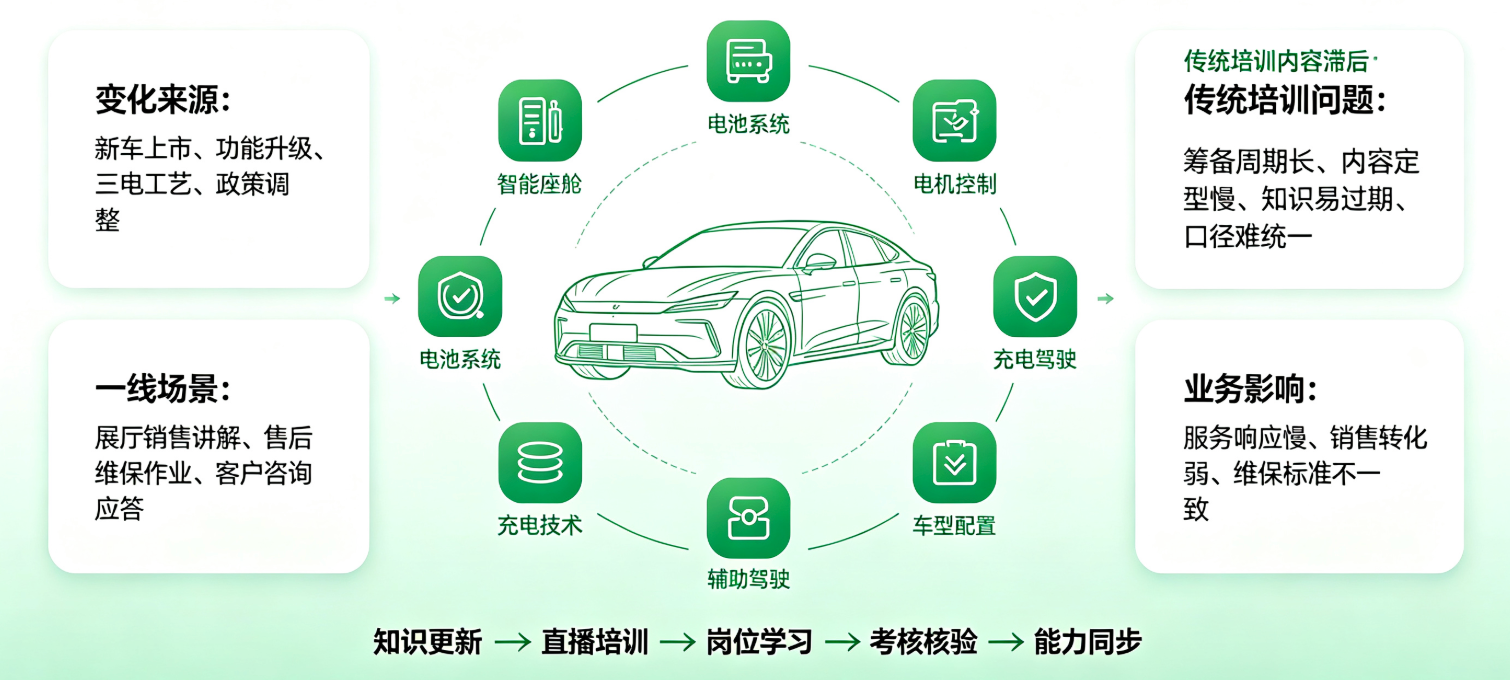
(I) Rapid Vehicle Model Iteration Causes Severe Lag of Traditional Training Content
The new energy vehicle industry witnesses continuous iteration and upgrading of technologies, vehicle configurations, intelligent cockpit functions and three-electric system processes, with new vehicle launches, functional upgrades and policy adjustments occurring at a high frequency. Traditional offline centralized training involves long preparation cycles and complicated implementation procedures. Once finalized, the training content can hardly be adjusted and updated in a timely manner. It is common that the launched training content becomes outdated before implementation due to evolving industry technologies and vehicle parameters. This leads to a gap between the knowledge learned by front-line employees and the pace of new vehicle launches, failing to meet the on-site work needs of terminal sales and after-sales maintenance, and restricting the improvement of store service and sales capabilities.
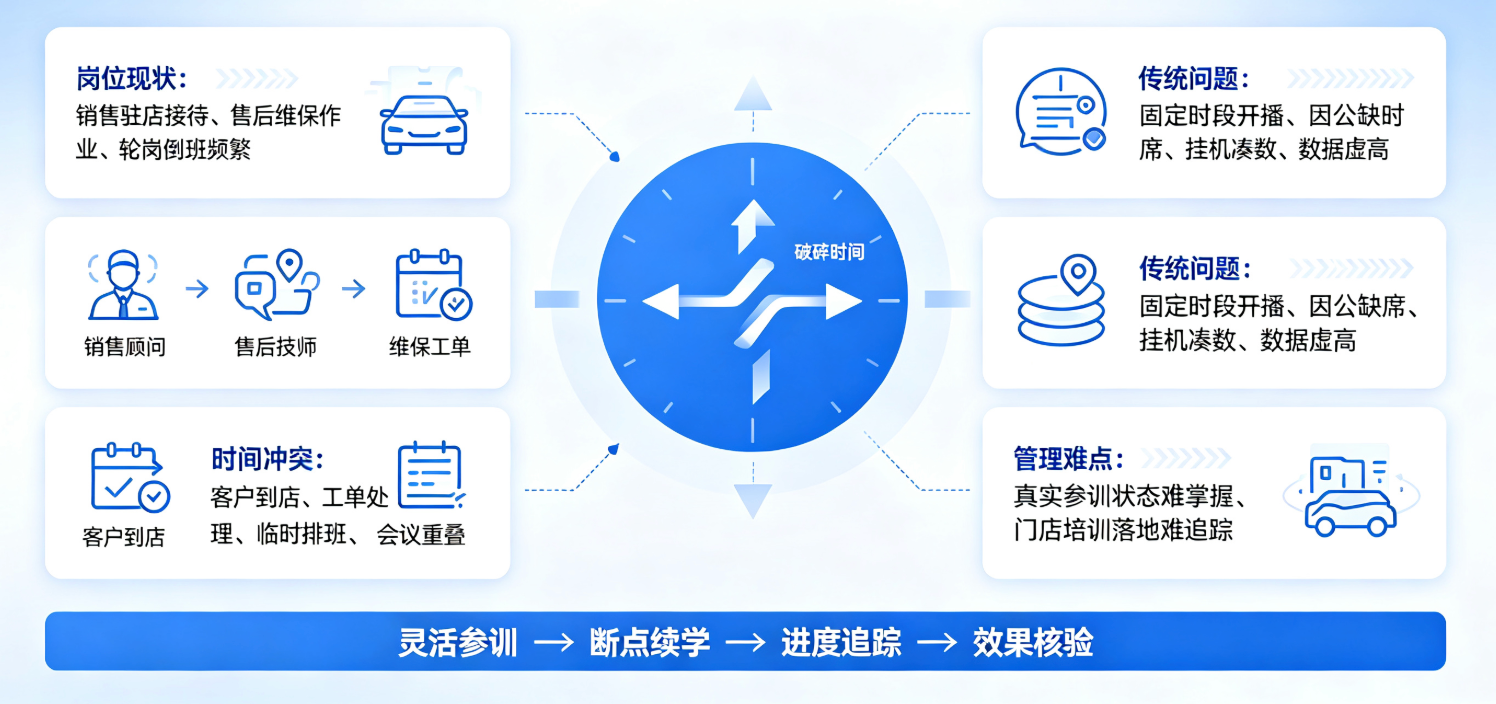
(II) Fragmented Working Hours Render Fixed-time Training Formalistic
Front-line employees of vehicle enterprises work in highly fragmented scenarios. Sales personnel need to receive walk-in customers throughout the day, and after-sales technicians must handle vehicle maintenance orders on demand. Combined with the regular job rotation and shift system, enterprises cannot arrange a unified spare time for all employees to attend centralized training. Fixed-time live training often results in employee absence due to work commitments or passive hanging up to accumulate training duration, leading to inflated training participation data and insufficient effective learning hours. Headquarters cannot accurately monitor the real participation status of employees across stores and positions, making it hard to control the on-site implementation of training and greatly reducing the overall training effectiveness.
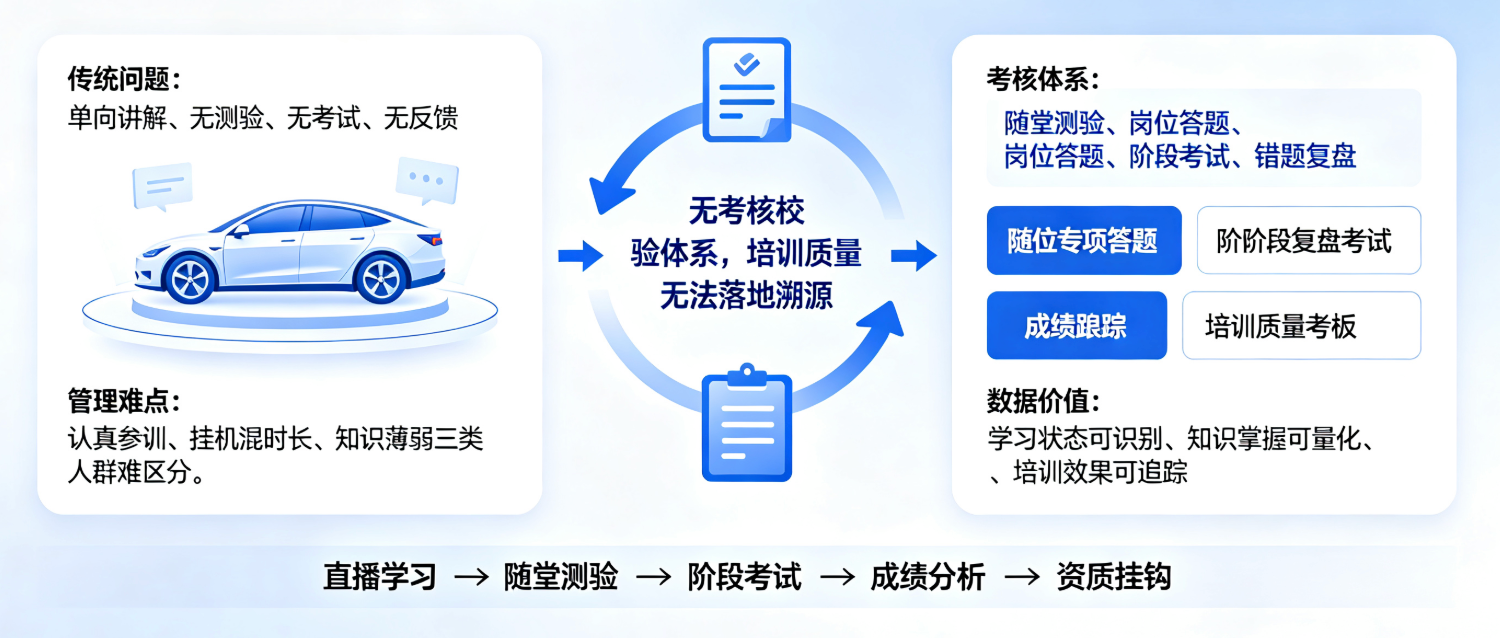
(III) Lack of Assessment and Verification System Leads to Untraceable Training Quality
Traditional online live training for vehicle enterprises only supports one-way content explanation, without supporting modules such as in-class quizzes, position-specific tests and phased review examinations. There is no effect verification link throughout the training process. Therefore, headquarters cannot accurately identify employees’ learning status or distinguish dedicated learners, passive participants and employees with weak knowledge mastery. Meanwhile, training results are not linked to store performance appraisal or employee employment qualifications, resulting in insufficient constraints and initiative for employee learning. In the long run, internal training becomes a mere formality and fails to achieve the core goal of improving capabilities through systematic training and learning.
(IV) No Job Isolation for Confidential Content Results in Prominent Cross-post Leakage Risks
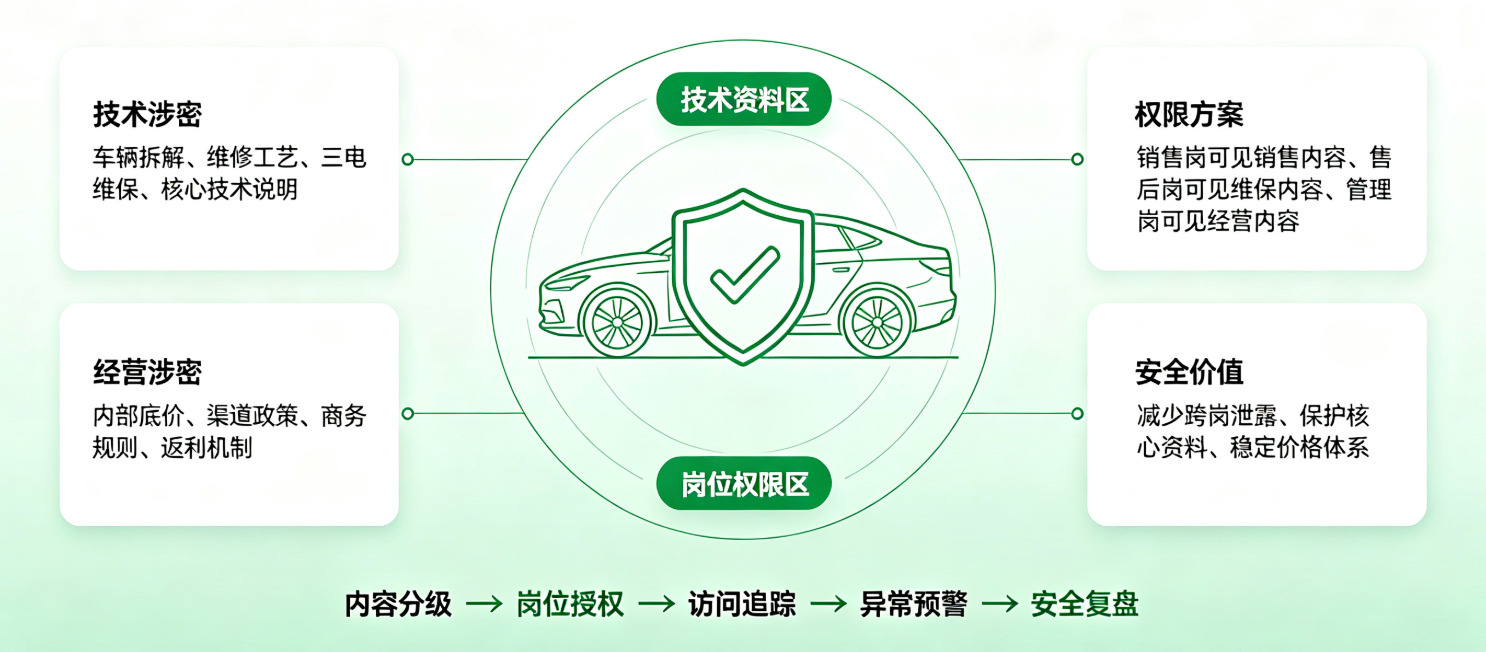
Corporate internal training covers a wide range of core confidential content, including exclusive technical data such as after-sales vehicle disassembly videos, core maintenance processes and three-electric system maintenance technologies, as well as confidential business information such as internal sales bottom prices, channel policies and business rules. General live streaming tools have a single permission mode, only allowing full-staff public access or overall encryption, without precise position-based access control. This may lead to non-technical employees viewing technical content and all staff accessing sales bottom prices, causing cross-post leakage of internal technical data and business policies and bringing major hidden dangers to the operation and technical security of vehicle enterprises.
II. Solutions to Existing Problems in Position-specific In-house Live Training of New Energy Vehicle Enterprises
(I) Lightweight Rapid Live Streaming for Special Training Sessions to Adapt to High-frequency Vehicle Model Iteration
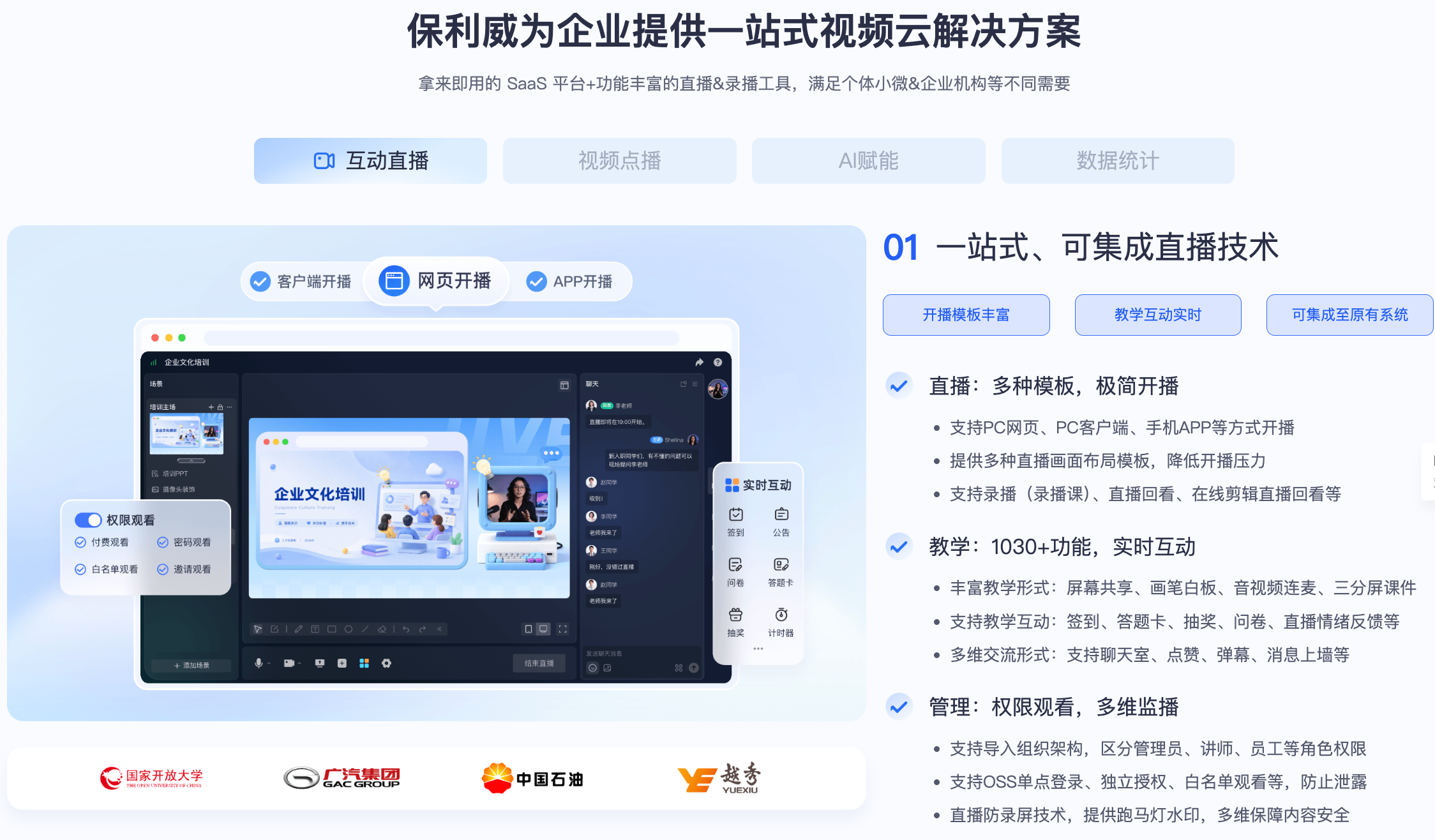
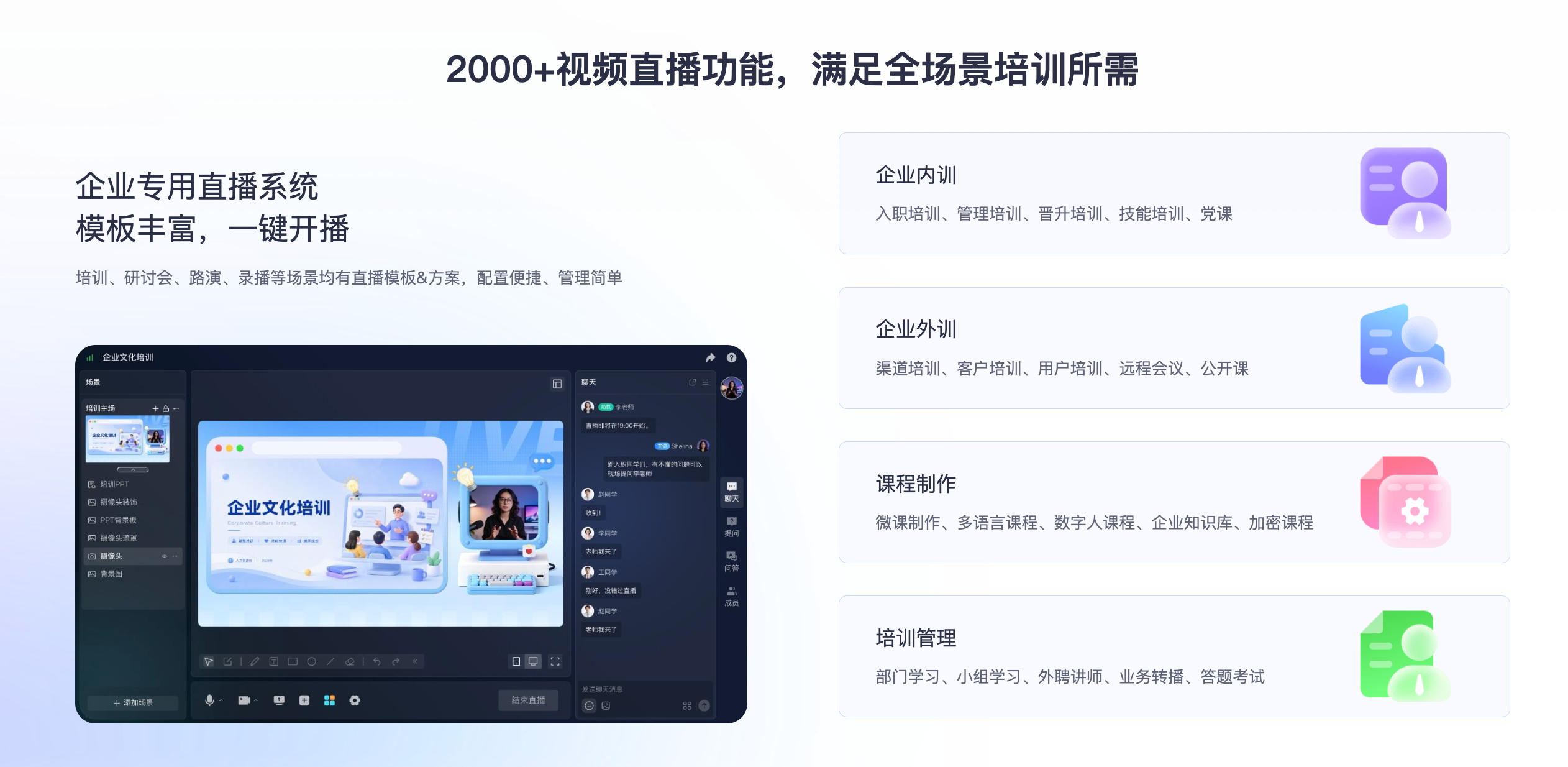
Supported by lightweight live course launching capabilities, the system supports live streaming via PC web pages, PC clients, mobile apps and other terminals, with diverse live layout templates available. It enables vehicle enterprises to quickly launch special training sessions without complicated preparation procedures. Enterprises can launch targeted training on vehicle parameters, sales pitches, maintenance processes and compliance policies in a timely manner following new vehicle launches, technology upgrades and policy changes. Meanwhile, the live training content can be iterated and updated as needed to replace outdated knowledge points, solving the problems of lagging and slowly updated traditional training content. After training, complete playback and on-demand resources are automatically accumulated, continuously building exclusive course materials for vehicle model training and on-the-job practical training, and forming a dynamically updated internal knowledge base for vehicle enterprises.
(II) Dual Live and On-demand Learning Mode to Adapt to Fragmented On-the-job Learning
Breaking the limitations of fixed-time centralized training, the solution adopts a dual-track learning mode combining cloud live streaming and live-to-on-demand playback, adapting to the fragmented work characteristics of front-line employees. Employees who cannot attend live sessions in real time can watch playback and study independently in their spare time. The system supports accurate learning duration statistics and breakpoint resume learning, allowing employees to complete learning in batches with automatic progress recording to avoid repeated learning. Headquarters can view the real participation duration and learning progress of all employees, eliminate fake participation and passive duration accumulation, and accurately control the implementation effect of training for each position.
(III) Full-process Assessment Components to Realize Linkage Between Training and Qualification Evaluation
Built with full-type assessment components including in-class quizzes, online questionnaires and phased examinations, the system allows instructors to launch position-specific tests, knowledge spot checks and graduation assessments at any time during live sessions to verify employees’ learning outcomes in real time. It automatically generates visual training data reports, accurately counting core indicators such as employee participation duration, answer accuracy rate and weak knowledge points, and clearly differentiating employee learning effectiveness. Enterprises can directly link training assessment results with store performance, employee employment qualifications and position grading, eliminating formalistic training and realizing quantifiable evaluation, traceable effects and practical capability improvement through training.
(IV) Refined Position-based Permission Control to Fully Protect Confidential Content Security
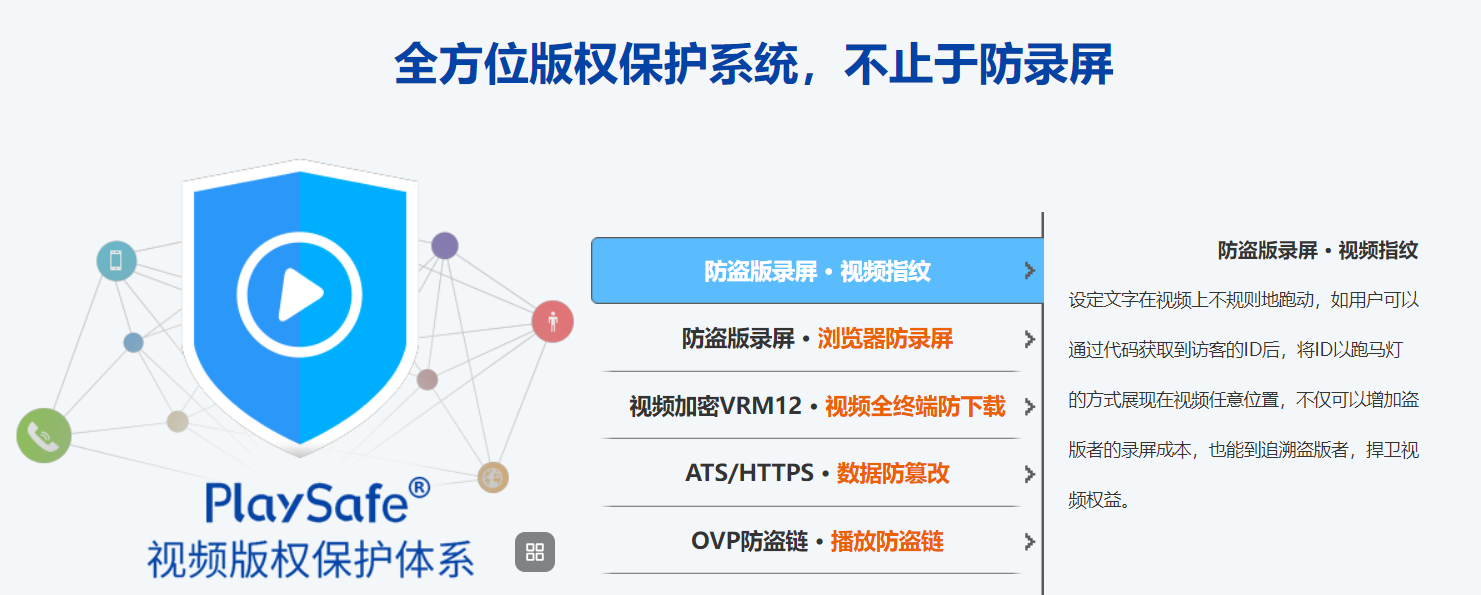
The solution builds an exclusive hierarchical permission system for vehicle enterprises, supporting precise configuration of position whitelists and partitioned content visibility to realize accurate isolation of training content for different positions. It can be set that sales staff can only view content related to vehicle pitches and sales policies, after-sales technicians can only access maintenance processes, disassembly tutorials and technical practical training content, and management personnel have exclusive access to confidential information such as business policies and channel bottom prices. Equipped with comprehensive security capabilities including video encryption, traceable watermarks and download prohibition, the system fundamentally prevents unauthorized video saving, screen recording leakage and cross-post dissemination, fully protecting the security of corporate core technical data and business confidential content.
III. Core Value of Solution Implementation