
Operation Guide for AI Programming Course Live Streaming in Education and Training Institutions – WeChat Mini Program Teaching and Enrollment Solutions
With the comprehensive penetration of artificial intelligence technology into vocational skills and science and innovation education, AI programming teaching has become a core popular track in vocational education and youth science and innovation training, covering mainstream teaching directions such as Python large model development, AI application construction, prompt engineering, and machine learning practical training. A large number of education and training institutions rely on their own WeChat Mini Programs to carry out free experience live broadcasts, open class drainage, and enrollment conversion of AI systematic courses, and achieve large-scale customer acquisition and course promotion relying on private domain traffic. However, AI programming teaching is a highly refined, strongly practical, and screen-intensive professional teaching scenario. Traditional general live streaming tools suffer from blurry teaching images, severe latency, poor exclusive Mini Program adaptation, weak data review capabilities, insufficient content security protection, and incomplete conversion links, failing to meet the core requirements of high-definition AI programming teaching, intellectual property protection, refined learning situation analysis, and efficient enrollment and conversion. This restricts the improvement of open class teaching quality and live streaming enrollment efficiency of institutions.
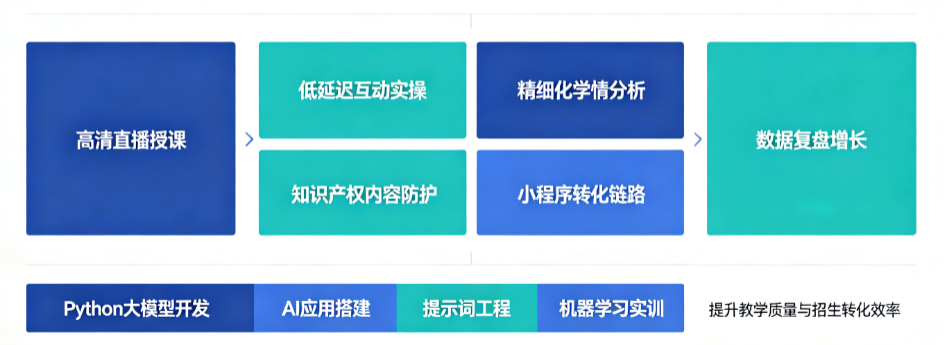
I. Core Pain Points of AI Programming Teaching Live Streaming via Mini Programs
(1) Insufficient Teaching Screen Accuracy and Poor Practical Teaching Experience
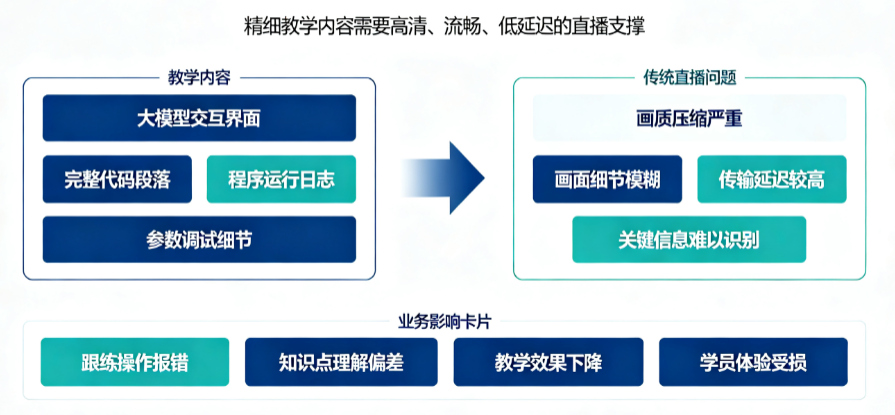
AI programming teaching relies heavily on real-time screen demonstration, which requires synchronous display of refined content such as large model interaction interfaces, complete code paragraphs, program operation logs, and parameter debugging details, imposing extremely high requirements on live streaming definition, screen fluency, and real-time synchronization. Traditional general live streaming screen casting suffers from severe image compression, blurry pictures, and high transmission latency. Students cannot clearly identify code characters, key parameters and operation logic, which easily leads to operational errors and misunderstanding of key knowledge points during practical learning. This seriously undermines the practical teaching effect of AI programming open classes and students’ learning experience.
(2) Mini Programs Lack Built-in Live Streaming Capabilities with High Independent R&D Costs
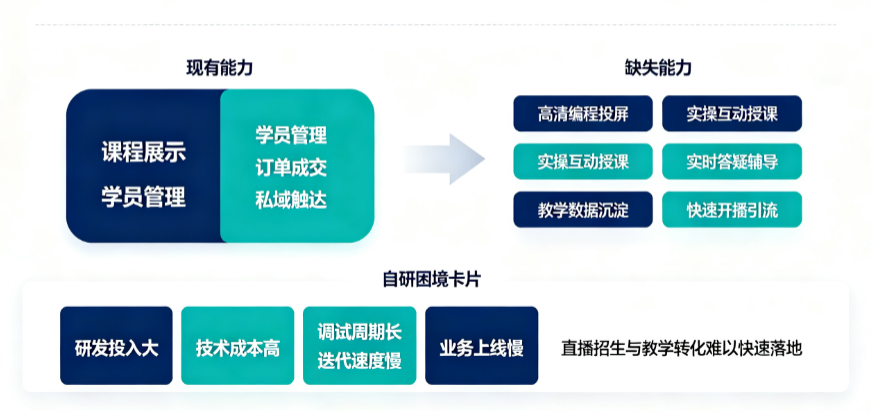
Self-operated WeChat Mini Programs of education and training institutions are mainly used for course display, student management and order placement, with no native professional live streaming capabilities adapted to AI programming teaching. If institutions independently develop customized live streaming modules to support high-definition programming screen casting and interactive practical teaching, they need to invest massive human and technical resources in R&D. The development, debugging and launch cycle is long with slow iteration speed, which cannot meet the business needs of frequent live streaming and rapid online drainage for AI programming open classes, greatly hindering the implementation of institutions’ live streaming enrollment business.
(3) Insufficient Dimensionality of Learning Situation Data Lacking Basis for Teaching and Enrollment
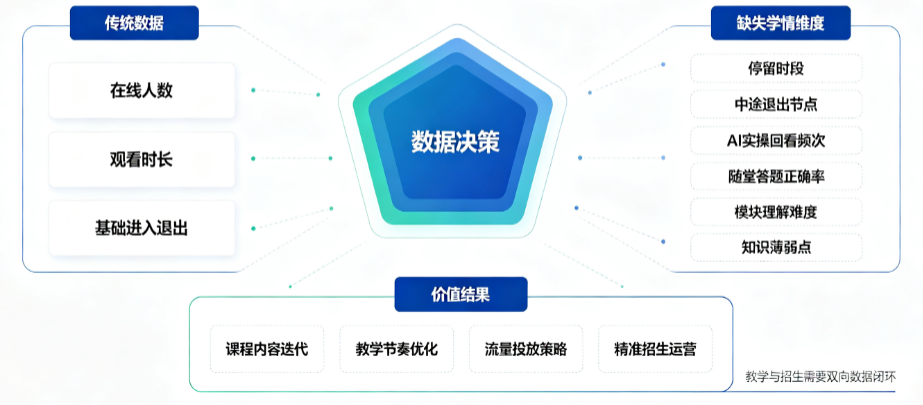
Most education and training institutions continuously deploy public and private domain traffic to launch AI programming drainage live broadcasts. Nevertheless, traditional live streaming tools only collect superficial basic data such as online number and viewing duration, and fail to refine core learning situation data including students’ stay periods, exit nodes, playback frequency of practical AI operation clips, and in-class answer accuracy. Operation teams cannot accurately identify learning difficulties and knowledge weaknesses in modules such as large model development, prompt engineering and machine learning. Course content iteration, teaching rhythm optimization, traffic delivery strategies and precise enrollment operation can only rely on teachers’ subjective experience without data support, making refined operation of teaching and enrollment impossible.
(4) Lack of Protection for Course Assets Leading to Serious Piracy and Customer Losses
Institutions’ self-developed AI commercial project cases, exclusive prompt teaching systems and machine learning practical training courses boast high exclusive commercial value and core competitiveness. General live streaming tools lack sound content encryption, copyright protection and anti-leakage mechanisms, with no watermark traceability, anti-download and anti-screen-recording control capabilities. Industry peers and screen-recording studios can completely record full-set AI programming live courses, repackage and resell them at low prices to seize student sources. Meanwhile, some unauthorized accounts intercept high-quality practical clips and post short videos online to misinterpret teaching content and mislead potential students, seriously damaging institutional brand reputation, weakening core course competitiveness and causing huge losses of intellectual property and student resources.
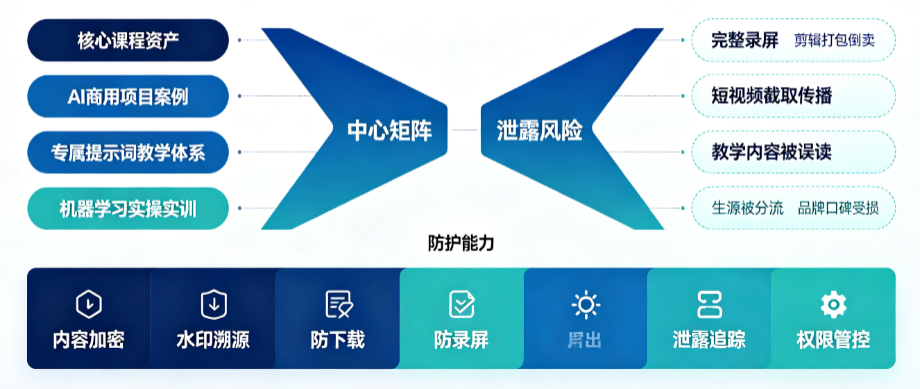
(5) Cumbersome Registration and Conversion Links Leading to Mass Loss of Potential Customers
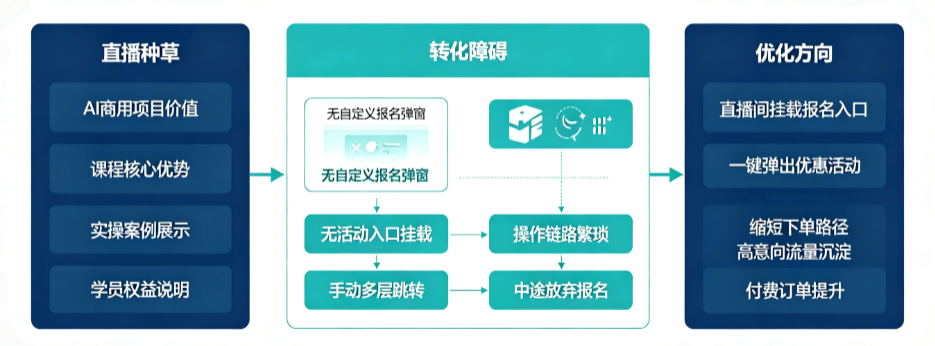
The core goal of free AI programming experience live broadcasts is to accumulate potential customers, guide students to sign up for paid systematic courses and realize traffic monetization. However, ordinary live rooms cannot customize mounted course registration pop-ups and activity entrances. After teachers introduce the value of AI commercial projects and core course advantages, prospective students need to manually jump through multiple Mini Program pages to find registration entrances and preferential activities, resulting in cumbersome and stuck conversion links. A large number of high-intent students give up registration due to complicated operations, leading to the failure of live streaming drainage traffic to be efficiently precipitated into paid orders and a sharp decline in the input-output ratio of live streaming drainage.
II. Operation Strategies for AI Programming Teaching Live Streaming via Mini Programs
(1) Ultra-High-Definition and Low-Latency Streaming to Adapt to Refined Programming Teaching
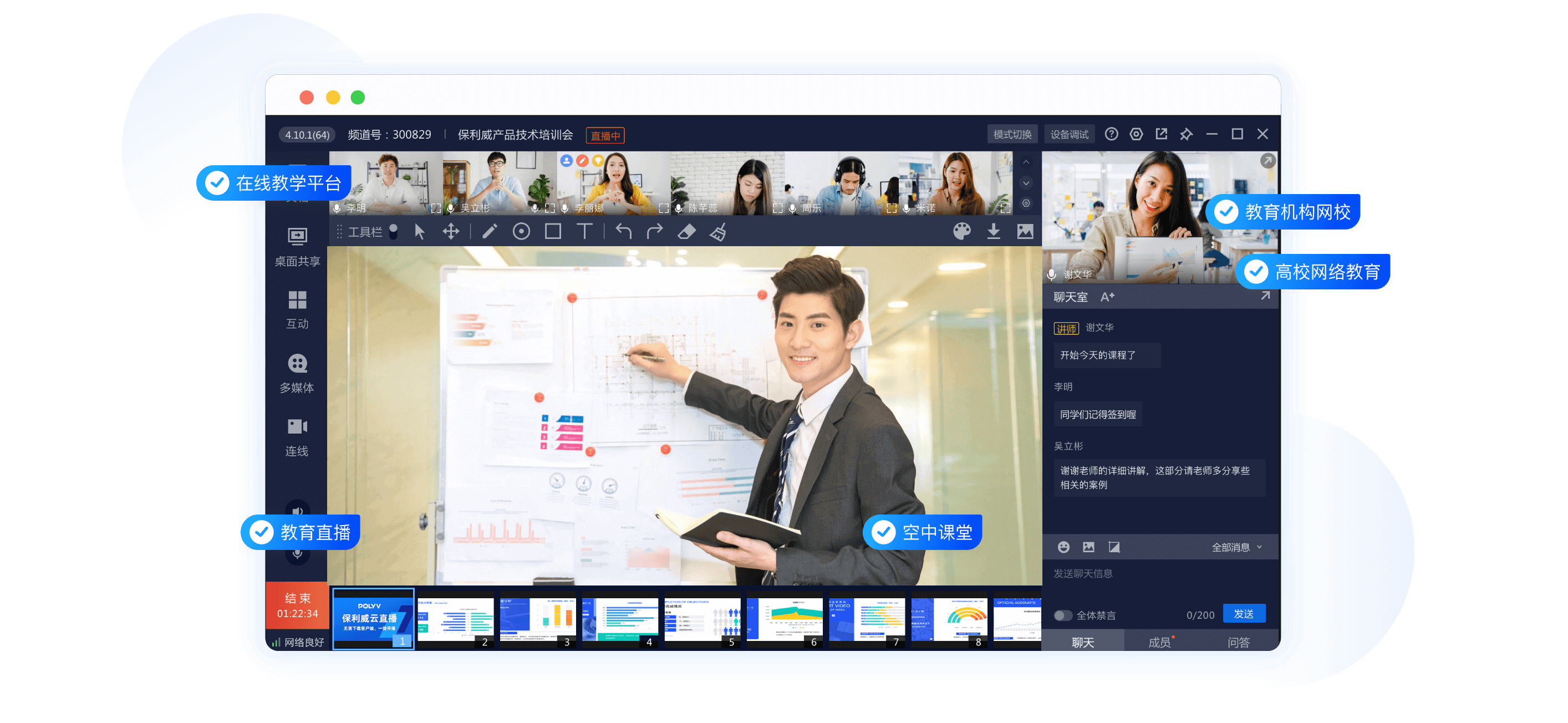
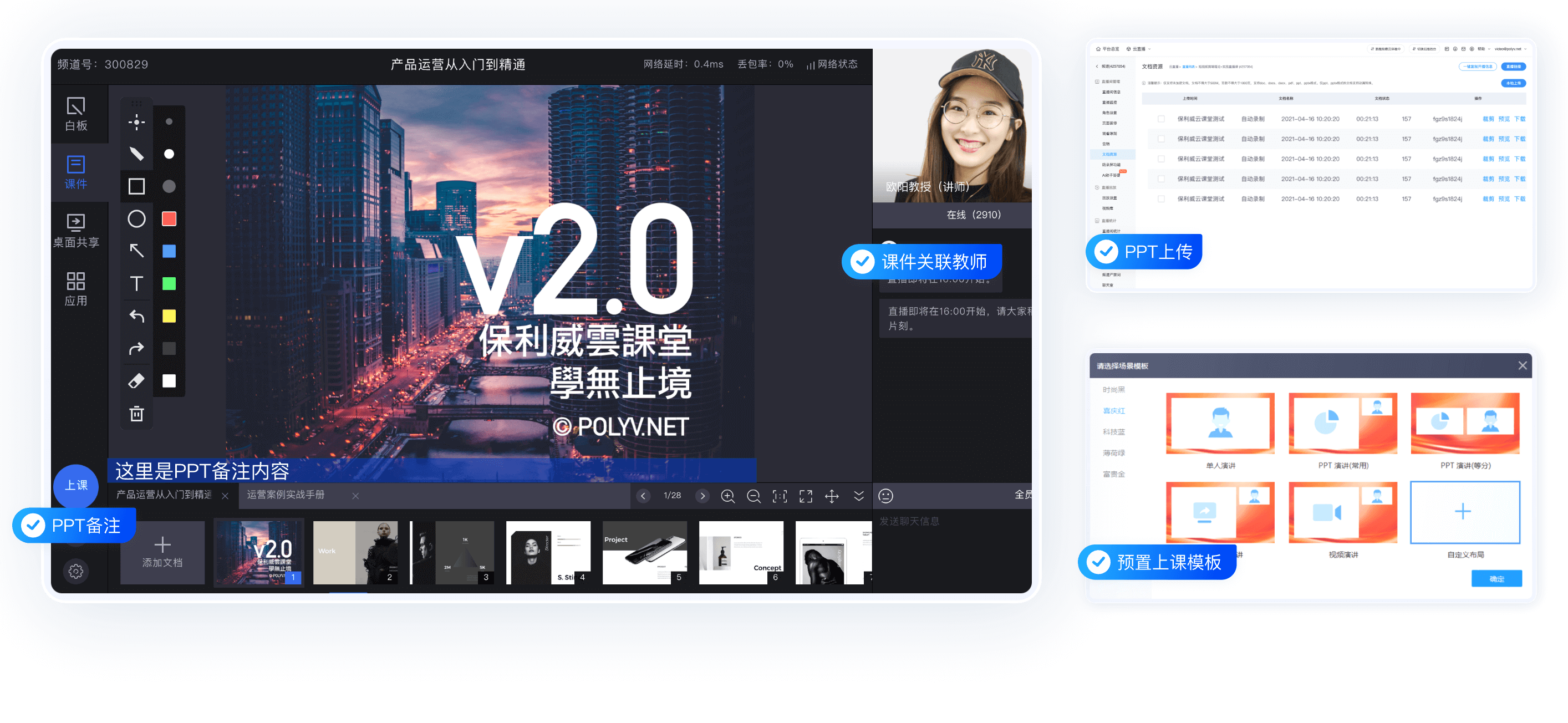
Adopting high-definition original-picture desktop screen casting, low-latency RTC real-time streaming technology, as well as adaptive resolution screen sharing and multi-window lossless image transmission capabilities, the solution perfectly adapts to refined AI programming teaching scenarios. It enables lossless ultra-high-definition display of code interfaces, large model interaction pages, operation logs and parameter debugging screens, eliminating image compression, blurriness, stuttering and latency. Students can clearly capture every code detail and practical operation process, and follow teachers to complete AI project exercises, parameter debugging and model practice in real time. This solves the traditional teaching problems of unclear display, unsynchronized operation and poor learning comprehension, and greatly improves the teaching quality of AI programming open classes.
(2) Lightweight SDK Embedding for Rapid Mini Program Teaching Launch
Equipped with mature and standardized Mini Program live streaming SDK, the solution supports lightweight embedding into institutions’ existing WeChat Mini Programs with out-of-the-box and rapid deployment, providing a complete set of exclusive live streaming capabilities for AI programming teaching. Institutions do not need to build live streaming modules from scratch, which greatly reduces R&D investment and shortens project development and launch cycles. It adapts to multiple scenarios such as high-frequency open classes, drainage live broadcasts and special practical training live broadcasts, helping education and training institutions quickly launch Mini Program live streaming businesses and seize traffic dividends in the AI programming education track.
(3) Full-Dimensional Learning Situation Review to Drive Teaching and Enrollment Optimization
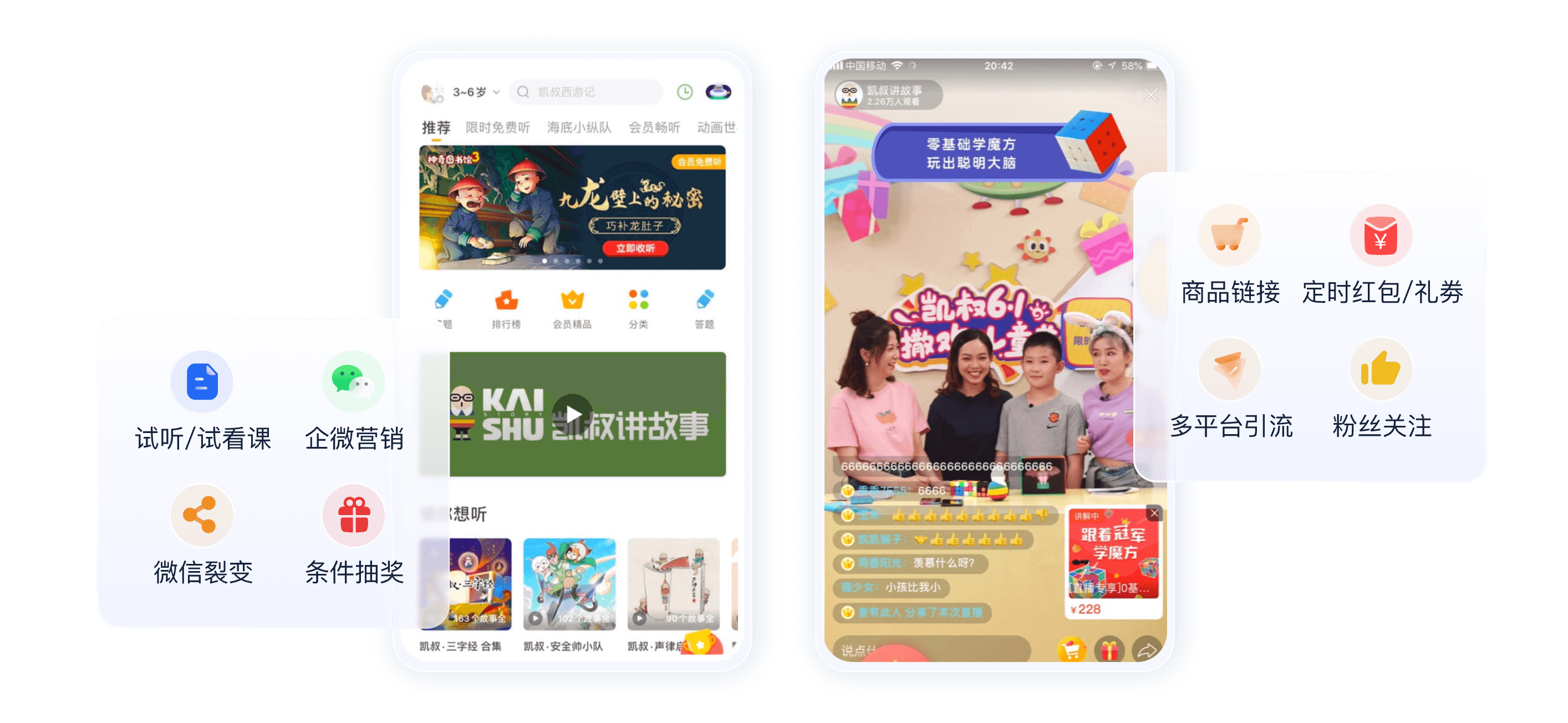
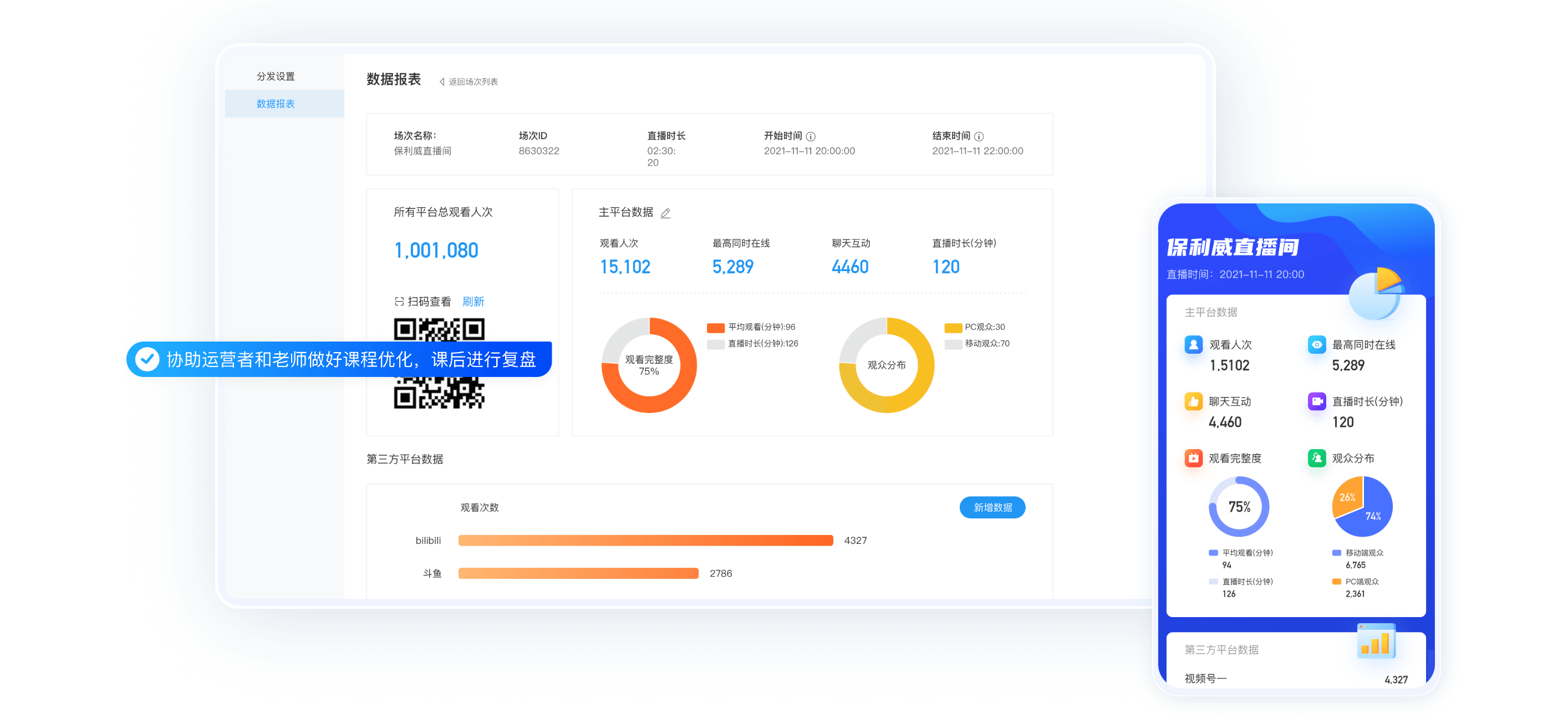
Featuring a full-domain student viewing behavior data dashboard, the solution comprehensively collects refined learning data including students’ viewing duration, page stay track, exit nodes, playback frequency of practical operation clips and in-class answer accuracy. It supports automatic summary of answer scores, full-dimensional data API export and independent review report generation for each class. It helps operation and teaching research teams accurately identify students’ learning difficulties, locate teaching weaknesses in core modules such as large model development, prompt engineering and machine learning, optimize course content and adjust teaching rhythm in a targeted manner. Meanwhile, it optimizes traffic delivery and enrollment strategies based on user learning data, realizing iterative teaching and precise customer acquisition driven by data.
(4) Exclusive Copyright Protection to Safeguard Core Course Assets
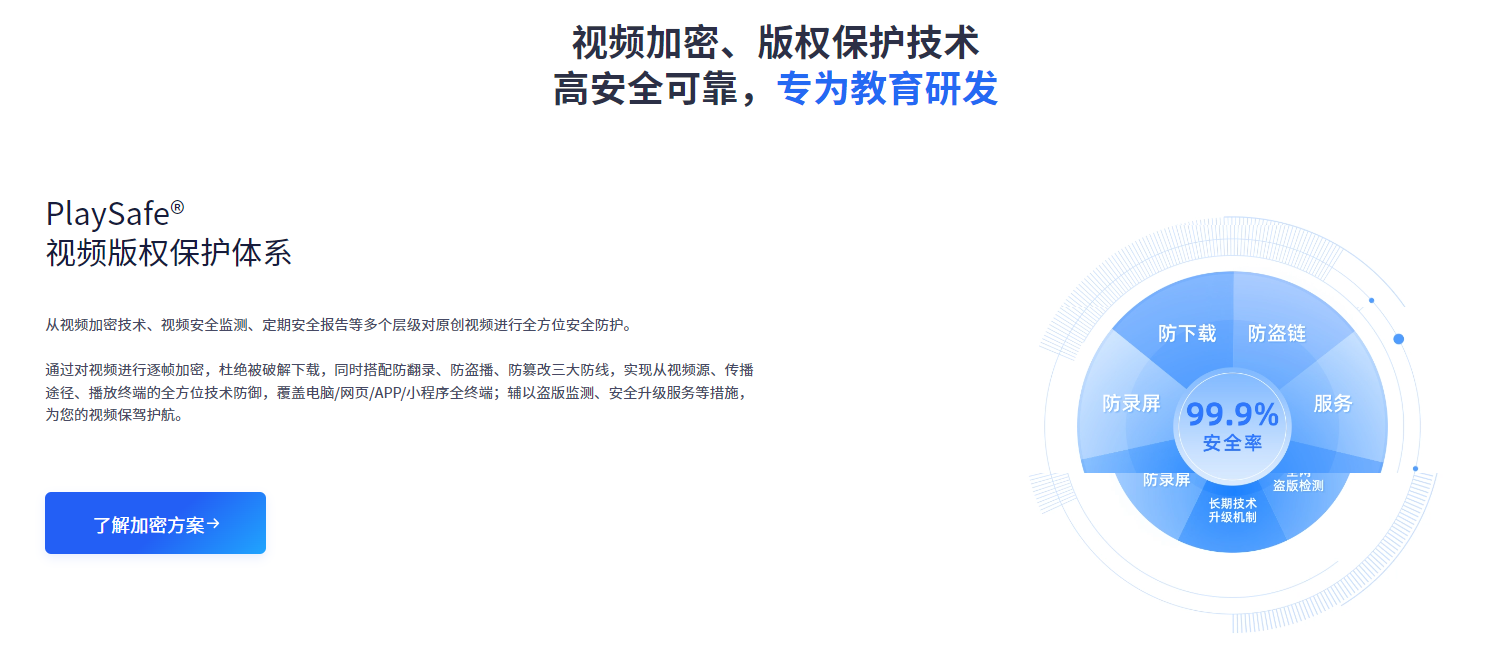
Built with Polyvi PlaySafe® copyright protection system exclusively developed for protecting intellectual property rights of institutional courses, the solution fully safeguards core AI programming teaching assets. It adopts multiple protection mechanisms including encrypted video storage, exclusive dynamic traceable watermarks, unauthorized download prohibition, anti-screen-recording and illegal rebroadcasting prevention, fundamentally avoiding piracy and resale of full courses and malicious dissemination of teaching clips. It effectively prevents risks such as peer piracy and diversion, malicious marketing by unauthorized accounts and misleading false content, fully protects the exclusive commercial value of institutions’ AI commercial cases, exclusive teaching systems and practical training courses, and stabilizes institutional core course competitiveness and brand reputation in the industry.
(5) One-Click Pop-up Jump to Realize Efficient Enrollment Conversion Closed Loop
The solution supports customized live room registration pop-ups, activity pop-up components and exclusive external link jump configuration. During live broadcasts, it can one-click evoke the AI systematic course registration page, time-limited preferential activity page and course detail page in the WeChat Mini Program, eliminating the need for multi-layer manual jumps for students and greatly shortening the registration operation link for potential customers. At the key marketing moments when teachers introduce course advantages, employment prospects and project value, it can instantly guide potential customers to complete consultation, registration and order locking, significantly reducing the loss rate of high-intent customers. It efficiently converts live streaming drainage traffic into paid orders and improves the monetization efficiency of open class enrollment.
III. Core Value of Solution Implementation