
Private Domain Live Streaming for Raw Material Factories: Cloud Factory Audit & Channel Compliance Operation Solutions
Compliance, transparency and stability of catering supply chains serve as the core foundation for raw material factories to maintain long-term partnerships with chain brands, distributors and other B-end clients. Amid increasingly stringent catering industry supervision, brand operators have raised stricter audit requirements covering raw material production, disinfection procedures, warehouse quality control and supply standards. Conventional offline factory inspections and manual communication can no longer meet the demands of regular cooperation.
Most raw material factories rely on general live streaming tools to conduct cloud factory audits and investment promotion briefings, yet they commonly face persistent pain points including disconnected quality control supervision, leakage of confidential channel information, loss of high-intent leads and delayed synchronization of production standards. These issues not only erode brand trust in supply chain cooperation but also trigger disordered channel management and churn of key clients. Accordingly, building a private, controllable, regularly broadcastable, lead-depositable and long-term operable B-end private domain live streaming system has become an essential demand for raw material factories to optimize supply chain services and deepen penetration into the B-end market.
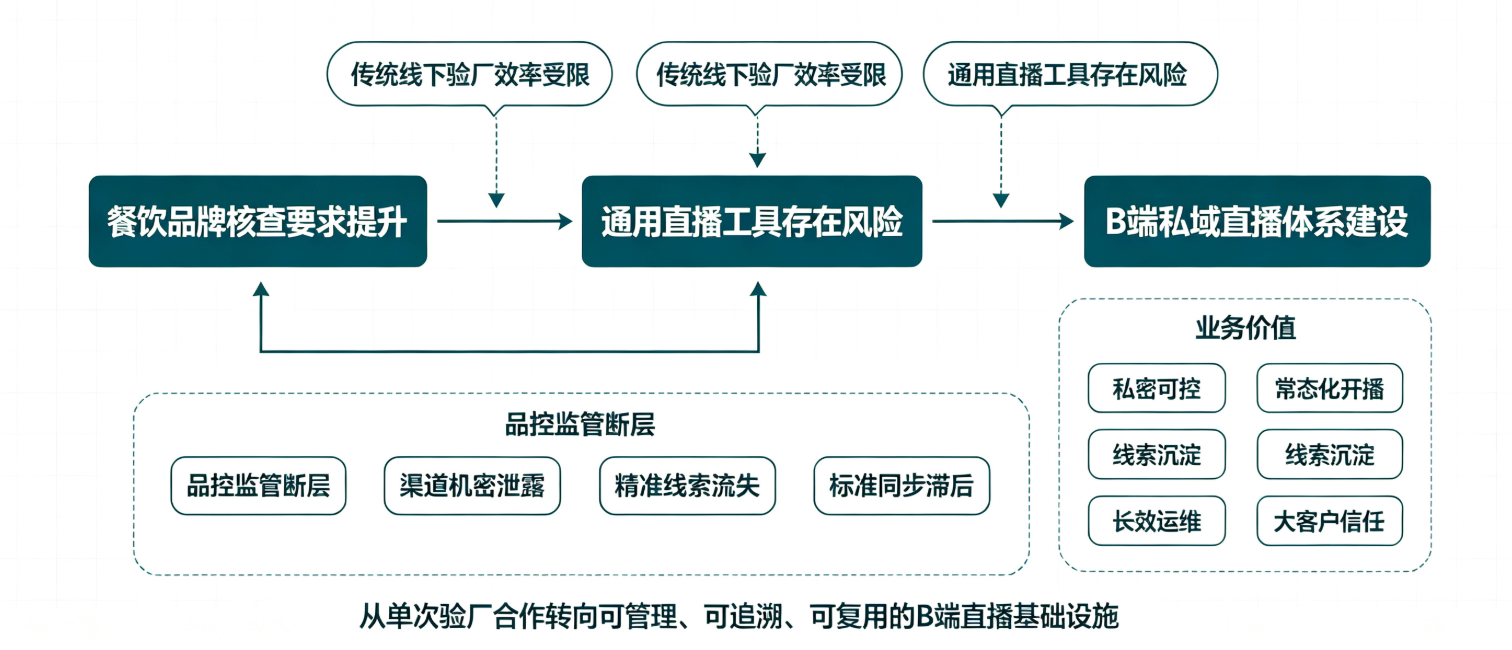
I. Key Operational Pain Points of B-end Live Streaming for Raw Material Factories
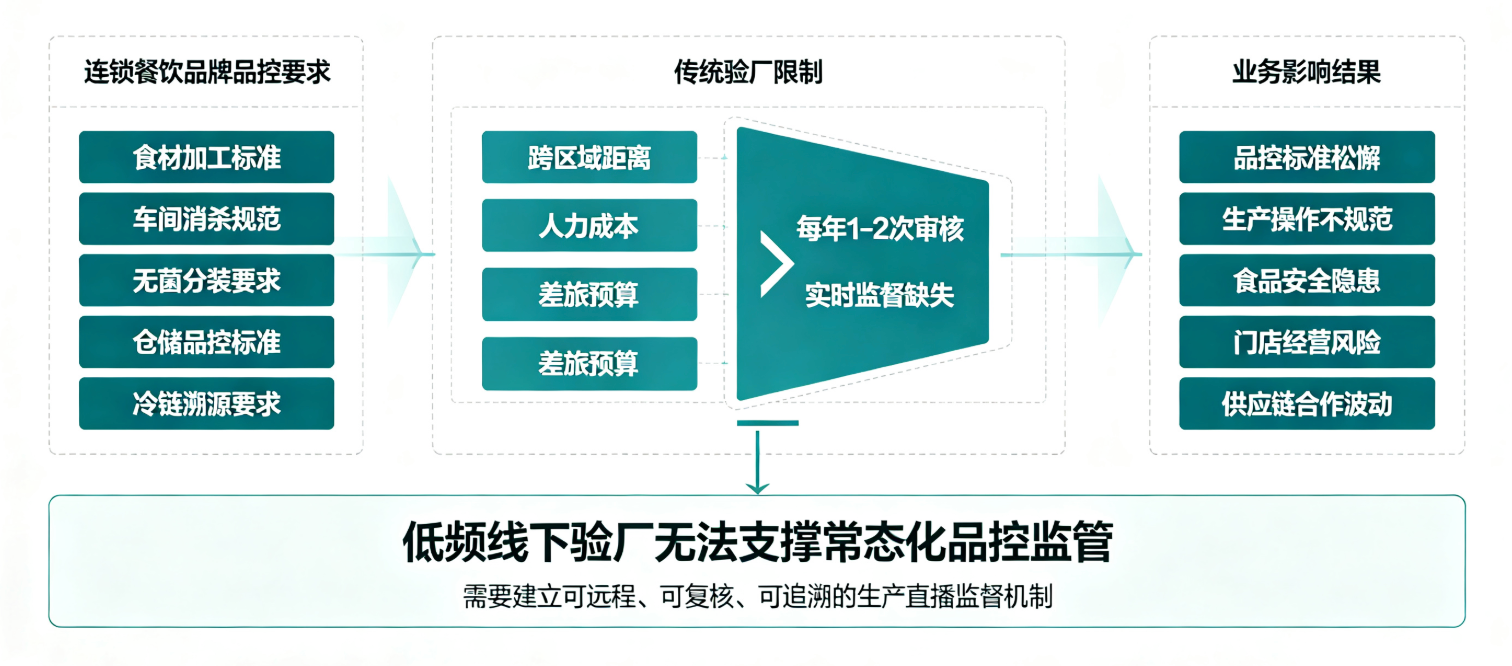
(1) Insufficient Offline Factory Audits Create Gaps in Production Quality Supervision
Chain catering brands boast mature quality control systems with rigorous review standards for the full workflow of raw material processing, workshop disinfection, aseptic packaging and cold chain warehousing. However, constrained by cross-regional distances, labor costs and travel budgets, brand quality control departments can only complete on-site factory audits 1 to 2 times per year. For most of the annual production cycle, compliance with production specifications, disinfection protocols and packaging standards relies entirely on self-reporting by factories, leaving brand headquarters unable to implement real-time remote inspection and verification.
Prolonged supervision gaps tend to trigger lax quality control standards and non-compliant operational practices, bringing hidden food safety risks that jeopardize the normal operation of catering outlets and hinder stable long-term supply chain partnerships.
(2) Undifferentiated Live Streaming Access Disrupts Commercial Channel Systems
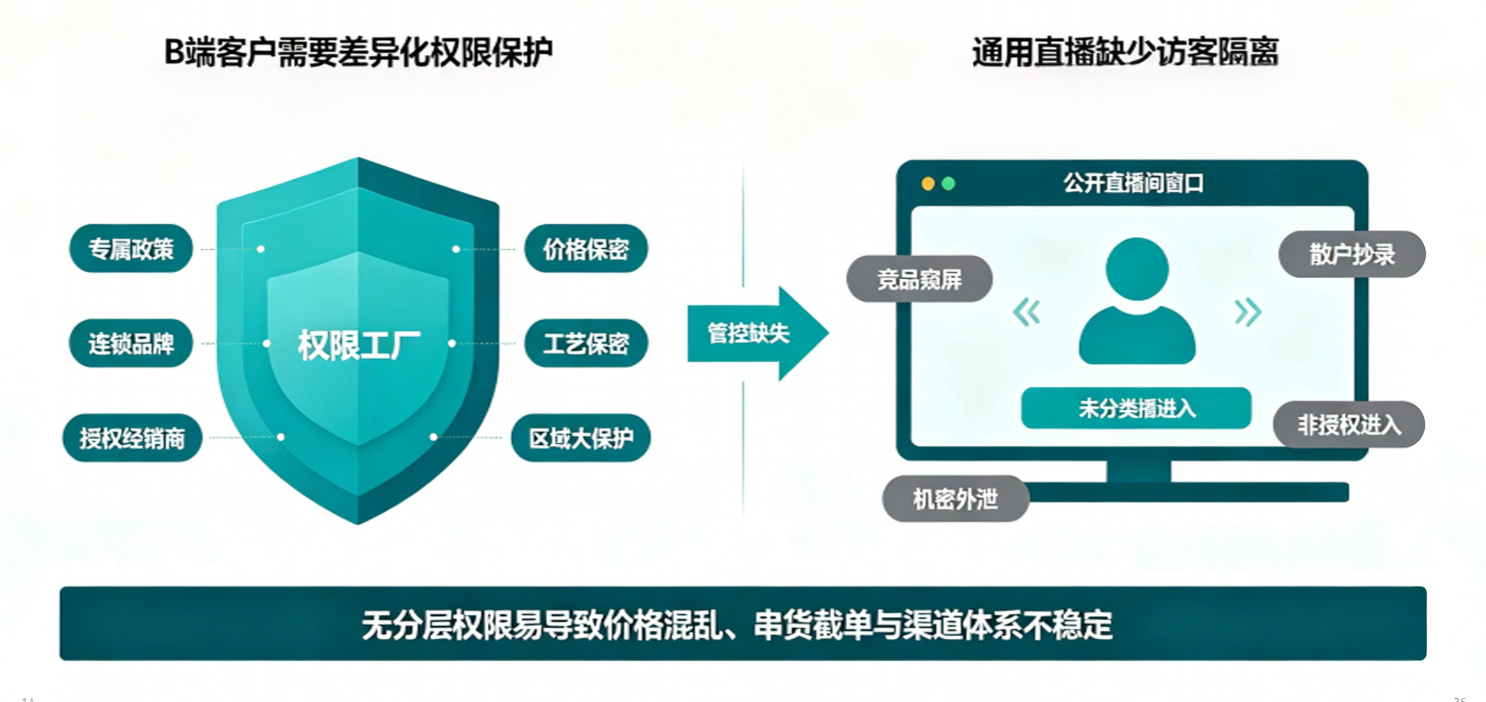
Raw material factories implement differentiated exclusive cooperation policies for B-end clients at distinct partnership tiers, covering customized raw material specifications, exclusive formulation processes, tiered bulk purchase prices, annual production quotas and exclusive regional protection. These core commercial mechanisms underpin stable channel operations and premium client services.
Generic public live streaming platforms lack refined access permission control and visitor isolation mechanisms, allowing competitors, small scattered retailers and unauthorized distributors to freely enter live rooms to record pricing policies and copy proprietary production techniques. This easily leads to leakage of core business confidentiality, chaotic channel pricing, disrupted regional investment layouts, parallel imports at cutthroat prices and malicious order poaching—all of which severely damage the interests of key clients and destabilize the factory’s entire channel ecosystem.
(3) Dispersed Client Intent Data Impedes Structured Reuse of High-Value B-end Leads
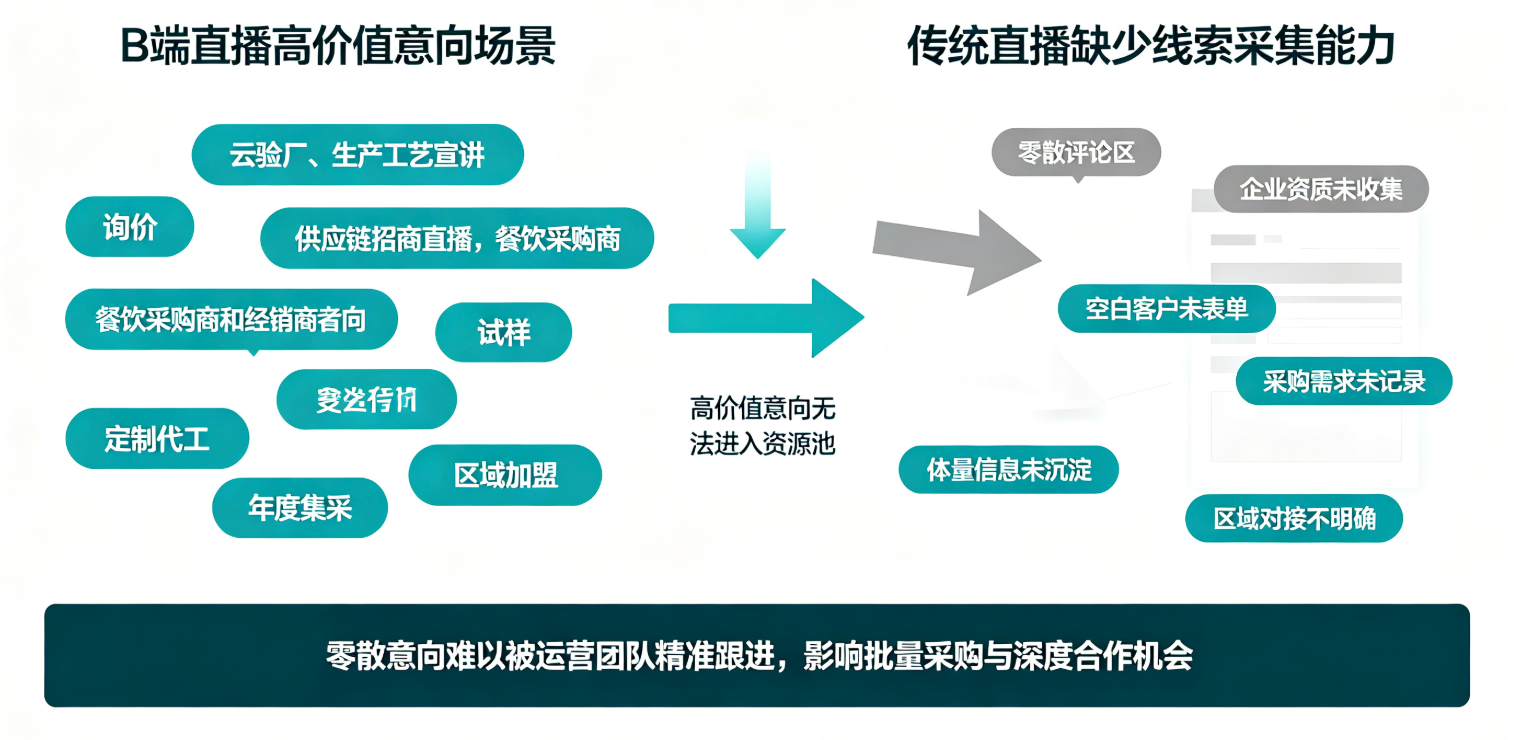
Cloud factory traceability tours, production technique briefings and supply chain investment promotion live streams constitute core touchpoints for raw material factories to engage high-quality B-end buyers, including catering procurement managers and distributors seeking sample testing, quotation, custom OEM, annual bulk procurement and regional franchising opportunities.
Nevertheless, conventional live streaming platforms only support basic comment interactions and lack systematic customer information collection capabilities. They cannot centrally gather critical data such as enterprise qualifications, core procurement categories, monthly purchasing volume, customization demands and target cooperation regions. Large volumes of high-intent business opportunities are scattered and lost, preventing the formation of standardized customer databases. Operation teams struggle to conduct targeted follow-ups, resulting in missed bulk procurement and deep partnership deals.
(4) Frequent Production Standard Iterations Lead to Inefficient Client Information Synchronization
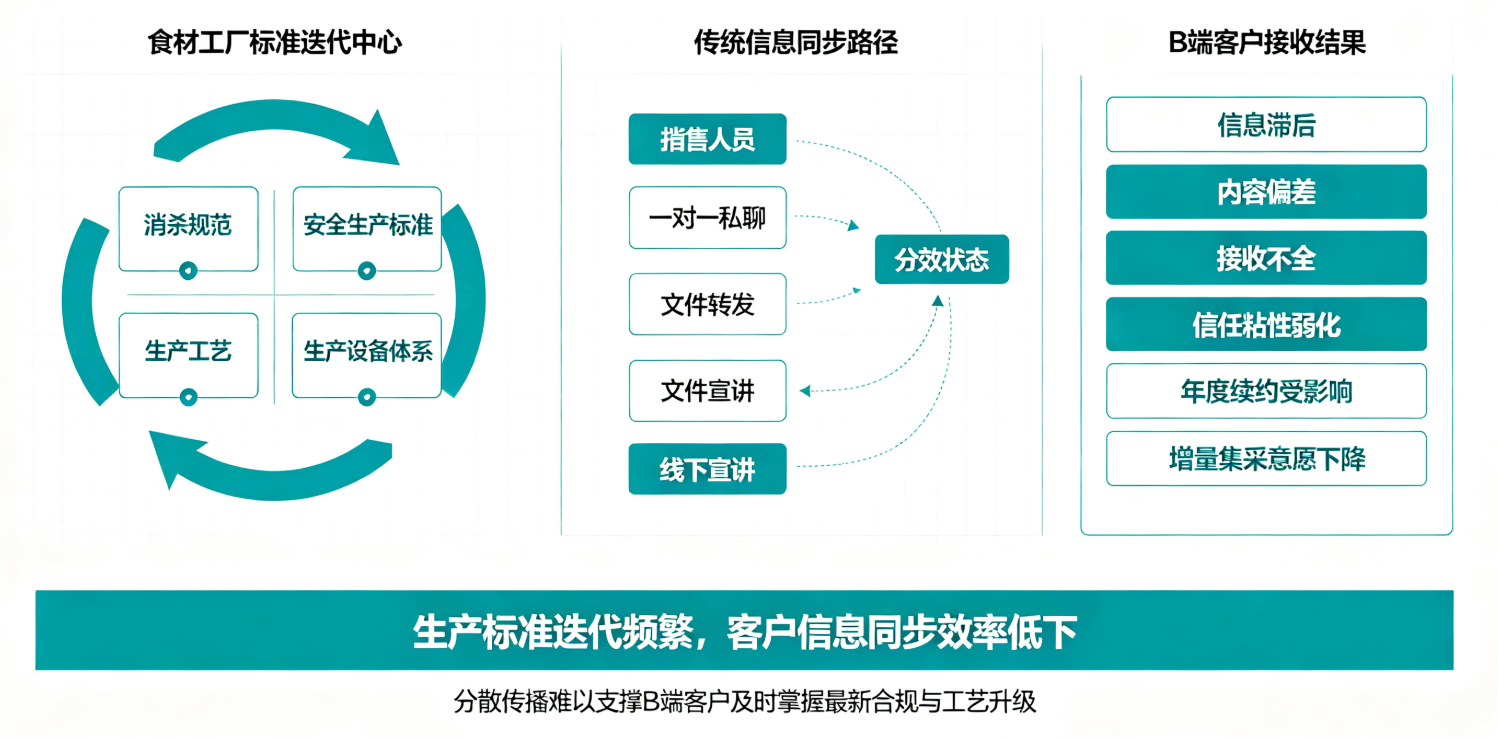
Continuous updates to catering industry disinfection codes, safety production regulations, manufacturing techniques and equipment systems are vital for factories to operate compliantly and sharpen core competitiveness—also key evaluation criteria for B-end clients to assess partnership eligibility.
Traditional communication models, which rely on one-on-one sales chats, file forwarding and offline briefings to disseminate updated standards, suffer from low transmission efficiency and limited coverage. Information delays, content discrepancies and incomplete message delivery frequently occur. Partner catering brands fail to stay promptly informed of the factory’s latest compliance upgrades and technical optimizations, weakening trust and loyalty, and reducing willingness to renew annual contracts, increase procurement volumes or launch customized deep cooperation.
II. B-end Private Domain Live Streaming Operation Strategies for Raw Material Factories
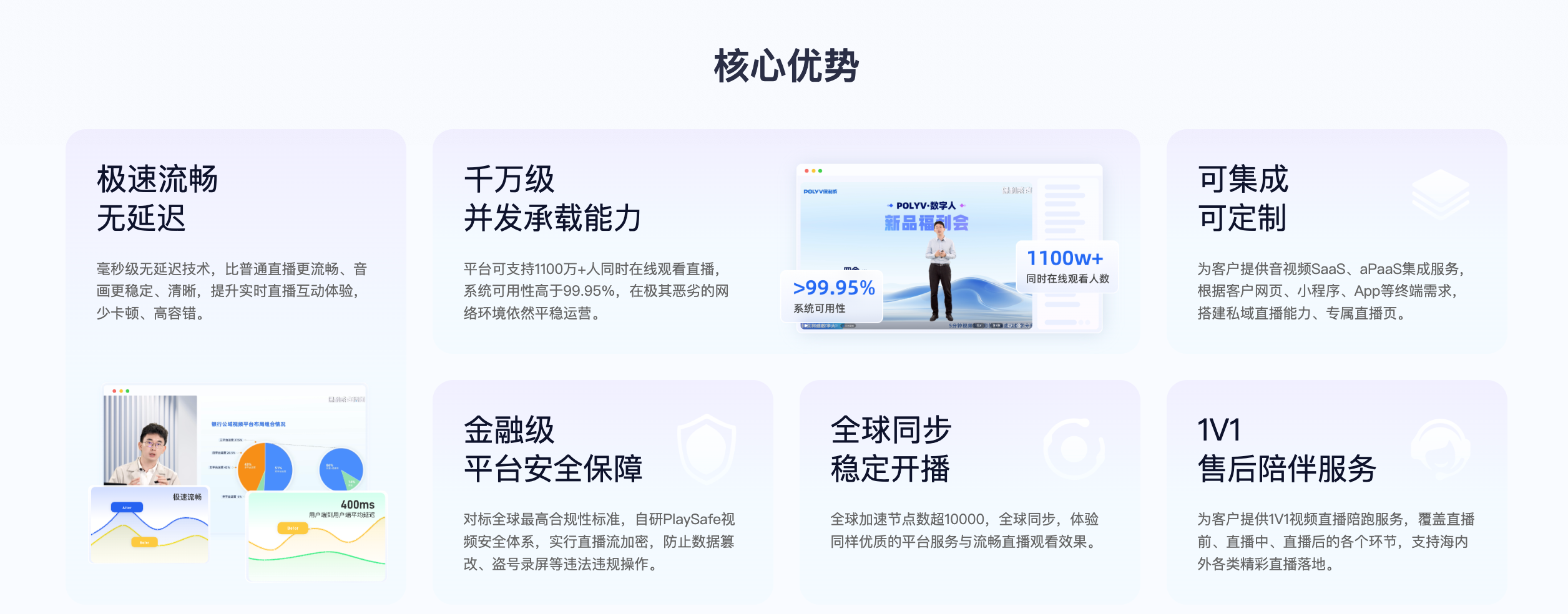
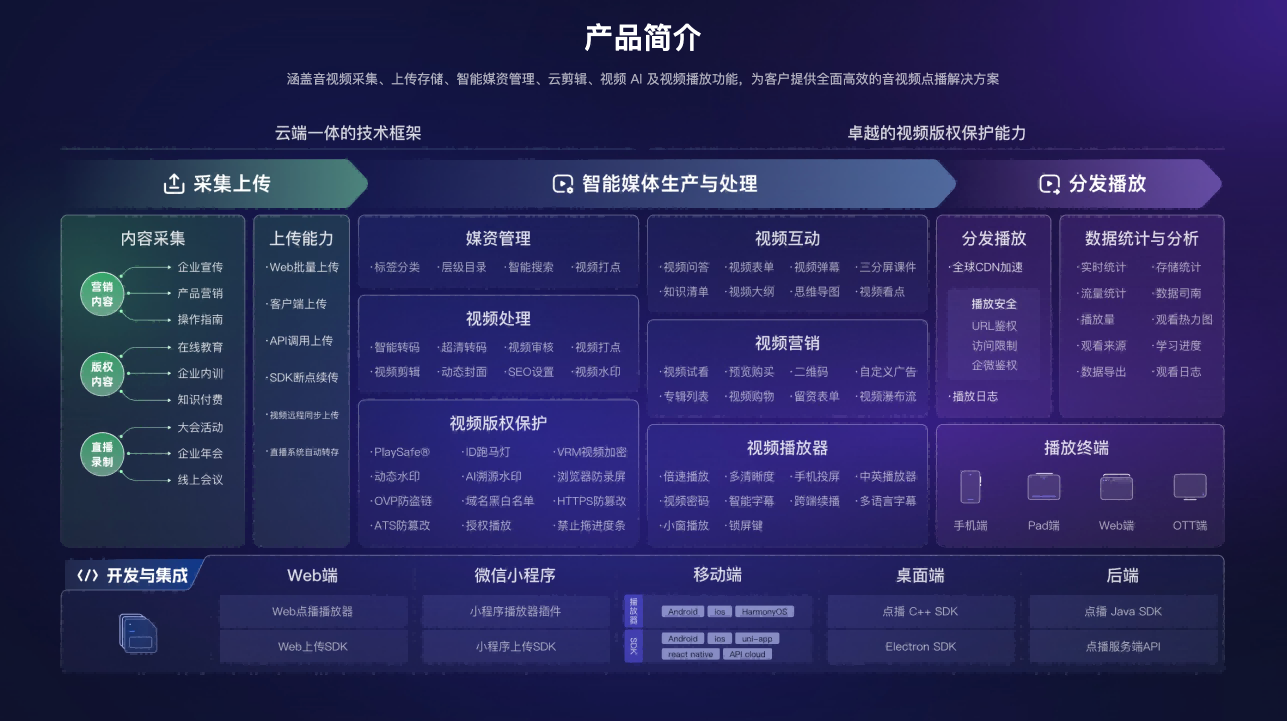
Polyv develops specialized, private and lightweight private domain live streaming solutions tailored to core scenarios of catering raw material factories, including remote cloud factory audits, key account maintenance, channel investment promotion and supply chain empowerment. The solution directly addresses the four core pain points: inadequate quality control oversight, confidential channel information leakage, lost high-value leads and delayed standard synchronization. It empowers factories to achieve transparent supply chain management, standardized channel operation and long-term client relationship maintenance.
(1) Regular Private Domain Live Streaming to Build a Transparent Quality Control System
Establish an exclusive B-end private live streaming hub that supports regular real-time broadcasts of on-site production workshops, disinfection workflows, aseptic packaging, cold chain warehousing and quality sampling inspections. Without requiring on-site visits by brand representatives, the platform delivers remote factory audit and online quality verification channels, filling gaps left by limited annual offline audits and enabling year-round continuous production supervision.
Visual live broadcasts intuitively showcase the factory’s standardized, compliant production strengths, fully alleviating brand concerns over quality control, consolidating the food safety foundation of supply chain cooperation and securing enduring supplier-customer partnerships.
(2) Multi-Layer Permission Control to Build a Confidentiality Barrier for Channel Information
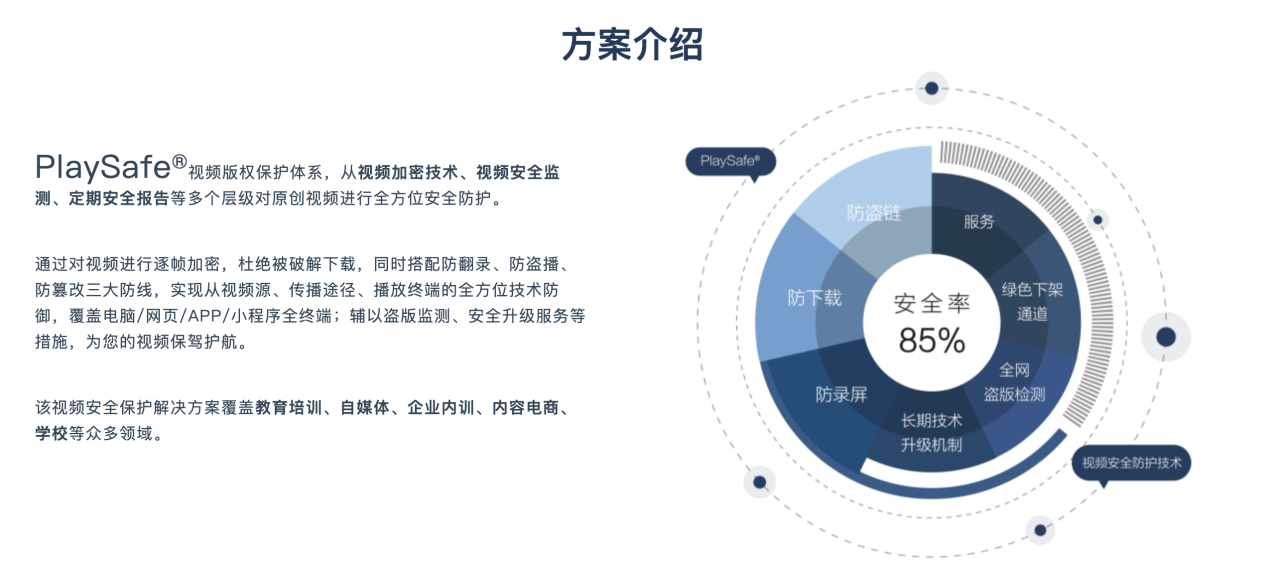
Equipped with enterprise-grade private live streaming security frameworks, the system supports three layers of refined access control: real-name enterprise authentication, exclusive whitelist access and password-protected live sessions. Factories may launch dedicated private live streams categorized by client purchasing volume, partnership tier and operating region, granting viewing access only to authorized chain brands, contracted distributors and prospective key clients while blocking competitors and unauthorized visitors.
Core commercial information including exclusive pricing, custom manufacturing processes and annual production quotas can be displayed in tiered access modes, fundamentally preventing confidential information leakage, stabilizing channel pricing systems, standardizing regional investment layouts and fully safeguarding the legitimate interests of factories and major clients.
(3) Customizable Lead Capture Forms to Systematically Accumulate High-Quality B-end Leads
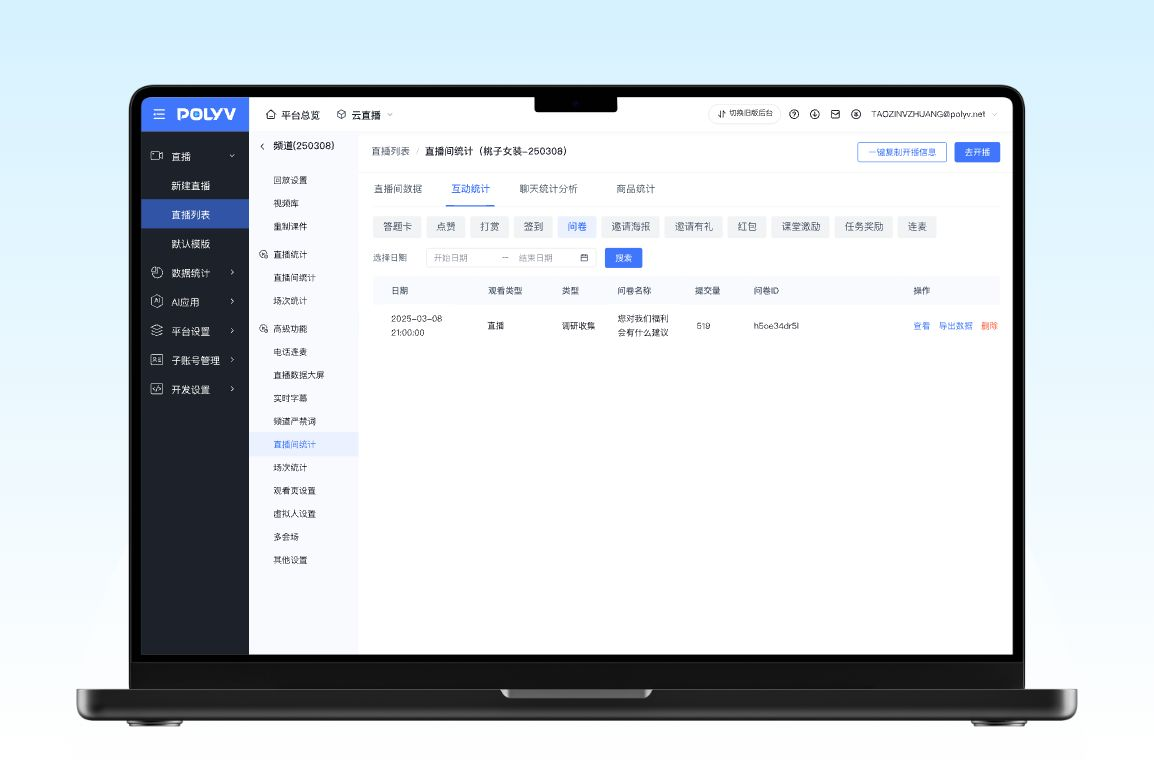
Built-in customizable B-end exclusive lead capture forms allow flexible configuration of professional data fields: enterprise name, core business categories, target cooperation regions, sample testing applications and annual bulk procurement intentions. During cloud factory tours and investment promotion sessions, prospective buyers and distributors are guided to submit partnership demands voluntarily. The system automatically archives and categorizes all submissions to build a structured, reviewable high-value customer database.
Operation teams can accurately segment clients by partnership tier, actual business demands and purchasing capacity to deliver targeted follow-up services, drastically boosting conversion rates for sample testing, bulk procurement and regional franchising.
(4) Targeted Distribution of Live Replays to Strengthen Long-Term Supply Chain Trust
After each live stream covering technical upgrades, standard revisions or cloud factory audits, the system automatically generates high-definition complete replays that fully archive updated disinfection protocols, safety production standards, process optimizations and equipment upgrades. Live replay videos can be privately shared with designated partner clients as a replacement for inefficient one-by-one manual communication, enabling unified, high-efficiency dissemination of the factory’s latest compliance standards and production advantages.
Consistent delivery of the factory’s compliance upgrade capabilities and refined quality control strengths to B-end clients continuously reinforces supply chain trust barriers, effectively lifting annual contract renewal rates and incremental procurement volumes.
III. Core Implementation Value of the Solution
This solution is deeply aligned with the core demands of raw material factories in B-end supply chain operation, channel management and key account cultivation, resolving all prevailing industry pain points comprehensively. It enables raw material factories to deploy a secure, efficient, long-term and reviewable B-end private domain live streaming operation system, supporting retention of existing clients, tapping new order opportunities, standardizing channel management and sustainably elevating the enterprise’s core supply chain competitiveness.