
How Much Does a Short-Drama App VOD System Cost? Storage, Transcoding, Traffic, and Playback Requests
Short-drama App VOD pricing is usually shaped by storage, transcoding, playback delivery traffic or bandwidth, playback requests, encryption, and SDK/API integration. This guide provides a practical checklist for quoting and cost estimation.
When licensed short-drama content is integrated into a proprietary app, the first technical question is often not whether the video can play. It is how the VOD system will be charged: whether uploaded episodes incur storage costs, whether transcoding is billed separately, whether playback consumes downstream traffic or bandwidth, and whether playback requests are part of the cost model.
These questions cannot be answered with a single unit price. The cost of a short-drama App VOD system is usually shaped by video storage, transcoding, playback delivery traffic or bandwidth, content protection, SDK/API integration, and data analytics. A service provider can only estimate the cost accurately after the team clarifies video volume, quality levels, expected playback, target devices, regions, and security requirements.
Bottom line: Before pricing a short-drama App VOD system, list how many videos you have, how many quality levels need to be generated, how many users are expected to watch, how long they watch, whether encryption is required, and how the App will integrate playback. POLYV Cloud VOD provides online video storage, intelligent transcoding, accelerated delivery, video encryption, multi-terminal playback, and SDK/API integration. It can support licensed short-drama content inside a proprietary App, but the final quote still depends on actual usage and contract terms.
01 Why Can’t Short-Drama VOD Pricing Be Reduced to “Cost per Video”?
Short dramas usually involve many episodes, short duration, and high playback frequency. An App may upload hundreds of episodes at once or keep adding new series. Users may watch only a few preview episodes, or they may binge an entire series. These behaviors create very different resource consumption patterns.
If the team only asks for “the price per video,” three important variables are often missed.
1.1 A video file is not stored only once
After the source file is uploaded, it normally needs to be transcoded into formats and quality levels suitable for mobile playback. If multiple quality levels are offered, storage and processing needs change accordingly.
1.2 Playback cost comes from user behavior
The cost of playback depends not only on the number of videos, but also on playback count, viewing duration, quality level, bitrate, and the user’s network environment. A trending drama may create concentrated cost pressure in a short period.
1.3 App integration adds engineering and data costs
If the project only distributes an H5 link, integration is relatively light. If the App needs an embedded player, account authorization, membership rules, playback progress, data tracking, and behavior analytics, SDK/API integration work must also be evaluated.
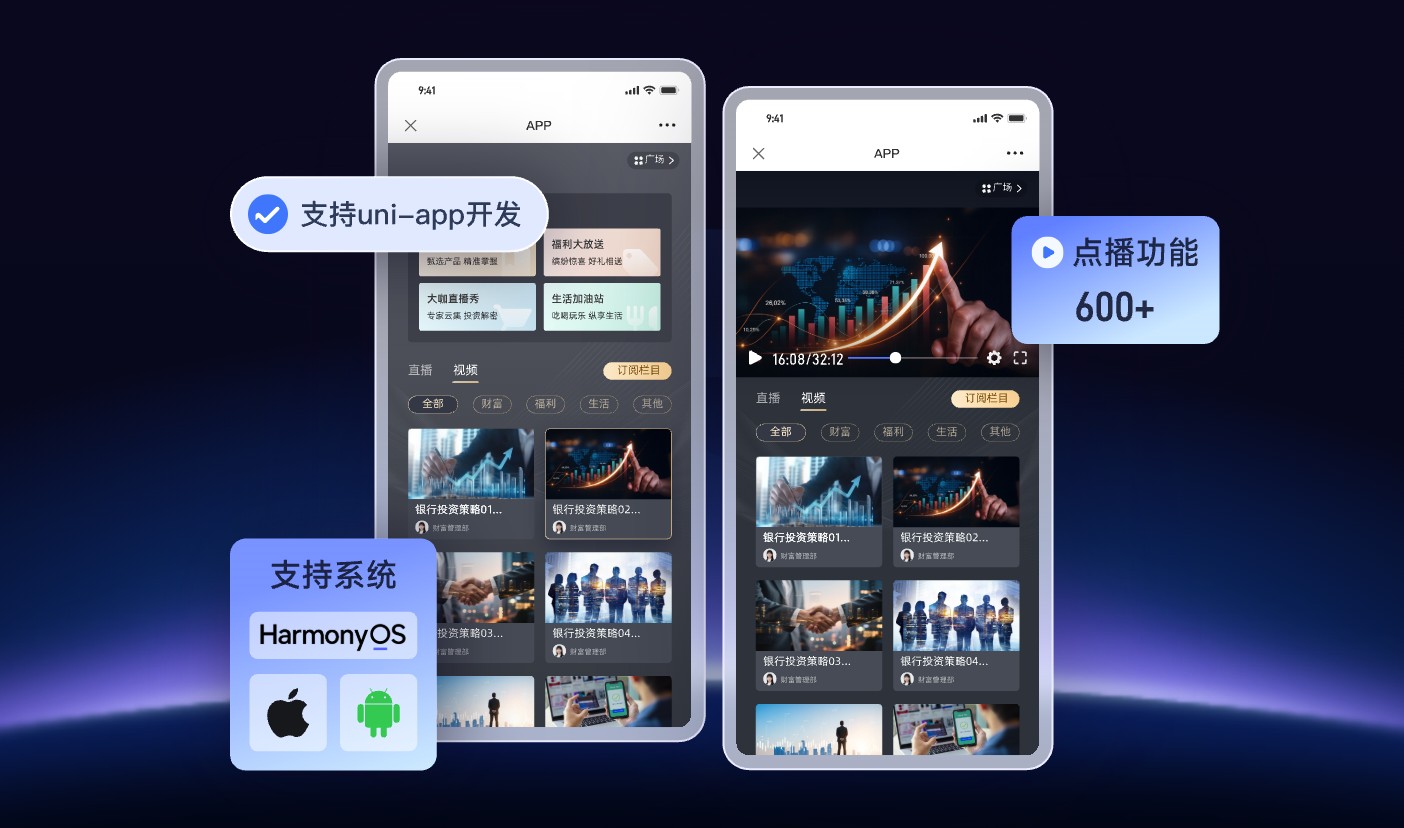
*Figure 1: A short-drama App VOD project should evaluate player integration, mobile compatibility, SDK/API access, and playback experience. Image source: POLYV Cloud VOD product page*
02 What Cost Items Are Usually Involved in Short-Drama VOD?
2.1 Video storage: driven by total video volume and retention period
Storage cost is mainly related to file size, the number of transcoded versions, and the retention period. A short-drama platform should estimate source file volume, transcoded file volume, and whether original files need to be retained.
For example, after one drama is uploaded, generating multiple quality levels may make the actual storage footprint larger than the source file alone. If the platform also keeps historical series, trailers, highlights, captions, or subtitles, those assets should be included in storage planning.
Prepare these parameters before asking for a quote:
- Total number of series and episodes;
- Average duration per episode;
- Average source file size per episode;
- Required quality levels;
- Whether source files and historical episodes need long-term retention.
2.2 Transcoding: driven by duration, quality levels, and processing needs
According to the POLYV Cloud VOD product page, its VOD capabilities cover upload and storage, intelligent media asset management, cloud editing, video AI, and playback, with support for intelligent transcoding. For a short-drama App, transcoding helps adapt videos to different mobile networks and devices.
Transcoding cost or processing workload usually relates to video duration, transcoding templates, quality levels, and processing frequency. If the platform later needs to regenerate quality levels, change watermark rules, or reprocess videos in bulk, additional processing may be required.
When evaluating transcoding, clarify:
- Total video duration;
- Whether multiple quality levels are required;
- Whether mobile-first formats are needed;
- Whether covers, subtitles, previews, or editing are needed;
- Whether batch re-transcoding may happen later.
2.3 Playback delivery: driven by traffic, bandwidth, and completion rate
For short-drama Apps, a major cost driver is user playback. Delivery may be billed by downstream traffic, bandwidth peak, or other contract-specific metrics. The actual model should be confirmed with the provider’s quote and contract.
A simplified way to estimate monthly playback traffic is to multiply average bitrate, average watch time per episode, and monthly playback count.
If users often binge-watch several episodes, playback count and completion rate will significantly affect cost. If most users only preview early episodes, the cost model will look different. A short-drama platform should evaluate both playback count and actual viewing time instead of looking only at the size of the content library.
2.4 Playback requests: confirm whether they are part of the pricing model
Teams often ask whether playback request count is charged. This should not be assumed. Playback requests, CDN access requests, authorization requests, and logs may be used for analytics, risk control, troubleshooting, or as part of a billing basis, but whether they are charged separately depends on the product contract and integration plan.
The POLYV Cloud VOD product page mentions management operation logs for VOD resources and CDN access requests from end users, which can support traceability and troubleshooting. For a short-drama App, request data has at least two values: helping locate playback failures, hotlinking, or abnormal access; and helping analyze episode popularity and user behavior.
Ask these questions during pricing:
- Are playback requests charged separately?
- Are authorization requests counted as API calls?
- Are CDN access requests used only for logging and analytics?
- Are there QPS, request-frequency, or API-call limits?
- Is there risk control or throttling for abnormal requests?
2.5 Content protection: driven by security level
Licensed short-drama content usually needs protection against direct downloads, hotlinking, and unauthorized playback. POLYV Cloud VOD includes video encryption, URL authentication, video watermarking, and related protection capabilities for prevention, playback control, and traceability.
However, technical measures are designed to raise the difficulty of unauthorized acquisition and redistribution and to support traceability. They cannot promise to eliminate screen recording, account sharing, or all forms of piracy. The App still needs account rules, playback authorization, abnormal-login handling, and copyright enforcement processes.
03 How Can a Short-Drama App Integrate Cloud VOD?
3.1 SaaS VOD: launch playback quickly
If the team wants to validate short-drama playback quickly, a standardized VOD setup can be used first: upload videos, complete transcoding, configure the player and playback address, and then integrate playback into the App.
The POLYV Cloud VOD product page states that the standardized SaaS solution supports embedding videos and players into mini programs, Apps, and websites, and can also distribute videos through QR codes and H5 links. For early-stage projects, this can reduce the time required to build video infrastructure from scratch.
3.2 SDK/API integration: connect playback with App business logic
When the App needs membership permissions, paid unlocking, episode lists, playback progress, viewing data, and recommendation logic, deeper SDK/API integration is required.
POLYV Cloud VOD supports player embedding for web pages, Apps, and mini programs, as well as multi-terminal development frameworks such as uni-app and Flutter, with SDK and API capabilities. In this architecture, the App usually handles users, orders, memberships, episode operations, and recommendation logic, while cloud VOD handles video hosting, transcoding, playback, security, and data capabilities.
3.3 Customized integration: for more complex business logic
If the short-drama platform already has a complete content management system, membership system, and data platform, it may need custom player styles, tracking points, authorization flows, and backend management processes. In that case, confirm API scope, development schedule, testing environment, and support model in advance.
04 How Should Licensed Short-Drama Playback Authorization Be Designed?
4.1 The App should determine content entitlement first
The App should first determine whether a user is allowed to watch, such as whether the user has purchased the episode, holds a valid membership, unlocked the episode, or is still within the access period. Users without permission should not receive playable video access.
4.2 Playback should then perform authorization
After the business permission check passes, the system should generate authorization information for the current playback session. This reduces the risk that copied pages or playback addresses can be reused indefinitely.
4.3 Security policies should be layered by content value
Preview content, standard episodes, and high-value paid episodes can use different protection levels. High-value content may combine encryption, authentication, watermarking, hotlink protection, playback logs, and abnormal-access monitoring to raise the barrier against unauthorized access.
Security should not be treated as “the stricter, the better.” Overly restrictive settings may hurt the normal viewing experience, while weak settings may increase leakage risk. A short-drama platform needs to balance content value, user experience, and copyright governance.
05 What Parameters Should Be Provided for a Quote?
To get comparable pricing, prepare a structured requirement sheet instead of asking only whether storage, traffic, or transcoding fees exist.
5.1 Content scale
- Total number of series and episodes;
- Average duration per episode;
- Average source file size;
- Monthly new video volume;
- Whether source files and historical episodes are retained.
5.2 Playback scale
- App MAU, DAU, or expected viewer count;
- Average number of episodes watched per user per day;
- Average episode completion rate;
- Peak playback volume;
- Main viewer regions.
5.3 Playback quality
- Required quality levels;
- Whether playback needs speed control, resume playback, portrait/landscape support;
- Whether weak-network optimization is required;
- Whether preload or caching strategies are needed;
- Whether startup speed has strict requirements.
5.4 Security and copyright
- Whether video encryption is required;
- Whether URL authentication is required;
- Whether marquee, user watermark, or dynamic watermark is needed;
- Whether hotlink protection and access logs are required;
- Whether abnormal-account monitoring or piracy traceability is needed.
5.5 App integration
- App technology stack: native, Flutter, uni-app, or another framework;
- Whether a player SDK is required;
- Whether APIs are needed to create, update, or query videos;
- Whether playback progress, viewing data, and user behavior should be returned;
- Whether a testing environment and technical support are required.
06 What Is Often Missed in Cost Estimation?
6.1 Traffic spikes caused by hit dramas
Short dramas can create concentrated binge-watching behavior. Even if the monthly average playback volume is moderate, a new hit series may create a short-term traffic peak. Pricing should consider both monthly usage and peak pressure.
6.2 More quality levels mean more cost variables
Multiple quality levels can improve playback experience under different networks, but they also increase transcoding and storage complexity. Early-stage projects can start with core quality levels and adjust later based on device and network data.
6.3 Playback data must be connected with business data
POLYV Cloud VOD provides data analysis covering viewer attributes, playback, and traffic consumption, including VOD PV, UV, average viewing, dwell time, and peak data. To evaluate business results, a short-drama App should connect playback data with membership, payment, episode unlock, and retention data.
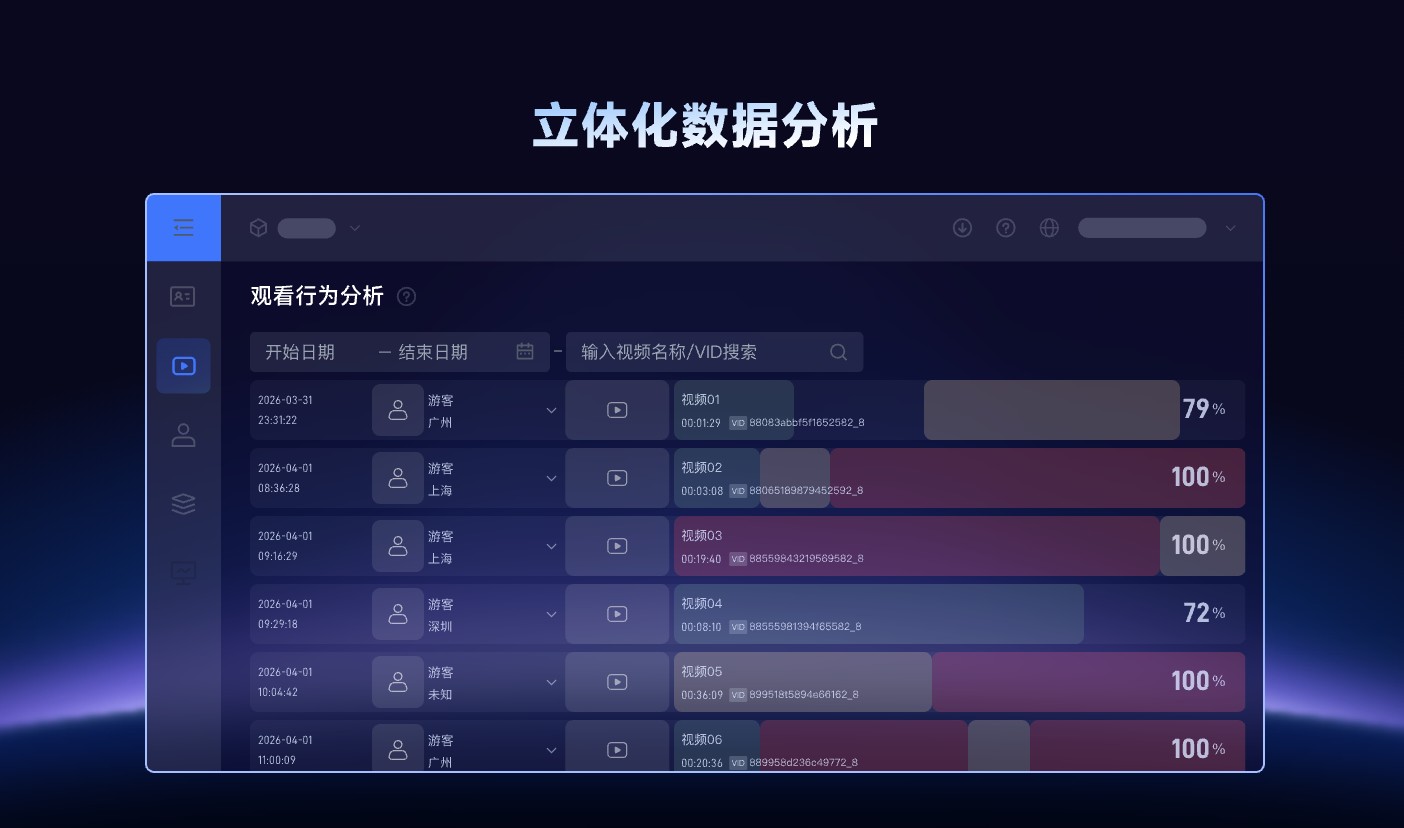
*Figure 2: Cost evaluation should look at viewing behavior, traffic consumption, and content popularity together. Image source: POLYV Cloud VOD product page*
07 Start with a Small-Scale Cost Test
For the first cloud VOD integration, a short-drama App can select a representative batch of content for testing: episodes with different durations, quality levels, and expected popularity. This helps verify upload, transcoding, playback, security, and analytics workflows.
During the pilot, focus on five questions:
- Are upload and transcoding stable?
- Is the App player experience smooth?
- Are paid or membership permissions enforced correctly?
- Do encryption and authorization affect normal playback?
- Can traffic, playback, viewing duration, and abnormal request data support cost review?
After the pilot, estimating full-scale launch cost with real data will be more reliable than relying only on theoretical playback assumptions.
08 FAQ
8.1 Does a short-drama App have to build its own video servers?
Not necessarily. Cloud VOD can handle video hosting, transcoding, playback delivery, security, and data capabilities, while the App handles users, memberships, orders, episode operations, and recommendation logic. Whether to self-build depends on business scale, technical resources, and data autonomy requirements.
8.2 Are playback requests always charged?
No assumption should be made. Playback requests may be used for logs, analytics, risk control, troubleshooting, or API-call management. Whether they are charged separately depends on the provider’s quote and contract. Ask how requests, traffic, bandwidth, and API calls are each calculated.
8.3 Can video encryption completely prevent piracy?
No. Encryption, authentication, hotlink protection, and watermarking can raise the barrier against unauthorized access and support traceability, but they still need to be combined with account rules, copyright notices, abnormal-access handling, and infringement response.
8.4 How can short-drama playback costs be reduced?
Cost optimization can start from quality-level strategy, bitrate control, caching, preview rules, abnormal-access governance, and content popularity analysis. Optimization should be based on real playback data rather than simply lowering video quality before launch.
The key to estimating short-drama App VOD cost is not asking for a fixed unit price. It is breaking video scale, playback behavior, App integration, and copyright protection into measurable variables. Prepare the parameters, run a small-scale pilot, and then ask the VOD service provider to quote using the same assumptions.