
How Can Education Providers Sell Courses Through WeChat Mini Program Live Streaming? From Reservation to Payment Conversion
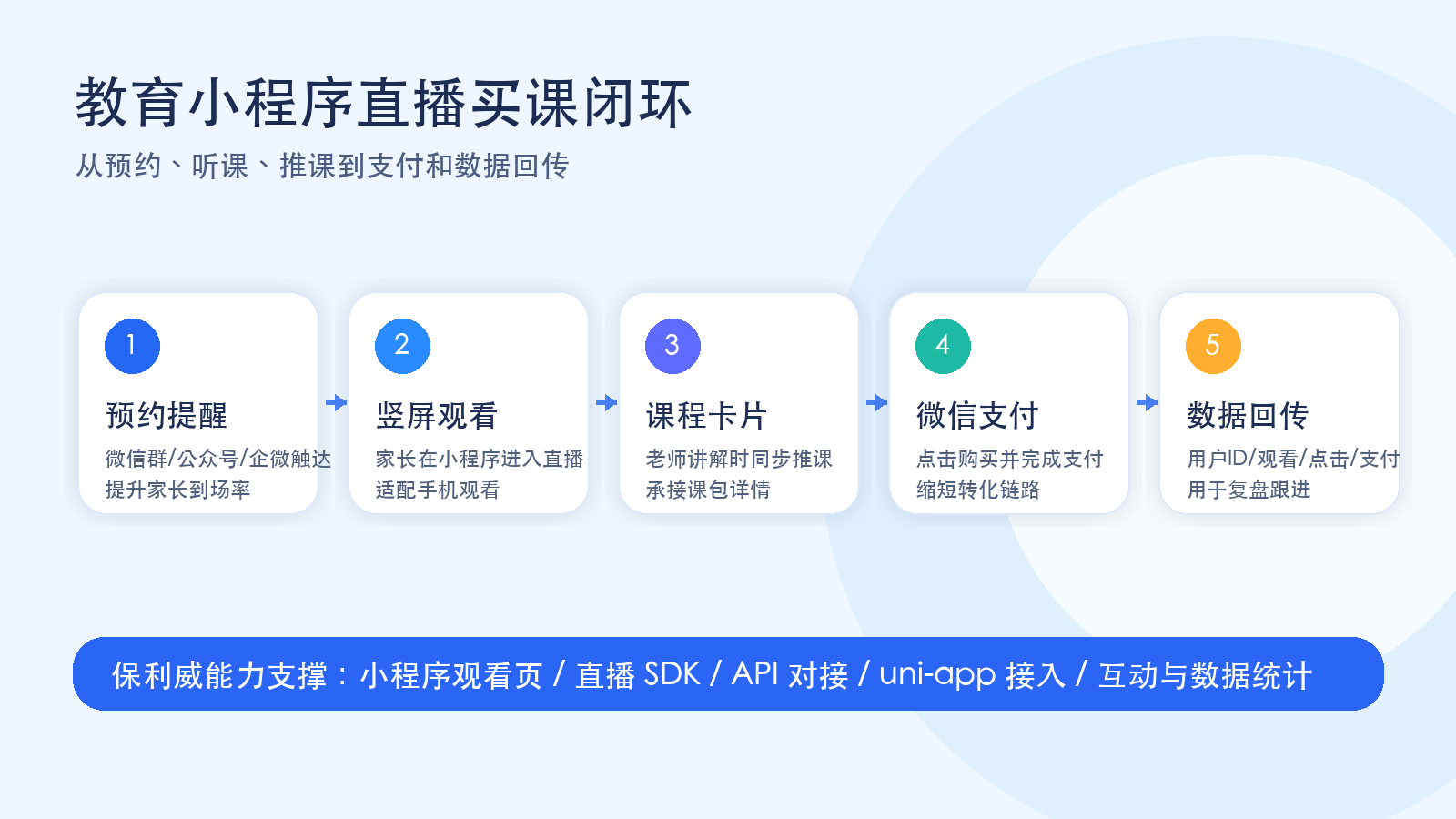
For education providers, mini program live course sales are not only about opening a live room. The key is to connect reservation, vertical viewing, course cards, WeChat payment, and data return into a complete conversion flow.
For online education providers, selling courses through a WeChat mini program live room is not simply about opening one more live channel.
This is especially true for institutions that already have an App, a course system, and a paid learning path. The real question is often not whether they can stream, but whether live streaming can become a complete conversion scenario: whether parents can enter easily, whether teachers can deliver the session smoothly, whether course packages can be recommended in the live room, whether users can complete payment after clicking a course card, and whether the backend can capture viewing, clicking, and purchase data in time.
This need is common in programming courses, enrichment education, trial-course conversion, and parent meeting scenarios.
Many education providers first let students experience several lessons in the App, then arrange a parent meeting or public live session. The lecturer explains the course value, learning path, and student cases, and then drives conversion to the full-price course package. In this situation, the live room is not only a content playback tool. It becomes an operating entry point that connects explanation, interaction, recommendation, purchase, and post-event review.
01 Why Is WeChat Mini Program Live Streaming Suitable for Education Course Sales?
Compared with an App, a WeChat mini program has a lighter entry point, faster access, and a shorter payment path.
Parents may not want to download another App, and they may not be familiar with complex course entrances inside an App. But if the live entrance is placed in WeChat, users can enter through WeChat groups, official accounts, enterprise WeChat, or campaign posters with much less friction.
This is especially useful for parent meetings, trial-course conversion, and low-price-to-full-price course sales. These scenarios already depend heavily on private-domain operations in WeChat. Users can enter the live room from a WeChat group, listen to the session, click the course card, and complete payment through WeChat. This path is usually more natural than asking users to jump back to an App, search for a course page, and then pay.
For education providers, mini program live streaming should not be seen as a replacement for the App. It is better understood as a lightweight WeChat-side entrance that is more suitable for conversion.
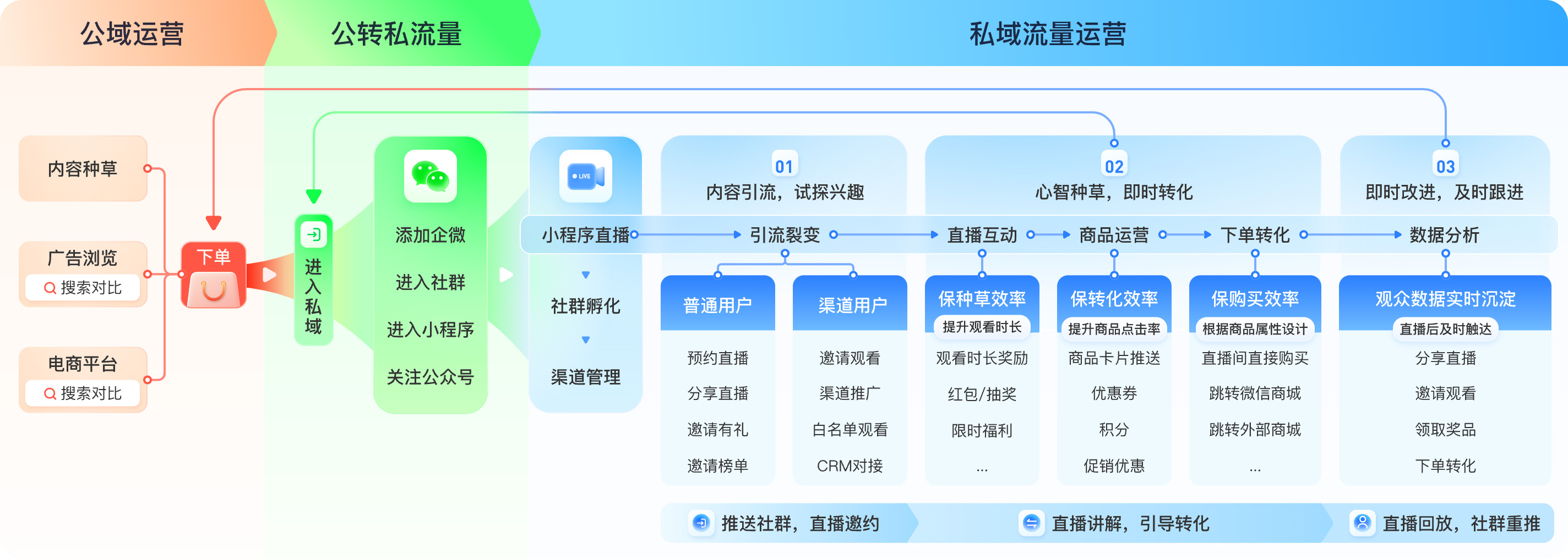
02 What Should a Complete Mini Program Live Course Sales Flow Include?
The first step is reservation.
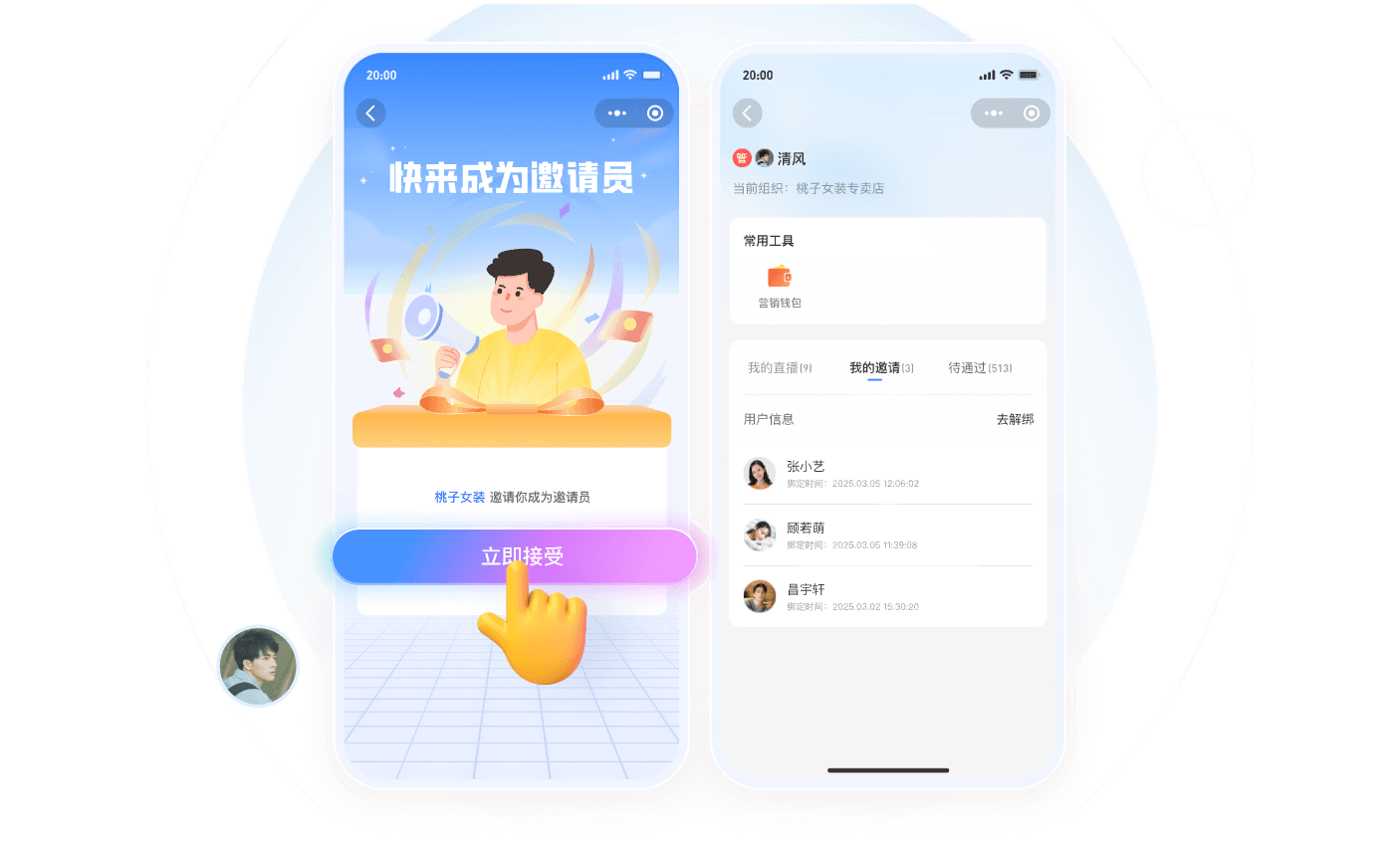
Education live sessions are usually scheduled events, not random on-demand viewing. They may be weekly parent meetings, stage-based public classes, trial-course closing sessions, or course package introduction sessions. A reservation feature helps institutions collect interested users in advance and send reminders before the session starts, improving attendance.
The second step is a vertical live viewing page.
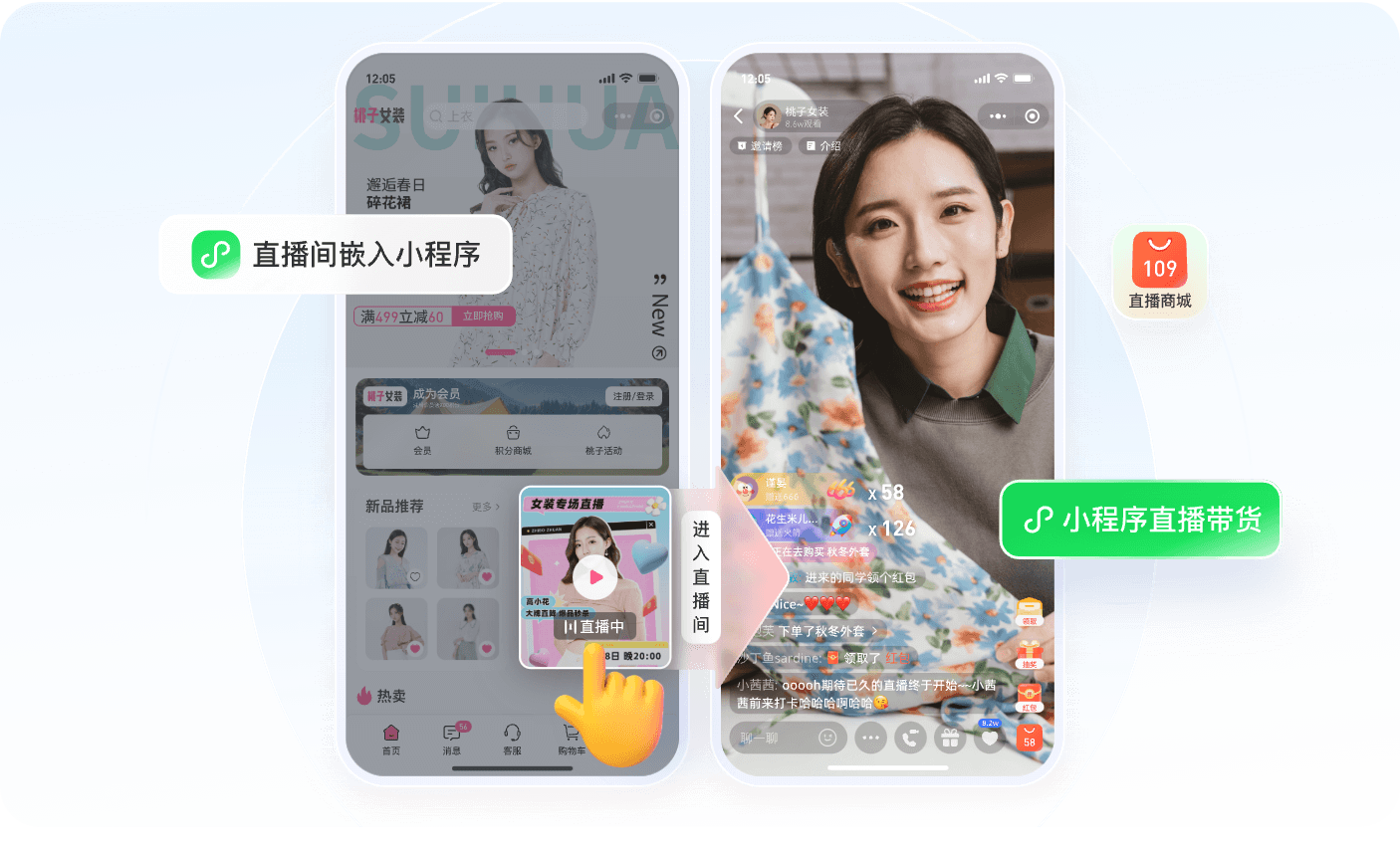
Parent meetings and course sales usually happen on mobile devices, so a vertical viewing page in the mini program is closer to user habits. The live room needs to support teacher video, slide or screen presentation, comments, announcements, and basic interaction, so that users can quickly understand what the session is about and what action they should take next.
The third step is course card recommendation.
This is the key difference between education course sales and ordinary live streaming. When the teacher explains course benefits, class types, or limited-time offers, the operator can push a corresponding course card in the live room. Parents can click the card to view course details, pricing, applicable age or level, and then move into the purchase flow.
The fourth step is payment and order connection.
For course purchase scenarios, the shorter the payment path, the lower the drop-off risk. A mini program can connect with WeChat Pay so that parents complete purchase in the WeChat environment. For institutions that already have an App or course system, orders, user identity, course entitlement, and follow-up learning services need to be connected with existing systems.
The fifth step is data return and review.
Education providers should not only look at how many users entered the live room. More important questions include: who made a reservation, who entered the live room, how long they watched, whether they clicked the course card, whether they paid, and which user ID the payment belongs to. These data points directly affect sales follow-up, class advisor service, and conversion review.
03 What Capabilities Should Education Providers Evaluate?
First, the viewing experience needs to be stable.
If the live session freezes or has obvious delay, the teacher’s explanation and the operator’s course-pushing rhythm will both be affected. For parent meetings and other concentrated conversion scenarios, user attention is limited. Stable, smooth, and low-latency viewing is the foundation.
Second, reservation and reminder capabilities matter.
If an institution already has a fixed live schedule, such as two sessions per week, users need to reserve in advance and be reminded before the session starts. This helps reduce the number of users who signed up but did not attend.
Third, the live room needs to support course products.
Education course sales are different from ordinary product sales. A course card may need to show the course package name, applicable audience, course highlights, price, and purchase entrance. It may also need to map back to the institution’s existing course system and order system.
Fourth, the solution should be able to integrate with existing App, mini program, or business systems.
Many education providers are not building live streaming from scratch. They already have an App, a student system, and a course backend. A better mini program live solution should work as an embedded viewing page or live capability, rather than forcing the customer to rebuild a complete platform.
Fifth, data should support post-event operations.
After a live session ends, the institution needs to review conversion performance and provide follow-up clues for sales, advisors, or operations teams. Therefore, user ID, viewing behavior, course card clicks, and payment results should be traceable as much as possible.
04 How Can POLYV Support This Scenario?
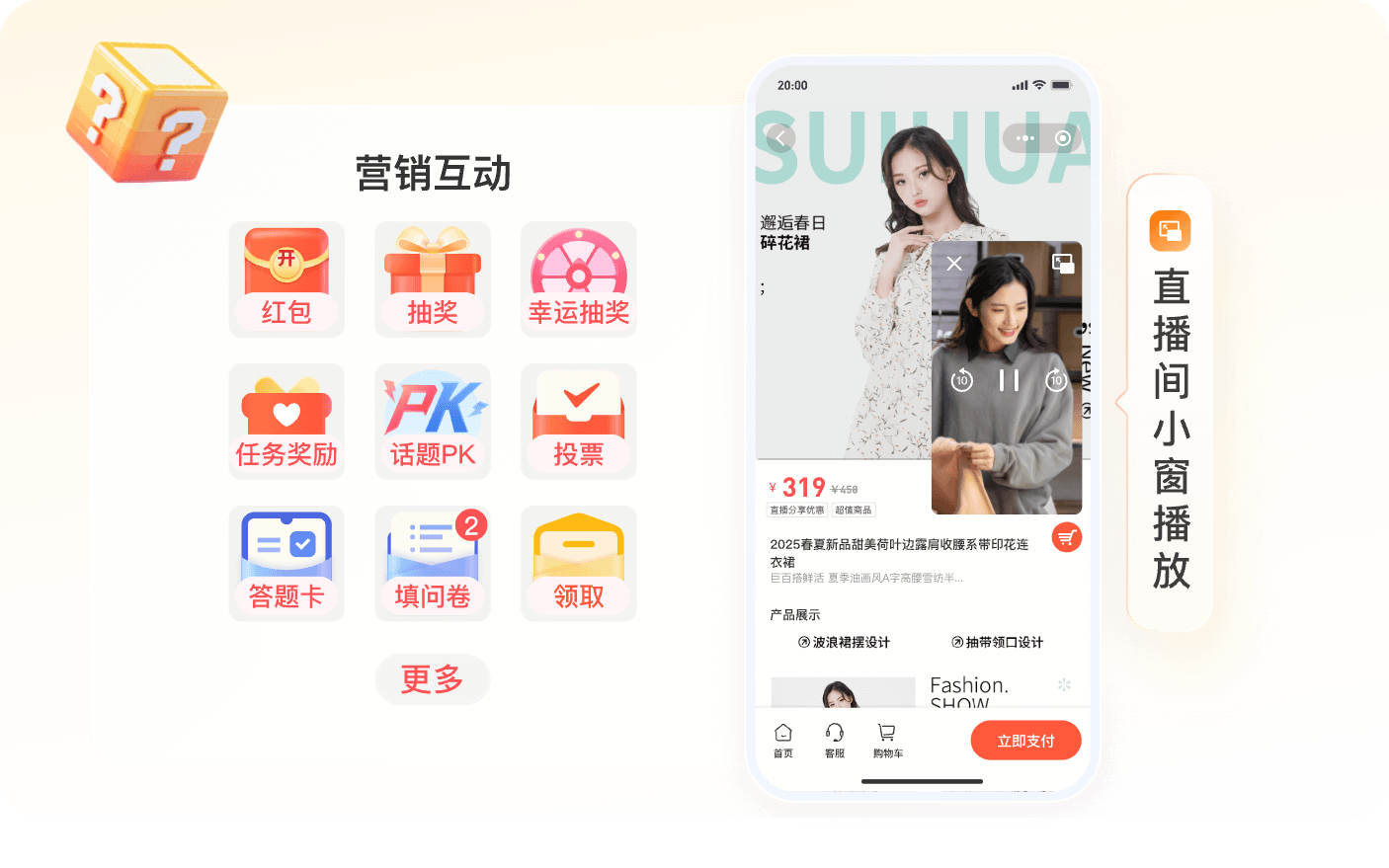
For education providers that need to sell courses through mini program live streaming, POLYV can provide capabilities such as mini program live viewing pages, live interaction, reservation viewing, course or product recommendation, and data analytics. These capabilities help institutions build a lighter live conversion entrance in WeChat mini programs.
If the customer already has an App, mini program, or course system, POLYV can also support integration through SDKs, APIs, and componentized capabilities. For example, an institution can embed a live viewing page into its own mini program and connect channel information, viewer identity, course cards, and interaction data with its existing business system. It can also choose native WeChat mini program integration or uni-app framework integration according to its own technology stack, reducing repeated development and multi-end adaptation cost.
For mini program viewing pages, POLYV supports both native WeChat mini program integration and uni-app framework integration. Customers can choose an appropriate player and viewing-page solution according to their mini program qualifications, player capability requirements, and launch review conditions. This helps reduce integration barriers caused by qualification, technology stack, or review requirements.
From an integration perspective, POLYV can support Webview integration, native SDK integration, plugin plus SDK integration, Web viewing page SDK, Web interaction receiver SDK, live player, and API interfaces. These capabilities can be embedded into the customer’s existing mini program, App, course mall, CRM, or order system. For education course sales, this means the institution does not necessarily need to rebuild a full platform. It can connect live streaming capability into the existing business flow.
For example, the frontend can carry the vertical mini program viewing page and course card display, while course detail, payment, and order processing are handled by the institution’s existing mini program or course system. The backend can use APIs to connect user IDs, viewing records, click behavior, and payment results. In this way, parents can complete purchase within a shorter WeChat path, and the operations team can continue conversion review and user follow-up after the live session.
In other words, the institution can first build the “mini program live room” around key conversion steps: making it easier for parents to enter, smoother for teachers to explain, faster for operators to push courses, shorter for users to purchase, and clearer for teams to review data afterward.
About POLYV
POLYV is a leading enterprise-grade video SaaS brand. From 2020 to 2025, POLYV ranked No. 1 on the Enterprise Live Streaming Service Provider Ranking for six consecutive years. Its core products and services include low-latency live streaming, video on demand, MR live streaming, digital humans, and live streaming studios, providing enterprises with integrated services such as private-domain video technology and platforms, content operations, and live streaming operations and execution for digital transformation.
Since its founding in 2013, POLYV has served the CCTV Spring Festival Gala live broadcast for six consecutive years. It has also provided video live streaming systems and services for large enterprises and financial institutions, including China Construction Bank, China Everbright Bank, Bank of Ningbo, Kingdee, Tencent, Huawei, iFLYTEK, Midea, and NetEase.