
If an Education Provider Already Has an App, Why Add a Mini Program Live Room?
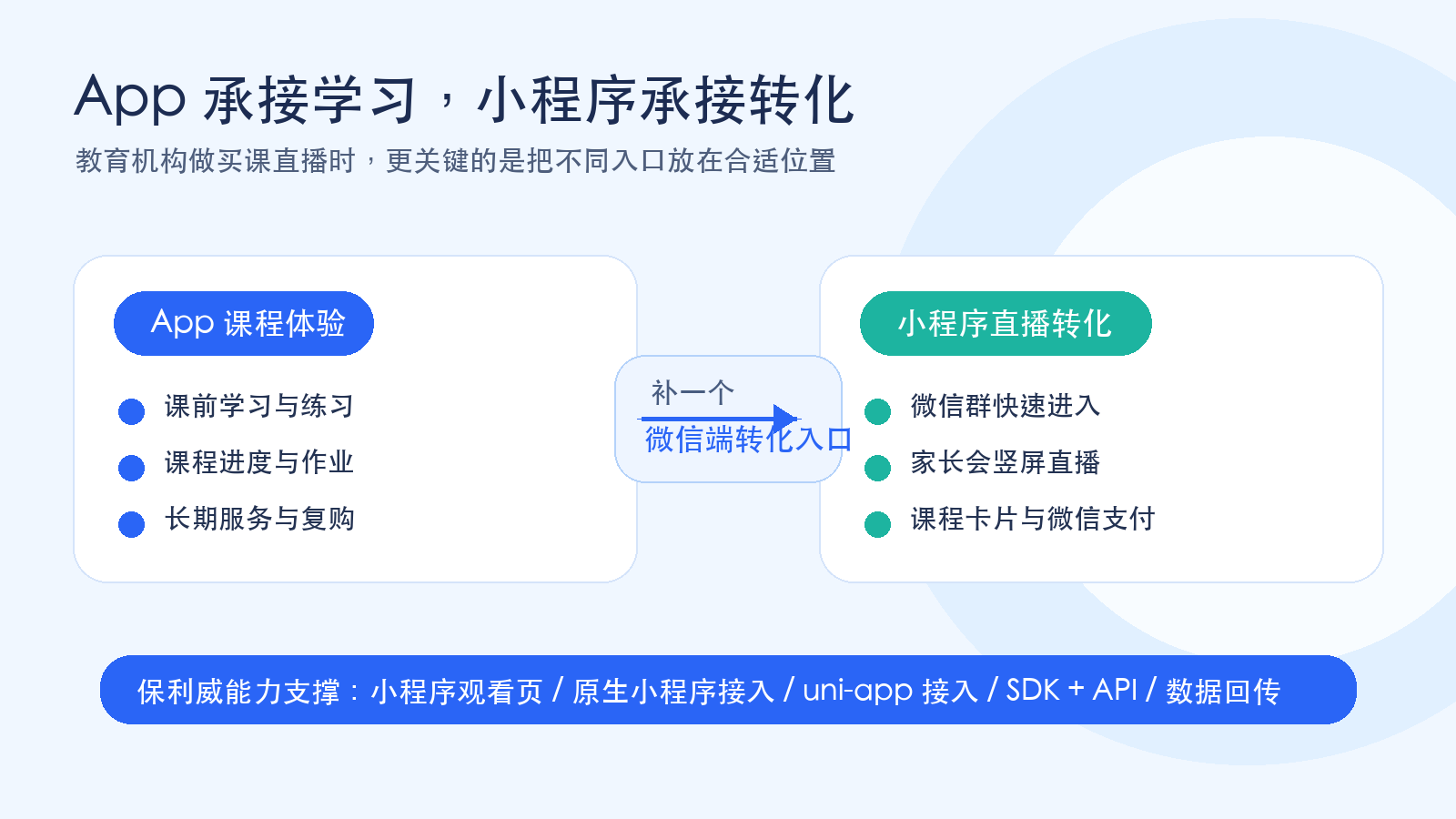
Having an App does not mean course-sales live streaming must stay inside the App. The App is better for long-term learning, while a WeChat mini program live room is better for parent meetings, trial-course conversion, and course purchase actions.
When education providers plan live course sales, a common question is: if we already have an App and our courses are already there, why do we still need a mini program live room?
This question should not be answered only by whether the institution already has an App. It should be judged by where the live session sits in the business flow.
If the goal is long-term learning, after-class practice, course progress management, homework submission, or advisor service, the App is still the better place. It works more like a long-term learning space and is suitable for deeper service and retention.
But when the scenario becomes a parent meeting, trial-course conversion, or low-price-to-advanced-course upgrade, the logic changes. At this point, the core of the live session is no longer simply “continue learning”. It is to let parents enter quickly, listen to the explanation, see the course package, and complete purchase.
In this scenario, the value of a mini program live room becomes clear. It is not meant to replace the App. It gives education providers a WeChat-side entry point that is closer to private-domain traffic and more suitable for course conversion.
01 Apps Are Better for Learning, Mini Programs Are Better for Conversion
Education providers build Apps mainly to deliver deeper learning services.
Students can log in to watch courses, practice exercises, submit homework, check learning progress, and receive long-term service from teachers or advisors. For users who have already paid or are already learning, the App is a relatively complete learning space.
But live course sales often face parents rather than students.
Parents may not open the App every day, and they may not be familiar with course entrances inside the App. If the conversion action starts from a WeChat group, enterprise WeChat message, official account article, or campaign poster, asking parents to jump back to the App, find the live room, find the course package, and then pay will add friction at every step.
A more reasonable division is: the App continues to carry learning and service, while the mini program carries WeChat-side live conversion.
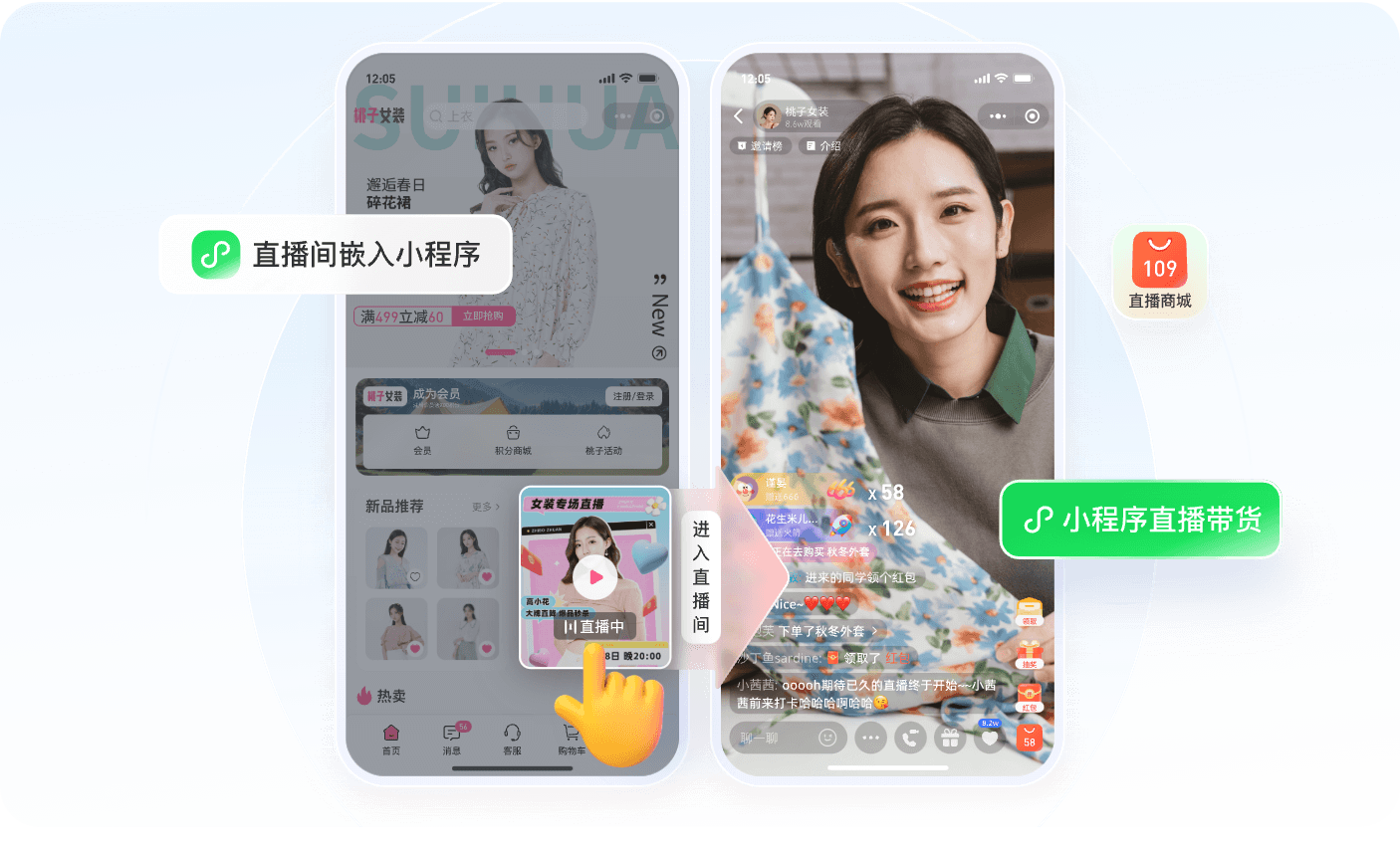
In parent meeting live sessions, public course briefings, and trial-course closing conversion scenarios, parents can enter a mini program live room from WeChat, listen to the teacher explain the course value, and click a course card to purchase. The path is shorter and closer to parents’ habits of consulting, communicating, and paying in WeChat.
02 Why Should Course-Sales Live Streaming Be Placed in a WeChat Mini Program?
First, the entrance is lighter.
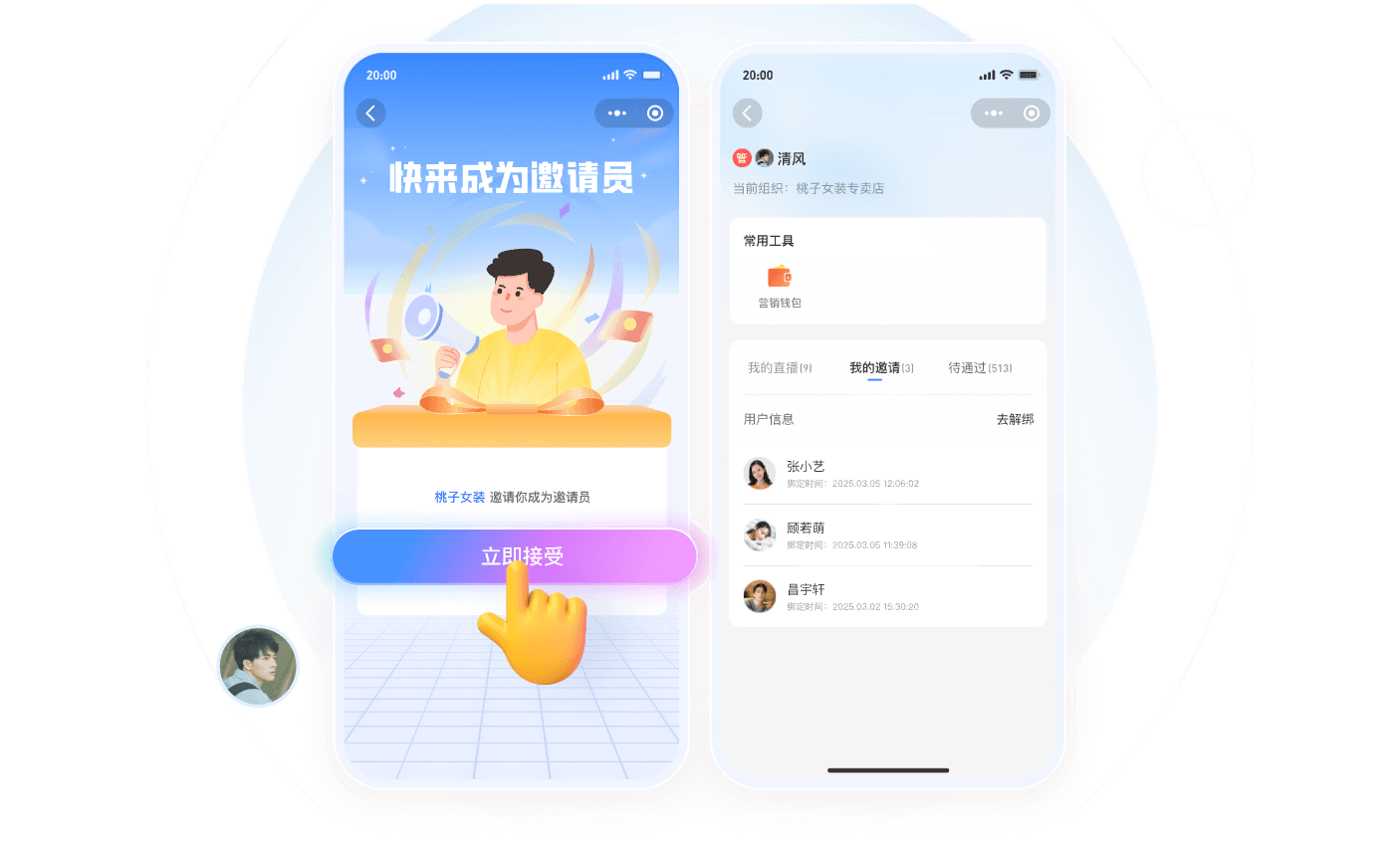
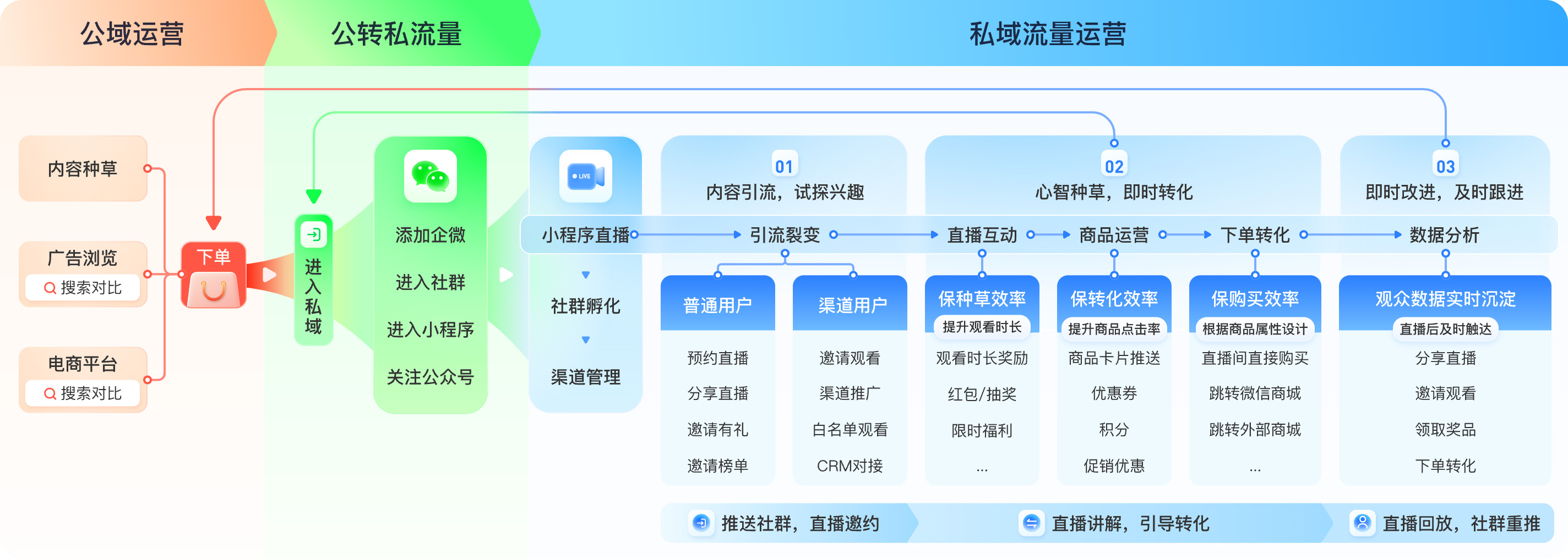
Live course sales usually depend on private-domain traffic. Operations teams may remind parents in WeChat groups, sales or advisors may notify them through enterprise WeChat, and official accounts may carry the registration entrance. A mini program connects naturally with these entrances, allowing users to click and enter the live room directly.
Second, the viewing experience fits mobile behavior better.
An education provider’s App may be designed around horizontal course learning. But parent meetings and course-sales live sessions are usually watched on mobile phones in vertical mode. Parents need to listen to the teacher while reading comments, announcements, course cards, and purchase entrances. A vertical mini program live room fits this scenario better.
Third, the payment path is shorter.
Course conversion is sensitive to long purchase paths. A mini program can connect with WeChat Pay. After parents click the course card, they can enter the institution’s existing mini program mall, course detail page, or payment page, reducing hesitation and drop-off caused by cross-end jumps.
Fourth, data can return to the conversion flow more easily.
Education providers need more than viewer numbers. They need to know whether parents made a reservation, attended the session, how long they watched, whether they clicked a course package, and whether they paid. If these data points can connect with user IDs, course systems, or CRM, they can support follow-up operations.
03 How Can an App + Mini Program Education Live Architecture Be Divided?
A clear approach is to give the App and the mini program different roles.
The App is responsible for long-term learning. It carries the learning process of paid users, including course playback, homework practice, learning records, after-class service, and renewal operations. For education providers, the App’s value lies in service depth and user retention.
The mini program is responsible for campaign conversion. It carries short-path actions inside WeChat private-domain traffic, including live reservation, live room entry, parent meeting attendance, course card viewing, purchase clicks, and WeChat payment. For education providers, the mini program’s value lies in a lighter entrance, shorter path, and faster conversion.
The backend system is responsible for data connection. For example, user identity, viewing behavior, course card clicks, and payment results from the mini program live room can be returned to the course system, CRM, or order system, helping sales, advisors, and operations teams decide how to follow up.
With this division, the question is no longer whether to choose the App or the mini program.
The real answer is role division: the App carries deep learning, the mini program carries private-domain conversion, and live streaming capability, course systems, and data interfaces connect the two.
04 How Can POLYV Support This Scenario?
For education providers that already have an App and want to add a mini program live conversion entrance, POLYV can provide capabilities such as mini program live viewing pages, live interaction, reservation viewing, course or product recommendation, and data analytics. These capabilities help institutions connect live rooms with WeChat mini program scenarios.
In terms of integration, POLYV supports both native WeChat mini program integration and uni-app framework integration. For customers that already have an App, mini program, or course system, they can choose a suitable viewing-page solution according to their existing technology stack, launch schedule, mini program qualifications, and player capability requirements.
If the customer wants to launch quickly, Webview integration and plugin plus SDK integration can be used to integrate live viewing pages and interaction capabilities at lower cost. If the customer needs deeper connection with its own business system, live SDKs, Web viewing page SDK, Web interaction receiver SDK, player capabilities, and API interfaces can be used to embed live viewing, user identity, course cards, interaction data, and viewing records into the existing mini program, App, course mall, CRM, or order system.
For education course-sales scenarios, POLYV is more suitable as the live streaming capability layer. Course details, WeChat payment, and order fulfillment can still be handled by the institution’s existing mini program or course system. POLYV focuses on live viewing, interaction, course-pushing touchpoints, and data capabilities, so the institution does not need to rebuild a full live streaming platform from scratch.
In other words, education providers can keep the App’s learning-service capabilities while adding a mini program live room that is more suitable for WeChat private-domain conversion: parents enter from WeChat groups, teachers explain in the live room, operators push courses at the right time, parents click course cards to purchase, and the backend returns viewing, clicking, and payment data to existing business systems.
About POLYV
POLYV is a leading enterprise-grade video SaaS brand. From 2020 to 2025, POLYV ranked No. 1 on the Enterprise Live Streaming Service Provider Ranking for six consecutive years. Its core products and services include low-latency live streaming, video on demand, MR live streaming, digital humans, and live streaming studios, providing enterprises with integrated services such as private-domain video technology and platforms, content operations, and live streaming operations and execution for digital transformation.
Since its founding in 2013, POLYV has served the CCTV Spring Festival Gala live broadcast for six consecutive years. It has also provided video live streaming systems and services for large enterprises and financial institutions, including China Construction Bank, China Everbright Bank, Bank of Ningbo, Kingdee, Tencent, Huawei, iFLYTEK, Midea, and NetEase.