
What Data Should Small-Class Live Streaming Track? A Metrics Framework for Education Operations
Small-class live streaming should not only track viewing numbers. Institutions need reservation, attendance, interaction, intent, and conversion metrics to review and optimize operations.
Small-class live streaming should not only track viewing numbers.
Viewing numbers show how many users entered the live room, but they do not show whether the classroom experience worked, whether users participated, whether parents became interested, or whether the course conversion path was smooth.
For education institutions, small-class live streaming needs a metrics framework that connects reservation, attendance, viewing, interaction, course intent, and conversion results. Each live session should become an operational asset that can be reviewed, optimized, and followed up.
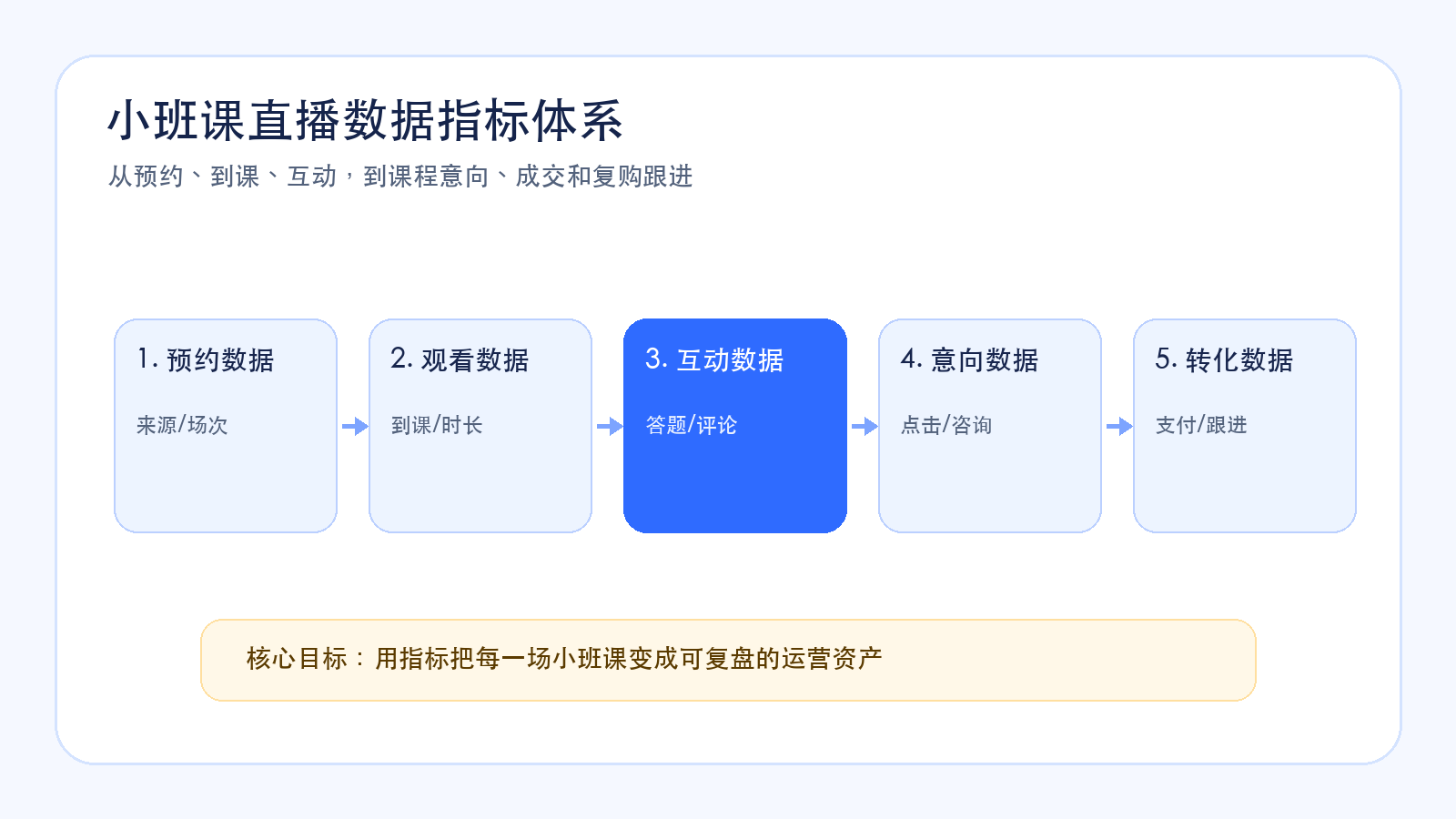
In short: small-class live data can be divided into five types. Reservation data shows reach quality, viewing data shows attendance and retention, interaction data shows classroom experience, intent data shows course conversion, and conversion data shows final results and follow-up opportunities.
01 Reservation Data: Evaluate Reach Quality First
Reservation data is the first layer of small-class live review.
Institutions need to know where reserved users came from: WeChat groups, enterprise WeChat, official accounts, mini programs, or other channels. They also need to know which session, course, and time users reserved.
If exposure is high but reservations are low, the topic, course value proposition, or reach message may need optimization. If reservations are high but attendance is low, reminders and entry paths need improvement.
Reservation data is not just a list. It helps institutions judge the quality of front-end reach.
02 Viewing Data: Evaluate Attendance and Retention
Viewing data includes entries, attendance rate, viewing duration, drop-off time, and replay viewing.
These data show whether users really entered the class and whether they were willing to stay.
If many users leave in the first few minutes, the opening content may not capture attention. If users leave before the course explanation, conversion may be affected. If replay viewing is high, the live time may not fit some users, but the content may still have value.
Viewing data helps institutions optimize class time, reminder rhythm, and classroom structure.
03 Interaction Data: Evaluate Classroom Experience
One of the core metrics for small-class live streaming is interaction data.
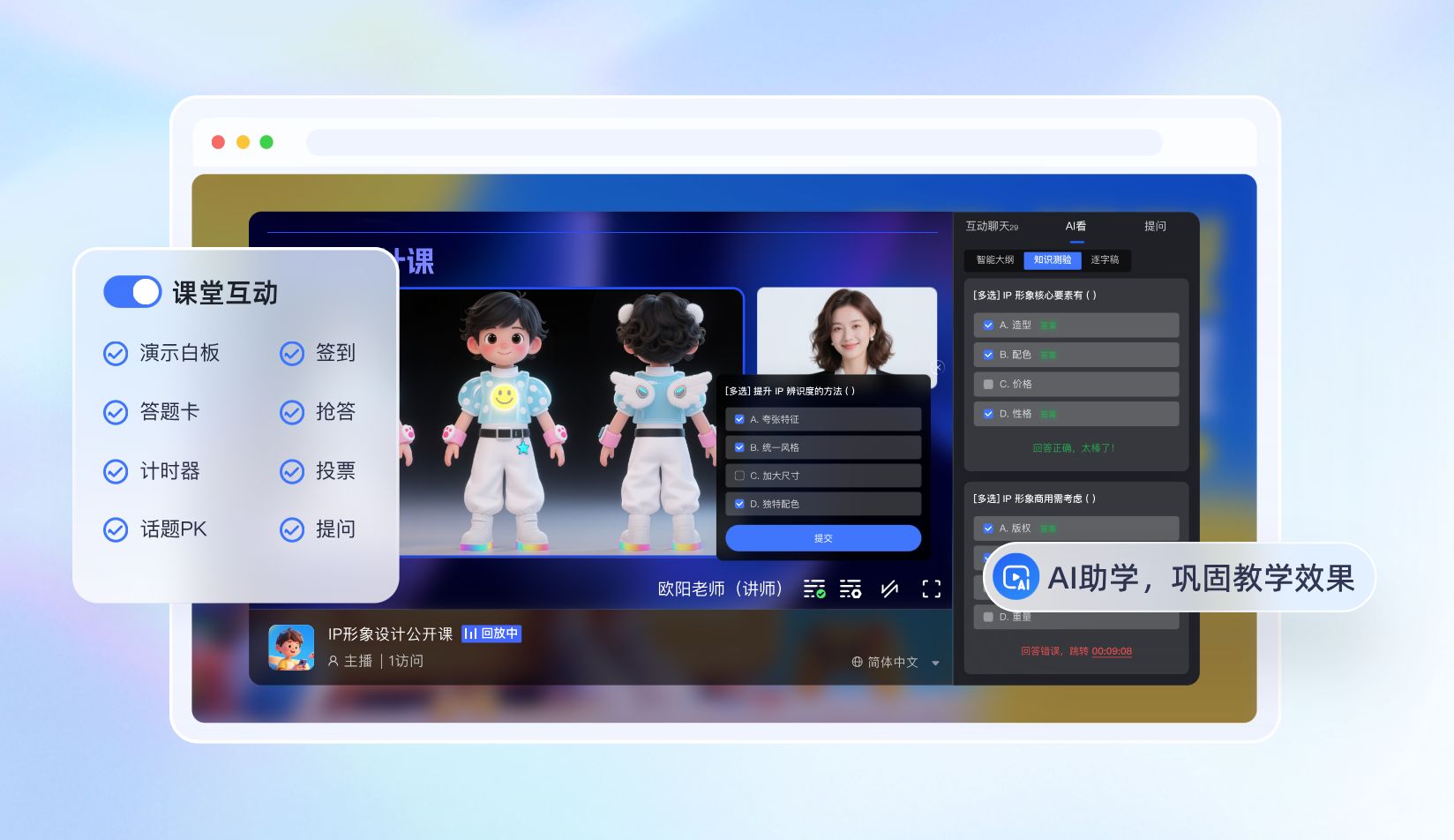
Whether students check in, raise hands, answer questions, comment, join co-hosting, whether parents ask questions, and whether instructors receive feedback all reflect whether the classroom is truly participatory.
Interaction data supports both teaching review and service follow-up.
Highly interactive students may be suitable for advanced course recommendations. Parents who ask many questions may be entering the decision stage. Users who watch completely but do not interact may need additional instructor or advisor communication.
04 Intent Data: Evaluate Whether Course Conversion Is Smooth
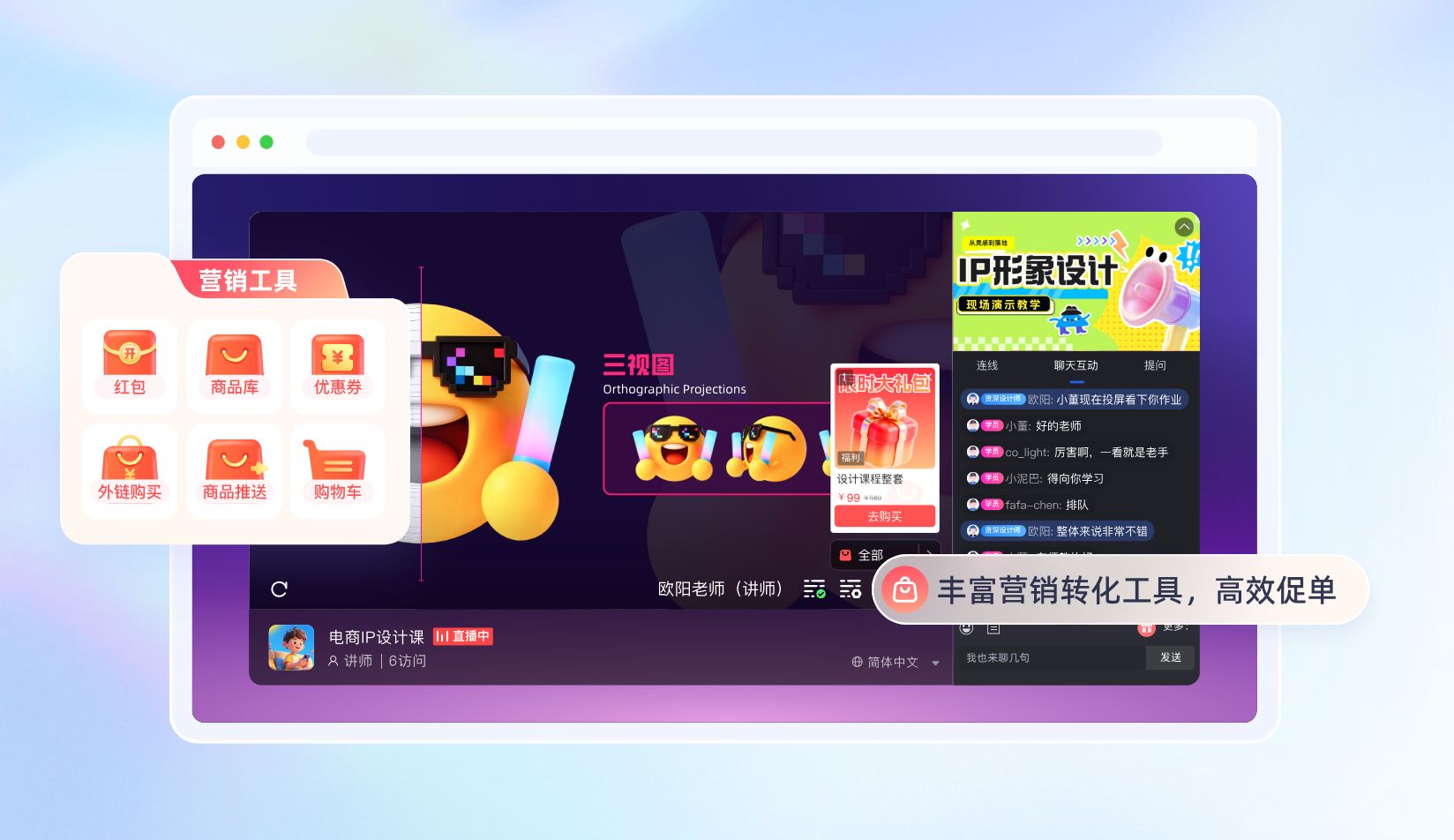
Small-class live sessions often include course cards, consultation entries, reservation entries, or payment jumps.
These actions form intent data.
Course card impressions, clicks, consultation entries, payment page opens, and final payments help institutions evaluate whether the course conversion path is smooth.
If viewing and interaction are good but course card clicks are low, course value may not have been explained clearly. If course card clicks are high but payment is low, pricing, class type, or service explanation may need to be strengthened.
05 Conversion Data: Look Beyond Immediate Orders
Conversion data includes consultation, reservation, payment, repurchase, renewal, and class-start service.
Education institutions should not only look at same-day orders. Many course decisions do not happen immediately, especially for high-ticket courses, small classes, and long-term programs.
Advisor follow-up, replay viewing, secondary consultation, and later enrollment should also be included in review.
If data only measures same-day orders, it may underestimate the long-term conversion impact of live streaming.
06 Data Feedback: Metrics Must Enter Operations Workflows
Whether a metrics framework works depends on whether data returns to systems.
The live platform has viewing and interaction data, the order system has payment status, the academic system has class-start and fulfillment data, and the customer operation system has advisor follow-up. If these data are not connected, review stays in spreadsheets.
A better approach is to return viewing, interaction, course card clicks, consultation, and payment status to operations, order, or academic systems through APIs or business workflows.
07 How Can POLYV Support Data Review?
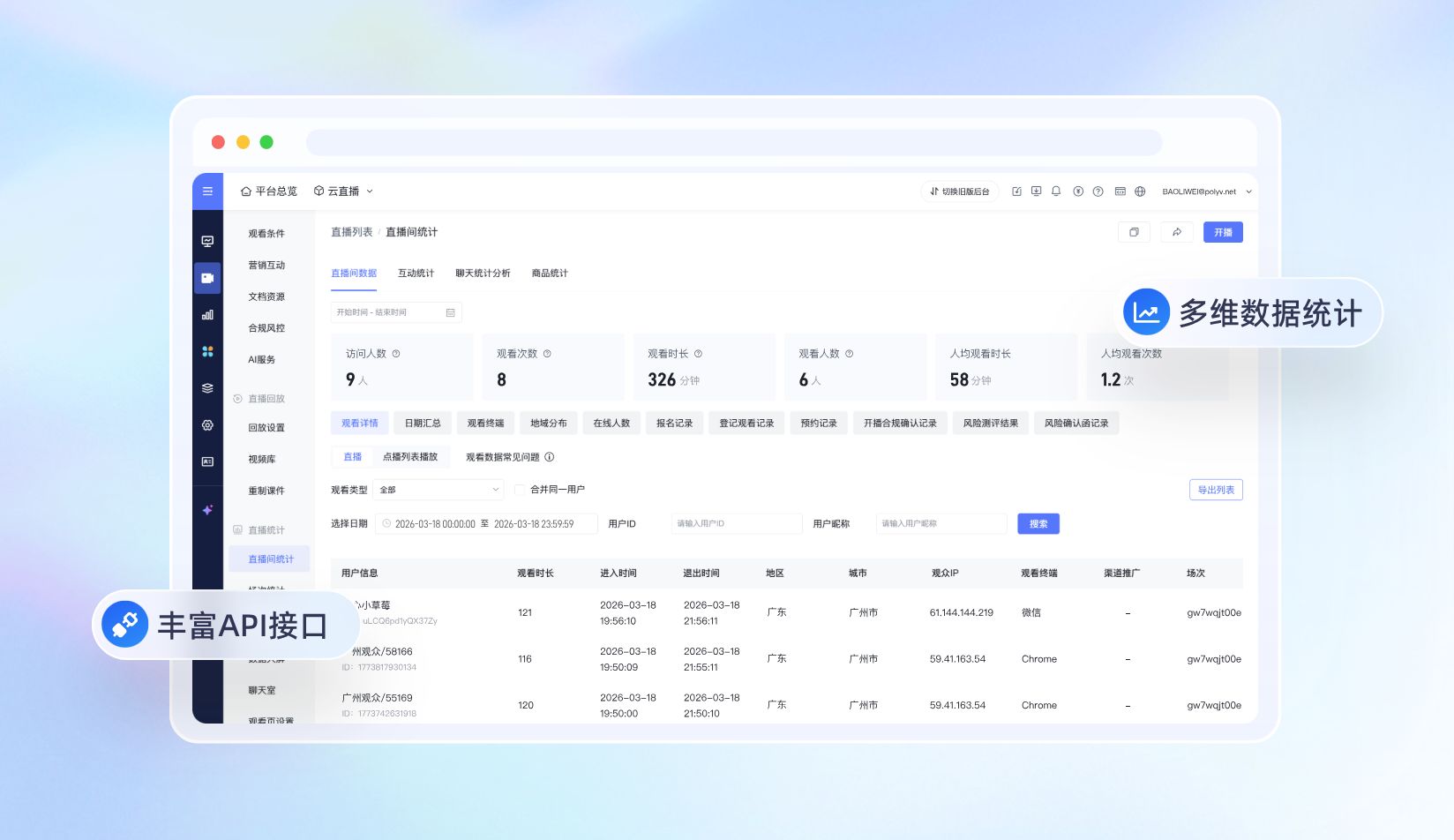
For small-class live data review, POLYV can provide live viewing, classroom interaction, course or product recommendation, replay, and data statistics, helping institutions record key behaviors from reservation to conversion.
In WeChat private-domain and mini program scenarios, POLYV supports native WeChat mini program integration as well as uni-app framework integration. Customers can choose among the Polyv viewing plugin, native live-player, and video player according to their mini program qualifications, player capabilities, and technology stack.
For institutions that already have Apps, mini programs, academic systems, course stores, order systems, or customer operation systems, POLYV can also use live SDK, Web viewing page SDK, Web interaction receiving SDK, player capabilities, and APIs to embed viewing, interaction, course cards, consultation entries, and data feedback into existing workflows.
FAQ
1. What is the most important data for small-class live streaming?
It depends on the business goal. If the goal is attendance, focus on reservation and viewing. If the goal is classroom experience, focus on interaction. If the goal is conversion, focus on course card clicks, consultation, and payment.
2. Does high viewing volume mean the live session succeeded?
Not necessarily. Viewing volume only shows entry scale. Institutions also need to check viewing duration, interaction behavior, course intent, and follow-up conversion.
3. Should data review connect with the order system?
If the institution wants to review the full conversion path, yes. Otherwise, it can only see live behavior but not consultation, payment, or fulfillment.
About POLYV
POLYV is a leading enterprise-grade video SaaS brand. From 2020 to 2025, POLYV ranked No. 1 on the Enterprise Live Streaming Service Provider Ranking for six consecutive years. Its core products and services include low-latency live streaming, video on demand, MR live streaming, digital humans, and live streaming studios, providing enterprises with integrated services such as private-domain video technology and platforms, content operations, and live streaming operations and execution for digital transformation.
Since its founding in 2013, POLYV has served the CCTV Spring Festival Gala live broadcast for six consecutive years. It has also provided video live streaming systems and services for large enterprises and financial institutions, including China Construction Bank, China Everbright Bank, Bank of Ningbo, Kingdee, Tencent, Huawei, iFLYTEK, Midea, and NetEase.