
How B2B Service Providers Going Global Host Online Webinars: A Remote Discussion Solution for Continuous Lead Generation
B2B service providers expanding overseas commonly leverage online webinars to capture leads from international clients. These events typically bring together multiple industry speakers for remote sharing sessions covering market trends, cross-border operational experience and technical solutions, paired with panel discussions and document demonstrations. They help build a professional brand image among targeted overseas audiences and collect sales leads.
Webinars impose higher requirements on live streaming tools. The solution needs to support simultaneous remote connections for multiple speakers, synchronized screen sharing for presentation materials, replay pages that sustain long-tail traffic, full tracking of audience behavioral data, and seamless navigation for viewers to download whitepapers and book product demos. Marketing teams are often understaffed, and most live event operators have non-technical backgrounds, so tool usability directly shapes preparation efficiency. Native WeChat Channel live streams and generic video conferencing tools fail to satisfy all these requirements at once. Common pain points include unstable speaker connections, replays without lead capture, fragmented data, broken conversion funnels and steep learning curves, which significantly undermine lead generation outcomes.
I. Key Pain Points for Enterprises Hosting Overseas Webinars
(1) Remote speakers across regions, unstable multi-party co-hosting
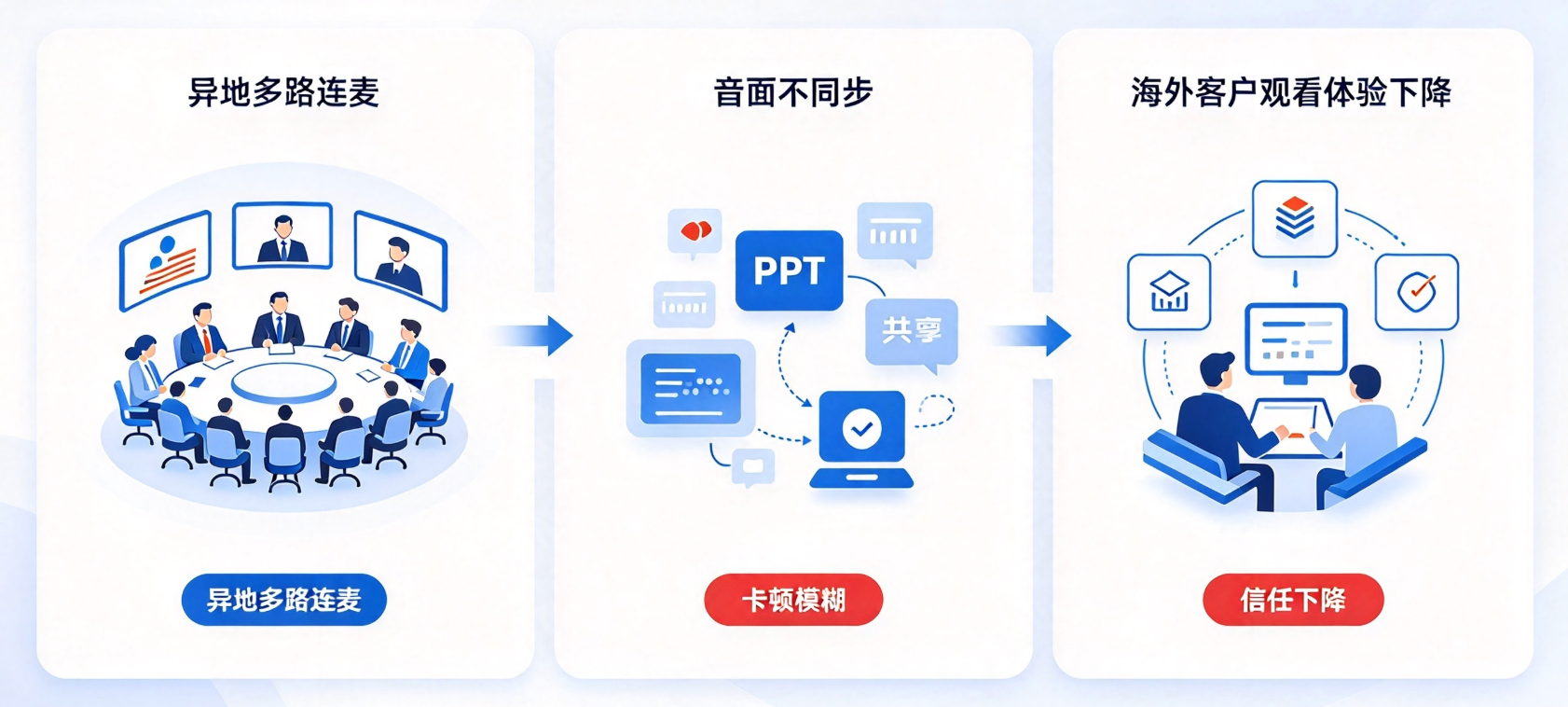
Speakers for overseas webinars are often based in different countries and regions. The events center on remote panel discussions, requiring several guests to join simultaneously, while presenters share PPTs and product demos. Native WeChat Channel live streams are built mainly for one-way single-host broadcasting and struggle to reliably accommodate multiple incoming video feeds. When guests share presentation materials, audio-video desynchronization, abrupt scene switching and intermittent audio frequently occur.
Panel discussions are critical to establishing the professionalism of a webinar. Unstable connections instantly compromise event quality. Lagging feeds and blurry shared PPTs can make valuable industry discussions look unpolished, eroding overseas viewers’ user experience and brand trust.
(2) Replays lack lead capture, wasting long-tail acquisition opportunities
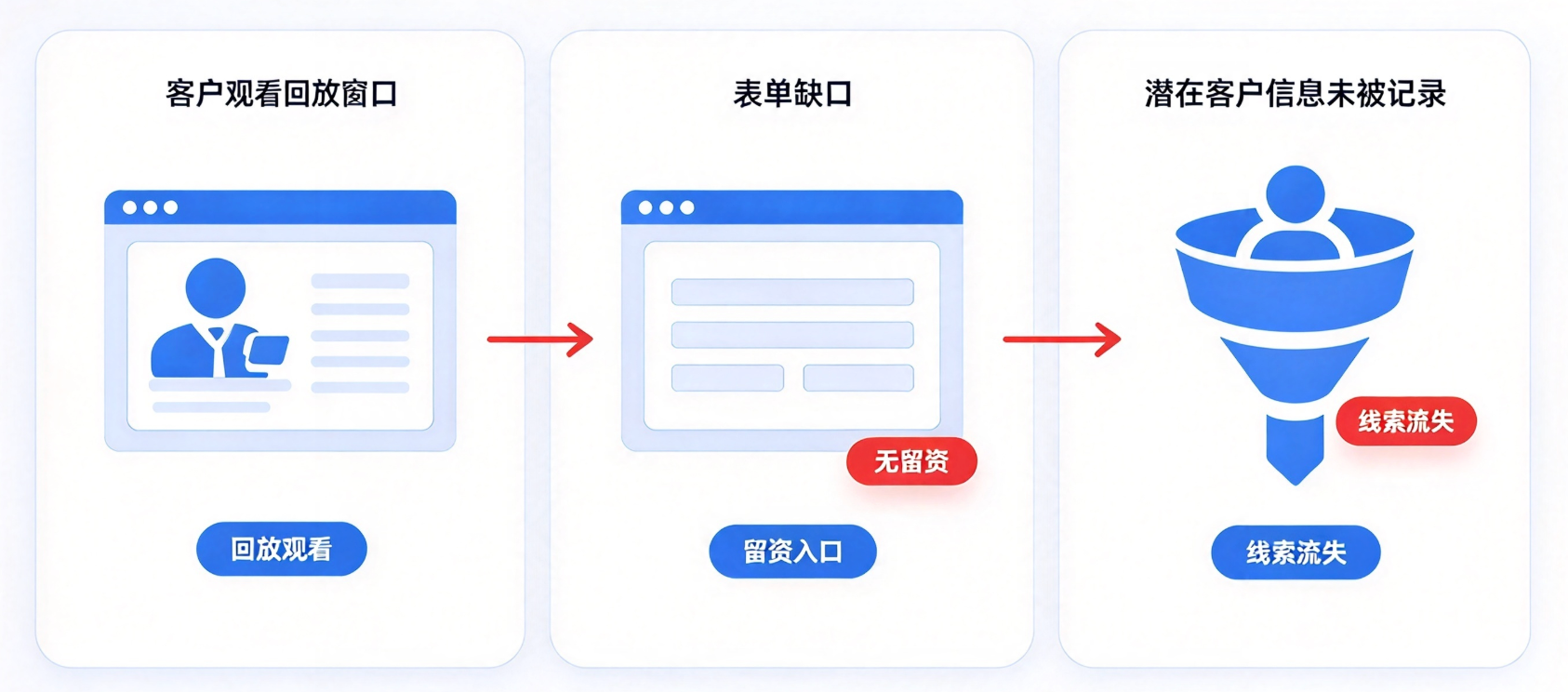
Due to time zone differences and busy schedules, many target clients cannot join the live session and will watch the recording afterwards. Many service providers only embed a lead form for live attendees, while replay pages feature a standalone video player. Visitors can watch the full recording without submitting any information.
This means a large volume of prospective clients reached via replays leave no contact details. Marketing teams can only view aggregate replay view counts, with no visibility into viewer identities, company affiliations or interests. Replays should function as lead generation assets for weeks or months after the event, yet the absence of secondary lead capture forfeits this long-tail traffic value.
(3) Limited data granularity, difficult opportunity evaluation
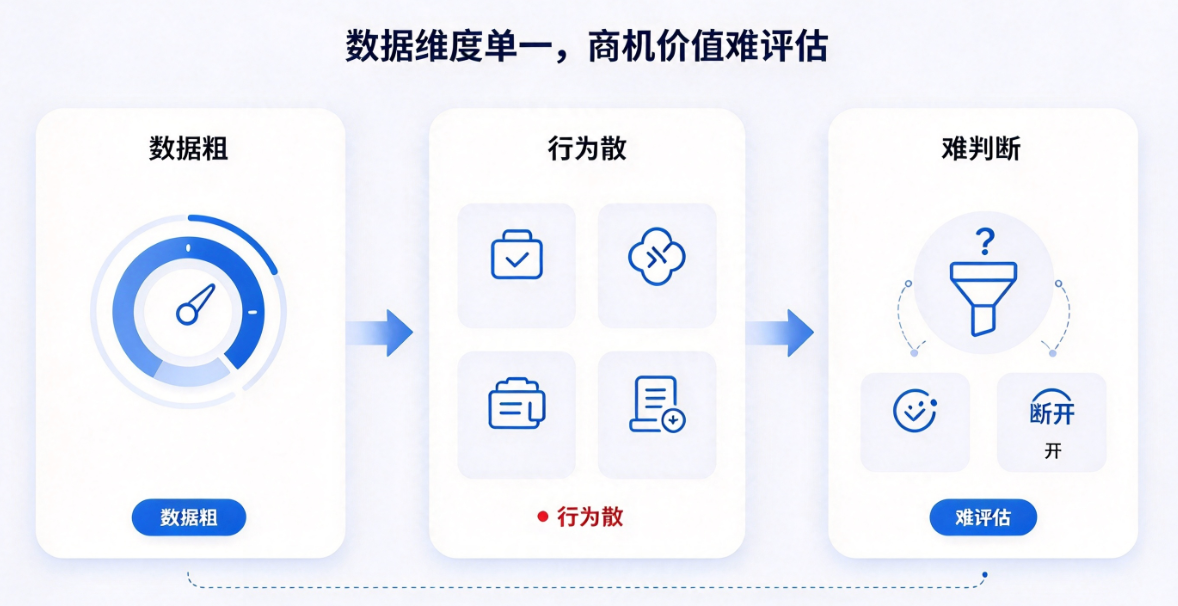
Generic live streaming platforms only deliver basic metrics such as viewership and peak concurrent viewers. Marketing teams can only gauge rough attendance, with no granular records of audience behavior. It is hard to track who finished the full session, who dropped off quickly, who submitted questions, or who downloaded whitepapers. These critical signals sit scattered across separate systems.
Without integrated data covering viewing records, lead submissions and engagement, marketing teams struggle to quantify high-quality sales opportunities or demonstrate campaign ROI to stakeholders. Decisions on speaker selection and topic planning for future webinars rely on guesswork rather than measurable evidence.
(4) Lack of embedded conversion entry points, barriers to whitepaper and demo access
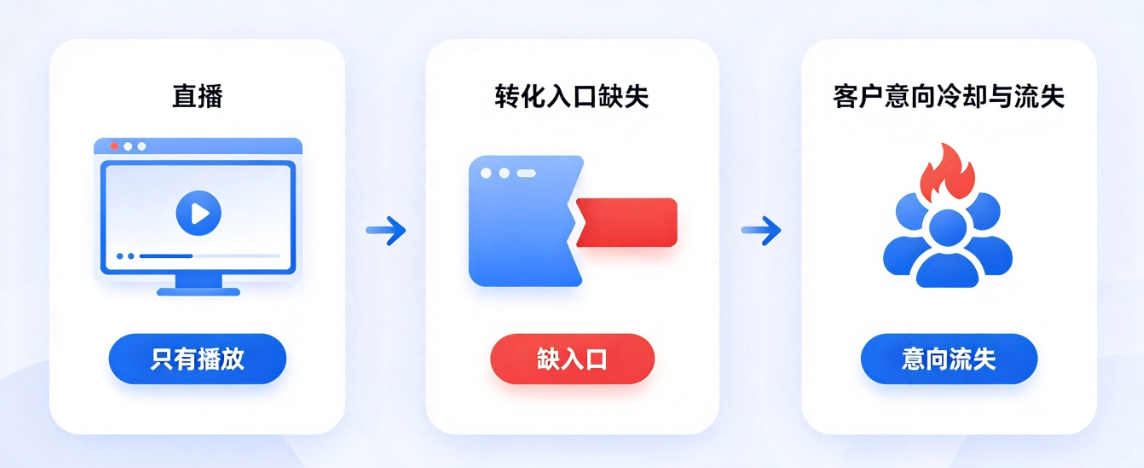
The ultimate goal of webinars is to guide audiences to downstream sales touchpoints, including whitepaper downloads and product demo bookings. Many live pages contain nothing but the video window, with no persistent conversion buttons. After watching the presentation, interested visitors need to navigate to the brand website or email sales teams manually.
Extended conversion paths kill momentum. Prospects easily get distracted after leaving the live page, and their interest fades. Without in-stream entry points, intent triggered by high-quality content cannot be captured promptly, resulting in lost conversion opportunities.
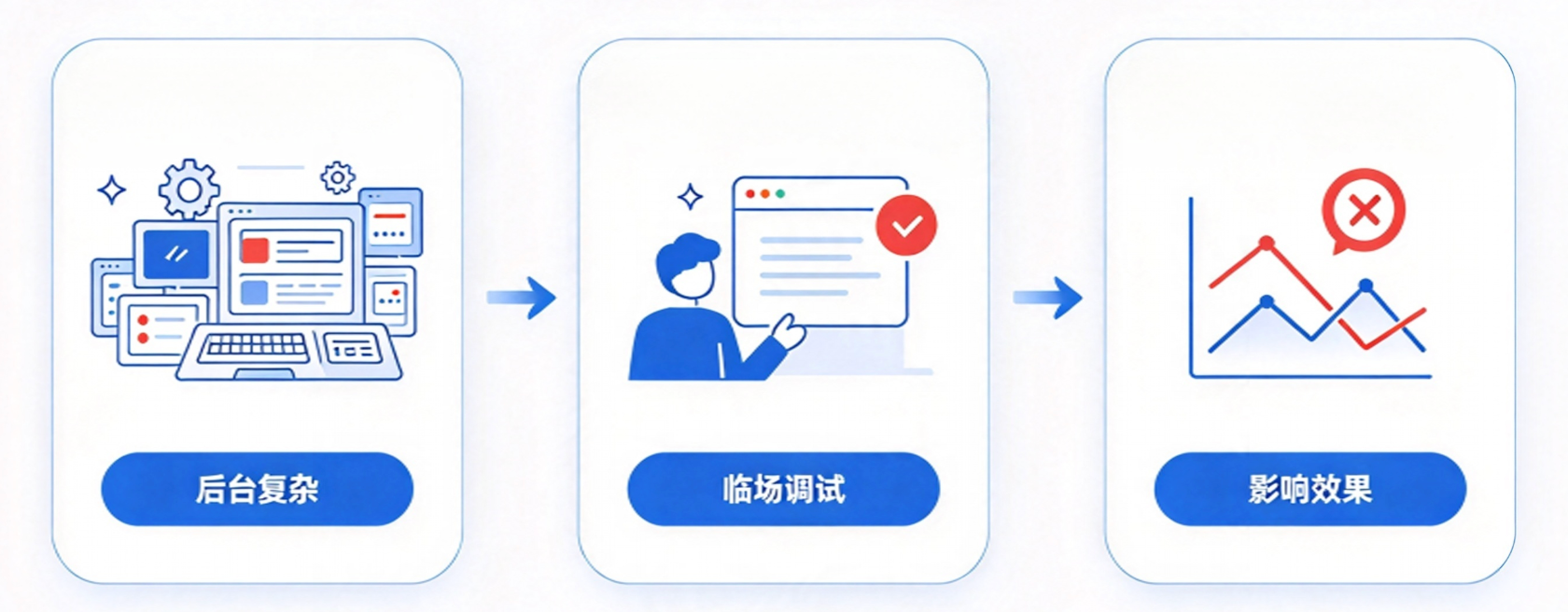
(5) High tool complexity, heavy setup burden for new operators
Event operators are mostly marketing specialists focused on content planning and community outreach, with limited technical knowledge. Overly complex enterprise live dashboards come with abundant configuration options. Setting speaker permissions, adjusting layouts and configuring streaming parameters requires substantial learning time.
On event day, operators must coordinate speakers and manage the agenda while troubleshooting backend issues, creating heavy operational pressure. Even strong content can be undermined by inadequate preparation caused by difficult tooling.
II. Efficient Implementation of Online Webinars for Enterprises
Polyv delivers an integrated live webinar solution tailored for B2B service providers going global. It addresses five core requirements: remote guest collaboration, long-tail lead capture via replays, customer data aggregation, instant conversion guidance and low-barrier operation. The platform covers the full workflow from event preparation and live engagement to replay hosting and post-event analysis, enabling marketing teams to run professional overseas webinars efficiently.
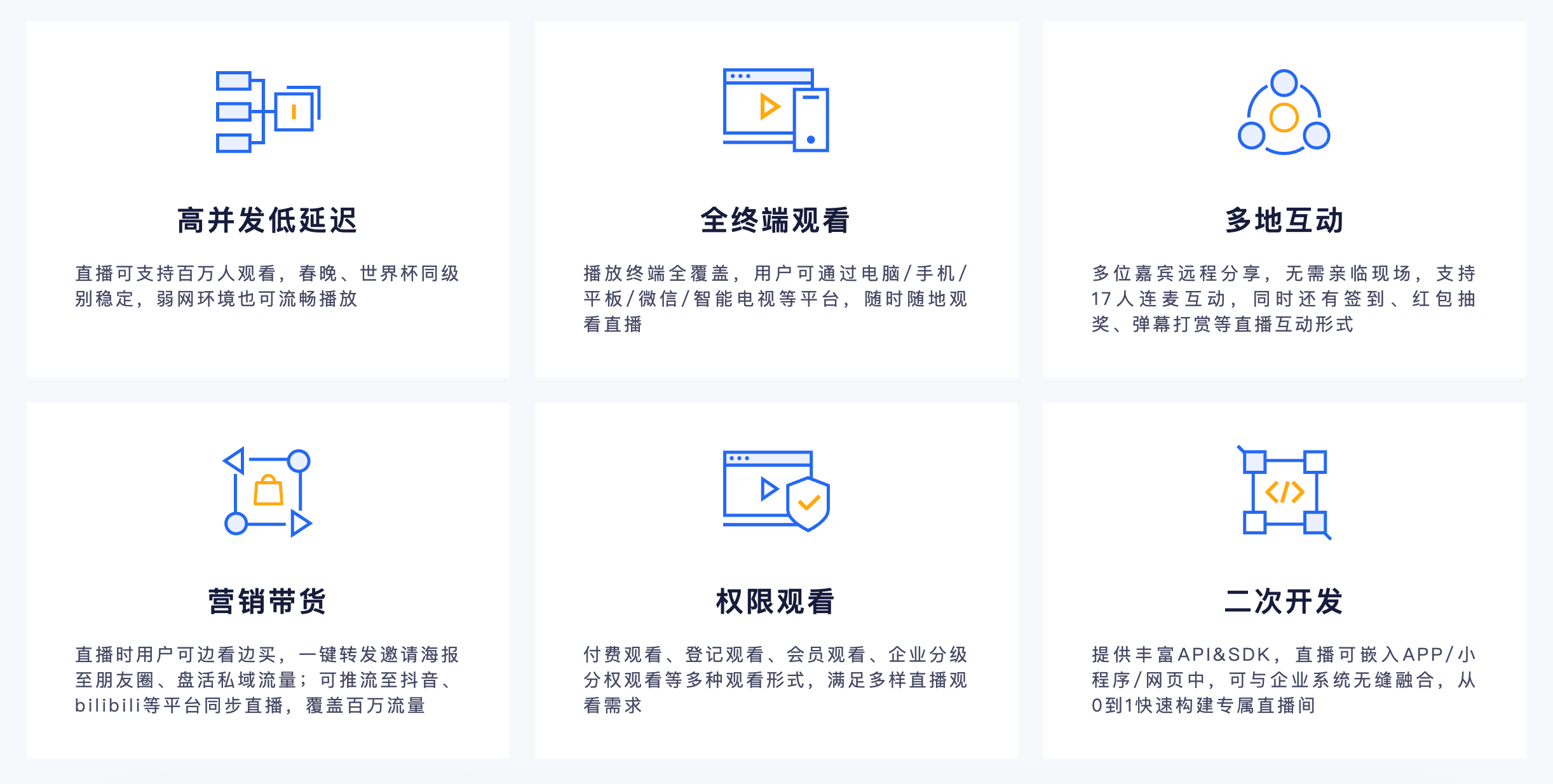
(1) Multi-guest co-hosting and screen sharing optimized for panel discussions
The platform supports simultaneous remote connections for multiple speakers. Presenters can share PPTs and product demo screens on demand, and multi-speaker layouts can be adjusted flexibly across different discussion segments. Panel sessions display guest feeds side by side, while presentation segments switch to full-screen shared content for a smooth, polished viewing experience.
Live feeds can be simultaneously pushed to external channels such as WeChat Channels to reach private-domain audiences. This capability is purpose-built for remote professional panel formats, ensuring stable audio and video with seamless transitions, so overseas webinars match the professionalism of offline industry forums.
(2) Interactive replays with secondary lead capture to accumulate leads
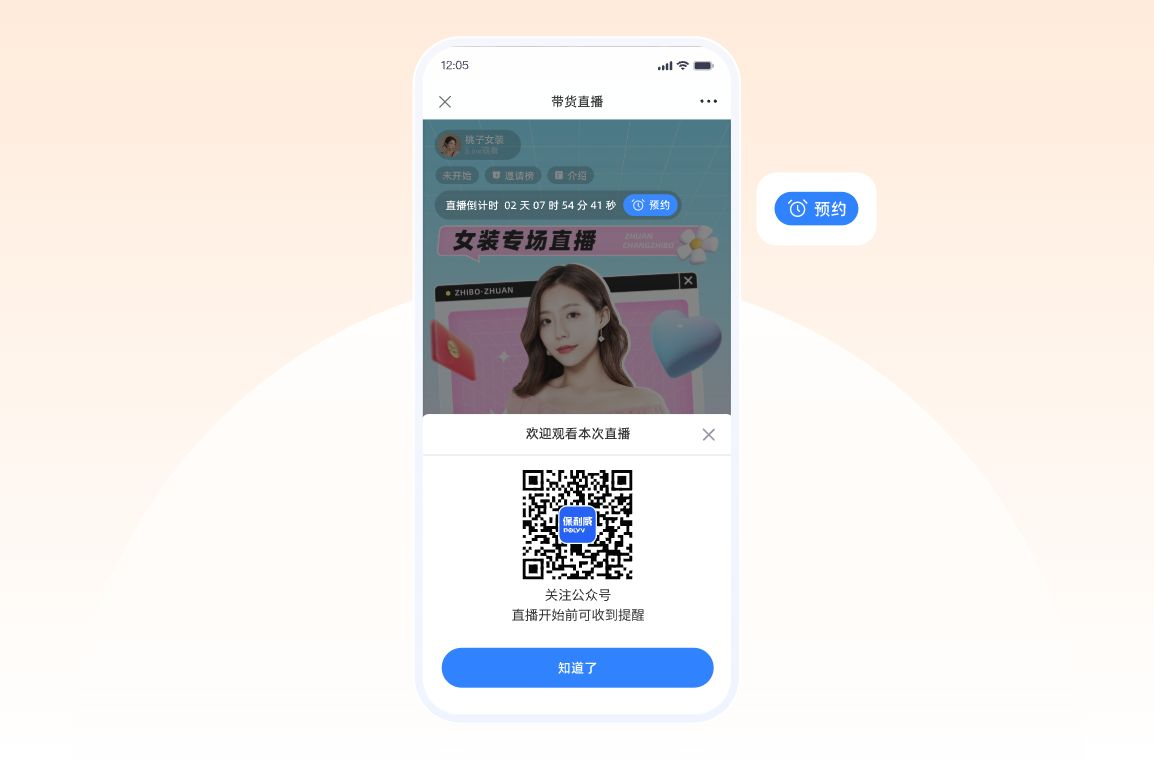
Marketing teams configure lead forms in advance to collect visitor information including company name, job title and product interests. After the live session concludes, replays retain interactive components such as lead forms and Q&A panels through interaction restoration. Users watching recordings can submit information while viewing.
Replays are transformed from passive video files into continuously operating long-tail lead capture pages. All leads generated both live and via replays are centralized in the backend and available for bulk export for sales follow-up, converting every replay view into actionable sales leads.

(3) Full-linkage data for informed review and decision-making
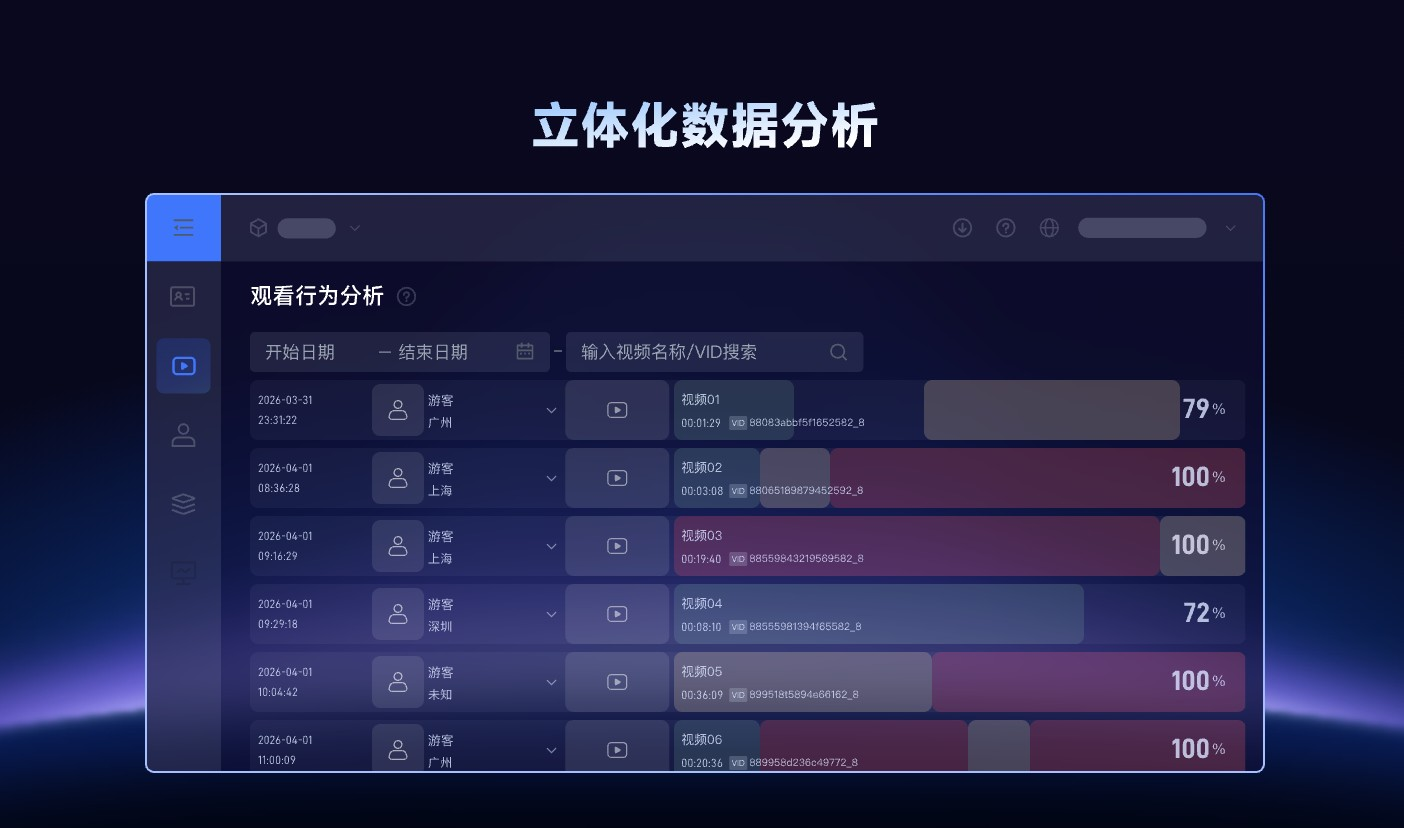
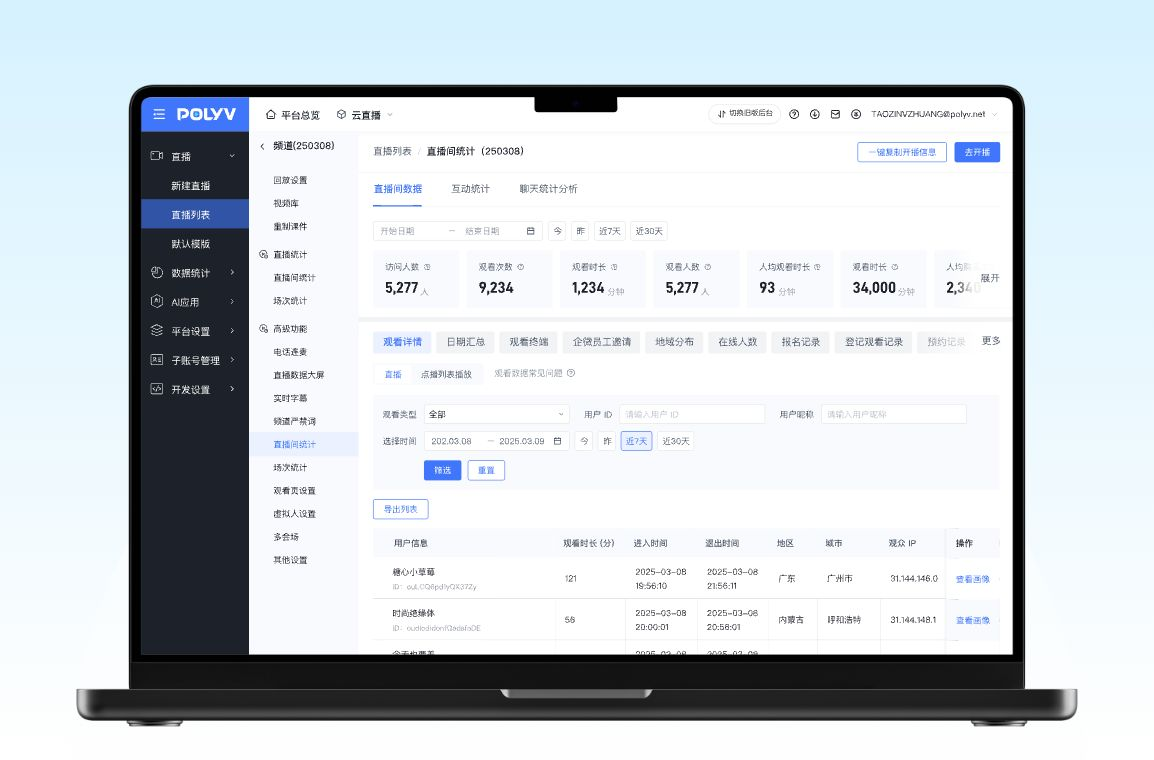
The platform records comprehensive audience behavior metrics, including watch duration, completion rate, lead details, comments and question statistics. Marketing teams can assess individual engagement levels, distinguishing high-intent prospects who finish the session and participate in Q&A from casual visitors who leave shortly after tuning in.
Behavior data is interconnected with lead records. Teams can clearly measure valid opportunities generated by each webinar and identify which segments attract the longest watch time and most interactions. These insights support data-driven topic planning and speaker recruitment for future events, grounding marketing investment in quantifiable outcomes.
(4) Embedded CTA buttons for one-click downloads and bookings
Configurable persistent CTA buttons are built into the live interface. Marketing teams can place direct entry points for whitepaper downloads and demo bookings within the live page. Viewers can complete these actions without exiting the stream or jumping to external websites.
Presenters can guide audiences to activate these CTAs at relevant moments in the presentation, capturing interest immediately. Shortened conversion paths connect professional webinar content directly to sales follow-up and reduce drop-off during redirection.
(5) Visual dashboard enabling fast setup for novice users
The backend features a visual interface. Live room creation, guest invitation, form configuration and CTA setup are completed via intuitive menus and forms, with no advanced streaming expertise required. Following guided workflows, marketing staff can launch a full webinar with zero technical background.
Simplified workflows free marketing teams from tedious technical debugging, allowing them to focus on speaker outreach, content design and lead follow-up. It cuts down preparation time and operational stress for non-specialist teams.
III. Business Value of the Solution
Built around the full lead generation workflow of overseas B2B webinars, this solution resolves the limitations of generic live tools across five dimensions: remote discussion experience, long-tail lead capture through replays, customer data aggregation, instant conversion and operational efficiency. It helps teams generate high-quality overseas leads at lower preparation costs, turning every webinar into a stable source of sales opportunities and improving the overall return on marketing investment.