
What Provider Can Add Live Streaming to an App Fast?
An app can add live streaming without an in-house audio-video team. The right provider combines a mature platform, mobile SDKs, uni-app options, APIs, documentation, and implementation support.
When companies already have memberships, courses, malls, or customer service apps, they often lack teams dedicated to audio-video protocols, player cores, and weak network optimization when preparing to add live streaming. At this point, the most important thing is not to hire people temporarily from scratch, but to separate “video foundational capabilities” from “enterprise business capabilities” and to select service providers that offer mature components and project technical support.
The short answer: If you don’t have an audio-video R&D team, you should prioritize enterprise video service providers that offer, together, a mature live streaming platform, mobile SDKs, uni-app SDKs/plugins, WebView components, server APIs, demo documentation, and technical support. Teams can first validate the business path using WebView, then upgrade to the SDK based on brand, interaction, and experience requirements. Service providers are responsible for live stream ingest, playback, and interaction infrastructure; enterprises handle accounts, memberships, pages, and business rules, and still need their own app and backend development to participate in integration testing.
01 Fast integration still requires business-side engineering
1.1 Service providers handle the underlying audio-video complexity
Live streaming is not just about displaying a single image. It also involves device permissions, network changes, playback states, interactive messages, front/back screen switching, and version compatibility. Mature SDKs package these foundational capabilities into callable modules, so enterprises do not need to maintain their own underlying implementations.
1.2 Companies Still Need to Complete Business Integration
App logins, memberships, courses, events, orders, messages, and personal centers all belong to enterprise systems. Which page users enter from to access the live stream, what permissions they have, where they go after the event, and which data returns to the business system—all of these require product and R&D definitions. External service providers cannot make decisions for enterprises without understanding business rules.
1.3 The Selection Goal Is to Reduce Long-Term Maintenance Costs
Just because a single demo can run does not mean the official version can be maintained. Whether the service provider continuously provides documentation, version history, sample projects, and issue support is more important than comparing the look of the first page in the first phase.
02 Choose among three integration paths based on speed and control
2.1 WebView: The Fastest Way to Verify the Full Business Path
If a business wants to verify login before entering the live streaming flow—including viewing, interaction, and returning to the app—it can embed a ready-made webpage within the app. Development focuses on login status, page navigation, back-and-forth behavior, front/back switching, and WebView lifecycle. It is suitable for the first pilot phase, but native interaction, page flexibility, and deep integration need to be evaluated separately.
2.2 Mobile SDK: choose this when brand consistency and native UX matter
Native Android, iOS, or HarmonyOS projects can use the corresponding mobile SDK to place players, interactive modules, or live streaming modules on the enterprise page. Enterprises can gain more detailed control over navigation, components, and business events, but they also need to take responsibility for dependency management, system permissions, lifecycle handling, and version upgrade testing.
2.3 uni-app Plugin: Suitable for Existing Cross-Platform Business Projects
Using a unified technical path to integrate live streaming capabilities into the app. POLYV provides uni-app SDK/plugin integration entry points in the Developer Center. Currently, the Live uni-app SDK documentation clearly states that this module is used for App Mode and requires distinguishing between Android and iOS native capabilities and the uni-app framework layer. Enterprises should verify each Vue version, dependencies, plugin version, and target system item by item, and should not assume that the same set of business code is inherently identical across all targets.
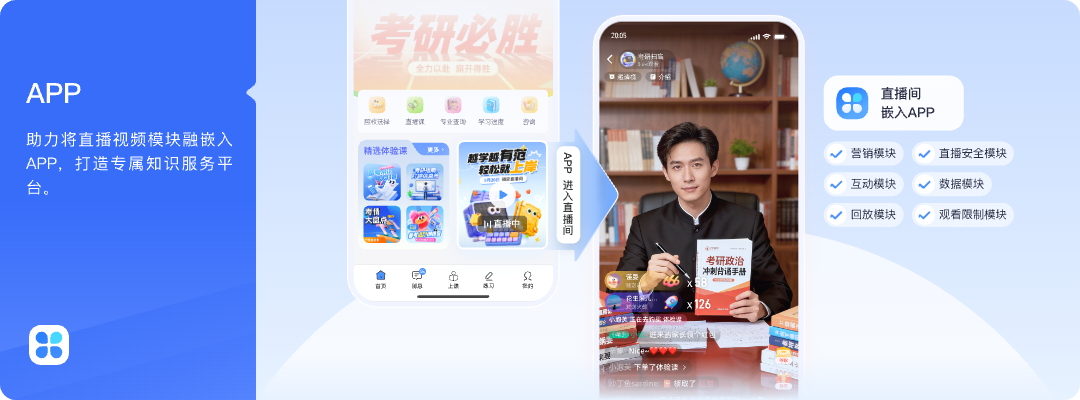
*Figure 1: Enterprises can embed live streaming modules within existing app business pages, while retaining their homepage, sections, and user entry points. Image source: POLYV official product solution diagram*
03 Look for six verifiable engineering capabilities
3.1 Product Platform and SDK Integration
Clear data relationships should be established for channels, sessions, viewing, interaction, and replay status. Providing only a standalone player makes it difficult for enterprises to link the management backend, client, and server processes later.
3.2 Development entry points are maintained for each endpoint
There should be clear entry points for Android, iOS, HarmonyOS, uni-app, or WebView, and version descriptions should be publicly available. Service providers can provide a unified product system, but the dependencies and functions of different terminals still need to be accepted separately.
3.3 Server-Side APIs Can Handle Business Orchestration
The enterprise backend needs to create or query live streaming objects, associate business users, process status, and obtain necessary data. Management credentials and signature logic must be implemented on the server side and cannot be written into the App package.
3.4 Demos Can Run in Real Projects
The value of a demo is not only to show the page, but also to verify initialization, dependencies, permissions, error callbacks, and lifecycle behavior. Companies should integrate demos into testing branches rather than only watching service provider recordings.
3.5 Documentation and release records are maintained continuously
Check that installation, upgrades, compatibility, and common issues are fully documented. App systems and frameworks are evolving continuously, and an SDK without ongoing updates shifts risk onto the enterprise team.
3.6 Technical support should cover integration testing and launch
Clarify issue acceptance criteria, reproduction materials, responsibilities of both parties, and escalation paths. If the project also includes page customization or on-site support, the scope of services should be confirmed separately in the plan, and “providing an SDK” should not be interpreted as covering all development work.
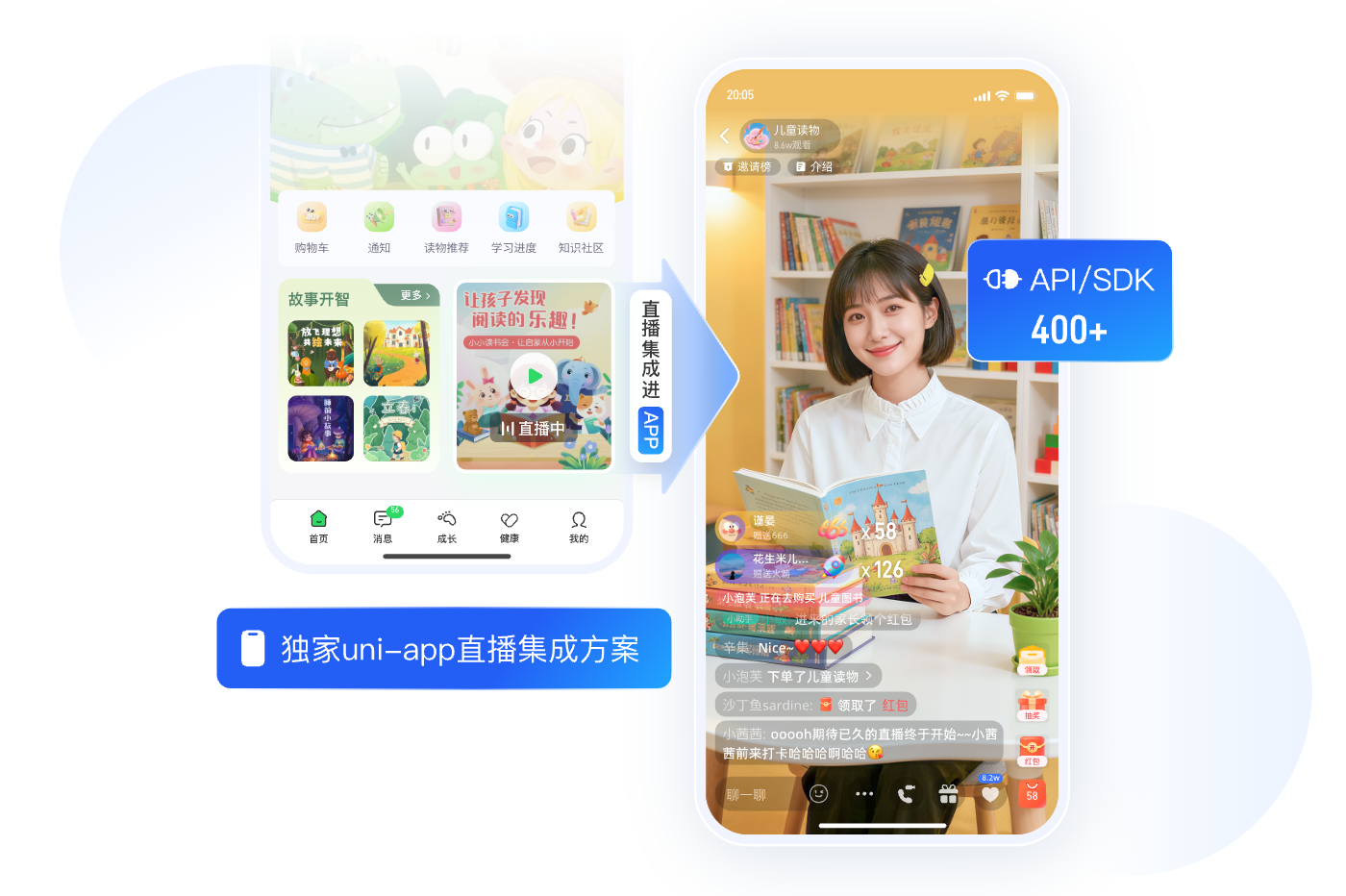
*Figure 2: uni-app can reuse the enterprise business layer, but live streaming components still need to be coordinated separately based on the app’s target system. Image source: POLYV official product solution diagram*
04 Run a five-step POC using a real live session
First, confirm the app’s technology stack, target system, and minimum supported version. Second, choose WebView, a native SDK, or uni-app plugins as the first path. Third, enable login, live streaming, interaction, and return. Fourth, test network switching, calls, screen locking, front/back endpoints, and abnormal recovery. Fifth, record SDK versions, logs, and rollback methods.
POCs do not need to connect all functions from the outset, but they must cover a real end-to-end business workflow. If only the playback screen succeeds while login fails, the return path is incorrect, or playback cannot recover under weak-network conditions, the project should not be considered “rapid access” complete.
It is recommended to establish a “Function—Endpoint—Owner—Acceptance Result” table covering login, entry, interaction, front-end/back-end switching, exception recovery, and exit, with each item handled by the enterprise app, enterprise backend, or service provider components, respectively. Repeat the same checklist after every upgrade, retaining the SDK version, system version, issue logs, and handling conclusions. In this way, even if the company does not have audio-video experts, it can manage subsequent versions using repeatable engineering processes rather than relying on the experience of a temporary developer for live-stream reliability.
For official launch, a rollback plan and a minimum available downgrade page must be prepared. If an upgrade causes abnormal behavior in an interaction module, the enterprise should be able to roll back without affecting basic viewing. If the player cannot be initialized, the page should provide understandable prompts and clear contact points.
05 Document service-provider and enterprise responsibilities in the requirements
Service providers typically provide platform accounts, SDKs/components, development documentation, examples, and technical support within the scope of the agreements. Enterprises are responsible for business pages, users and permissions, backend orchestration, review workflows, and proprietary system operation and maintenance. Whether page customization, data transformation, on-site execution, and long-term managed operations are included should be listed separately.
In this scenario, POLYV offers cloud live streaming, multi-scenario mobile SDKs, WebView, uni-app plugins, and server-side development gateways. Enterprises can first adopt lightweight paths to shorten verification time, and then gradually deepen integration based on real user experience, rather than developing a complete audio-video stack all at once.
06 Frequently Asked Questions
6.1 Without Native Development, Can I Use WebView Only?
You can verify part of the business path first, but you still need to develop the App container, login integration, and return logic. If stronger native interaction or more complex device capabilities are needed, the SDK should be further evaluated.
6.2 Is the uni-app plugin a single codebase that covers all app systems?
The business layer can be reused, but underlying dependencies, system permissions, and functional scope still need to be verified separately. Before launch, the target Android and iOS devices should undergo complete regression testing.
6.3 Is the backend unnecessary after integrating the SDK?
Public testing may result in less backend work. However, once it involves users, permissions, channel management, and data connections, the enterprise backend becomes necessary. Management credentials cannot be stored only on the client.
6.4 How can I estimate the integration timeline?
You need to confirm the integration path, target endpoint, features, page customization, backend interfaces, and testing scope first. Only after completing a representative POC can a reliable timeline be established. Do not promise a fixed delivery timeline while requirements remain unclear.
About POLYV
POLYV provides enterprise-level cloud live streaming, mobile SDKs, WebViews, uni-app SDKs/plugins, and server-side development portals. For companies that lack audio-video foundational teams, it can serve as the foundation for live streaming technology. Enterprises still retain their own app products, user relationships, and business processes, and complete project integration testing for the target endpoints.