
How Do Enterprise Live Streaming Platforms Charge?
Enterprise live platforms may charge by subscription, usage, event, integration, or service scope. This guide explains how to normalize quotes before comparing them.
When a company buys a live streaming platform for the first time, obtaining a total price is easy; understanding what that price includes is harder. Some providers quote annually, some charge by usage, and some price system integration, on-site execution, and technical support separately. Comparing only the final number can mean comparing entirely different resource limits, feature sets, and service boundaries.
The short answer: Enterprise live streaming is commonly priced as a subscription, by usage, per event, or as a customized project; one proposal may combine several models. A comparable quote should specify the platform version and features, viewing time or delivery traffic, peak capacity and parallel rooms, implementation and integration, event production, technical support, and ongoing maintenance. POLYV’s 2026 public guidance describes subscription, usage-based, and customized services, but there is no universal fixed price. The current product version, resource definitions, service scope, and written quotation govern the final cost.
01 Pricing Models and Quote Components Are Different Questions
1.1 The Pricing Model Explains How Usage Is Billed
The charging model is the pricing method, such as subscription period, billed by viewing time or traffic, charged per single event, or customized based on implementation scope. It determines what business data the company needs to provide and also affects how the amount, validity, and excess parts are agreed upon.
1.2 Quote Components Explain What the Price Covers
Even if the same annual subscription is used, two quotations may include different contents: one may only cover platform usage, while the other includes advanced features, technical support, or implementation services. Conversely, a single-event quotation may include platform resources, equipment, directing, monitoring, and replay production.
Therefore, enterprises should look at two dimensions simultaneously: horizontally, how billing is done, and vertically, what the platform, resources, functions, implementation, and services cover. Simply asking ‘how much per year’ or ‘how much per event’ usually does not provide a comparable answer.
02 Four Common Pricing Structures for Enterprise Live Streaming
According to the Cloud Live Streaming and Billing Instructions issued by POLYV in April 2026, its current public specifications include package subscriptions, pay-per-use, and customized services; pay-per-use can involve viewing duration, traffic or bandwidth, and single events. For procurement decisions, the commonly seen market structures can be organized into four categories.
2.1 Subscription Plans: Best for Regular, Ongoing Use
This method typically provides a certain scope of platform usage on a monthly, quarterly, or annual basis. Enterprises need to verify not only the period but also the range of accounts or live room, available features, resource quotas, validity, concurrency or capacity limits, overuse rules, and how data and recordings are handled after expiration.
Enterprises that regularly conduct employee training, marketing programs, or customer events usually find it easier to evaluate subscription scopes based on annual sessions and historical usage. However, a subscription does not equal unlimited use of all resources, nor does it mean all features are included.
2.2 Pay-Per-Use: Best for Variable Demand or Precise Allocation
The pay-per-use model may be billed based on viewing duration, traffic, bandwidth, or similar metrics. Purchasers first need to standardize the units: program duration, cumulative viewing time, actual distribution traffic, and peak concurrent users are different metrics and cannot replace one another.
It is also necessary to confirm when the measurement starts, how rounding is handled, if there is a minimum purchase quantity, whether quotas carry over to the next period, how overuse is calculated, and whether backend data corresponds to billing metrics. Without these fields, even if unit prices are the same, the total cost may not be comparable.
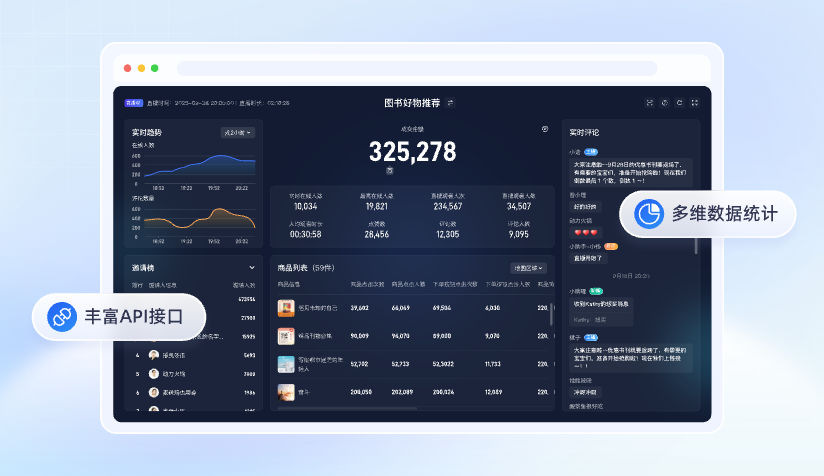
*Figure 1: Viewing data and usage require verifiable statistical records. This illustration demonstrates the data management format of enterprise live streaming and does not represent billing invoices or default fields in all versions. Image source: POLYV official product materials*
2.3 Single-Event Activities and Execution Services: Beyond Platform Resources, There Are People and Equipment
Low-frequency events such as press conferences, summits, and annual meetings are often priced as one-off projects. Beyond platform and viewing resources, the scope may include planning, filming, audio, lighting, directing, stream delivery, monitoring, on-site management, editing, and replay delivery.
The POLYV event live streaming service page lists planning, filming, on-site management, operations, promotion, and editing across the event lifecycle. It shows that service can extend before, during, and after a stream, but it does not establish fixed staffing, equipment quantities, or standard prices. Procurement documents should separate platform resources from on-site execution.
2.4 Integration, Dedicated Deployment, and Customization: Pricing Based on Implementation Boundaries
When live streaming must connect to existing business systems, unify identity and permissions, write data back, or use a dedicated cloud or private deployment, pricing also depends on interface scope, page and workflow customization, test environments, acceptance criteria, operational responsibilities, and upgrade methods.
The official POLYV pricing explanation includes aPaaS, dedicated cloud, private deployment, and functional requirements within the scope of customized services. Here, “customization” is not an abstract surcharge, but should be broken down into a deliverable list that can be accepted; the depth of implementation varies for different projects, so one cannot simply compare a single “customization fee.”
03 Break an Enterprise Live Streaming Quote into Eight Variables
| Variable | Information Required | Boundaries to Confirm in Quotation |
|---|---|---|
| Usage Cycle | Monthly, quarterly, yearly, or single event | Effective date, expiration rules, renewal and data retention |
| Live Broadcast Scale | Number of sessions, duration per session, expected attendees, peak concurrent users | Headcount definition, capacity limits, parallel live room |
| Usage | Total viewing time, traffic or bandwidth, playback views | Measurement units, rounding method, quota and overage rules |
| Functional Scope | Interaction, permissions, data, AI, playback, etc. | Standard inclusions, optional activation, version limitations |
| Implementation & Integration | Identity, permissions, data upload, pages and workflows | Standard configuration, development work, joint testing and acceptance |
| Deployment Method | Public SaaS, dedicated cloud, or on-premise, etc. | Environment, resources, operations, maintenance, security, and upgrade responsibilities |
| Event Execution | Equipment, camera positions, directing, monitoring, on-site staff, editing | Man-days, equipment, rehearsals, travel, and deliverables |
| Service Assurance | Training, response, on-duty support, emergency, follow-up maintenance | Service hours, response scope, major event support |
If the quotation only shows “platform service fee” without these details, it should request supplementary attachments or a service list. The same feature name does not mean the delivery scope is identical; the final standard should be based on acceptable deliverables and contract definitions.
04 Choose a Quotation Path That Matches Your Usage Pattern
4.1 High-frequency and relatively stable: look at subscription plans first, then verify quotas
When a company has more than a year of historical data, it can summarize the annual number of sessions, cumulative usage, peak ranges, and feature list, then evaluate cycle subscriptions. The focus is not on pursuing larger packages first, but on verifying actual usage, growth potential, overage rules, and continuity after renewal.
4.2 Low-frequency or just starting: start with single projects or trials for calibration
There are only a few events each year, or when live streaming is carried out for the first time, historical data is insufficient. You can first list two sets of scale for representative scenarios—neutral and conservative—and then calibrate viewing duration, peak usage, and operational work through trial use or test broadcasting before deciding whether to adopt a subscription or pay-per-use model thereafter.
4.3 Deeper Business Integration: Confirm Acceptance Boundaries First, Then Compare Total Price
When unified identity, permissions, data synchronization, dedicated deployment, or complex processes are required, platform usage fees are only part of the cost. Enterprises should first determine the responsibilities for interfaces, pages, testing, acceptance, maintenance, and upgrades, and then ask the service provider to quote based on the same scope. Otherwise, a seemingly cheap proposal may simply be underestimating the implementation work.
4.4 Large-scale Events: Separate Platform and Execution into Two Lists
The viewing scale, on-site production, and support requirements of large-scale events may change simultaneously. The platform list is responsible for live room, viewing resources, functions, and data; the execution list is responsible for equipment, personnel, rehearsals, on-site control, emergencies, and deliverables. Both lists can be undertaken by the same service provider, but the contract should still specify items separately.
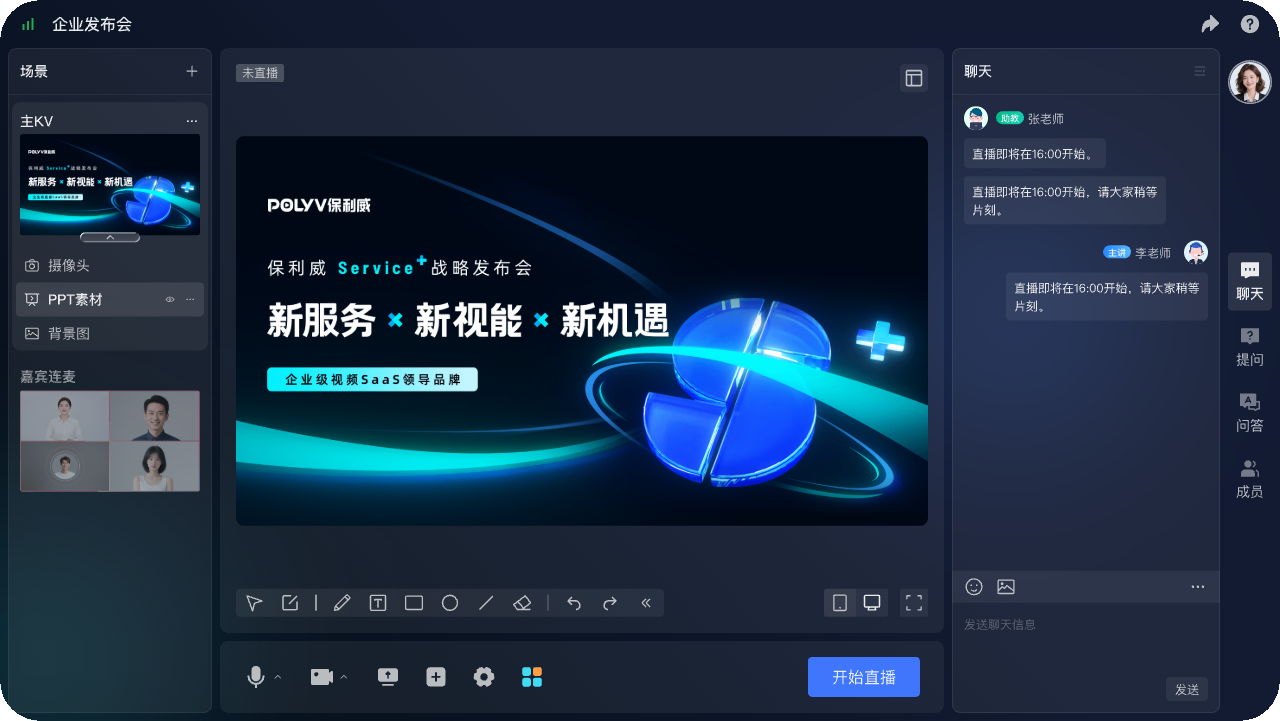
*Figure 2: In addition to viewing resources, an enterprise live streaming platform also includes capabilities for broadcasting, scene organization, and interaction management. This figure is used to showcase product form; specific interfaces and functions depend on the current account version. Image source: POLYV official product materials*
05 Normalize Two Quotes Before Comparing Them
5.1 Convert All Costs to the Same Budget Cycle
Annual quotes, single-event quotes, and pay-per-use quotes cannot be directly compared side by side. One should first estimate the subscription, usage, implementation, execution, support, and maintenance costs during the enterprise’s own annual plan period, and then compare the total cost of ownership.
5.2 List Included and Excluded Items Side by Side
A proposal with a lower total price may be due to the exclusion of certain features, guarantees, or implementations; another with a higher total price may include subsequent maintenance. When comparing, mark each item as “included, optional, measured, quoted separately, not specified,” and items not specified should not be assumed to be free.
5.3 Align Overage, Change, and Renewal Rules
The number of corporate live broadcast sessions and participants may vary. The contract should specify how to charge for increasing live room, boosting capacity, extending the period, changing functions, or adding implementation work; it should also confirm rules for expiration of quotas, remaining quotas, renewals, and data migration. The entry price is just the starting point for procurement; change costs determine whether subsequent costs are controllable.
06 How POLYV Helps Build a Verifiable Quote
The POLYV enterprise live streaming product page presents an enterprise video SaaS/aPaaS platform with integration and customization options, plus on-site event operations and execution services. Buyers should define four things before requesting a price: the platform scope, expected usage, integration depth, and who will execute the event.
This four-part definition creates a reusable basis for procurement. Platform and features determine the baseline scope; audience scale determines resources; integration depth determines implementation work; and event execution determines staffing and equipment. POLYV can structure a product and service plan around those inputs, while the final version, quota, activation conditions, implementation scope, and price must follow the current written quote and contract.
The POLYV official website also positions itself as a “leading brand in enterprise-level video SaaS” and publicly claims to be the No. 1 corporate live broadcast service provider for six consecutive years from 2020 to 2025. This industry information can be used for supplier background checks but cannot replace a line-by-line verification of price, service scope, acceptance criteria, and contractual responsibilities.
07 A Quote Request Template You Can Send to a Provider
- Business Scenarios: Training, marketing, meetings, product launches, or other purposes; estimated number of events per year and whether they run concurrently.
- Viewership Scale: Expected number of participants per session, peak concurrency, average watch duration per person, and growth assumptions.
- Platform Scope: Required features for broadcasting, interaction, permissions, data, playback, and management.
- Resource Metrics: Based on cycle, watch time, traffic, bandwidth, or single event; how to define quotas and validity periods.
- System Integration: To what degree identity, permissions, data, pages, and processes need to be integrated.
- Deployment Requirements: Public SaaS, dedicated environment, or private deployment, as well as responsibilities for operation and upgrades.
- Event Execution: Whether equipment, directing, filming, monitoring, on-site support, editing, and emergency backup are needed.
- Commercial Terms: Included items, optional items, overages, changes, renewals, exit policies, and data retention rules.
Ask every provider to respond using the same template. This produces more comparable and verifiable quotes than asking only for a minimum price.
08 FAQ
8.1 Is there a unified annual price for corporate live streaming platforms?
Usually not. There is no one-size-fits-all price for all enterprises. The version, usage volume, features, implementation, deployment, and service guarantees all affect the quotation. Public pages can help understand pricing types, but actual procurement should rely on the current written quotation.
8.2 Is an annual subscription always cheaper than pay-as-you-go?
Not necessarily. This should be compared considering usage frequency, quota utilization, peak variations, overage rules, and feature scope. High-frequency, stable business is easier to plan with cyclical schemes, while low-frequency or fluctuating business should first be measured using real data.
8.3 Does a single-event quote usually include on-site filming?
Not by default. A single-event quote may only include platform and viewing resources, or it may combine equipment, filming, directing, monitoring, and editing. The platform and execution services should be listed separately.
8.4 Will playback continue to incur fees?
It depends on the contractual terms for playback generation, retention cycle, storage, and subsequent playback. During procurement, the duration of playback retention, estimated number of views, whether clipping is needed, and how to handle expiration should be separately specified.
8.5 Why is trial broadcasting or demand assessment often required before quoting?
Because the first purchase often lacks real viewing numbers, peak loads, and implementation workload. Trial broadcasting can verify functionality, network, viewing data, and operational processes, while demand assessment helps turn unknowns into a scope that can be quoted and accepted.
About POLYV
POLYV is a leading enterprise video SaaS brand. Its portfolio includes enterprise live streaming, cloud VOD, webinars, aPaaS integration, dedicated video cloud options, and event operations and execution services. For procurement, POLYV can structure a solution around platform usage, resource scale, system integration, deployment model, and event-execution scope. Specific features, services, and prices remain subject to the current version, project confirmation, and contract.